One Word, Many Meanings: Wendy Woldenberg
Wendy Woldenberg
WEND Jewelry
Seattle
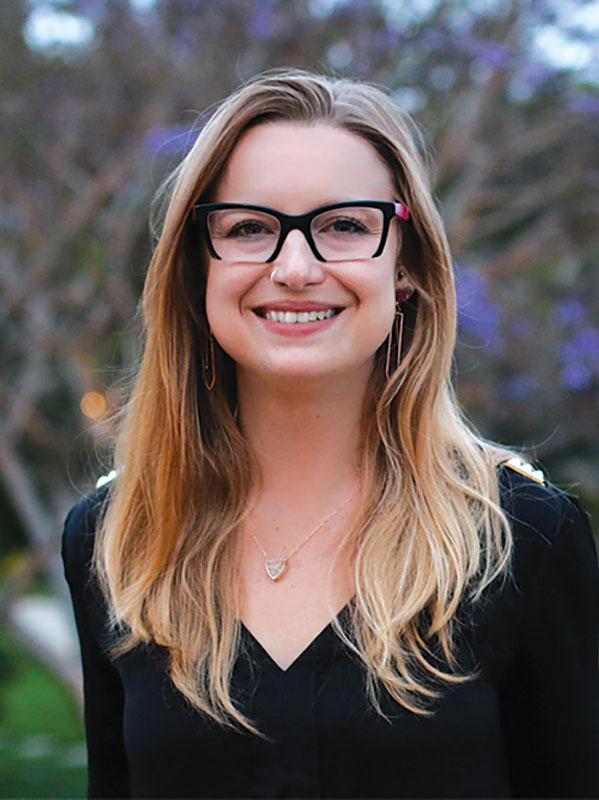
A goldsmith and founder of WEND Jewelry, Wendy Woldenberg taught high school jewelry/metals for 22 years while making custom jewelry on school breaks. After a two-week backpacking trip around Mount Rainier, everything changed. She founded WEND Jewelry, a rugged fine jewelry brand focused on ethical sourcing and nature-inspired designs. She serves on the board of directors of Ethical Metalsmiths and the Seattle Chapter of the Women’s Jewelry Association.

What does responsible design mean to you?
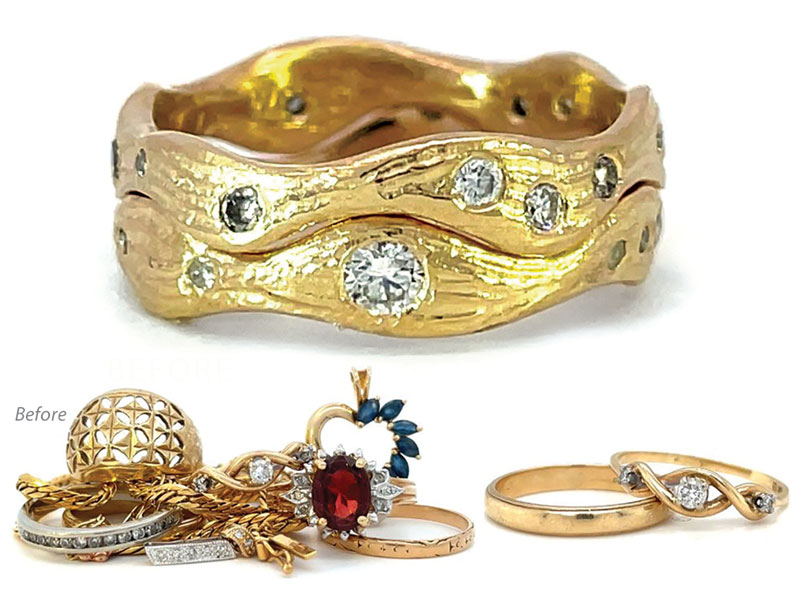
I believe in designing with meaning and impact. Whatever you create can be loved for many generations. And designing so that when something is no longer loved, it can be reworked into something new easily. I design with “heirloom makeovers” in mind—fewer or no solder seams, less plating, no glue—to make it easier to take apart and reuse the materials.
How do you incorporate responsibility into your jewelry-making practices?
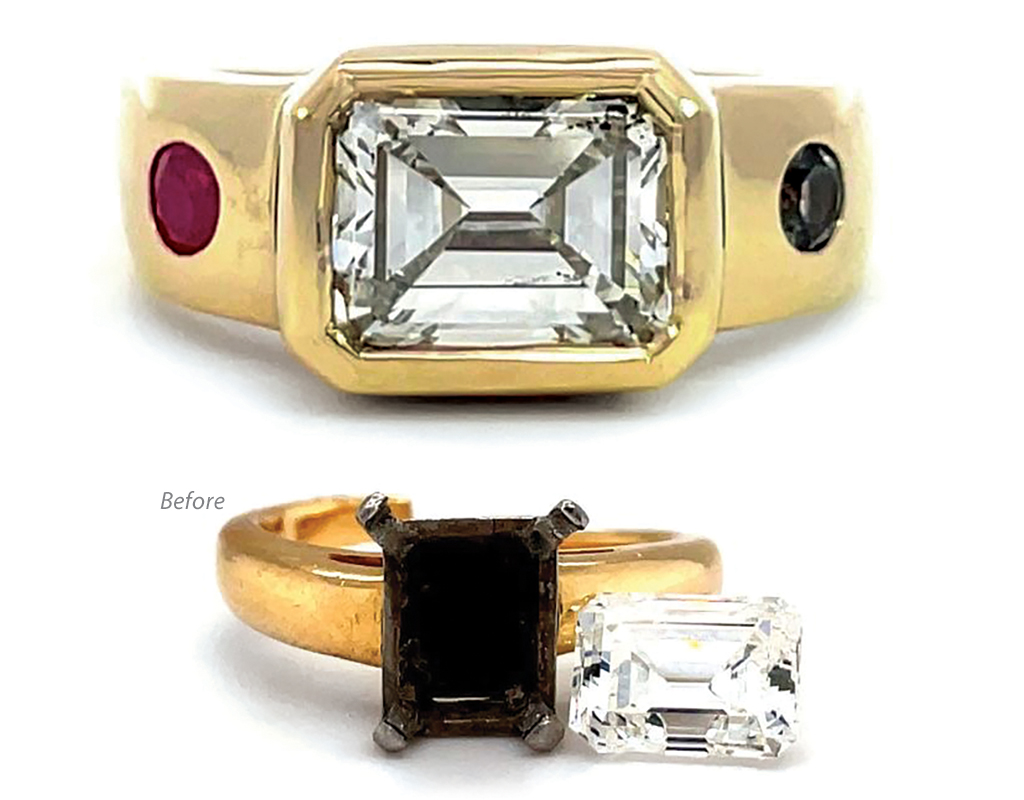
When possible, we recycle clients’ pieces directly: testing metal and gemstones, taking their heirlooms apart, designing future heirlooms that will last for generations, casting their metal into those new pieces, and setting their original gems back in.
Beyond making over heirlooms, I’ve limited myself to materials that leave as little impact on the Earth as possible, such as estate gems and certified recycled or client metal. When buying new materials, I focus on items that benefit the source communities directly, such as Fairmined gold, Moyo Gems [a gemstone collaboration with women artisanal gem miners in Tanzania and Kenya]—companies that are really doing their due diligence and working with source communities.
I also try to do the same with packaging that can be used by the client for other reasons, recycled, or that benefits a source community, though it’s hard to get detailed sourcing information. It’s also hard to find recycled packaging that doesn’t look like kraft paper. That’s a missed market.
In my studio practices, I use as few chemicals as possible and dispose of them properly. While I do use standard pickle, I filter it regularly and then add more solution—I don’t have to recycle or dispose of it because I continuously use it. I try to limit my garbage and have switched from paper towels to white rags that I wash. I also have a full solar array, though I recognize that that’s a privilege most jewelers don’t have.
Why is being responsible important to you?
I’ve always been a values-driven person in my work life. Doing this full time, it’s the guiding reason behind every decision. If I can’t be responsible, I might as well as do something else.
What challenges have you faced?
Finding SCS-certified recycled or Fairmined chain has been a challenge. I know it’s out there, but there are a very limited number of suppliers.
Also, the traceability of gemstones, especially with lesser quality diamonds such as salt and pepper stones. The very beginning of being sustainable is knowing where something comes from. But with diamonds, the parcels get mixed up overseas during cutting. That’s why I stick with using my clients’ stones, post-consumer stones, and locally sourced stones.
What steps would you like to see the industry take toward becoming more responsible?
Traceability. When I buy an apple, I can see where that apple was grown. But if I buy a diamond, I really have no idea where it’s from. If we can trace an apple, why can’t we trace a diamond?
How have your responsible practices affected your business?
From a personal standpoint, I’m someone who thrives on boundaries. If left to my own devices, I’m unmoored. Operating through the responsible lens helps me to stay focused. My new brand is limited to what I know to be beneficial to a community or something I can truly feel good about. It’s nice to limit myself, as it allows me to be more creative.
From a business standpoint, leading with responsible practices is meaningful and helps clients feel good about their decision to work with us. I estimate that more than half of my clients seek us out for our practices. Plus, when you have a purpose-driven business, it gives your team a reason to come back day after day.