One Word, Many Meanings: Jamie Hollier
Jamie Hollier
Balefire Goods
Arvada, Colorado
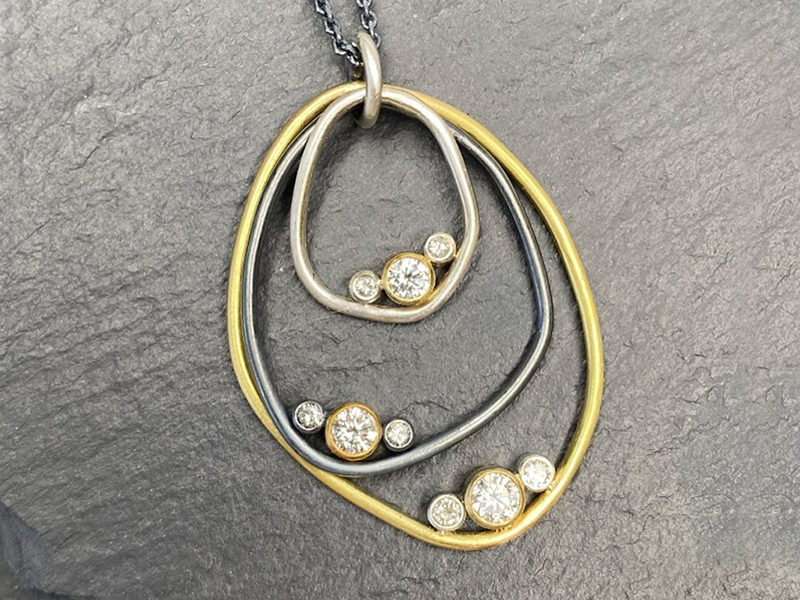
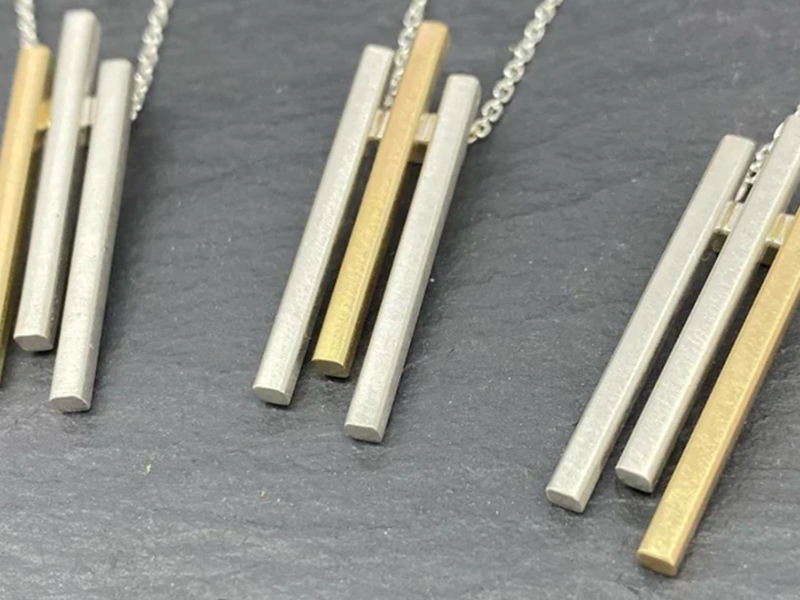
Jamie Hollier first fell in love with metalwork and jewelry thanks to her exposure to metalwork in her grandfather’s machine shop, jewelry in her great aunt’s antique shop, and going to art shows with her mother. Although she studied art history and metalsmithing in college, her career took her into the tech world. Eventually, she realized she needed a change and was ready to return to her love for metalsmithing and jewelry. She decided to create a place for artisan-made, responsibly sourced, unique jewelry and her company Balefire was born in 2017.

What does responsible design mean to you?
For us, the idea of responsible design is having knowledge about the sourcing of the materials you’re using (both gems and metal) and the impact that those items have (both from an environmental and socioeconomic point of view), along with conditions of the shop where those items are used to create jewelry.
How do you incorporate responsibility into your jewelry-making practices?
One of our biggest things is sourcing. We are fortunate to have connections and relationships with different responsible gem dealers who vet their stones. We use a lot of recycled materials—both from clients and from refiners offering certified recycled metals. We always look to see if there are certain tools and techniques that we can use that are safer and will expose us to less chemicals. Finally, we make sure we treat our employees and staff with humanity and respect as craftspeople and individuals.
Why is being responsible important to you?
It’s always been my thing. Before I opened my company, I worked in the fashion industry. There are some really negative, awful things in the way that clothing is made and the amount of trash that’s produced in the industry that will never go anywhere. It made me more thoughtful of my purchasing and I got really involved with responsible sourcing. When I decided to open Balefire, I wanted to do the same thing. I’ve always been anti-fast fashion, and now in jewelry, too. I’m trying to do the opposite of that.
What challenges have you faced?
Knowledge, and the lack of easy access to it. I always try to keep abreast of issues, but it can be difficult because of the lack of transparency. I try to work with people I feel good about and fully vet my sources for materials. But it’s work and hard and sometimes you’ll get it wrong.
Luckily, Ethical Metalsmiths has great tools to help jewelers interview vendors. I use those tools and checklists for getting more information. You can’t just take someone’s word for it; ask for back-up proof of their claims. A lot of people can claim things, but what do they have to back up the work they’re doing? You have to ask a lot of questions and get the right answers.
What steps would you like to see the industry take toward becoming more responsible?
People need to care about it. It needs to be a priority. A lot of people don’t care where things come from and [their] negative impact on the environment or communities. We need to think about what we produce, not just about our bottom line.
How have your responsible practices affected your business?
I think it’s resulted in getting better clients. We get a lot of clients who come in curious about what we do. It’s a great thing that we can talk to them about sourcing (both the positive and the negative) and how we produce things. They’re curious about jewelry and don’t just view it as a commodity. They become long-term clients who give us the freedom to create creative things.
Another benefit is that we build stronger relationships with our vendors. It’s less transactional and more about the work you’re doing and the story you’re telling. I’ve met some really wonderful people who are our vendors but also our friends.