One Word, Many Meanings: Niki Grandics
Niki Grandics
Enji Studio Jewelry
San Diego
Niki Grandics is a designer, jeweler, writer, and activist who holds degrees in marketing and applied design from San Diego State University and a Graduate Jeweler diploma from GIA. She is the founder of Enji Studio Jewelry, an “ethical with an edge” fine jewelry studio. A member of the advisory council of Ethical Metalsmiths, Grandics is passionate about transparency, social entrepreneurship, and unique gemstones and the stories behind them.

What does responsible design mean to you?
I think it’s thinking in terms of beyond just what’s happening within my studio—thinking upstream and making sure everyone is done right.
How do you incorporate responsibility into your jewelry-making practices?
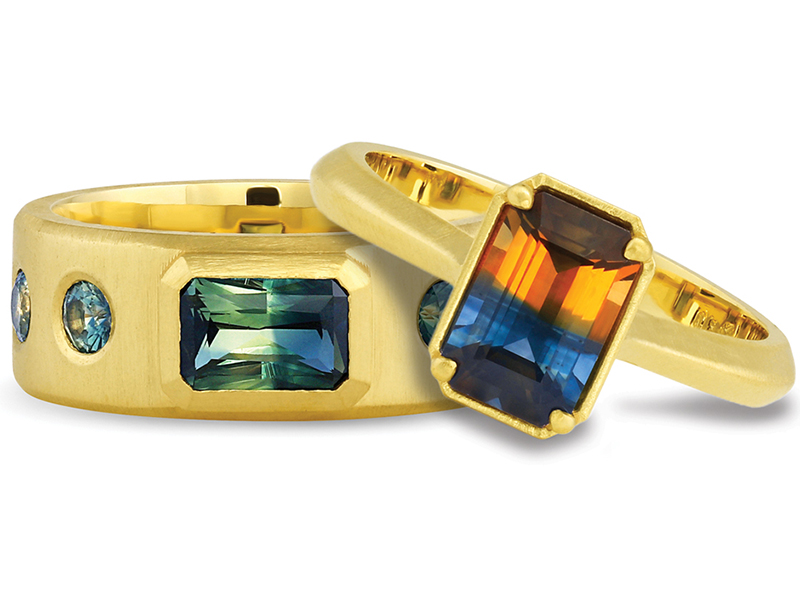
I’ve been on a journey of educating myself [about] what being responsible means since I started my business. Then, I was of the mindset that mining was bad, and I cut out as much as I could, focusing on recycled materials. I had been under the impression that recycled gold had the potential to limit new mining and its environmental impacts, something I now know isn’t the case. I’ve begun to shift more focus onto Fairmined materials, and some of my clients seek me out specifically because of it. The appeal for me is the human rights impact, and the fact that the benefits of the resource are able to stay in the community that mines the resource.
More recently, I’ve been switching the way that I’m designing to focus more on pieces that are fully custom, in an effort to limit overproduction. When designing collections, there will always be a few pieces that are left over or didn’t sell as well, and I started thinking about the resources that went into making those pieces that might be scrapped for parts. I want to limit that side of overproduction. I really only want to invest the time, energy, and resources into pieces that are guaranteed to have a home or that the person will really love and treasure for a long time.
Why is being responsible important to you?
It’s about taking action. A lot of jewelry is an expression of some kind of love. It extends to the Earth that gave us these mind-blowing materials to work with, and everyone who did work along the way to bring out the magic in those materials.
What challenges have you faced?
Early on there was a lack of access to information. It was hard to determine what types of materials actually are or could even be considered responsible, where to find materials, what types of questions to ask suppliers, or what terms like recycled mean in the context of precious metals and stones. Coming from the fair fashion community as someone who was new to the industry, I had the desire to learn more, but there was a disconnect between the information available and with the people on the ground.
What steps would you like to see the industry take toward becoming more responsible?
One thing I would like to see is greater clarity around what some of the terms mean. Having one definition of recycled would make it easier to explain what it really means. What does responsible mean? What does ethical mean? What does sustainable mean in an industry that uses finite resources? This is why people have trust issues with the jewelry industry. Being open and having clarity prioritizing transparency is what usually earns a client’s trust. It’s not by having really creative definitions that don’t mean what people think they mean.
How have your responsible practices affected your business?
It’s one of the main reasons people seek me out. Over the years I have focused a lot on my writing and social media content around education and helping my clients shop their values. They trust me that I’m going to guide them through this in a no BS way. Even throughout the pandemic, I had a sizable waitlist of clients. People are willing to wait because they trust me and want to work with me.