All That Glitters Can Do Good: Diamonds for Peace
All That Glitters Can Do Good
Reclaiming Diamonds, Restoring Communities
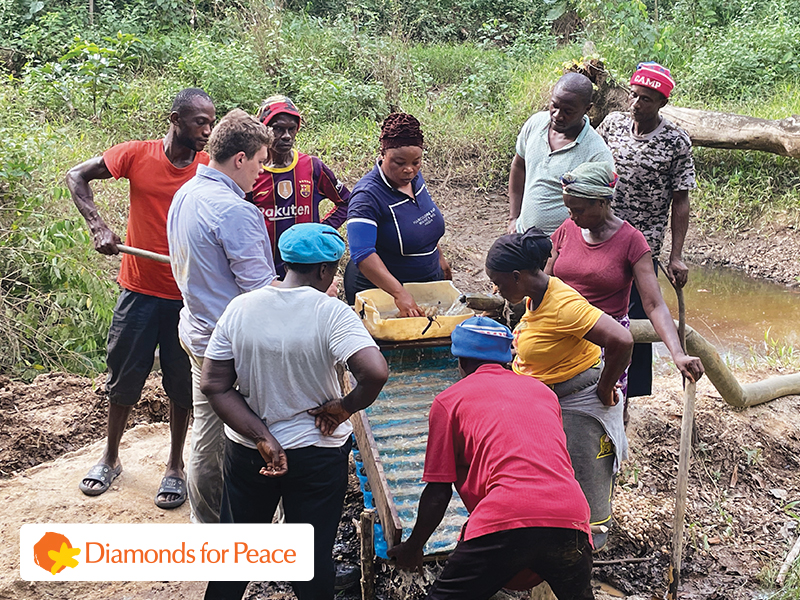
Diamonds have long symbolized love and commitment, yet the journey they take from mine to market often tells a different story—one of poverty, exploitation, and environmental degradation. While efforts to improve responsible sourcing in large-scale diamond mining have gained traction, artisanal and small-scale miners remain largely overlooked, despite accounting for roughly 25 percent of the world’s diamond supply, according to the World Bank.
There’s where Diamonds for Peace (DFP) comes in. Founded in 2014 by DFP’s executive director, Chie Murakami, the nonprofit is working to improve working conditions, promote fair wages, and introduce ethical and environmental best practices to artisanal diamond mining communities in Liberia.
“We started as a volunteer group, but I had been thinking about it for years,” explains Murakami. “When I got engaged, I wanted to learn more about diamonds. I assumed I would find beautiful stories, but instead, I found conflicts, child labor, and exploitation. It was shocking.”
Murakami first traveled to Sierra Leone in 2012 to explore ways to get involved. But she found the region already saturated. “The officials were well-connected, and there wasn’t much room for another group,” she explains. In contrast, a trusted contact in Liberia introduced her to local mining communities and key government officials. After meeting the country’s minister of mines—who was developing a policy to organize miners into cooperatives, a key step toward fair trade—she saw a path forward. “If felt like the right place to make a difference.”
With a background in international development, Murakami saw an opportunity to apply fair trade principles to diamond mining, much like what had already been done for coffee and cocoa. Today, Diamonds for Peace is working with miners, diggers, and their families to break the cycle of poverty and create a more ethical diamond trade.
Challenging Superstitions & Breaking Cycles
One of the biggest hurdles in improving artisanal diamond mining in Liberia isn’t just financial—it’s cultural. Many miners lack accurate information about diamonds, believing long-held superstitions that guide their mining practices.
“When we first arrived, many miners didn’t even know diamonds were used in jewelry,” Murakami recalls. “They believed diamonds have magical powers so they can fly airplanes. Some believed diamonds could move on their own so there was no way to tell where diamonds were deposited.”
These misconceptions led to inefficient and destructive mining practices, with miners digging at random locations rather than using scientific prospecting methods to locate diamonds. DFP is working to change that narrative through education and hands-on training, helping miners recognize where to dig for diamonds efficiently, which not only increases success rates but also reduces unnecessary environmental damage. Techniques include observing the terrain to identify paleo river flows where diamonds may have been transported by rivers and starting small with test holes instead of large-scale excavation.
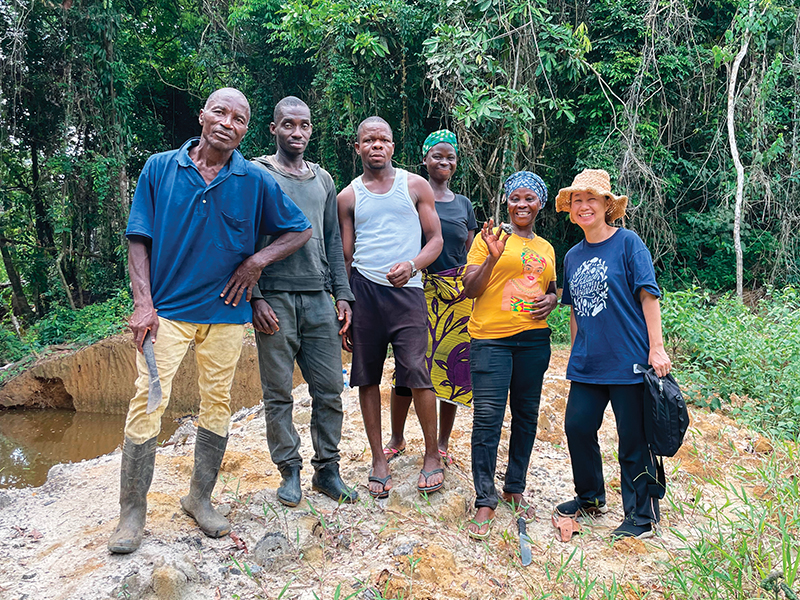
A fairer diamond trade starts on the ground—where miners are learning new skills, reclaiming old land, and reshaping the future of responsible sourcing one stone at a time.
However, breaking old habits takes time. “Not everyone believes what we say right away,” admits Murakami. “But over time, more miners are starting to adopt responsible practices, and that’s a big step forward.”
At the same time, economic hardship drives miners to work under exploitative conditions. Most lack the funds to purchase mining tools, so they rely on middlemen who provide equipment and food in exchange for diamonds at unfairly low prices. This system leaves miners with little to no profit, forcing them to continue working under exploitative conditions and preventing them from ever gaining financial independence.
To break this cycle, DFP has introduced alternative income sources, including beekeeping and fish farming, allowing miners to generate income outside of diamond mining.
“By having a side business, miners don’t have to rely on supporters,” says Murakami. “They can fund their own mining activities, negotiate better prices for their diamonds, and become financially independent.”
The program is already seeing success. In one community, miners have established three fishponds, while others have begun growing fruit trees and vegetables through agroforestry projects.
These initiatives do more than just provide financial stability—they also offer environmental benefits. Artisanal mining leaves a lasting mark in the land. Once a site is exhausted, miners often abandon it, leaving behind large pits filled with stagnant water that become breeding grounds for mosquitos, increasing the risk of malaria and rendering the land unusable for farming.
Unfortunately, asking miners to reclaim land without incentives is a tough sell, says Murakami. That’s why DFP has focused on creating financial benefits for conservation efforts. The introduction of beekeeping is a perfect example: By giving miners a new source of income tied to forest preservation, they now have a reason to protect the land rather than degrade it.
Beyond environmental work, DFP has also focused on improving community infrastructure. In one Liberian village, sanitation was a major issue due to a lack of toilets, leading to widespread open defecation. With the organization’s help, the community built new public toilets, providing cleaner, safer conditions for 400 people. The organization also helped to launch a community-wide trash collection effort.
By addressing economic, environmental, and public health concerns together, DFP is not just improving mining conditions, but it’s also helping build more resilient, self-sufficient communities.
From Informal Workers to Organized Cooperatives
Another key focus for DFP is helping miners formalize their work. Most artisanal miners in Liberia operate without licenses, making them vulnerable to exploitation, legal issues, and financial instability. To address this, DFP has helped miners form cooperatives, allowing them to obtain mining licenses and negotiate fairer deals, pool resources for better tools and safety equipment, hold regular meetings to discuss community needs, and establish transparent financial practices.
Women, who are often excluded from leadership roles in mining communities, have also been encouraged to participate in cooperatives.
“In some areas, women don’t always have access to mining licenses, finance, or protective equipment,” says Murakami. “We’re working to change that by helping women enter leadership positions and ensuring they have the same opportunities as men.”
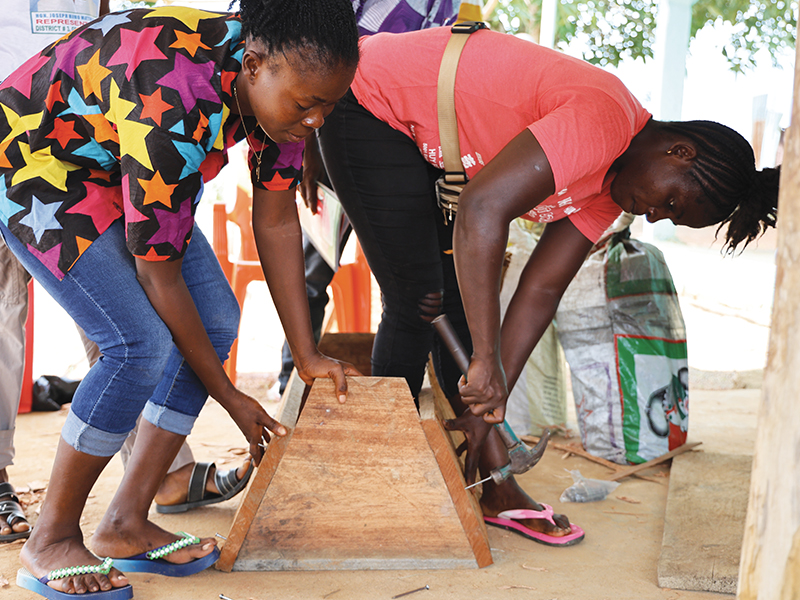
By helping miners launch side businesses such as beekeeping, DFP empowers them to afford better tools while also protecting the land that sustains them.
Education has also played a major role in shifting power dynamics. In 2022, DFP conducted rough-diamond grading workshops in 17 communities, reaching more than 2,000 miners. Understanding how to assess a diamond’s value gives miners leverage when negotiating prices, reducing the risk of exploitation.
“If miners don’t know how to evaluate their own diamonds, they can’t fight for fair pay,” says Murakami. “By giving them this knowledge, we’ve giving them the power to demand better treatment.”
Building a Fairer Diamond Supply Chain
Despite its efforts, DFP still faces one of its biggest challenges: artisanal miners have little to no access to ethical buyers. Currently, Liberia has only three licensed diamond exporters, all of whom have a history of exploiting miners. As a result, many miners are reluctant to enter the formal market.
DFP is working to change that by establishing a traceable and accountable diamond supply chain. Its long-term goal is to connect Liberian diamond cooperatives with international ethical buyers, ensuring that consumers can purchase diamonds that directly support artisanal miners and their communities.
While this sourcing program is still in development, Murakami emphasizes that jewelers and retailers have a crucial role to play.
“Jewelers talk directly to customers, and they have the power to educate them about responsible sourcing,” she says. “Most consumers don’t ask where their diamonds come from. If jewelers encourage those conversations, we can create demand for ethically mined diamonds.”
As Diamonds for Peace continues its work, change won’t happen overnight. Shifting long-held beliefs, improving working conditions, and creating a fair and transparent diamond trade requires time, education, and industry collaboration. However, the progress in Liberia shows that change is possible.
For those looking to further these efforts, Murakami’s advice is simple: ask questions.
“Suppliers may not always disclose negative aspects of their sourcing,” she says. “But by asking many questions, jewelers can better understand where their diamonds are coming from and make informed decisions.”
For jewelry makers and designers, this presents an opportunity—not only to source diamonds more ethically, but also to be part of the movement that ensures these gemstones truly symbolize love, fairness, and peace.