All That Glitters Can Do Good: PlanetGOLD
All That Glitters Can Do Good
The Future of Gold Is Mercury Free
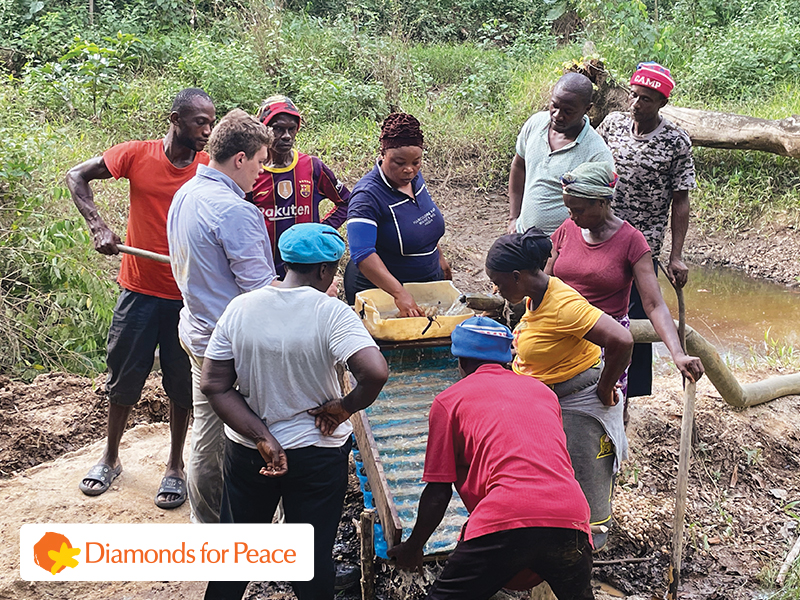
For centuries, artisanal and small-scale gold miners have relied on mercury to extract gold from ore. The toxic practice involves adding mercury to gold-containing ore, then heating the resulting mixture to vaporize the mercury and leave behind only the precious metal. Mercury exposure can cause severe health problems, from neurological damage to developmental disorders in children. And because mercury never breaks down, it accumulates in the environment, contaminating air, water, and soil for generations.
With an estimated 10 to 20 million miners—including 4 to 5 million women and children, based on data from the Global Mercury Project, the Delve Database, and academic research—working in the artisanal and small-scale gold mining (ASGM) sector, mercury pollution has become a global crisis. But banning mercury outright isn’t a practical solution. For many small-scale miners, mercury is not just a tool, it’s an economic necessity. The process is cheap, easy to use, and well understood, making it an attractive option for those with limited resources.
The planetGOLD initiative is tackling this issue head-on. Launched in 2018, the program is funded by the Global Environmental Facility (thegef.org) and led by the United Nations Environment Programme (unep.org), with additional leadership provided by the United Nations Development Programme, the United National Industrial Development Organization, and Conservation International. Through partnerships with governments, private sector stakeholders, and mining communities in more than 20 countries, planetGOLD is working to eliminate mercury use in ASGM while improving the lives of miners and ensuring a cleaner supply chain.
“Miners can’t be expected to abandon their livelihoods without viable, profitable alternatives,” says Susan Keane, global coordinator for the planetGOLD program. “Criminalizing mercury use risks pushing miners further into the shadows, creating thriving black markets that are even harder to regulate.” Instead, planetGOLD works with governments to encourage gradual, structured transitions to mercury-free mining rather than imposing sweeping bans that could devastate communities economically.
That’s why planetGOLD is structured to help countries meet their commitments under the Minamata Convention on Mercury, a global treaty designed to reduce mercury pollution. The convention, which went into force in 2017, requires signatory nations to develop action plans to eliminate mercury use in ASGM while ensuring miners are not left without economic opportunities.
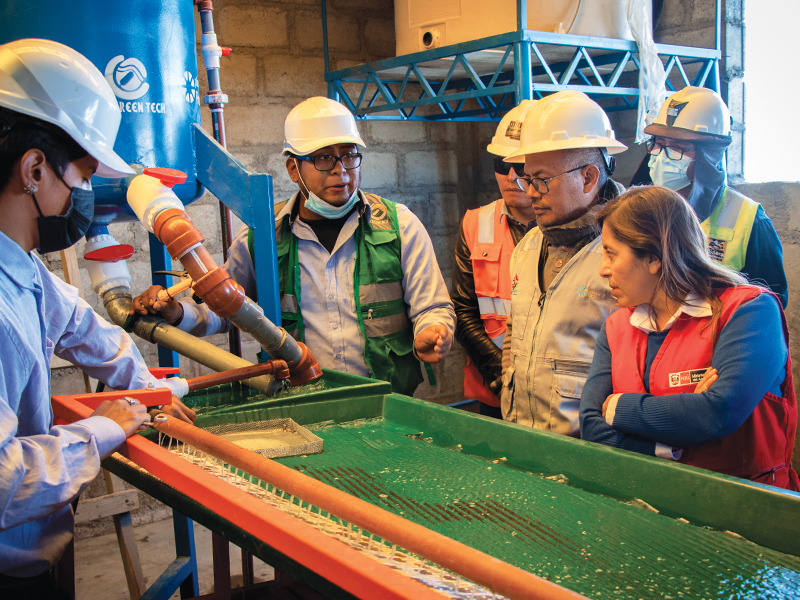
With tools like shaking tables, miners are embracing mercury-free practices that reduce health risks and pave the way for a more responsible future in gold mining.
“Our work aligns with the Minamata Convention,” says Keane. “We’re not just introducing new technologies—we’re helping governments put in place policies that allow miners to transition away from mercury in a way that is both practical and environmentally and socially responsible.”
One of the biggest barriers to reducing mercury use is the lack of access to alternative mining technologies. Many small-scale miners are unaware of safer processing methods, and even those who are aware often can’t afford the tens of thousands of dollars required to purchase the necessary equipment. In addition, safer practices also involve investments in worker training, protective gear, and safe infrastructure—costs that quickly add up for resource-limited mining communities.
The planetGOLD program is helping miners to overcome this hurdle by facilitating financing options through partnerships with banks and investors. “If miners can secure the funds to buy mercury-free tools, they can increase productivity, extract more gold, and see the benefits quickly,” explains Keane. “But without that initial support, it’s difficult for them to make the transition.”
A Two-Pronged Approach
Since there is no one-size-fits-all solution when it comes to eliminating mercury from small-scale gold processing, planetGOLD focuses on two primary approaches.
Gravity-Based Processing
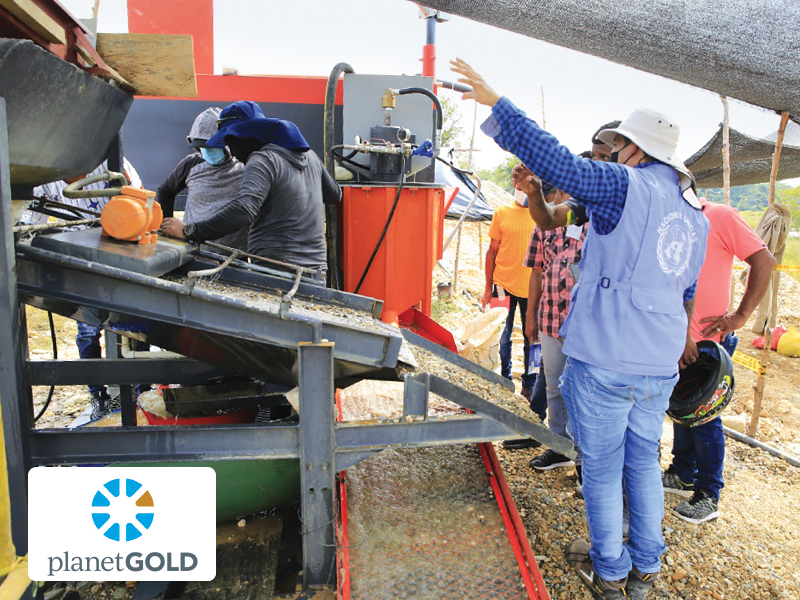
This method relies on sluices, shaking tables, and centrifuges to separate gold from ore without mercury. Because gold is much heavier than other minerals, it naturally settles during processing. However, effective gravity separation requires miners to process their ore properly, and many need additional training to use the equipment efficiently.
Chemical Leaching (Cynaide-Based Methods)
Though cyanide is often controversial, it is far more efficient and manageable than mercury when properly regulated. Many small-scale miners already use cyanide, and planetGOLD works to ensure its safe handling. “People clutch their pearls when we talk about cyanide,” Keane admits, “but with proper training, it can be used far more safely and effectively than mercury.”
In some cases, miners don’t have to process their own gold at all. In Ecuador and Peru, planetGOLD has helped miners sell their ore to professional processing plants instead of extracting the gold themselves. This model, known as toll milling, not only eliminates the need for mercury, but also ensures a higher yield of gold using state-of-the-art equipment. However, Keane notes that trust remains an issue.
“Miners often don’t trust that they’ll get a fair price from a processor,” she says. “We’ve worked on ways to build confidence, like split-sample testing, where miners and processors compare results to ensure transparency.”
But new processing methods alone aren’t enough. Even miners who transition away from mercury often struggle to access formal gold markets. Many are forced to sell to middlemen who offer quick but unfair payments, leaving them with little financial stability. Meanwhile, jewelry makers and retailers who want to support responsible gold sourcing often find it difficult to trace gold back to responsible ASGM operations.
planetGOLD is working to bridge this gap by connecting miners with buyers who are willing to support ethical sourcing efforts. Some jewelers have partnered directly with mining cooperatives, helping them to formalize their businesses and enter the formal economy.
The Road Ahead
As the first phase of planetGOLD’s work wraps up, the program is expanding into a second phase, with operations that could expand to the nearly 40 countries that have made commitments under Minamata to address mercury from ASGM. Moving forward, the initiative will focus on scaling up jurisdictional approaches that support integrated planning at the local or regional level; expanding financing options to ensure miners have access to affordable loans; and strengthening supply chain connections between small-scale miners and ethical buyers.
The ultimate goal? A future where mercury-free gold mining is the norm, not the exception. While progress has been made, Keane emphasizes that the jewelry industry still has a long way to go in supporting responsibly mined gold. Beyond purchasing, she urges jewelers to educate their customers and raise awareness about the impact of mercury in gold mining.
“Most people don’t think about where their gold comes from,” she says. “Jewelers are in a unique position to change that.”