

Pulse-arc and Laser Welders: How They Work
How the Welders Work
The difference between pulse-arc and laser welding technologies
Need help choosing between pulse-arc and laser welding technology? Click here for tips and advice on picking the best system to meet your needs.
When deciding on the best type of welding system for your business, you should first get to know the two technologies so you can understand how they work.
Pulse-arc welders use electricity to weld. Most systems have a pen-type tool that contains a tungsten electrode. That electrode is the negative lead. An alligator clip that holds the jewelry item is the positive lead. To use, you need to touch the electrode tip to the spot that you want to weld. Once the electrode makes contact, it automatically retreats into the pen. As the electrode retreats, an arc forms.
“It’s not a spark like what you get whenever you have static electricity,” explains John Sartin, a self-professed “pulse-arc guy” and member of the Tech Team at Rio Grande in Albuquerque, New Mexico. The electrode, he says, “targets that electricity and, in doing so, creates plasma, which then melts the metal that it’s pointed at.”
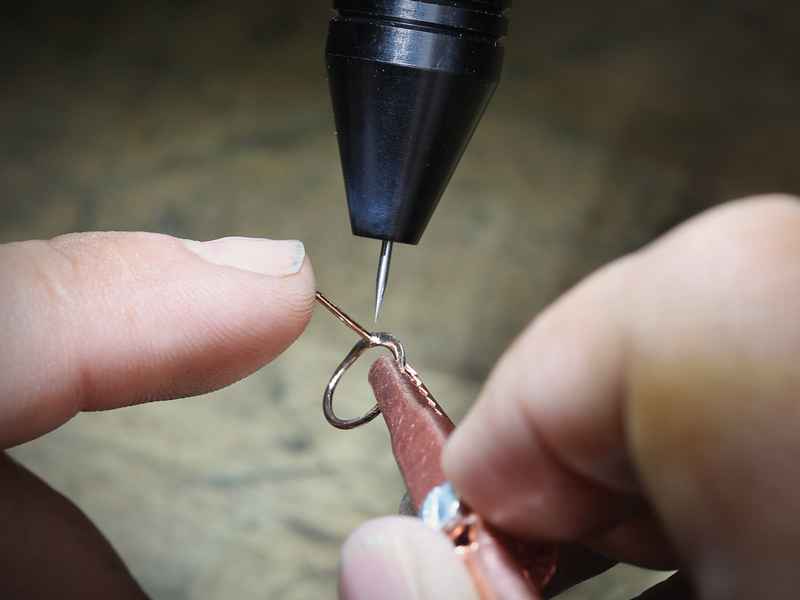
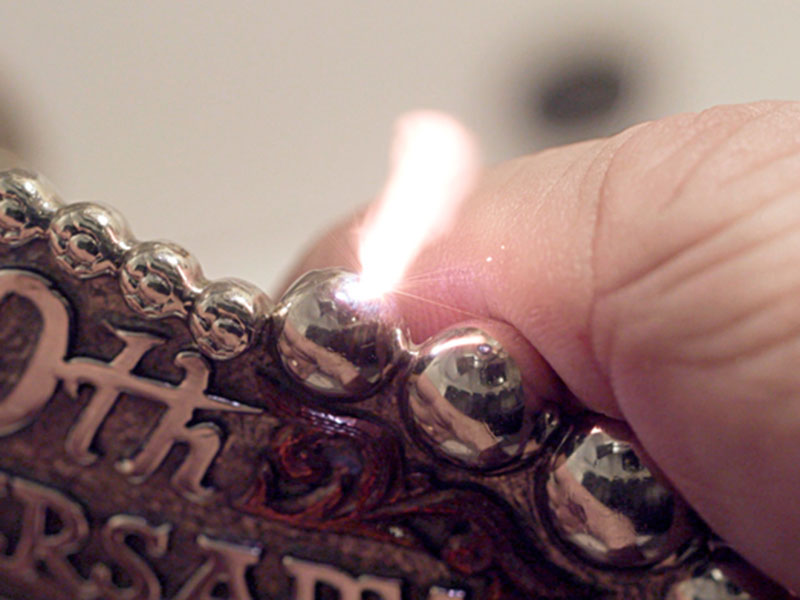
A pulse-arc welder (left) and a laser welder (right).
Instead of electricity, laser welders use light to generate the heat needed to weld metals. Inside of a laser sits a flash lamp, a laser rod, an yttrium aluminum garnet (YAG), and a couple of mirrors. The user dials in the parameters for the piece being welded, which tells the flash lamp to flash, which sends a specific wavelength of light into the laser rod. The light is captured, straightened, and then sent to the metal to be welded.
“Basically, you’re taking one wavelength of light and focusing it to a very tiny pinpoint of light on the metal, which is strong enough to melt the metal,” explains Phillip Scott, a member of Rio Grande’s technical support team and resident “Laser Dude.”