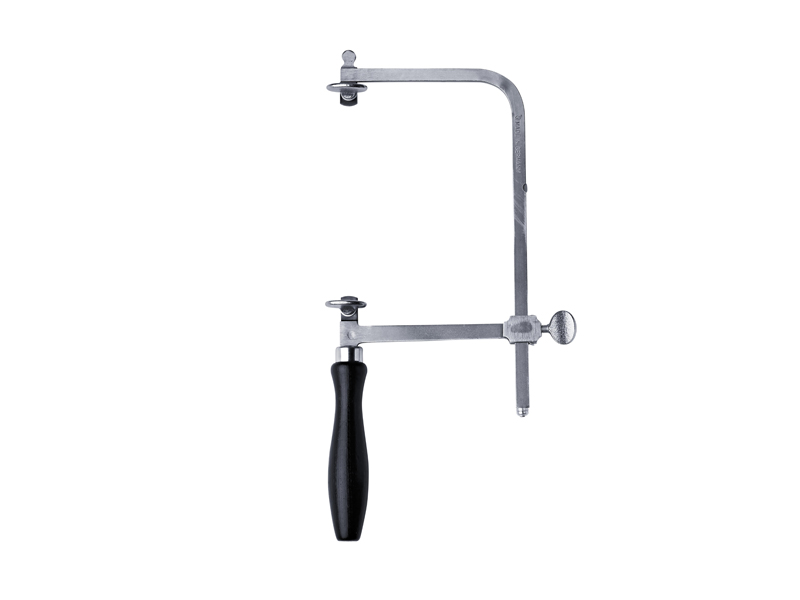
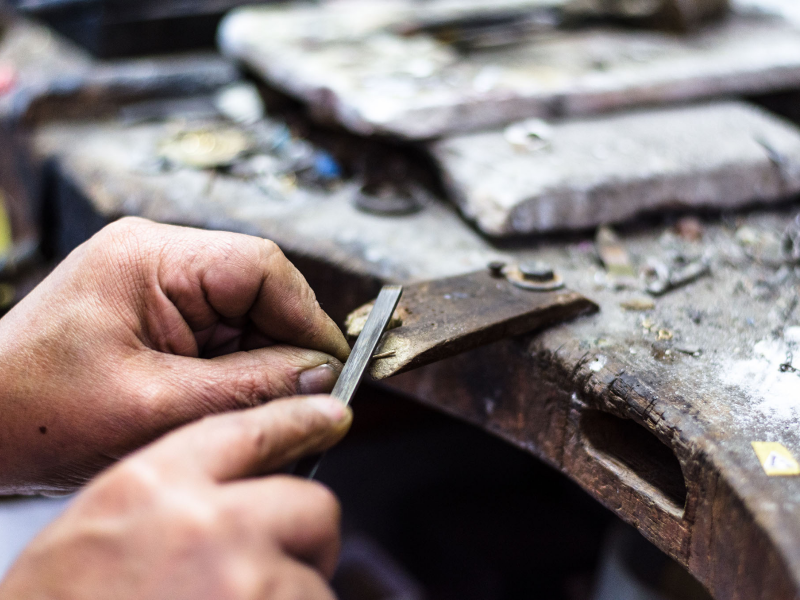
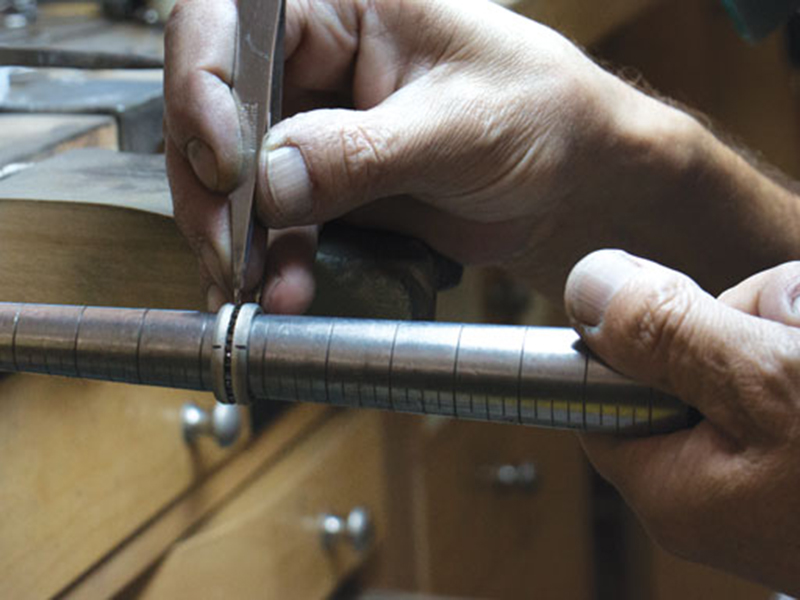
This saw frame has remained unchanged in form and function for nearly 2,000 years. It can be adjusted to hold different types of blades for varying materials and tasks. For a blade to work properly, the frame should be held vertically to the sawn surface. Sawing motion should start at the elbow, not the wrist, to provide a long, smooth stroke. A light grip works best, allowing the blade to do the work.
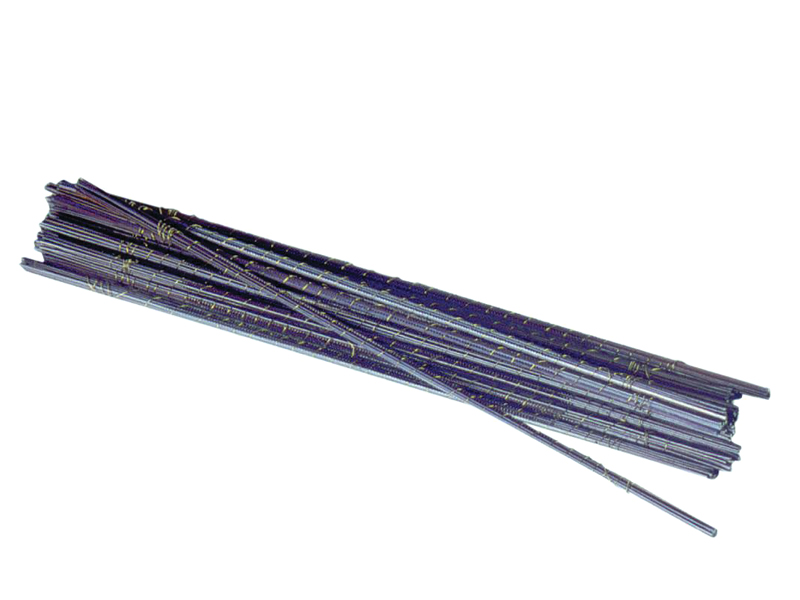
Saw Blades for Metal
Metal saw blades range in size from a thick #8 down to a very thin #8/0. The most common size used is a #2/0. Choose a saw blade fine enough to have at least two teeth within the thickness of the metal being sawn.
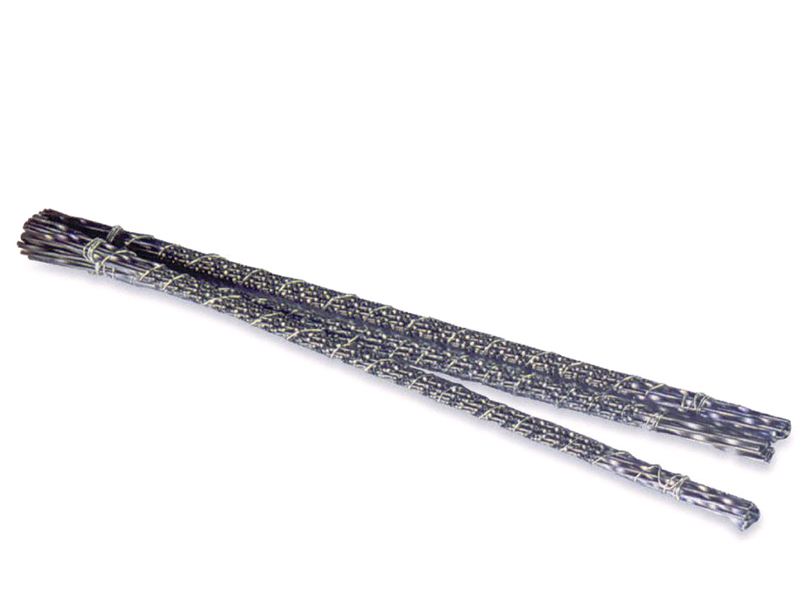
Saw Blades for Wax
Used for cutting hard carving wax (which has a high plastic content), the wax saw blades are spiraled to shed wax residue. Like those for metal, saw blades for wax come in different widths, but even the finest wax blade will cut a wide kerf in the wax.
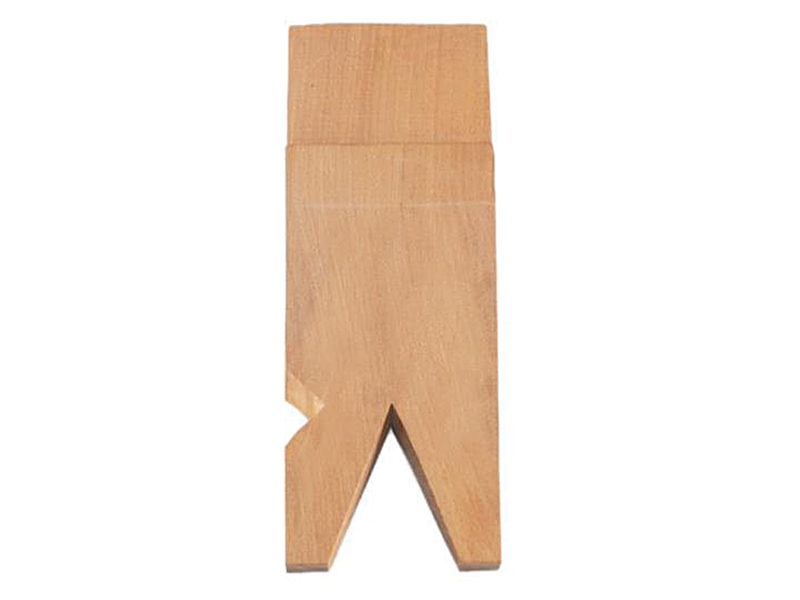
Bench Pin
When attached to the front of a workbench, this pin becomes the focal point where work is carried out and materials are processed.
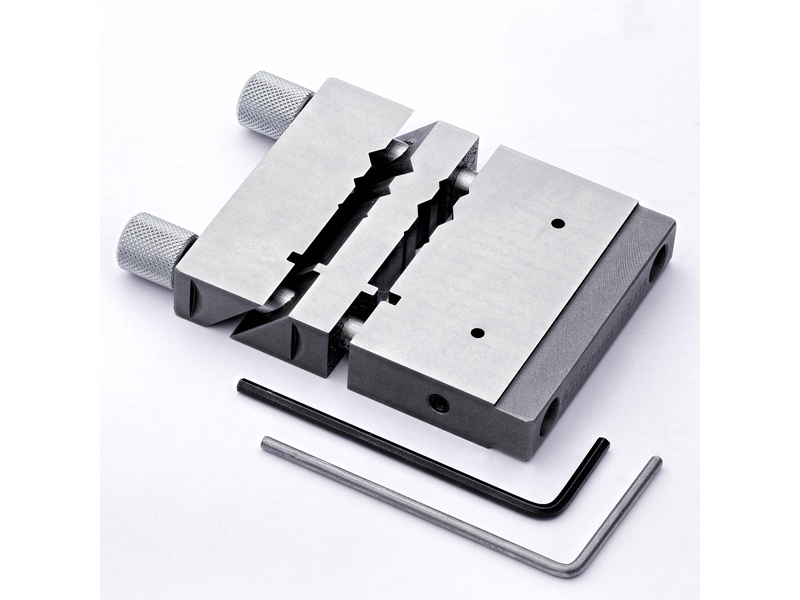
Miter Jig (aka Cutting Vise)
Holds sheet, wire, or tubing accurately at 45 degree, 60 degree, or 90 degree angle for filing or cutting. Click here to see a related video.
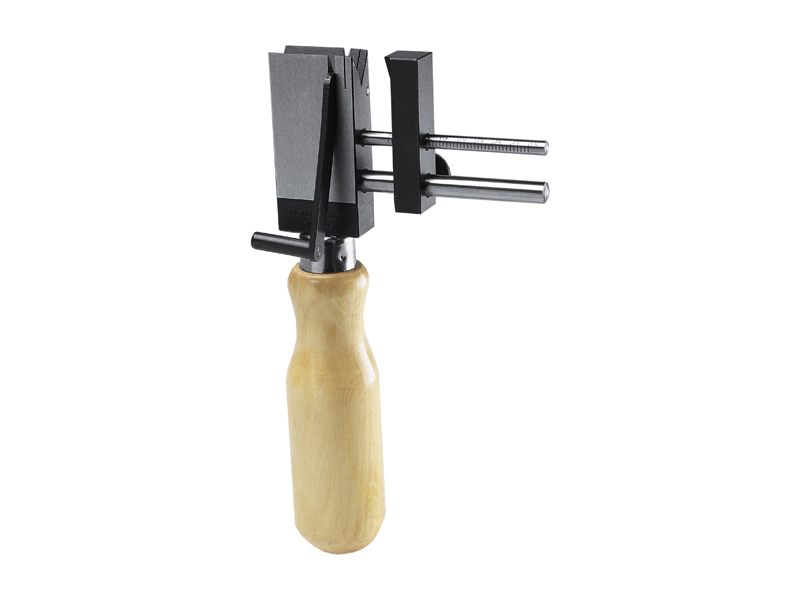
Tube-Cutting Jig
Holds tubing at exact lengths while the jeweler is sawing.
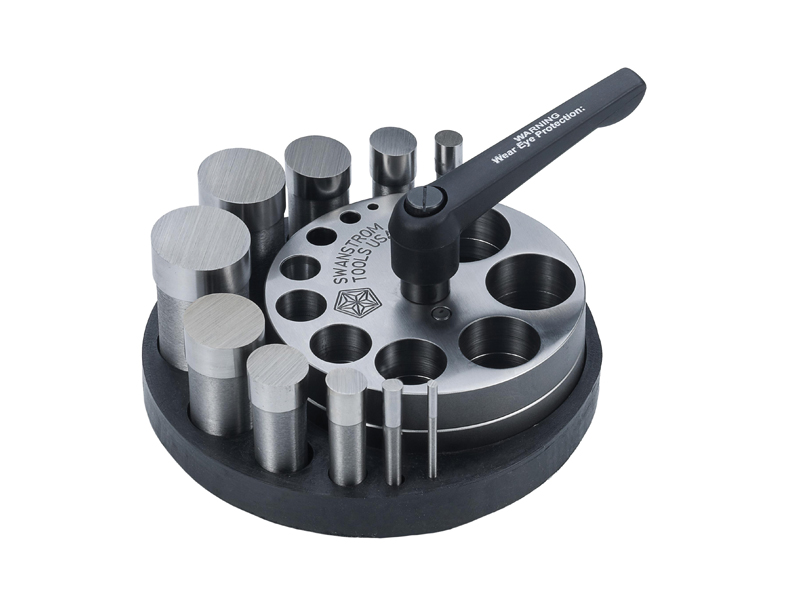
Disc or Circle Cutter
Cuts circles and disks of non-ferrous sheet metals.
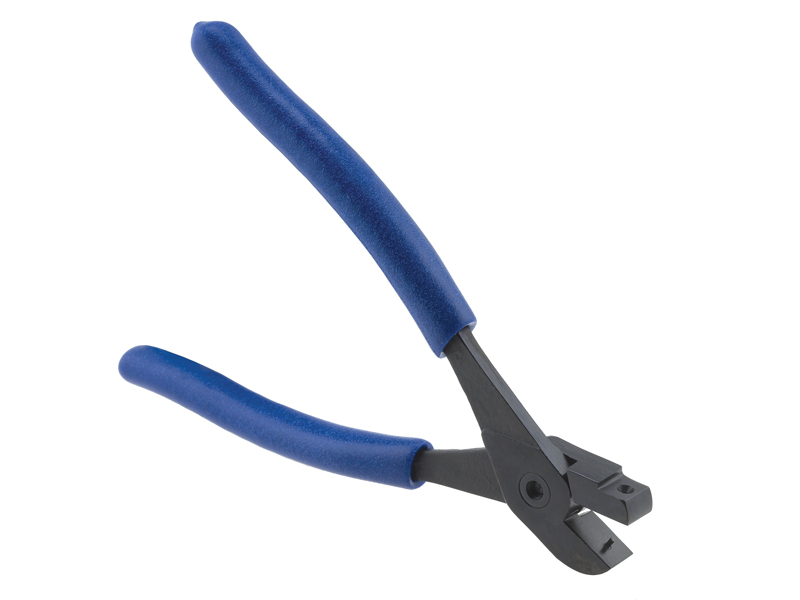
Hole Punch
This tool will punch an 18- to 16-gauge hole in metal. It can accommodate metals that are up to 18-gauge (0.04 inch) in thickness. Pliers format.
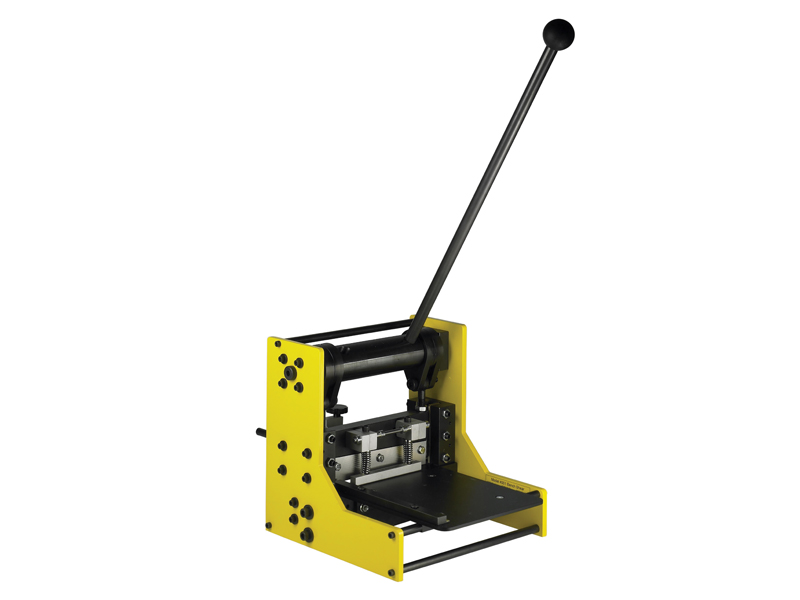
Guillotine Shear
Provides a clean, straight cut in metal sheet, creating smaller pieces that will be further cut or shaped. Many shears have a non-marring “hold-down bar” that secures the material to be cut, keeping fingers out of danger.
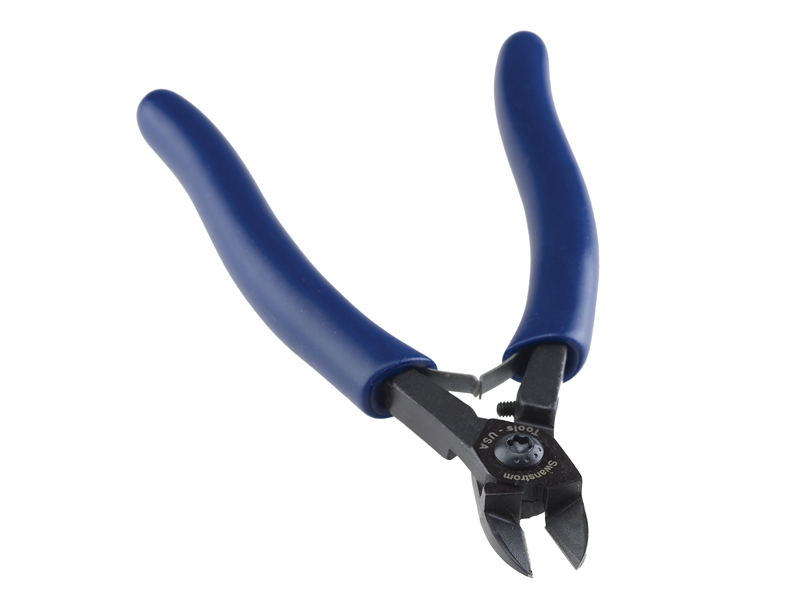
Flush Cutters (aka Side Cutters)
Designed to cut wire. Their angled edges forcefully indent and wedge apart the wire, leaving mild evidence of the cut. Pliers format.
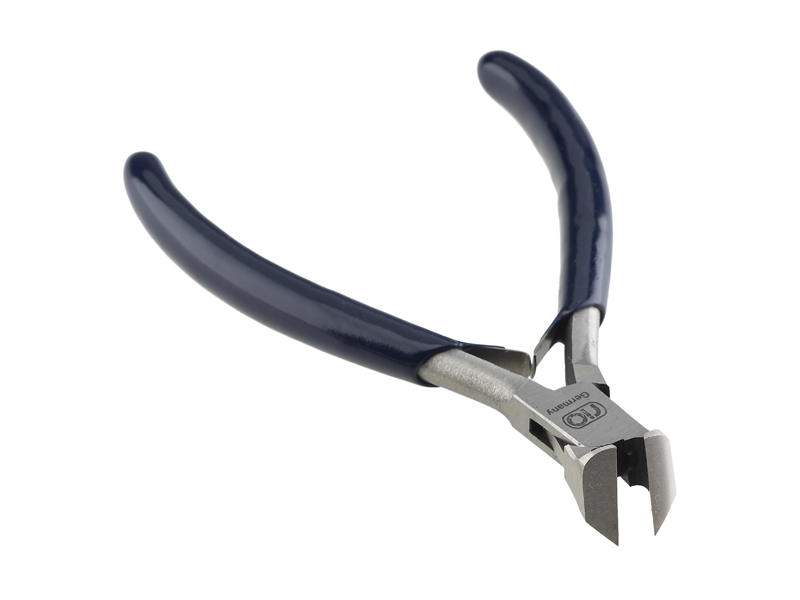
End Cutters
This hand tool has its cutting blade across the top of the jaw, perpendicular to the handle. It enables closer cuts to the metal’s surface, with less material protruding from the cut. Pliers format.
To provide the best experiences, we use technologies like cookies to store and/or access device information. Consenting to these technologies will allow us to process data such as browsing behavior or unique IDs on this site. Not consenting or withdrawing consent, may adversely affect certain features and functions.
Functional
Always active
The technical storage or access is strictly necessary for the legitimate purpose of enabling the use of a specific service explicitly requested by the subscriber or user, or for the sole purpose of carrying out the transmission of a communication over an electronic communications network.
Preferences
The technical storage or access is necessary for the legitimate purpose of storing preferences that are not requested by the subscriber or user.
Statistics
The technical storage or access that is used exclusively for statistical purposes.The technical storage or access that is used exclusively for anonymous statistical purposes. Without a subpoena, voluntary compliance on the part of your Internet Service Provider, or additional records from a third party, information stored or retrieved for this purpose alone cannot usually be used to identify you.
Marketing
The technical storage or access is required to create user profiles to send advertising, or to track the user on a website or across several websites for similar marketing purposes.
A Fresh Look. A New Website. A Stronger Membership.
We’re excited to unveil Jewelers of America’s refreshed brand and redesigned website, reflecting our growing community and continued commitment to the jewelry industry.
With JA and MJSA now united under one membership, we’re bringing together more resources, expertise and connections to support every facet of the jewelry industry.
Take a look around to see all that JA offers — members can login to access member-only content like benefits, the Knowledge Vault and Advocacy resources.
Questions? Contact us at members@jewelers.org or call/text (800) 223-0673.