

career pathways
Skills Spotlight
Highlighting non-traditional jewelry jobs.
When you think of a career in the jewelry industry, you probably picture traditional jobs like retail jewelry sales or jewelry design and production. Those jobs are out there, but “non-traditional” industry opportunities in areas like technology, corporate social responsibility, finance and operations and education are equally important to the success of a jewelry company.
Here’s a look at some of these key skill sets and jobs.
Technology
Just about every aspect of the jewelry business has been affected by advancements in technology over the last decade. The emergence of these technologies offer new ways for companies to building brand awareness, acquire talent, and increase efficiencies. As systems and technologies are scaled to meet market demand, the entire industry is set to bring new excitement to the products, processes, and customer experiences.
Key Skills
- Familiarity with e-commerce platforms to manage online sales
- Comfortable using Point-of-Sale (POS) systems that help businesses process transactions, manage inventory and generate sales reports
- Can use Customer Relationship Management (CRM) systems that help track interactions and customer or client information that can help to build and manage these relationships
- Know how to use the data: Individuals with strong data analysis skills and experience with tools like Excel and Google Analytics are highly valued.
- Ability to use devices like smartphones to manage sales, access info on customers and stay connected with team members
Pathways
Jewelers need employees who are skilled at utilizing and maximizing technology tools and keeping up with the many changes still to come. While not everyone on staff needs to be a tech expert, having a working knowledge has come to be expected across various roles and companies are increasingly hiring those who specialize in CAD, web development and e-commerce. Tech specific jobs include:
- Jewelry E-commerce Sales & Marketing Specialist
- Jewelry Product Photographer and E-Commerce Support
- E-Commerce Coordinator
- E-Commerce Data Entry Specialist
- Manager, E-Commerce Jewelry Sales
- E-commerce Jewelry Processor
- E-commerce Fulfillment
- Website Designer/Developer
- Virtual/Remote Sales Associate
- SEO Content Writer
- Logistics
- Digital Operations Management
Salary Expectations
| TECHNOLOGY | 25th Percentile | Median | 75th Percentile |
| Average Annual Base Salary | $55,250 | $59,000 | $72,500 |
Data is from Jewelers of America’s Jewelry Industry Salary Study conducted April-June 2023 and includes data from 2022. Compensation varies based on experience, specific job responsibilities, company size and location, among other distinctions. Given these variables within a career pathway, data is presented as such: The 25th Percentile indicates 25% of the data fall below this percentile; the Median (50th Percentile) represents the middle number where 50% of answers are lower and 50% are higher; the 75th Percentile indicates 75% of the data fall below this percentile.
- Jewelry Voices
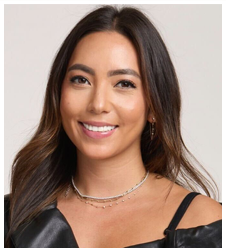
Olivia Landau
Co-Founder/ CEO, The Clear Cut
How did you get started?
I started as a blogger who wrote educational articles on the dos and don’ts when purchasing an engagement ring. While blogging I was also working at Tiffany & Co. before eventually working for a large diamond wholesaler. My husband (boyfriend at the time) and I had previously met at GIA! He went on to start a fair-trade diamond mining business in West Africa. Eventually he enrolled in business school at Columbia. While there his classmates reached out to him and asked if he “knew a guy” in the diamond industry that could help them with engagement rings. I became “the guy.” I started to post some of my designs online and quickly couples from around the world started reaching out asking if I could create their rings. In 2018 we decided to quit our jobs and commit to The Clear Cut full time. We were accepted to a Tech accelerator (Techstars) and the rest is history! Today The Clear Cut is a leading direct to consumer (DTC) diamond jewelry business.
What’s the best part of your job?
Being able to educate and inspire the next generation of diamond and jewelry professionals.
How has your job changed over the years?
When I started there was no such thing as a DTC (direct to consumer) diamond jewelry business. It was highly unusual to purchase engagement rings online and very rare to sell through social media.
At The Clear Cut, we challenge the status quo, from changing how people buy engagement rings to championing greater gender and racial equity. Education, transparency, and community are integral pillars at The Clear Cut and we are leveraging these principles to help redefine the diamond industry for women.
Corporate Social Responsibility (CSR) and Responsible Sourcing
The global nature of the jewelry supply chain means there’s a growing need for professionals with interest and expertise in responsible sourcing to help improve the lives of the people and communities worldwide who are affected by the industry. Large jewelry retailers and manufactures have staff dedicated to ensuring their companies are following national and international laws and regulations as part of their overall practices. Jewelry buyers, sales and management professionals for companies of all sizes need to stay up-to-speed on issues that can impact supply and prompt questions from business-to-business clients or the end consumer.
Key Skills
- Understanding and knowledge on issues like responsible sourcing, human rights and the environment
- Ability to communicate with various stakeholders: jewelry manufacturers and suppliers, retailers and potentially consumers and governments about issues
- Problem solvers who want to work to improve supply chains
Pathways
Given the global nature of the jewelry business and the drive from consumers toward greater transparency and responsibility from the products they buy, virtually every pathway from sales professionals to owners and executives in the industry will benefit from those with a passion and interest in responsible sourcing. Specific jobs that focus on responsible sourcing or where knowledge of sourcing issues may be required include:
- Responsible Sourcing Manager
- Sourcing Manager
- Planning Analyst for Jewelry Supply
- Supply Manager
Salary Expectations
| CSR & RESPONSIBLE SOURCING | 25th Percentile | Median | 75th Percentile |
| Average Annual Base Salary | $62,500 | $80,000 | $101,250 |
| Average Incentives/Bonuses | $750 | $5,500 | $10,000 |
Data is from Jewelers of America’s Jewelry Industry Salary Study conducted April-June 2023 and includes data from 2022. Compensation varies based on experience, specific job responsibilities, company size and location, among other distinctions. Given these variables within a career pathway, data is presented as such: The 25th Percentile indicates 25% of the data fall below this percentile; the Median (50th Percentile) represents the middle number where 50% of answers are lower and 50% are higher; the 75th Percentile indicates 75% of the data fall below this percentile.
- Jewelry Voices

Christina Miller
Founder, Consultant, Christina T. Miller Consulting
How did you get started?
I studied jewelry and metalsmithing academically earning a BFA, MFA and 1-Year certificate in jewelry from Le Arti Orafe Jewellery School in Florence, Italy. My jewelry was always in reference to nature, but during graduate school I really started exploring where the materials in my jewelry came from. This led me to co-found Ethical Metalsmiths in 2004 which I kept evolving while in a tenure track teaching position at Millersville Univ. in PA from 2006-2010. In 2015 I officially stepped down from EM to start the consultancy.
What’s the best part of your job?
Engaging with people eager to lend their skills to improving realities for others all along jewelry value chains and collaborating.
How has your job changed over the years?
So much has changed! We have standards now and alternative purchasing options! We didn’t have this in the beginning when we were raising awareness about mining issues, threats to indigenous land, pollution, and worker exploitation. Not that we have eliminated these issues, but overall, the level of awareness means that more people are working toward change.
I am honored that individuals, companies, and organizations seek out information about how to shift their practices. For me, being an artist first has meant taking a creative approach and trying to look at things systemically. Building community and raising awareness has been critical. I thrive off of building things that don’t exist yet.
Finance & Operations
Businesses on the retail and supply side of the industry need to effectively manage procedures within the business. This can include inventory, merchandising, store presentation, store systems, financial reporting, achieving profit margin goals, and other operational and strategic duties.
Manufacturers must also ensure efficient processes for sourcing, production and timely delivery of product. This includes managing metrics to evaluate efficiency throughout the company, planning and executing quarterly production schedules, including material resources, and launching and managing programs to expand business-to-business sales.
Key Skills
- Ability to understand and analyze financial data and create financial reports
- Strong understanding of accounting
- Ability to create and manage budgets and forecast for the future
- Can develop and implement strategic short and long-term goals for an organization
- For operations, understanding supply chains, production processes and inventory management is important
- Familiar with technology – such as project management software – to improve efficiencies
Pathways
Properly managing finances and operations is critical for all jewelry companies. Regardless of the pathway you’re on, it is likely you will need to plan and budget and have knowledge of key aspects of operations and workflow. In this field professionals may be responsible establishing and managing metrics to evaluate efficiency throughout the company, to lower costs while raising gross margins.
This may include maintaining inventory control to ensure accuracy in all processes and procedures relating to merchandise and finances. Jobs that emphasize financial and operational expertise include:
- Business Manager
- Buyer (Purchasing)
- Operations Manager
- Finance Manager
- Financial Analyst
- Data Analyst
- Inventory Control Manager
- Controller
- Supply Chain Manager
Salary Expectations
| FINANCE & OPERATIONS | 25th Percentile | Median | 75th Percentile |
| Average Annual Base Salary | $55,000 | $65,000 | $80,000 |
| Average Incentives/Bonuses | $875 | $3,000 | $4,750 |
Data is from Jewelers of America’s Jewelry Industry Salary Study conducted April-June 2023 and includes data from 2022. Compensation varies based on experience, specific job responsibilities, company size and location, among other distinctions. Given these variables within a career pathway, data is presented as such: The 25th Percentile indicates 25% of the data fall below this percentile; the Median (50th Percentile) represents the middle number where 50% of answers are lower and 50% are higher; the 75th Percentile indicates 75% of the data fall below this percentile.
- Jewelry Voices

Annie Doresca
Founder, Consultant, Christina T. Miller Consulting
How did you get started?
Finance was introduced to me as one of the options to research when I took an assessment in college. I was conflicted with want I wanted to major in. I knew that I loved money and a calculator. I started in the for-profit sector where I worked as an Auditor, and eventually transitioned to an investment banking firm. It was then that I realized that I wanted to work for organizations with a mission. Fast-forward, I work at Jewelers of America, a nonprofit trade association with a mission to improve consumer confidence in the jewelry industry. I have enjoyed every aspect of what I do and who I do it with.
What’s the best part of your job?
One of the aspects I find most rewarding and enjoyable about my job is working with people who are passionate about the jewelry industry. I also have the opportunity to make a tangible impact on the financial success and strategic direction of the organization.
I take great satisfaction in leveraging my financial expertise and analytical skills to drive informed decision-making.
How has your job changed over the years?
When I first started, my title was Director of Finance. I was not as involved in discussions surrounding innovation. As time evolved, I was promoted to Chief Financial Officer. I am more future focused on our impact and goals as an organization.
Education and Training
The future of the jewelry industry hinges on effectively training and educating the next generation of jewelers. Within the industry, education-focused roles take various forms, including consultants and sales trainers, instructors at esteemed institutions like GIA and professors/teachers at colleges, universities, high schools and trade/vocational schools. Even for the youngest learners, jewelry classes are readily found, spanning from community centers to school enrichment programs and camps. Working in education and training can offer the opportunity to educate those around you and impart wisdom that can help individuals advance in their careers and get the training they need to succeed. On the professional level, training is critical in ensuring that jewelers keep pace with change – technology to research and everything in-between.
Key Skills
- Ability to communicate information (verbal and written) effectively – both in teaching various concepts in a way that is understandable and providing valuable feedback to trainees and/or students
- Patience and understanding of different backgrounds and learning styles students may have
- Ability to create and manage lesson plans and training materials
- Good organizers who can manage multiple students and assignments and can create a well-organized and positive learning environment
- Flexibility and being able to adapt to changing circumstances
- Ability to incorporate technology into the learning process
Pathways
Trainers and educators can find a place at all levels within the jewelry trade, whether their focus is teaching others or becomes a key component of their job. For example, a store or sales manager must train new employees and focus on ensuring all staff are consistently learning and growing on the job. Jewelry education doesn’t stop when someone earns a credential or gets a diploma – it is ongoing and critical to success. Jobs that emphasize educational expertise include:
- Jewelry Design Instructor
- Jewelry Manufacturing Instructor
- Gemology Instructor
- Manager of Learning and Development
- Sales and Product Trainer
- Talent Development Specialist
- Digital Sales Training
- Training Manager
- Talent and Culture Manager
- Jewelry Voices
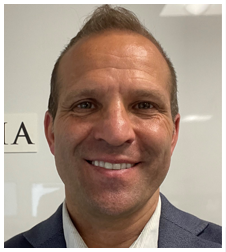
Carson Lee
Sr. Gemology Instructor, GIA
How did you get started?
My High School offered Beginning and Advanced Jewelry classes. Myself and two of my friends were the only ones to sign up for Beginning Jewelry, so we sat in the back of the Art class and learned basic hand fabrication and enameling. The following year I was the only student to sign up for the Advanced Jewelry class and I learned wax hand carving and lost wax casting. I spent most lunch hours alone centrifugal casting silver with an Oxy/Acetylene torch! (Not sure that would be allowed today!) I was drawn to the creative nature of the manufacturing process and the hands-on, detailed nature of jewelry making.
What’s the best part of your job?
As an instructor, I love igniting passion through education in a room where I am surrounded by people who care as much as I do about beautiful gems and the jewelry industry.
How has your job changed over the years?
This industry, like most others, is ever changing and evolving. I have heard it said that, on average, a person will change careers 7 times throughout their life. My experience supports this thought. My first passion was for working as a bench jeweler, but my career has shifted multiple times. From a Jewelry Store owner, Jewelry Designer to an independent buyer to a Sales Associate to an Appraiser to Gemology Instructor. One resounding benefit is that my education and experience supported each of these major career path changes! I think that is quite unique to this industry. You can completely change your focus and your daily tasks, but all of your education still applies!