

career pathways
Jewelry Designer
If you have a passion for style and fashion as well as skills in drawing, painting, or graphic design, a career in jewelry design could be a great fit for you.
Designers may work with independent jewelers, retail stores, and private clients to create one-of-a-kind jewelry. They may also work for well-known, large-scale manufacturers, working with existing concepts/models to create line expansions of the company’s collections. Some designers go on to start businesses, selling designer jewelry under their own names.
It is a unique and challenging occupation and may be of interest to creatives.
Key Skills
- Artistic and creative
- Have an eye for design and understanding of its principles
- Detail oriented
- Comfortable working with Computer-Aided Design (CAD) programs, like Matrix and Rhino.
- Comfortable meeting new people and can present themselves and their work in a positive light
- Interest in things with interesting aesthetics including art, gems, or vintage clothing
- Interest in international fashion and celebrity style trends
- Time management and organizational skills to meet deadlines are equally important parts of a successful design career
- Effective communication skills to convey design ideas and work with clients and vendors
- Understanding of fashion and jewelry trends to ensure your designs remain relevant and appealing to customers
Possible Job Titles in this Pathway
- Jewelry Designer
- Assistant or Associate Designer
- Product Design & Development
- Technical Drawing Design
- CAD/CAM Jewelry Design & Prototyping
- Hand Rendering
Salary Expectations
| JEWELRY DESIGNER | 25th Percentile | Median | 75th Percentile |
| Average Annual Base Salary | $57,500 | $65,000 | $77,500 |
| Average Incentives/Bonuses | $100 | $2,500 | $5,000 |
Data is from Jewelers of America’s Jewelry Industry Salary Study conducted April-June 2023 and includes data from 2022. Compensation varies based on experience, specific job responsibilities, company size and location, among other distinctions. Given these variables within a career pathway, data is presented as such: The 25th Percentile indicates 25% of the data fall below this percentile; the Median (50th Percentile) represents the middle number where 50% of answers are lower and 50% are higher; the 75th Percentile indicates 75% of the data fall below this percentile.
Experience & Training
- Previous experience in sales, customer service, or fashion merchandising, especially in jewelry, accessories, art, or interior design.
- Education in art or design and formal training in jewelry design and CAD/CAM; bench experience is helpful.
- Gemology courses will introduce you to gems and their unique characteristics. Classes in business, marketing, and entrepreneurship are invaluable for running your own business.
- As a designer starting out, getting a job that allows you to learn from more experienced designers and to work directly with customers will develop your own skills.
Related Education or Certification
On the Job
In the field of jewelry design, professionals use creative thinking and brainstorming to create sketches, 3-D images and product prototypes of assorted styles and types of jewelry. Most designers bring a love of style as well as artistic or engineering ability to their work. Some hands-on experience making jewelry helps a designer understand how jewelry works: how it is put together, how the stones are set, the clasps attached and so on. Good hand-eye coordination, computer skills, and drafting ability are important, as are an understanding of color and some gemological training. Communication skills are also critical, particularly for designers working directly with retail customers. Time management and basic business skills will come in handy, as will experience supervising the work of others. Increasingly, designers need to get involved in marketing and social media, so the ability to photograph and write about your work will be helpful.
Turning inspiration into jewelry is the greatest challenge a designer faces. When they are successful, they see their unique style transformed into jewelry that expresses peoples’ deepest feelings – and there is nothing more satisfying than that.
Growing in the Industry
A designer’s career path can take many directions. Jewelry designers can start with a retailer or manufacturer, and then start their own companies. Others will move into management or supervise the work of a design studio. Some designers are also jewelers and sell their work through galleries, craft fairs, or websites like Etsy, or open their own stores.
- Jewelry Voices
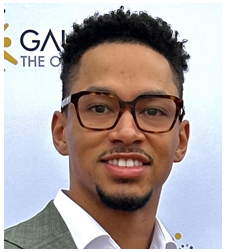
Christian Bolling
Designer/Salesman/Watch Technician, Jeffery B. Jewelers
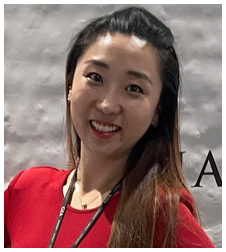
Eunyeong Ko
CAD Designer, Maria Tash
How did you get started?
Christian: I have been a part of the sales force since 2014 and have been awarded JA’s 20 under 40 because of my recent role in creating a new division. I have been in the watch technician role since 2017, after finishing my certification and have been a designer for the company since 2019, being self-taught in Matrix CAD. My father, Jeffery Bolling, was on the road as a salesman for 30 years before opening Jeffery B. Jewelers. Because of that I’ve been around the industry my whole life, learning different aspects along the way. However, after finishing my watch certification, my responsibility in the industry started growing: From the Bridge program at the Stuller facility to participating in meetings at jewelry conventions for our company, dealing directly with manufacturing facilities to accomplish large projects and even having the amazing opportunity to learn about the rough diamond industry.
Eunyeong: My experience in the jewelry industry spans 10 years, during which time I have worked as a wholesaler, a Gemologist, a CAD designer and bench jeweler. During my time in Korea, I worked in the wholesale gold chain industry for a TV home-shopping channel. The jewelry amazed me with its exceptional craftsmanship and the special memories each piece held for clients. Seeking to further my education and skills, I came to the US in 2016 and graduated with a GG (Graduate Gemologist) and JDT (Jewelry Design & Technology) designation from the Gemological Institute of America (GIA). The education from GIA has been truly inspiring and empowered me to pursue a thriving career as a jeweler.
I started my career as a freelance bench jeweler and CAD designer, I collaborated with various jewelry stores/companies and individual clients in California. I relocated to New York and was fortunate enough to join the team at the luxury piercing and fine jewelry brand Maria Tash.
What’s the best part of your job?
Christian:I would have to say the most rewarding part of my career has been the relationships we are able to form along the way. Being in such a vast industry, connecting so many different people, cities, and countries, you never know who you could have the opportunity to meet, learn from, help next is the most exciting aspect.
Eunyeong: As a member of the design team, I find it fulfilling to launch new collections that meet international trends and needs. It’s a gratifying experience to see my ideas come to life, despite the challenges of 3D prototyping and pushing design boundaries to ensure delicacy and versatility.
How has your job changed over the years?
Christian:With as many positions I can claim to have at Jeffery B Jewelers, I would say that the most change has come from the sales side. I believe there has been a major shift in relationships, from what we can provide and have in our store to who we are and who we have worked with and our image within the community. That has made it more important in the sales division to show who the client is doing business with.
Eunyeong: My role at Maria Tash has involved designing jewelry using CAD and creating 3D models for productions, and processing prototypes. I gained valuable knowledge in reverse engineering, production management, and manufacturing while working with 3D printers and scanners. Working with a skilled team in an open-opportunity environment allowed me to showcase my problem-solving skills and excel in custom pieces on hand. Through my experience with this brand, I have gained a deeper understanding of the technical intricacies involved in the manufacturing process of fine jewelry.