

Embracing Flaws: Set in Stone
Kenetha Stanton, kintsugi, and the healing process
Kenetha Stanton stumbled upon kintsugi art several years ago, during a difficult period of her life where she experienced several intense losses. The kintsugi philosophy resonated with her, and she began visualizing how she could put back together the pieces of her life to create something better.
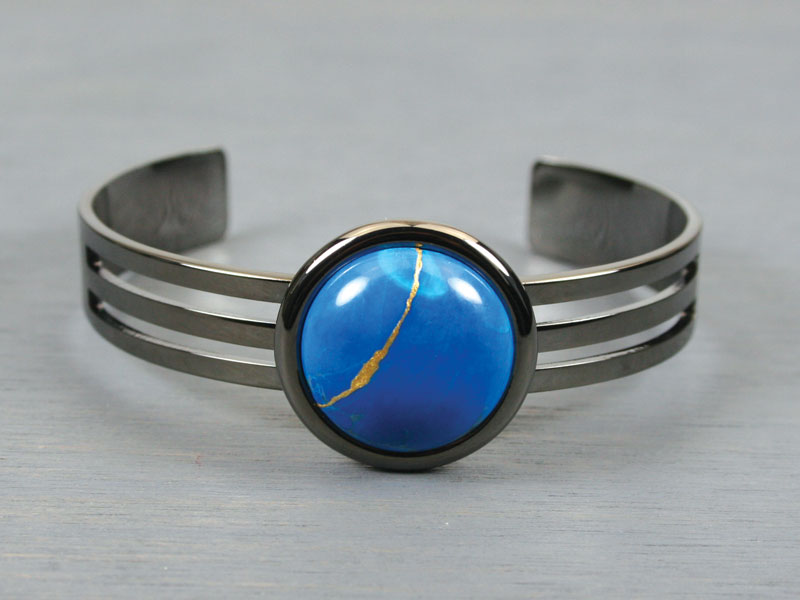
She was working as a life coach at the time, and she thought kintsugi could help inspire clients in the way she had been inspired. Although she had never done any lapidary work before, Stanton decided to try her hand at repairing inexpensive colored stones—agate, howlite, quartz—and offering them as pendants to her clients. “This was back before it was popular,” she explains. “I had to explain what it was.”

Her creations struck a chord with her clients, and she began selling them on Etsy to help a wider audience. Eventually, she moved away from coaching to focus full time on her art and open her online store, A Kintsugi Life.
She opted for gemstones out of concern for cultural appropriation—“they weren’t part of the original tradition,” she says. That’s also one of the reasons she opted not to try using an authentic kintsugi repair kit in her work.
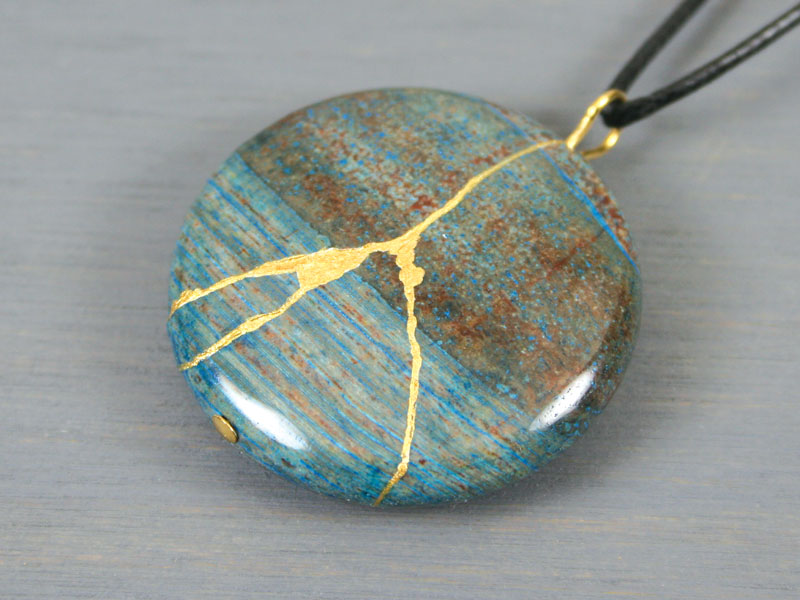
“Even if I wanted to go that route, it doesn’t work well with gemstones,” Stanton says. “Stones have a lot of texture in the surface. If you’re sprinkling precious gold metal powder on the surface, it’s going to get into those crevices. It’s tough to get out and you’re wasting precious powder.” Instead, she’s opted to target more modern methods.
She begins with the stone, which sometimes comes from someone interested in having it repaired; otherwise, she sources and breaks one herself. Early on, Stanton made the decision to target less-expensive stones (“I’m know I’m going to lose a fair percentage of them,” she says), but some fare better with her process than others.
“Not all stones handle the breaking process very well,” she explains. “I’ve had some stones that shatter so completely I can’t figure out how to put them back together.”
She notes that stones with glassy textures, such as obsidian and quartzes, are more likely to shatter than something like jasper. Stanton also avoids very small stones. “The epoxy gets too sticky, and the pieces stick to my fingers instead of each other,” she explains. “It doesn’t work.”
Cracking the stones can also be a challenge. Stanton uses a hammer and a cast iron chisel, and despite her best efforts to control how and where the stone breaks, it often seems like it’s left up to fate.
“It would be nice if they broke such-and-such way, but there’s not a good correlation between where I put the chisel and where the stones break,” she says. “I place the chisel on one part of the stone, and it breaks somewhere else. Sometimes it’s completely random.”
To repair the stones, she uses a two-part, water-resistant epoxy. “Because of the amount of force taken to break the stone, it can create microcracks in the area of the break,” she explains. “If water gets into those cracks, over time it can cause them to break.”
To apply the epoxy, she uses either a trowel-like tool or a toothpick, depending on the size of the surface area. Although Stanton cleans the stones well before starting the repair, sometimes the thick epoxy can pull a piece of it loose—and that too must be cleaned away, even if it’s only as big as a grain of sand. “I can’t make the repair work with that little bit of debris in the way,” she says.
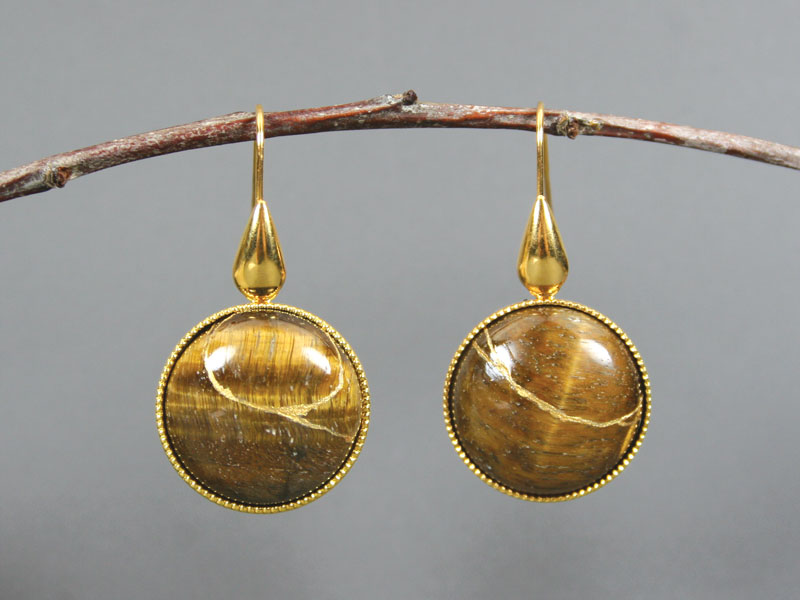
She then waits for the epoxy to dry before using a fine paintbrush to apply acrylic gold paint along the cracks. “I follow the crack as best I can to add the paint only along the repair line,” she explains. “Some people do it differently. I want to accentuate just the repair.” (When starting out, she tried adding powdered gold mica to the epoxy, but was disappointed with the results: The line looked more yellow than gold, and adding more powder to brighten the epoxy only weakened the seal.)
Once the paint is dry, Stanton applies clear acrylic sealant on the crack and the immediate surrounding area. Because of the possibility of microcracks, she had initially applied the sealant to the entire stone but didn’t like the way it looked (“I tended to see some of the brush marks”).
Although she’s seen her sales level off as the art of kintsugi becomes more known and her competition has increased, she’s been pleased with sales.
“Sales initially surprised me because I hadn’t been expecting this to have wide appeal,” she says. But considering the difficulties so many people have faced over the past year, perhaps it’s not as surprising that people are turning to items to find comfort.
“Customers generally report that these pieces bring comfort, hope that they will indeed heal from whatever hurt they are experiencing, and inspiration to find ways to grow from their experience.”