

Tips for Delivering Great In-Store Customer Service
Shining Bright
Jewelry retailers share their ideas for improving customer engagement
By Sharon Elaine Thompson
(Originally Published by MJSA August 2023)
If you’ve run a retail business for any length of time—and certainly if you made it through the worst of the pandemic shutdowns—you know how to keep your customers happy and give them what they want. But in the arena of in-store customer service, it’s always possible to improve your game. So, we’ve talked to jewelry retailers who love what they do and who each have a unique take on engaging the customer so that they come back again and again. Maybe there is something here that you can try.
Meeting the Customer’s Needs
Although no one company can be all things to every customer, offering jewelry in a range of prices and styles is an important first step in delivering good customer service.
In Portland, Oregon, Betsy & Iya has all the bases covered, explains store director of retail and buying Suzy Lutjen O’Connor. There is almost no reason for a customer to leave empty handed, as they’ve made sure to offer product in a range of prices. In addition to a line of 14k yellow gold fine jewelry that it produces in a studio next door to its retail operation, the company offers a line of silver, brass, bronze, and gold-filled fashion jewelry. Once a year, they offer pieces from that fashion line that “are imperfect and didn’t pass our initial quality control, but are still totally wearable and beautiful, but at a greatly discounted price.”
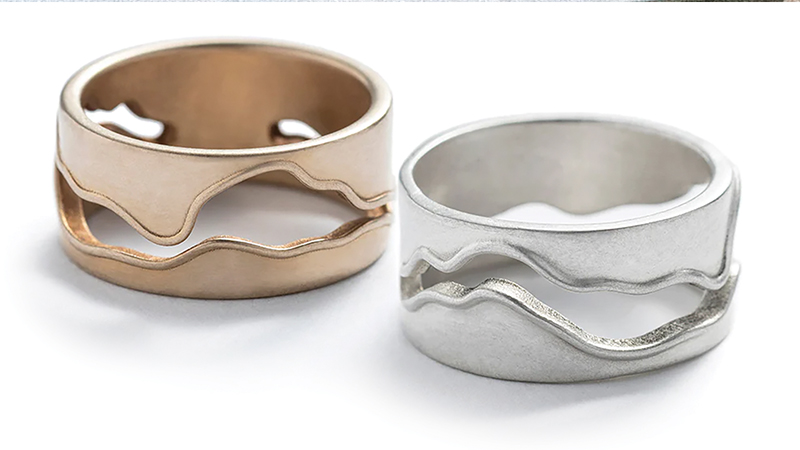
Betsy & Iya carries fine and fashion jewelry in a range of prices to ensure that they have something to meet every potential customer’s budget.
The company also has a Recast program featuring refurbished fashion jewelry. If a customer has a fashion piece of Betsy & Iya jewelry “that they’ve worn and loved and it’s no longer their style or they’re doing a closet clean out and they want to refresh, we will buy [it] back, refurbish it, polish it, repair it, if needed, then resell it at a discounted price,” explains Lutjen O’Connor. The selling customer “gets store credit to use on something new,” while other customers are able to “enter our brand at a lower price point.” And if none of these options work, Betsy & Iya’s owner, Betsy Cross, will design a custom piece in precious metal.
McCoy Jewelers and Goldsmiths in Dubuque, Iowa, takes a similar “whatever the customer wants” approach, explains store manager Samantha Swift. “We are the complete opposite of a case store when it comes to bridal jewelry. We have probably over 1,000 rings, and I would say 70 percent are faux.” The sample rings are made in sterling silver with imitation stones and are strictly for show. When the customer chooses the style they like—with the customizations they want—the ring is then designed or ordered for them. They also have a small selection of “very classic styles and different sizes and shapes [in karat gold] for those people who need it now,” she says, but acknowledges that most people shopping for an engagement ring are not in a same-day rush.
Instead, virtually all rings at McCoy’s are custom or customized. “We are here to help customers find their dream ring,” says Swift. McCoy’s attitude is “whatever your budget is, let’s figure it out, and let’s just build it.” If that means incorporating elements from one design into another, that’s what they do, using CounterSketch and Matrix. If a customer chooses a piece from one of the designer brands McCoy’s carries, those, too, can be reworked by the designer.
Swift says their customers much prefer this approach to feeling they’re under pressure to find something out of a case. “It creates a really nice relationship with our clients as well,” she says, adding that keeping things comfortable and giving customers what they want has always been the store’s approach.
Avoid Saying No
One of the reasons why it’s so important to offer a range of products for customers is that it helps jewelers avoid turning customers away. In fact, according to Peter Smith, author and retail luxury industry consultant in the Boston area, this “can do” attitude is key. “Just don’t say no,” he says. No is too often the easy answer. “We can’t reset that because…” “We don’t do that kind of work.” “We can’t have it ready for you by then.” But if you or your staff have banned the word no from the premises, says Smith, then you have to work around it, instead saying “Here’s what I can do for you.” Before you say “no,” stop a moment and consider: Is there a “yes” there that will create a happy, satisfied customer?
One way to step away from the “no” is to empower your employees to make more decisions on their own, says Greg Stopka, principal at JewelSmiths in Pleasant Hill, California. “I give my crew free rein when it comes to making a decision,” he says. “I don’t want them to say, ‘Gee, I know you have an issue, but I’m going to have to wait for the owner or manager to come and make the decision for me.’ I basically just say, ‘Do the right thing. If it’s pretty reasonable, and I’m sure it is, just go ahead and do anything to make the customer happy.” By empowering the staff to do that, he says, “it makes them feel so much more positive and confident when they talk to individuals.”
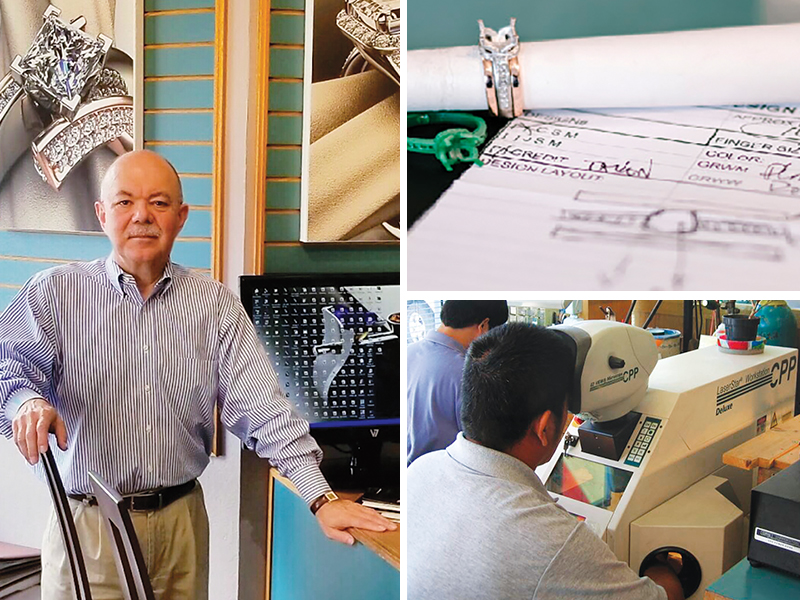
At JewelSmiths, owner Greg Stopka (above) empowers his employees to make decisions on their own in order to satisfy customers. “I basically just say, go ahead and do anything to make the customer happy,” he says.
That said, there are rare occasions when Stopka intervenes. “There might be times that are not in the realm of reasonable,” he says. “The staff would know when something is not reasonable, and then it is passed along to me for contacting the client. There are very few situations that do arise when something is not reasonable, and it is best for me to get involved.”
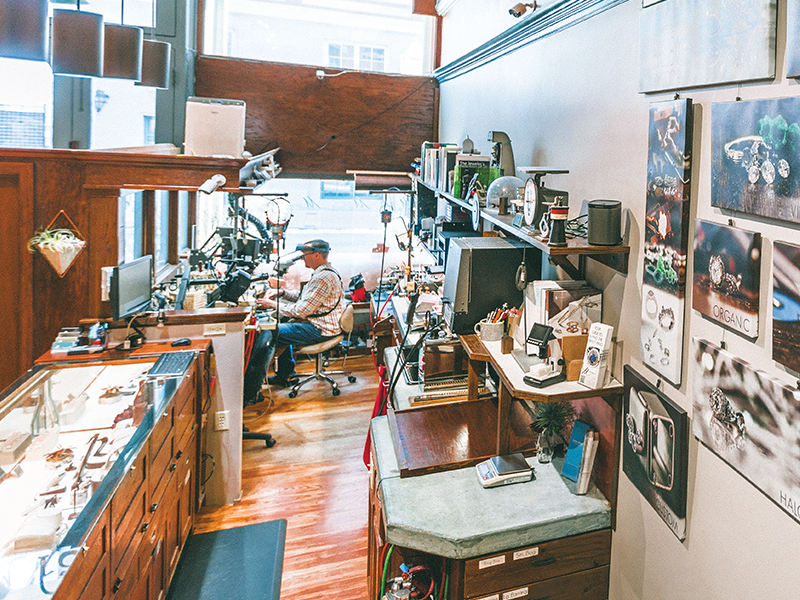
Being able to answer customers’ questions about products is essential, too—a customer can become impatient if the sales associate has to ask someone else for answers. At Betsy & Iya, customer advocates are steeped in the story that makes the business unique, and they know the design and manufacturing process intimately. As a result, “[Customers] are introduced to our story about our house line being designed and produced in house. They’re encouraged to try things on and offered assistance as needed. Without being pushy, we are very physically present and proactive,” says Lutjen O’Connor. If customers want to, they can watch the manufacturing process through windows on the street.
Make the Customer Central
The chances are good that you and your staff have multiple responsibilities, and in the press of those responsibilities, working with customers might feel pressured. But of course, customers are the reason your business is there. The more you are able to make the customer feel genuinely welcomed and remembered, the more likely they are to return and to recommend your business.
A key part of that, of course, is to welcome customers when they come into the business with, at the very least, an acknowledgment—a smile, a nod, a hello—and, if you are with another customer, saying that someone will be with them as soon as possible.
But when it comes to returning customers, says Swift, “We try really hard to remember their names.” McCoy’s also shows their appreciation for their customers’ business by asking for images of the couples’ engagement or wedding. “Our store is filled with pictures of our couples,” she says. “One of the girls tears up [whenever she comes in] because she’s so grateful that we remember her.”
This practice integrates the store even more firmly into the community and into the customers’—and potential customers’—minds. New customers who come into McCoy’s may recognize someone in the photos as an old friend or co-worker. That acts as a nonverbal recommendation, sends a message that customers are important to McCoy’s, and builds trust, says Swift.
At Betsy & Iya, sales associates are called “customer advocates,” which reinforces the importance of the customer. “We want them to advocate for our customers, to provide information to our design and production team,” says Lutjen O’Connor. “What metals are customers asking for? Are customers experiencing any issues? What are they loving? What are they asking for that we’re not stocking in the store?”

To show appreciation for their customers’ business, the staff at McCoy Goldsmith and Jeweler ask customers for images of their engagements and weddings, which they then display in the store.
Staff are encouraged to take the time necessary to get to know their customer. “Our customer advocates ask a lot of questions to get to know customers as individuals. We are friendly and outgoing without being pushy and ‘salesy,’” says Lutjen O’Connor.
Once they connect this way with people, customer advocates reach out personally to customers they’ve worked with recently at least once a week by e-mail, says Lutjen O’Connor. It may be to ask “How are you enjoying those earrings that you weren’t so sure about, or that you thought maybe were a little bold? Or maybe a customer and an employee connected on a favorite place, a place they grew up. We reach out with e-mails and phone calls not to push a product, but just to keep our connections with customers genuine and deep.”
It’s also important to make customers feel comfortable in the store. Buying jewelry may be the only major purchase a customer has made other than a car, says Swift. Some may come in prepared to resist a high-pressure sales presentation. It’s worthwhile to take the time to get them to relax and to feel welcome.
McCoy’s diffuses the “pressure to buy” tension by the simple fact that so much of the jewelry in the store is faux—it’s for display only, not for sale. Customers don’t feel rushed to take something they are not in love with, and sales staff are also more relaxed because they don’t feel pressured to turn the inventory over quickly to increase profit. They can take the time to create the perfect piece for the customer by customizing it or building one to spec. Their engagement ring customers in particular, says Swift, “would much rather come into a store that’s more friendly, flexible, less pushy in their approach.”
Engage the Customer
Before it’s possible to connect with customers and make them comfortable, you have to engage them. To do that, it’s necessary to come out from behind the counter.
“Furniture isn’t our friend,” says Smith. It’s a barrier between you and the customer and an impediment to communication and engagement. Free of the counter, you can guide the customer around the store to show them the pieces that might suit their desires. You become an advisor rather than a salesperson.
Stand in front of the customer, as you would a friend, says Smith, and “open your body language.” Don’t stand to one side of them, either. Face them, but don’t get into the customer’s personal space—usually considered 18 inches or the width of a counter, but “there is no absolute,” he says.
Smith mentions the findings of Albert Mehrabian, a UCLA professor known for his work on verbal/nonverbal communication. The Mehrabian model of communication, he says, emphasized that “that words account for 7 percent of what we say, tone of voice is 38 percent of what we say.” Nonverbals, such as body language or facial expressions account for a whopping 55 percent of what we convey. “Emphasizing the power of the nonverbals, to me, has always seemed to be a hugely important thing, in sales period, but certainly in retail sales.” Be aware of what your body and your face are telling the customer: Are you bored? Engaged? Antsy to go to lunch?
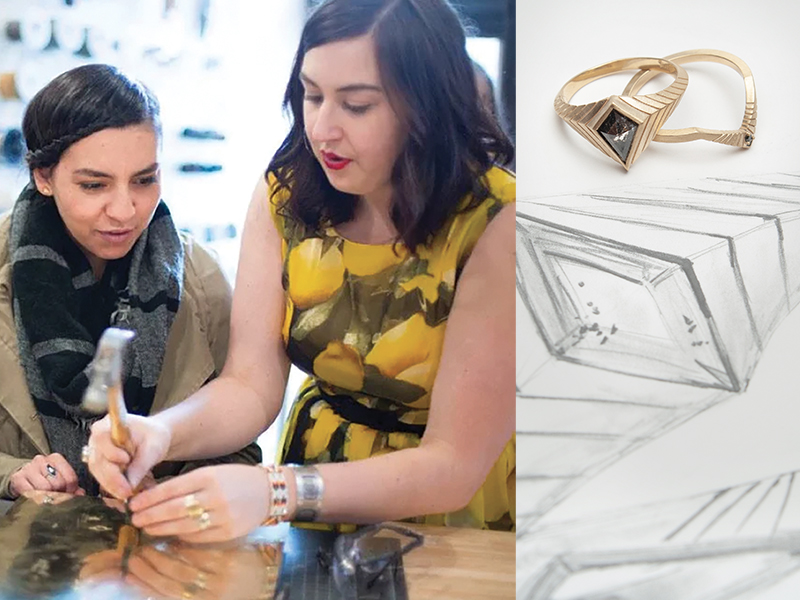
At Betsy & Iya, sales associates are known as customer advocates and are encouraged to take the time to get to know the store’s customers and to reach out to them regularly to keep their connections genuine.
Make eye contact, and maintain it for at least four seconds, says Smith. “It seems like an awfully short period of time,” he says, but if you do it right, he adds, when you turn away you should know the customer’s eye color. “If you don’t, you probably weren’t making good eye contact.”
Touching customers is “hugely important,” says Smith, as long as it’s appropriate touch, handled carefully and thoughtfully. “We have a particular nerve fiber in our skin, particularly in our hands and arms, designed to respond to the pleasantness of physical touch.” When it comes to jewelry, helping customers try on bracelets, necklaces, watches, and earrings provides, “lots of opportunity to properly touch customers.” It doesn’t have to be obvious or intrusive or even register with the customer, but it helps make that personal connection. In fact, he says, studies have shown that wait staff in restaurants who touched customers slightly on the arm or shoulder saw tips go up.
Even if you can’t get out from behind the counter, an open body posture, eye contact, and listening will engage customers, help them feel more comfortable and increase the chances they’ll become repeat customers.
Listen to the Customer
When engaging with customers, Smith says that sales staff have a tendency to jump in immediately with a bunch of facts. Instead, he says, they should start by “just listening, really listening. Then asking good, relevant, open-ended questions.” Tell me about the reason you’re buying this, or the person you’re buying it for. Has anything you’ve done in the past worked particularly well? This, says Smith, “can be very, very effective in getting them to open up.”
Everyone has a story, especially when it comes to jewelry, whether it’s time to repair or replace a beloved piece or time to buy a piece to celebrate a special event. It’s important to listen and ask questions to elicit those stories when designing custom jewelry.

Because McCoy’s carries jewelry for display only, the store presents a friendlier, more flexible, and less pushy sales approach.
Emotions and passion are what customers connect to, says Smith. He mentions a study that showed restaurant businesses that “got more emotive reviews did much better in terms of success and reservations.” The five-star rating had less impact than did the emotional content of the reviews. “In retail sales,” says Smith, because jewelry is an emotional purchase, “tapping into the emotive avenues is infinitely better than hitting them with facts, if they’re trying to figure out what they ought to be doing.”
Listening is “especially important when the customer is in what psychologists call the ‘red zone,’” says Smith. It can reduce the stress level significantly and open avenues of communication that can lead to a successful resolution.
Good listening in all situations can help you find the key to being able to say “yes” rather than “no.”
Look Beyond Jewelry Sales
Many jewelers believe delivering good customer service is important only for salespeople. However, there are things that jewelers can do to provide good customer service that don’t initially have anything to do with sales.
It starts with services offered beyond just selling jewelry. Many customers expect jewelry stores to provide repairs, which can cause many a jeweler to groan since repairs take their time away from more profitable work. And, if the repairs are taken on unwisely, can produce major headaches.
On the upside, however, repairs are sometimes how a customer “tests” a jeweler before committing to a larger purchase; handling it right, can lead to a handsome sale and a long-term customer. In fact, Stopka says that many of his custom designs come from a relationship that started with a repair.
But repairs often start with a complimentary cleaning, which can also be troublesome since it can lead to damage or stone loss if the piece is not examined properly before cleaning. However, cleaning a customer’s jewelry is a service that many jewelry stores still offer and for good reason.
During an inspection before cleaning, the jeweler may spot repairs that should be done before they result in a loss. If McCoy’s discovers an issue during a pre-cleaning inspection, says Swift, the jeweler brings out a microscope and projects the image onto a screen.
“The jeweler is able to walk them through what they are seeing [on the screen],” she says. “Once the client sees the damage, they’re much more eager to get it fixed than if we just tell them that it needs to be fixed. It’s also good if we are in a warranty situation.” With the microscope, they can demonstrate to the customer that it was damage rather than a manufacturing defect that was the cause of a loss.
And free cleanings don’t have to be limited to pieces being taken in for repair. Many jewelers will offer to clean the jewelry customers come in wearing. One of them is Stopka, who uses cleanings to build good will. He takes the cleaning process seriously, and he emphasizes with his staff that the work must be done well, even if it’s a free service.
Whether it’s a waiting customer, a friend who came with them, or someone dropping something off, they get their jewelry cleaned and polished, says Stopka. “You always get a comment from them to say, ‘Wow, I didn’t know it could get as clean as this,’ or ‘It’s never looked like this since before I bought it.’” Stopka knows he’s made an impression. “When they walk out of that store, they’re thinking about us. Maybe they don’t have a reason to buy or purchase any product or service. But they might say in conversation to a friend of theirs, ‘Yeah, there’s a place I do know. And they’re great.’”
In a world where information and technology overwhelm us, when it comes to providing great customer service, the key is still, as it has always been, putting the needs and the desires of the customer first. Listening, engaging, being passionate about the product, and giving them what they want will have them coming in and will keep them coming back.