

Send the Right Message

Send the Right Message
Marketing in the information age is complex, rewarding, and targeted
By Terri Wallo Strauss
When it comes to marketing in this new digital age, one can’t help but think of the opening line of Charles Dickens’ A Tale of Two Cities: “It was the best of times, it was the worst of times.”
Never before have businesses had so many platforms on which to reach consumers. But there can be such a thing as too much of a good thing, especially for companies that don’t have unlimited marketing budgets: With so many platforms, how do you know which is the best way to reach your customers? And with everyone else competing to reach the same audience on the same platforms, how do you stand out from your competition?
To help you understand the best ways to reach today’s consumers, we spoke with experts about the various marketing platforms that jewelers should be using. They share their thoughts on the mediums that are most likely to connect with modern consumers as well as the best approaches that jewelers should take when using them.
Change Is in the Air
Chris Ciunci, author of Marketing in the Trenches and a managing partner at TribalVision, which has offices in Boston and Rhode Island, says that there’s good news and bad news when it to comes to marketing in today’s jewelry industry.
First, the good news: The channels that businesses can use to reach consumers are near endless. “Consumers are digesting in-formation on so many platforms, and it’s exciting,” says Ciunci.
But then there’s the bad news: All those marketing options also mean that it’s far more difficult to create a marketing plan these days. Gone are the days when the country watched three news channels and read just a few print publications.
And it doesn’t matter the size or location of your business. According to Marty Hurwitz, even the most experienced retailers are facing these marketing challenges. However, he points out a bright side to the problem. “Fortunately, it’s much easier [now] to target the right people than it ever has been before.”
Hurwitz, who founded MVI Marketing in 1987 in Austin, Texas, has witnessed the jewelry industry change over the last 30 years and that’s where he says a conversation about marketing needs to start.
“The landscape is shifting,” he explains. “The traditional Baby Boomers, who virtually built the industry, are retiring, and their discretionary spending is slowing down and stopping.” Hurwitz says Millennials are now the generation with the most spending power. He also points out that consumers have diversified.
“Based on our research, forward-facing immigrants are driving luxury brands. Hispanics, for example, are the largest consumer spending demographic. Other cultural groups are now second- and third-generation Americans. And finally, the most underserved group is self-purchasing fe-males. All of these groups are unique and can be targeted through marketing.”
Ellen Fruchtman, president of Fruchtman Marketing in Toledo, Ohio, also has seen the significant shifts in the industry. “Price points have also dramatically changed in the industry, so the ability to purchase jewelry can cross several socio-economic demographics.”
Along with changing demographics, the industry is also witnessing changing priorities among consumers, especially those in the most coveted demographics.
“People have been wearing jewelry since before recorded history,” says Matt Perosi, chief thinker at the Sapphire Collaborative in Totowa, New Jersey. “However, people are no longer showing off their latest expensive jewelry to their friends. Instead, they are proudly holding up the latest smartphone. Priorities have changed for the 25- to 40-year-olds.”
Identify Your Customer
Before you can create a marketing plan, you need to know your customer. Your efforts will not be successful if you try to be everything to everyone.
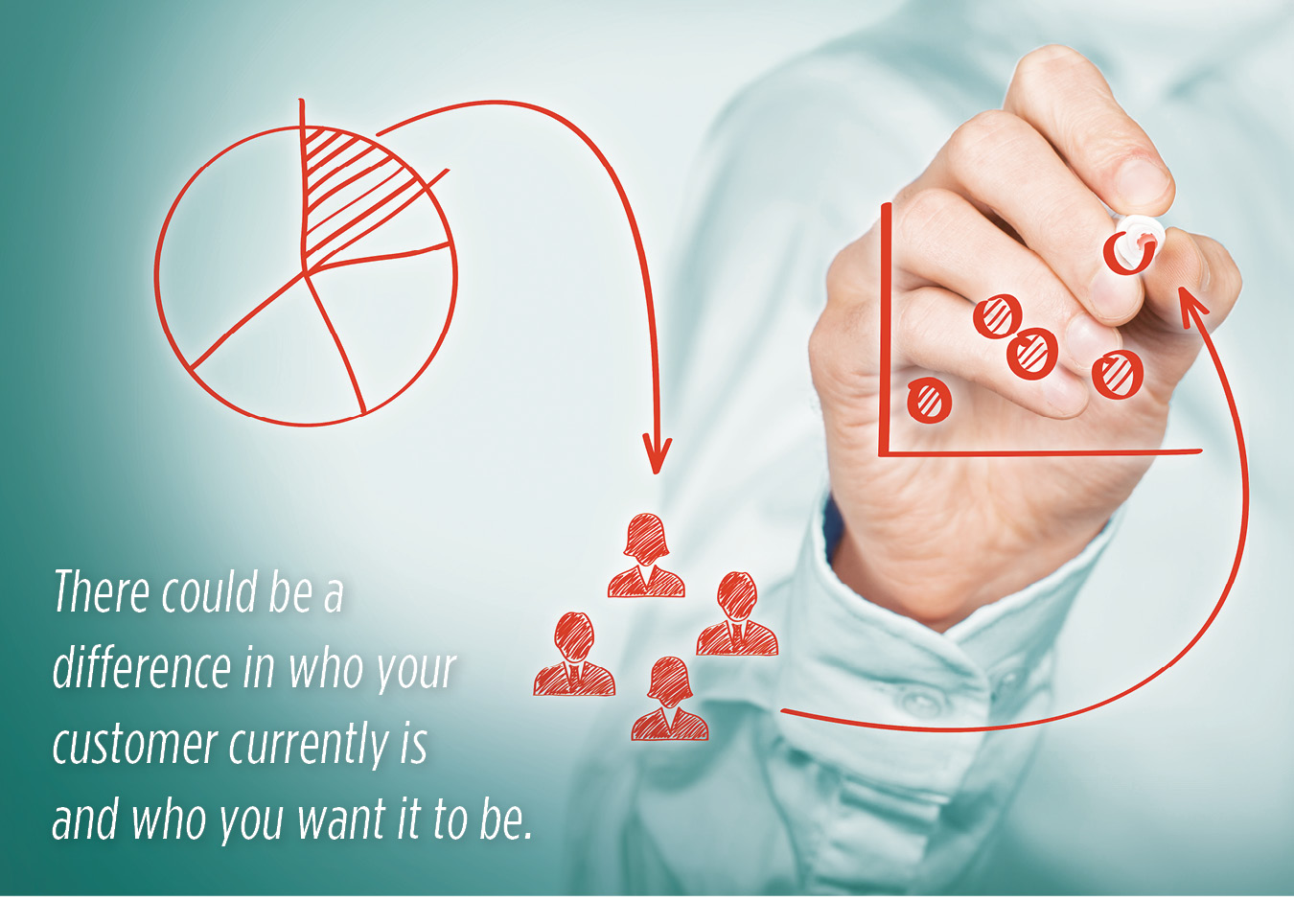
“First and foremost, you should know who’s walking in your door,” says Fruchtman. “There could be a difference in who your customer currently is and who you want it to be. For example, if you have a brick and mortar and don’t demographically have a lot of engagement age customers in your locale, don’t spend the bulk of your dollars there.”
“Today, everyone can be considered a potential consumer, but your individual product assortment and unique value proposition will help you decide which customers are in your target market,” says Laryssa Wirstiuk, founder and creative director of Joy Joya, a full-service digital marketing agency for jewelry brands based in Los Angeles.
Wirstiuk says you can paint a clear picture of who your target customer is by creating a few customer personas. A customer persona is an archetype that summarizes key information about the target customer, such as age, location, income, education, marital status, shopping habits, shopping frustrations, online behavior, brand affinities, and more. They play a key role in developing a marketing strategy.
“If you’re an established jewelry brand, then you can reflect on past sales data and use the numbers to devise a complete picture of your target customer,” she says. “If you’re a new jewelry brand, and you don’t have past sales data, then you will want to look at your perceived competitors and ask, who are their target customers?”
Have a Strong Digital Footprint
Regardless of who your target customer is, in today’s marketing world, every business must have a digital footprint, which starts with a website, and all marketing efforts, such as signing up for e-mails and social media advertising, will link to that website.
Believe it or not, “there are still jewelry retailers who don’t have an online presence,” says Hurwitz. “If somebody does not have a digital footprint—even a website at the least—they will be very challenged to succeed.”
However, just having a basic website isn’t enough—it needs to showcase a variety of products, and the content of the site needs to be updated often.
“A website has to be dynamic and a changing place to build community,” he says. “It has to have intelligent design—meaning it works on all devices. Adding content regularly is key. That can be stories, images, and blogs about how to clean jewelry or how to accessorize. When you change content consistently, you will spider up in the search engines.”
The content of your website and how frequently you update it will help determine your page’s rank with search engines, which is critical for reaching today’s consumers.
“Everyone uses Google to begin their search for answers,” says Perosi. “The only way Google knows to match up consumer questions with a website is if the website has matching answers. This [Search Engine Optimization (SEO)] is also a laborious process that can’t be ignored.”
He notes that Google has several tools that will help businesses understand how people find and use their website. “A frequent review of these tools will provide hints about keywords and new content that can be added to your website every month,” he explains. “These hints will also lead you to areas of your site that need to be rewritten to remain fresh.”
Don’t Rule Out Traditional Marketing
With the internet playing such an important role in people’s lives, it’s easy to see why marketing has now shifted to that platform. However, that doesn’t mean that traditional advertising avenues aren’t worth pursuing. So how do you know where to put your marketing efforts?
“It all comes down to budget,” says Fruchtman. “You have to determine what products and demographics bring you the greatest return on investment. Today it’s all about the media mix.”

This is why it’s so important to first identify your primary customer. Knowing who they are, where they can be found, and how they prefer to be reached will mean the difference between your message grabbing someone’s attention or falling on deaf ears.
“You have to go wherever your customers are,” says Perosi. “Baby Boomers still read the local newspaper while the younger generation will be attached to one of the social networks.”
Wirstiuk agrees. “If you turn on cable television during the morning and early afternoon hours, you’ll likely notice that most of the advertisements cater to Baby Boomers and older generations because they are the people watching television at that time. Gen Zers and Millennials are watching more streaming television than network television, so if you’re trying to reach those generations, then your TV ads probably won’t appeal to them. However, they are paying attention to podcast and YouTube advertisements.”
Perosi acknowledges that some jewelers still want to stick to tried-and-trusted routes. And while they can do so, they will need to tweak their efforts a little.
“Stores that are still using billboards should consider changing their methods and follow the photography trends found on Instagram,” says Perosi. “Close-up images would create more interest than the typical photos of a whole engagement ring. Move away from thin elegant fonts and small photos that are hard to read while driving.”
And speaking of marketing to people in their cars, don’t limit your efforts to things your customer may see while commuting. You may be able to reach them through what they’re listening to as well.
“Baby Boomers are still listening to radio stations, but jewelers must consider if that target audience is still worth the expense. Moving that radio media buy to Pandora or Spotify might be a good idea. Spotify appeals more to the under-30 demographic [Gen Zers] while Pandora has listeners in every age group,” Perosi says.
Finally, if you’ve been sticking with more traditional advertising methods, don’t assume that they’re still working for you.
“If sales have been on a decline for a few years then it should be obvious that their current marketing isn’t working,” says Perosi. “They need to take a chance and try something new by shifting their marketing budget to their website, social media, SEO, refreshing their store look, changing their product line, and thinking outside the box that they’ve become comfortable in.”
Take on Social Media
Regardless of the size of your advertising budget, social media must be a part of your marketing campaign. It can seem daunting with all the different platforms available, but the positive factor is that it can accurately target and identify customers for you.
“Targeting is easier—down to the street they live on,” says Hurwitz. “But because there are so many people doing it, it takes a certain finesse as to what kind of content and who you are marketing to.”
Experts say that’s why it’s important to know each social network’s claimed demographics. According to a study by the Pew Research Center in February 2019, people in the age range of 18 to 64 use YouTube. Facebook users are mostly in the age range of 25 to 49, while Instagram captures the 18 to 29 group. Older generations aren’t using Instagram as much: 40 percent of users are between 30 and 49, while 21 percent are between 50 and 64.
Whichever platform is best for you, the power of social media cannot be denied. Ever shop for a pair of shoes, leave the website without purchasing, and suddenly those shoes appear in your newsfeed on Facebook? That’s no coincidence and it’s called retargeting.
“We can set up retargeting through your website so when someone clicks on a certain pendant, a Facebook pixel sends them through a retargeting funnel,” says Ciunci. “An ad is now appearing on their Facebook or Instagram. Ninety-five percent of people are just browsing and will leave your website. You need to stay in front of them with content.”
A Facebook pixel is easy to add to your website, and a one-time tutorial can teach you how to quickly apply it. When a potential customer adds a product to their shopping cart, but abandons it, Facebook can deliver what is called a dynamic ad—an ad that shows that exact product—to that customer. Dynamic ads are easy to build as well—just upload your product catalog and Facebook does the rest.
You can also use Facebook to create ads to reach potential consumers by building “look-alike audiences.” These are people who have similar likes, interests, and demographics to people who are already visiting your website. They may have viewed similar products on others’ websites.
“You can’t be everything to everybody,” says Ciunci. “You have to have clearly defined customer personas built out and you then must refine your messaging and offers to that niche audience.”
That’s the paid advantage of social media, but don’t forget that you can also have free content by creating your own page on these platforms. Generating content to fill that page takes time, however.
“The new digital world of marketing doesn’t have deadlines,” says Perosi. “However, if you want social media to work, you can’t ignore it for a few days and hope no one notices. Each of these networks reward active users with more exposure to other active users. Social media engagement with commenting and messaging needs to be part of your daily work routine.”
Perosi says if you don’t have time to handle this yourself but have the budget, hire an in-house employee to manage your company’s social media, preferably someone about 25 years old, since that age group best understands why people spend so much time on those social networks. Your social media manager will also help you decide the best number of posts per week for each platform as well as the best time of day to post.
Also consider the content of your posts. Hurwitz notes that it’s important to pay attention to who’s featured in the photos you post.
“We need to look like our consumers in both our content and with personnel if we have a brick and mortar. We need to improve diversity,” he says.
When selecting models for your marketing campaigns, look at things beyond gender, age, and ethnicity. Consider the lifestyles and habits of your core customers and make sure they’re represented.
“Diamonds aren’t forever any more, tattoos are,” says Perosi. “The industry hasn’t caught up to the fact that the models they use in their ads must represent the modern customers. Tattoos, which were once hidden, are now prominently visible. If you want to refresh your branding to attract younger customers, you need to consider choosing models that represent the actual target audience.”
Yes, E-mail Is Still a Thing
Believe it or not, e-mail is not dead. In fact, it remains a critical component of any business’s marketing plan.
“E-mail marketing is one of the most effective ways to create a long-lasting relationship with your prospective and current customers,” says Wirstiuk. “E-mails can be personalized, and e-mail lists can be segmented by customer demographic and shopping habits.
“For example,” she continues, “you can send one type of e-mail to a customer who has purchased from you in the past and another type of e-mail to a customer who has browsed your site but abandoned the shopping cart. Then, you can gain valuable data like open-and-click rates and leverage that data to make adjustments to your e-mail marketing strategy as you move forward.”
According to Wirstiuk, building your e-mail list is key. “You’ll always want to create a clear call-to-action on your website for e-mail signups, and you’ll want to consider offering a special coupon or other offer to encourage website visitors to sign up. Any time you do in-person events you’ll want to be collecting e-mails from everyone who comes in contact with your brand.”
But don’t overwhelm your customers’ inboxes.
“Don’t over-e-mail,” cautions Fruchtman. “Two times a month is acceptable, or you can send one more if you want to remind them about an event. Test deployment on different days and times and see what works best.”
Also, while e-mails should be informative, don’t give away everything in the message. Ideally, you want to use e-mail to lure customers to visit your website.
And since marketing e-mails are not one-size-fits-all, it’s important to experiment a little to find what works best for you, your customers, and the message that you’re trying to promote.
“Test, test, test,” says Hurwitz, noting that sometimes the results can surprise you. Hurwitz remembers when a client ran an e-mail campaign with a simple text e-mail, which looked personal, was addressed to a named person, and had a friendly opening line—it did three times better over an HTML e-mail. Hurwitz theorizes that it could be that people are tired of glossy approaches and in today’s e-commerce world, they want the personal approach.
“Engage with content not offers. En-gage with satires that keep people’s attention. Don’t just engage with product offerings,” he says.
If all of this personalization sounds like it’s going to be a lot of work, Ciunci points out that there’s technology that will do it for you. He recommends developing a 60- to 90-day content calendar that you can deploy using a drip e-mail campaign, which is where multiple e-mails are automated and sent to a consumer in a specific order. This process can engage a customer and increase the chances that your messages will actually be read, yielding a higher success rate.
Influencing Others
Between the internet and social media, there are now more ways than ever to market your products digitally. In fact, a whole new career field has popped up as a direct result: social media influencer. These are people with large followings on social media whose recommendations could add a boost to your company.
There are two approaches to using social media influencers to promote your product. The first is to pay one directly to promote your brand to their followers. The Federal Communications Commission has strict guidelines governing how these posts must be labeled.
“It must be clear that it is a paid sponsored post,” says Fruchtman. “Consumers are very well aware of someone who has been paid, and so that is no more effective than any other paid advertisement. It’s definitely not authentic.”
The second, and better, approach is to try to catch the eye of social media influencers in the hopes that they discover your product and decide to share it with their followers on their own.
“To capture the attention of an influencer, you can post interesting and unusual photos on Twitter and Instagram along with the hashtags that influencers have used,” says Perosi. “It will take a bit of time to research influencers and their hashtags, but it is well worth it. You can also tag influencers in your own posts when you believe they will have a legitimate interest in what you’re sharing. Additionally, you can comment on your own posts as a way to subtly introduce yourself.”
It’s easy to get carried away trying to woo the internet’s biggest influencers to support your business and products, but plan to start small.
“On a micro level, an influencer could be the fashion-forward small-town newscaster who’s inspiring women in her community to dress and accessorize like she does,” says Wirstiuk, noting that influencers don’t necessarily have to be household names.
Fruchtman agrees and recommends business owners look in their own backyards first. “Have some great customers? Go to their Instagram pages and see how many followers they have and then approach them. If you live in a bigger city, start seeing who might have a large Instagram following or someone who is a fashion blogger and approach them. It would be far more effective to connect organically with great customers or local influencers who may be known in your community and invite them to the store for a special event or other occasion. Try and build a relationship with them. Let them get to really know you. And then, if they write about you, it will be for the right reason. Their followers will know it’s authentic.”
How to Keep Them Coming Back
Many companies spend a lot of time and effort focusing on how to ac-quire new customers. But it’s equally important to continue marketing to existing customers.
“According to data from Invesp, acquiring a new customer is five times as expensive as retaining an existing customer, and increasing customer retention rates by 5 percent increases profits by 25 to 95 percent,” says Wirstiuk.
“One way to retain customers is to make top-notch customer service a priority that shouldn’t stop when the customer makes a purchase,” she continues. “Once someone buys one of your products, then he or she should become a VIP and get access to special promotions, sales, events, and more. You can also consider creating a referral program so your current customers can earn points or other rewards every time they refer a new customer.”
One marketing effort that ties in well to how consumers like to shop is offering experiences or special offers.
“Host events, provide your customers with exclusive offers and service that is extraordinary!” says Fruchtman. “Remember their birthdays and anniversaries, and do something special during the holidays. Have great customers? Send them a centerpiece for the holidays. Want a bridal customer coming back for the band? Make sure you have a tickler in place to remind them to buy the band or bridal party gifts. Want to surprise a bride? Give her a gift certificate for a beautiful manicure. She’ll remember and talk about you on her social media. Do great things and customers will talk about you and refer you. Most of all, set up your marketing budget to include initiatives for existing customers and acquisition.”
It’s an exciting time with a lot of marketing choices, and while it’s easy to feel overwhelmed, Hurwitz says to think positively. “Look at those who are succeeding. The jewelry industry is always going to be here, but it’s changing dramatically. Those who embrace the change will figure things out.”