

Removing Friction at the Bench
Smooth Operators
Three tools that remove friction at the bench
By Melissa Muir
(Originally Published by MJSA May, 2026)
Having the right tools on your bench can make all the difference when it comes to getting the job done efficiently. Sometimes, that comes at a steep cost. Quality tools aren’t cheap, and that reality often pushes people toward more affordable options that look similar but don’t always perform the same.
I remember when I was first starting out—I bought what I could afford and what was easily accessible. My files came from the hardware store. I bought the finest they offered and thought they were great…until I tried a true hand file made for fine work. That was the moment I realized not all tools are created equal, even if they look the same. I also began to understand why some tools cost significantly more. In most cases, you truly do get what you pay for.
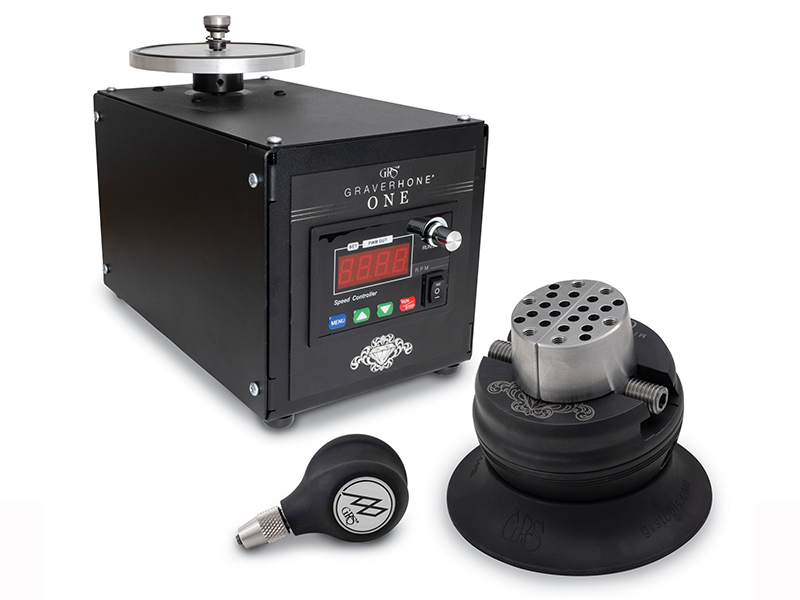
GRS has made a deliberate effort to address that balance between quality and accessibility. Their new “One” line reflects that approach, with the introduction of the GraverHone One and MicroBlock One. Both tools maintain the precision GRS is known for while being redesigned from the ground up to reduce cost without sacrificing functionality or performance.
They’ve also refined a simple but essential tool—the hand chuck—into something more precise and user-friendly with the introduction of the Maxim Hand Chuck. Each of these tools addresses a specific, real problem encountered at the bench.
These are not glamorous tools in the way a new pneumatic handpiece or elaborate stone-setting jig might be. Two are focused on holding your work steady, and one is dedicated to sharpening. But that is exactly the point. The most meaningful improvements at the bench are rarely dramatic—they are the ones that quietly remove friction from the tasks you perform dozens of times a week.
GRS GraverHone One
Engraving is one of the more difficult skills to master. Online videos show artists effortlessly removing curling ribbons of metal, leaving behind highly polished channels that evolve into leaves, scrolls, flowers, and intricate designs. It looks easy—but behind each of those cuts are hundreds of hours of practice.
Before you can even make your first cut, you need a properly sharpened graver. This is often where beginners struggle most. Many people ask me what tools they need to start engraving, and my answer is always the same: You must first learn how to sharpen properly. There are very few inexpensive ways to do this well.
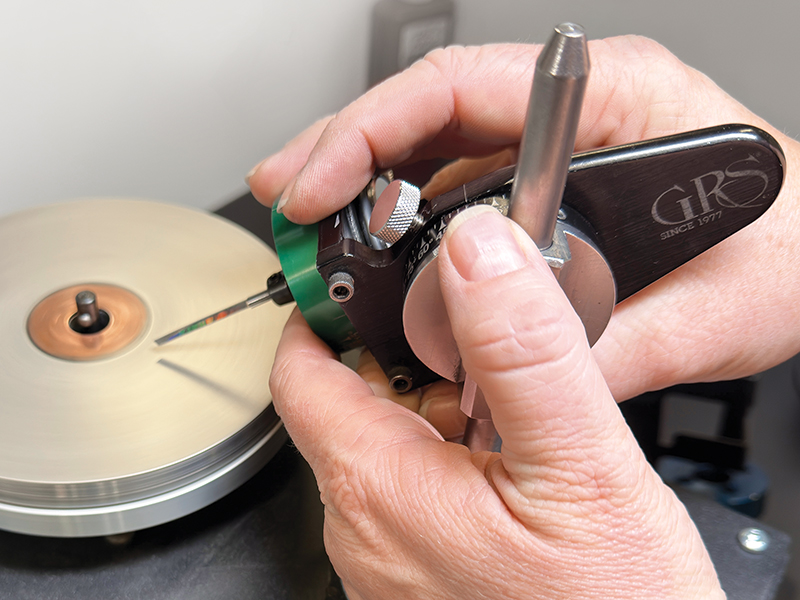
Paired with a sharpening fixture, the GraverHone One delivers controlled, repeatable angles, allowing jewelers to produce consistent cuts.
One of the first systems I was introduced to was the graver hone. It uses rotating abrasive wheels to shape and refine gravers. While it’s possible to sharpen by hand, these systems are most effective when paired with a fixture like the Apex Sharpening System, which allows you to set consistent angles and create repeatable geometry. Those angles directly influence the type of cuts you produce—whether it’s a wide, mirror-polished cut or fine lines used for shading and depth.
The GraverHone One features a variable speed range from 400 to 1,400 RPM, with a recommendation to stay below 900 RPM to prevent overheating and potential loss of temper in the graver. It includes a clear digital RPM display and refined speed control, allowing for precise adjustments rather than fixed presets.
It is powered by a high-torque, American-made motor that runs smoothly and consistently. The system is compatible with the full GRS wheel and accessory ecosystem. Sharpening wheels and the Apex system are purchased separately, allowing flexibility as your needs grow. The GraverHone One is priced under $700.
In use, it feels very similar to the earlier GraverHone VS, with noticeable improvements in control. The digital interface makes it easy to fine-tune speed, and switching directions is as simple as pressing a button. One notable difference is that the display remains lit and ready once a speed is selected—there is no traditional power-off button.
Changing sharpening wheels is straightforward, and it accepts the same wheels and templates used in existing GRS systems. The motor and spindle run smoothly and true, allowing for fast, accurate sharpening. The lower price point makes this system especially appealing for those looking to step into a more professional setup.
GRS MicroBlock One
The engraving vise is one of those tools that experienced bench jewelers often underestimate—until they use a poor one. The difference between a vise that rotates smoothly and one that resists movement, or between jaws that center reliably and those that require constant adjustment, directly impacts both efficiency and the quality of the final work.
The MicroBlock One is GRS’s compact entry in this category, and it makes a strong case for itself. At approximately 3.3 pounds, it is lighter than many comparable vises. Its low-profile design is intentional, especially for those working under a microscope. A lower working height improves posture, reduces strain, and provides better visibility of the work.
The size is well-suited for both smaller and larger hands, and it performs particularly well for smaller pieces such as pendants, rings, and earrings. For larger work or heavy material removal, a heavier vise may still be preferred due to the need for additional counterweight.
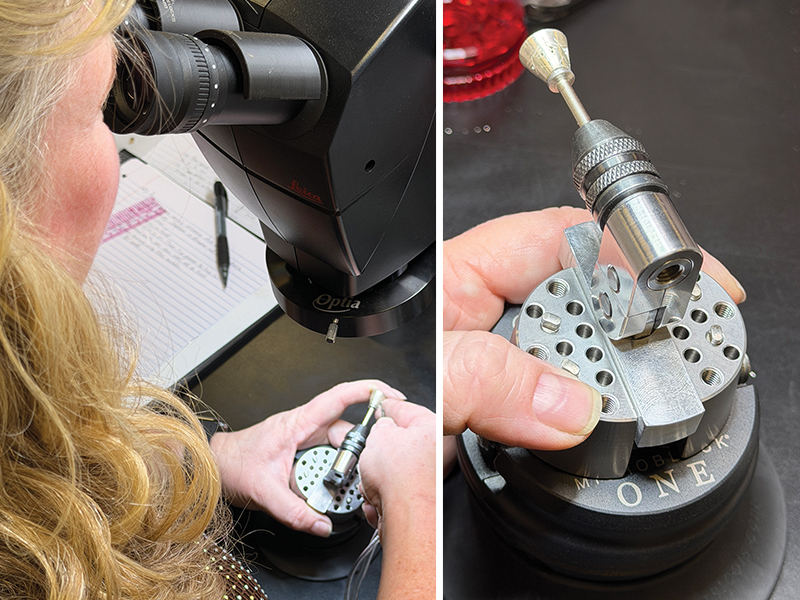
With its low profile and smooth rotation, the MicroBlock One provides stability and control, making it easier to handle detailed work under magnification.
The MicroBlock One features a self-centering jaw system that automatically positions the workpiece in the center, saving time and improving accuracy. It also includes an adjustable rotational brake, allowing you to move freely, add resistance, or fully lock the position depending on the task.
In use, the movement is smooth and controlled. I found it easy to rotate with minimal effort, and the shape made it comfortable to handle, especially for smaller hands. It is also fully compatible with existing GRS accessories, including pin jaws, making it easy to integrate into an existing setup.
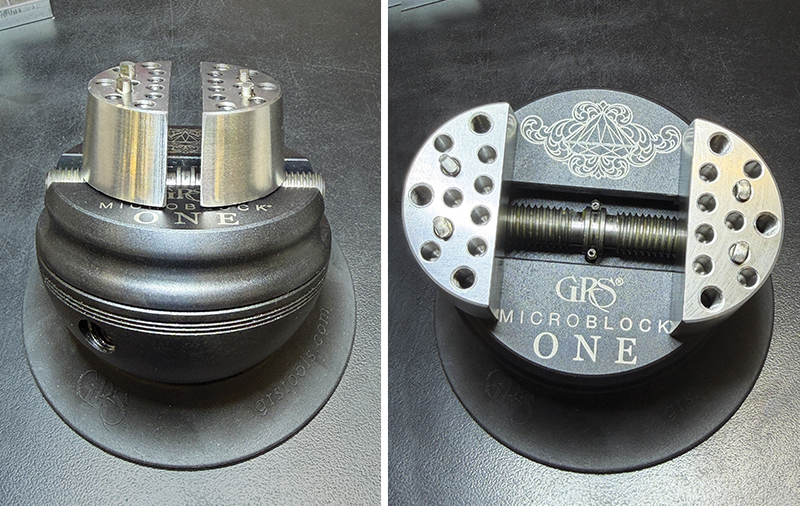
Typically priced around $250, it serves as an accessible entry point into the GRS vise system without sacrificing precision.
GRS Maxim Hand Chuck
The hand chuck is easy to overlook—it is, after all, just a handle. But for push engravers and stone setters, it is the primary connection between the hand and the tool. A poorly designed chuck quickly leads to fatigue, inconsistency, and the frustration of constantly resetting tool length.
The Maxim Hand Chuck addresses one of the most common issues directly: inconsistent tool projection. Its adjustable depth stop allows you to set exactly how far the tool extends and repeat that position every time. For anyone working with multiple gravers in a session, this is a meaningful improvement.
The chuck is compatible with gravers, burnishers, and beading tools, making it versatile across a range of bench tasks. The ergonomic handle design also reduces hand fatigue during extended use.
I first encountered a prototype of this tool during a workshop at the GRS Training Center. At the time, I questioned the need for another hand chuck. But after using it, my perspective changed quickly. While the prototype had a few issues, those have since been resolved. The current version holds securely and performs reliably.
Tool changes are simple—loosen the chuck, insert the tool, and tighten it. Adjusting the depth stop requires removing the chuck and jaw insert, setting the depth with the included hex key, and reassembling. Once set, it allows for consistent, repeatable positioning.
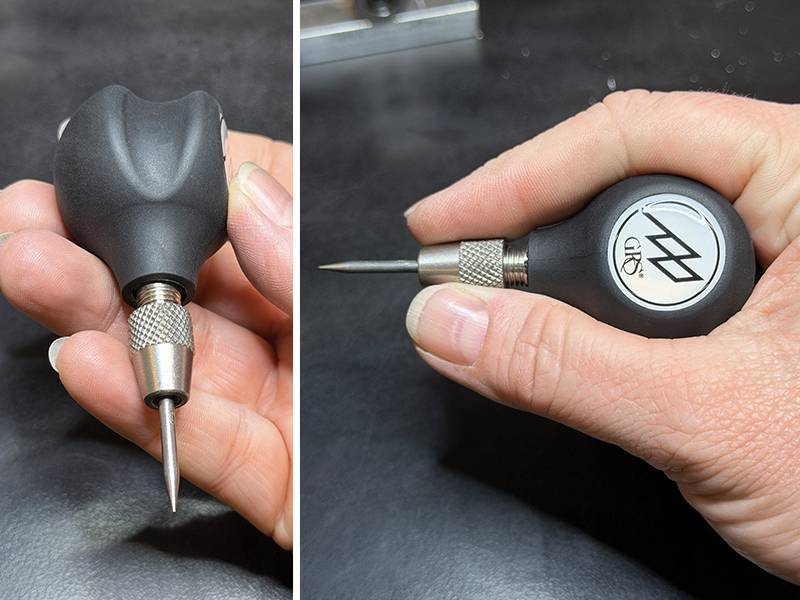
The Maxim Hand Chuck’s adjustable depth stop ensures consistent tool projection, reducing hand fatigue and allowing for more controlled, repeatable cuts across multiple gravers.
The Maxim Hand Chuck is available in a range of configurations, typically priced from around $24 for a single unit up to $125 for multipacks. It is important to note that this is a manual tool intended for push engraving—it does not replace powered systems for heavy cutting. However, for controlled, precision work, it performs exactly as needed.
Taken together, the GraverHone One, MicroBlock One, and Maxim Hand Chuck address three key stages of engraving: preparing the tool, securing the work, and controlling the cut. None of these tools are likely to be the most exciting purchase you make this year—but that is precisely the point. The best tools at the bench are the ones that work so well and so consistently that you stop thinking about them altogether. They remove friction, improve consistency, and allow you to focus fully on the work itself.