

Built for the Body
More Than Skin Deep
Why safety in body jewelry depends on materials, manufacturing, and verification
By Pablo Perelmuter
(Originally Published by MJSA May, 2026)
Editor’s Note: The following excerpt is based on a paper, “Enhancing Safety and Aesthetics in Modern Body Piercing: A Comprehensive Approach to Health and Safety,” that was presented by Pablo Perelmuter at the 2025 The Jewelry Symposium for the Advancement of Jewelry Manufacturing Technology (thejewelrysymposium.com), an annual conference in Detroit, Michigan.
Body piercing has evolved from an underground subculture into a widely recognized global practice, bringing with it increasing expectations around safety and quality. Jewelry used for piercings must meet those expectations in ways that go beyond traditional adornment, requiring careful attention to materials, manufacturing, and verification.
Unlike traditional jewelry, which is worn externally, body jewelry is designed for initial insertion and long-term wear within the body. It must be biocompatible, resistant to corrosion from bodily fluids, and capable of maintaining its integrity in a dynamic biological environment. These requirements have driven the development of more rigorous standards, as well as a growing emphasis on testing, traceability, and accountability across the industry.
As the field has matured, efforts to improve safety have expanded to include not only material selection, but also manufacturing practices and design considerations.
From Fringe to Fixture
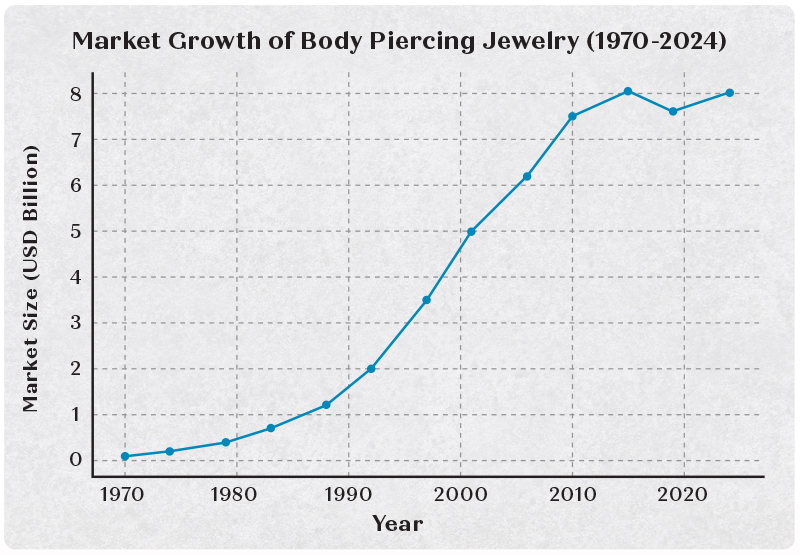
Modern body piercing owes much of its professional structure to The Gauntlet, the first dedicated piercing studio in the United States, founded by Jim Ward in the 1970s. Ward, along with piercing pioneer Doug Malloy, played a central role in shaping the early practices of the modern piercing industry.
The Gauntlet helped formalize piercing techniques and establish safety practices, creating a clear distinction between professional piercing and traditional jewelry retail. At the same time, piercing remained closely connected to underground and fetish communities, and it developed within a broader countercultural context.
Although The Gauntlet operated as a dedicated piercing studio, tattoo shops became a natural environment for body piercing as well. Clients interested in body modification often sought out both services, and this overlap led to a lasting association between piercing and the tattoo industry. That connection helped establish a foothold for professional piercers, even as it reinforced the perception of piercing as part of alternative culture.
The 1990s marked a turning point in the broader acceptance of body piercing, driven in part by pop culture exposure. Aerosmith’s Cryin’ music video, which featured Alicia Silverstone receiving a piercing from professional piercer Paul King, introduced the practice to a wide audience and helped reshape public perception.
This moment, along with similar cultural influences, contributed to a surge in interest. Musicians and athletes—including figures such as Lenny Kravitz and Dennis Rodman—openly displayed their piercings, further normalizing body modification and expanding its appeal beyond subcultures.
As visibility increased, so did demand for professional services and specialized jewelry. Piercing was no longer confined to alternative spaces; it had entered the mainstream as a widely recognized form of self-expression. At the same time, more practitioners began working in dedicated piercing studios, reflecting the growing recognition of the field as a distinct profession with its own technical requirements and safety standards.
This rapid growth also brought new challenges. As more people sought piercings, the limitations of existing jewelry—particularly in terms of material quality, design, and consistency—became more apparent. These issues helped drive the industry toward more formalized standards and a greater focus on safety.
Setting the Standard
In the early days of professional piercing, practitioners had limited access to jewelry designed specifically for use in the body. Many relied on adapted pieces originally intended for other purposes, which raised concerns about both safety and performance. Materials were not always selected with biocompatibility in mind, and designs did not consistently account for the stresses of long-term wear in healing tissue.
These limitations led to a range of issues, including mechanical failure, irritation, and complications during healing. As demand for higher-quality jewelry increased, it became clear that more consistent standards were needed—not only for materials, but also for how those materials were tested and verified.
As concerns about safety and material quality grew, so did pressure—both from within and outside the industry—to bring more structure to body piercing practices. In California, proposed legislation even sought to ban body piercing altogether, citing health risks tied to inconsistent standards.
That effort prompted a response from practitioners. In 1994, a group of piercers formed the Association of Professional Piercers (APP), initially to push back against the proposed restrictions. The organization quickly evolved beyond that original purpose, becoming a central resource for health and safety information not only for piercers, but also for healthcare professionals, legislators, and the public.
Over time, the APP helped establish a foundation for best practices across the industry. Its members contributed to the development of standards through hands-on experimentation with materials, surface finishes, and mechanical properties, as well as through the sharing of technical knowledge. Today, the organization includes members from around the world and continues to play a leading role in advancing safety and education in body piercing.
Raising the Bar
As the body piercing industry has evolved, practitioners have taken on an increasingly active role in shaping the standards that govern jewelry safety. Rather than acting solely as end users, piercers function as key stakeholders, helping define expectations for the materials and designs used in the products they work with.
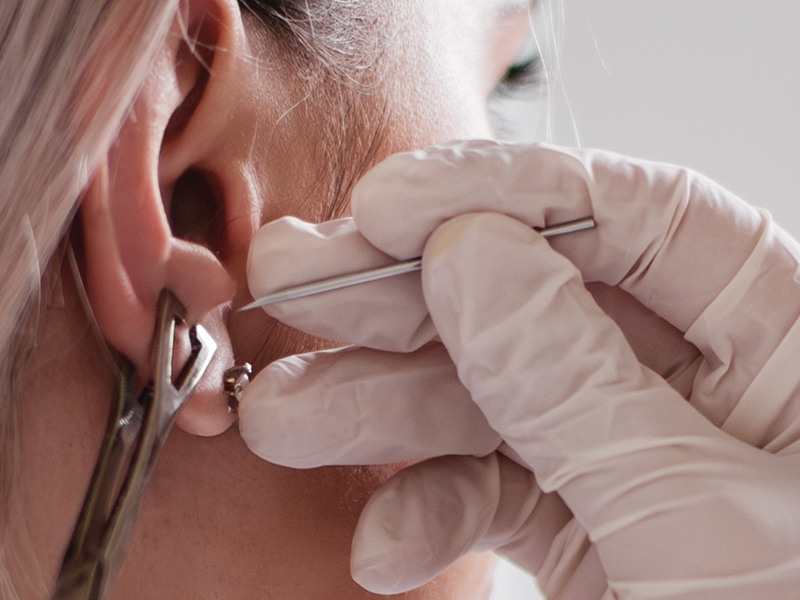
In body piercing, material choice, surface finish, and consistency all directly affect healing and long-term wear.
This involvement reflects the realities of the work itself. Because piercers are responsible for inserting jewelry into the body—often into fresh piercings—they must be confident that the materials they use meet high standards for safety and performance. That responsibility has led to broader adoption of established material standards, as well as the development of additional verification methods intended to ensure compliance.
One of the guiding principles to emerge from this process is the idea that body piercing jewelry must function similarly to medical implants, when such comparisons are applicable. In both cases, materials remain in prolonged contact with the body, including healing tissue, and, in some instances, mucous membranes. As a result, the expectations for performance extend beyond appearance to include long-term stability, resistance to corrosion, and compatibility with the biological environment.
To meet these expectations, the industry has aligned itself with standards commonly used in medical device manufacturing. ISO 10993, for example, is used to evaluate the biocompatibility of materials, assessing how they interact with the body and whether they may cause adverse reactions. ASTM standards such as F136, F138, and F1295 define specific material compositions and properties for alloys used in implantable devices, including titanium and stainless steel.
By adopting these standards, piercers and manufacturers are working to ensure that body jewelry materials undergo a level of scrutiny comparable to that applied to surgical implants. The goal is to provide materials that can withstand long-term exposure to bodily fluids, mechanical stress, and tissue interaction without degrading or causing harm.
From Trust to Proof
Body piercing jewelry continues to exist in a regulatory gray area, often classified alongside lightweight jewelry, where existing regulations do not fully reflect how these products are used.
This disconnect has significant implications for quality control. While body jewelry requires a high level of material verification and consistency, the systems used to evaluate it are not always applied with the same rigor found in medical device manufacturing. Assaying practices, for example, are not consistently enforced, and manufacturers are not uniformly required to meet the same standards for verification.
In practice, practitioners have often had to rely on documentation that is incomplete or difficult to verify. Manufacturers have historically provided mill certifications to indicate material composition, but these documents have not always been supported by independent testing. In many cases, certifications originated from overseas suppliers that lacked transparent verification processes, making it challenging to confirm their accuracy.
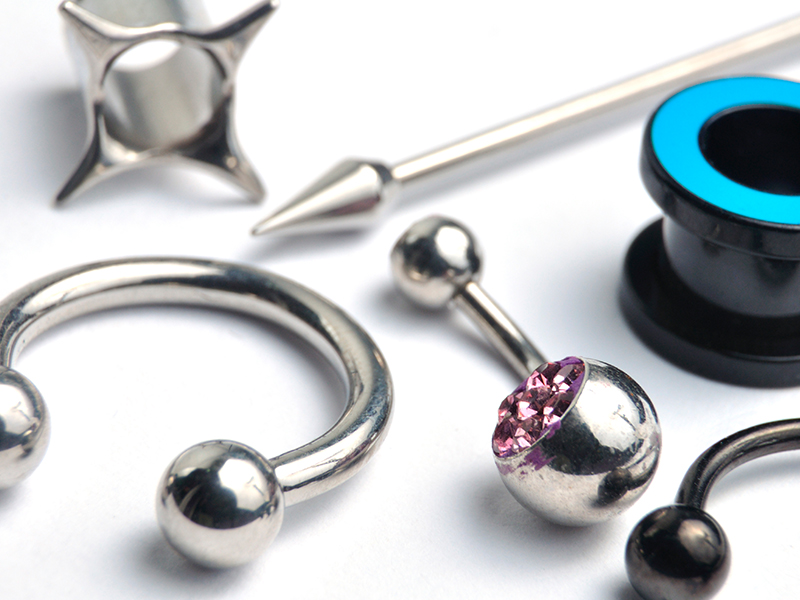
Every component begins with a material whose composition and origin need to be documented and verified.
Recognizing the need for greater accountability and verifiable oversight, the industry developed the Body Jewelry Verification Program (BJVP) as a structured system for evaluating materials and manufacturing practices.
The BJVP establishes a framework in which manufacturers are held to defined standards through documented and verifiable processes. Participating in the program requires the submission of detailed records, including mill certifications, in-house testing results such as X-ray fluorescence (XRF) analysis, batch tracking information, and third-party laboratory reports. These materials are reviewed to confirm compliance with recognized standards for composition and performance.
By incorporating independent verification and traceability, the program addresses longstanding concerns about the reliability of manufacturer-provided information. It also creates a more consistent system for evaluating jewelry intended for both initial piercings and long-term wear, helping ensure that materials meet the necessary requirements for safety and durability.
Gaining Traction
Since its introduction in 2018, the BJVP has gained traction among manufacturers producing body jewelry for professional piercing studios. Participating is voluntary, but it has become an increasingly sought-after form of verification.
In some cases, companies involved produce thousands of pieces of jewelry each day, including components such as tops, flat backs, and rings used in a wide range of piercings. While the total number of participating manufacturers remains relatively small, they represent a large share of the manufacturers focused on supplying professional piercing studios.
The program is structured in phases based on material categories. Phase 1 focuses on titanium and steel, while Phase 2 expands to include gold and platinum. Although participation is still growing, these phases reflect an effort to address the materials most commonly used in both initial and long-term piercings.
The introduction of stricter verification and tracking requirements has already led to changes in how some manufacturers operate. In certain cases, companies that previously relied on third-party production have shifted toward more controlled, in-house manufacturing processes. Others have strengthened their internal quality control systems to meet the expectations of the program.
These developments point to a broader shift within the industry. Where trust in manufacturers was once assumed, there is now a growing emphasis on documented transparency and verifiable compliance. This change reflects evolving expectations among practitioners, who increasingly require clear evidence that materials and processes meet established standards.
Standardizing Production
For many years, jewelry manufacturers supplied products to body piercers without providing verifiable documentation regarding material safety or quality control. As discussed earlier, this lack of independent verification made it difficult to confirm whether materials met the necessary standards for biocompatibility and structural integrity.
As the industry expanded, manufacturing also evolved. Small-scale operations grew into larger production facilities capable of producing thousands of pieces each day while maintaining precision and consistency. This shift increased the need for formal quality management systems to ensure that each piece of jewelry met defined standards.
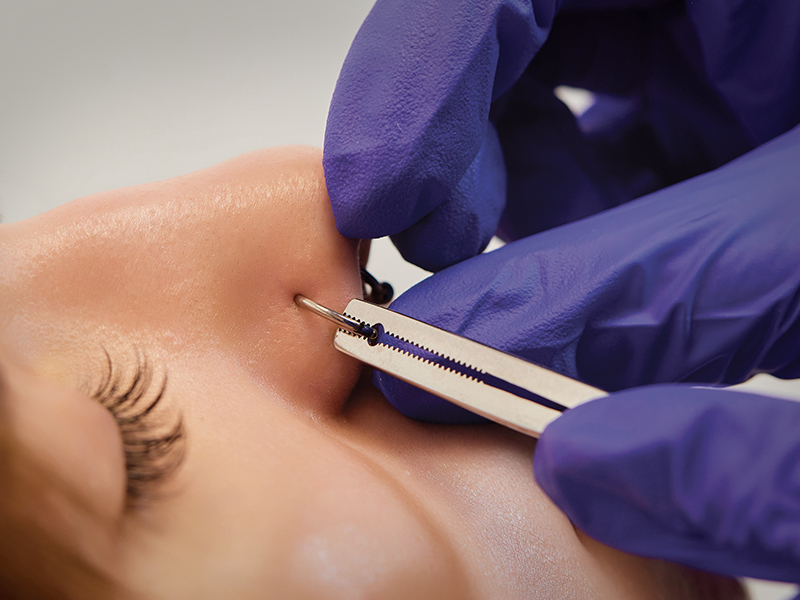
Handling jewelry in a live piercing requires confidence that materials will perform reliably inside the body.
To meet these expectations, leading manufacturers began adopting established quality frameworks such as ISO 9001 and ISO 13485. ISO 9001 provides a general structure for quality management, focusing on consistency in production and adherence to defined processes. ISO 13485 builds on this framework with requirements specific to medical device manufacturing, emphasizing risk management, traceability, and regulatory compliance.
These standards require manufacturers to document their processes in detail, from raw material sourcing through final inspection. This documentation supports traceability and helps ensure that products meet established specifications. For practitioners, it provides greater confidence in the reliability of the jewelry they use.
Transparency in sourcing and production has become a fundamental expectation, particularly for jewelry intended for initial piercings, including batch testing, chemical composition verification, and documented compliance with recognized standards.
Beyond Titanium & Steel
While materials such as titanium and steel benefit from well-established implant standards, body piercing jewelry also incorporates materials that do not have direct medical equivalents. These include gold alloys, platinum-based materials, and certain glass compositions, all of which are commonly used in piercing jewelry.
To address this gap, additional standards have been developed to define acceptable material properties. ASTM F2999 and ASTM F2923 establish requirements for chemical composition, toxicological safety, and limits on elements such as nickel that may cause adverse reactions. These standards help ensure that materials used in body jewelry are suitable for prolonged wear.
ISO 1811 complements these standards by providing a method for testing nickel release, allowing manufacturers to evaluate how materials behave under conditions that simulate wear. This is particularly important for individuals with sensitivities, as even small amounts of nickel release can lead to irritation or allergic reactions.
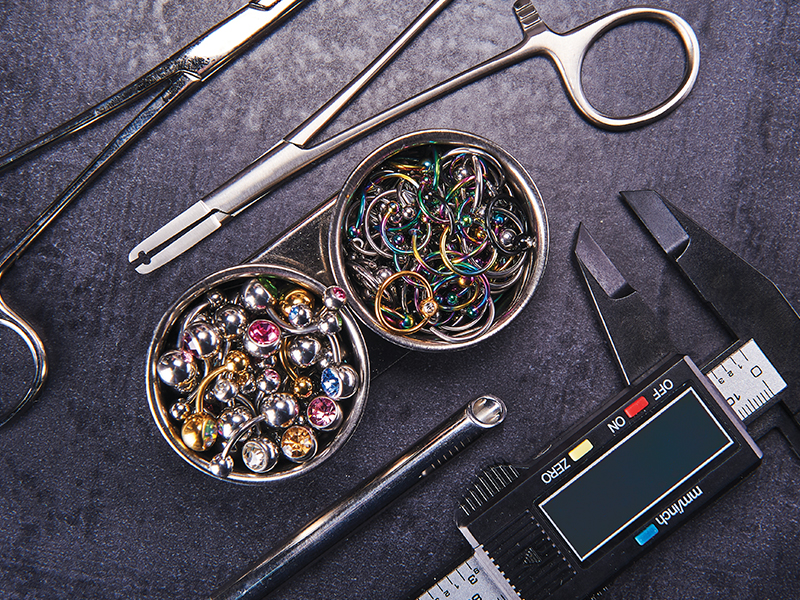
Advancing safety means aligning materials, processes, and verification within a more structured system.
Together, these frameworks create a more comprehensive approach to material safety, particularly for jewelry that combines multiple materials or is intended for long-term use. However, inconsistent enforcement across the broader jewelry industry continues to present challenges, making reliable verification systems an essential part of maintaining high standards.
Strengthening the System
The BJVP continues to evolve as part of a broader effort to strengthen accountability within the body piercing industry. Developed to address gaps in transparency, traceability, and material verification, the program represents an ongoing collaboration between practitioners, manufacturers, metallurgical engineers, and toxicology experts.
This collaborative approach supports the development of more consistent standards for jewelry used in both initial piercings and long-term wear. By requiring comprehensive documentation and independent verification, the program establishes a system in which materials can be evaluated through verifiable data rather than assumption.
In addition to improving transparency, these processes help ensure that materials meet established benchmarks for biocompatibility, chemical stability, and structural integrity. They also provide practitioners, health departments, and regulatory agencies with clearer information about the products being used, supporting more informed decision-making across the industry.
As the body piercing industry continues to grow, the need for consistent, reliable standards remains central. Efforts to refine verification processes and expand material guidelines are helping to create a more structured framework for evaluating body jewelry, while also supporting continued innovation in materials and design. Through this ongoing work, the industry is moving toward a more transparent, accountable model aligned with the demands of safety and long-term wear.