

A Market Defined by Intent
The Mid-Year Reset
What 2026 is telling us about holiday jewelry selling
By Deborah A. Yonick
(Originally Published by MJSA May, 2026)
There are years defined by trends—and then there are years defined by clarity. 2026 is the latter.
By midyear, enough signals have aligned to make something clear: the jewelry market isn’t drifting. It’s recalibrating. At the center of that shift is a change in how and why consumers buy.
What’s emerging isn’t a new trend. It’s a new way of buying.
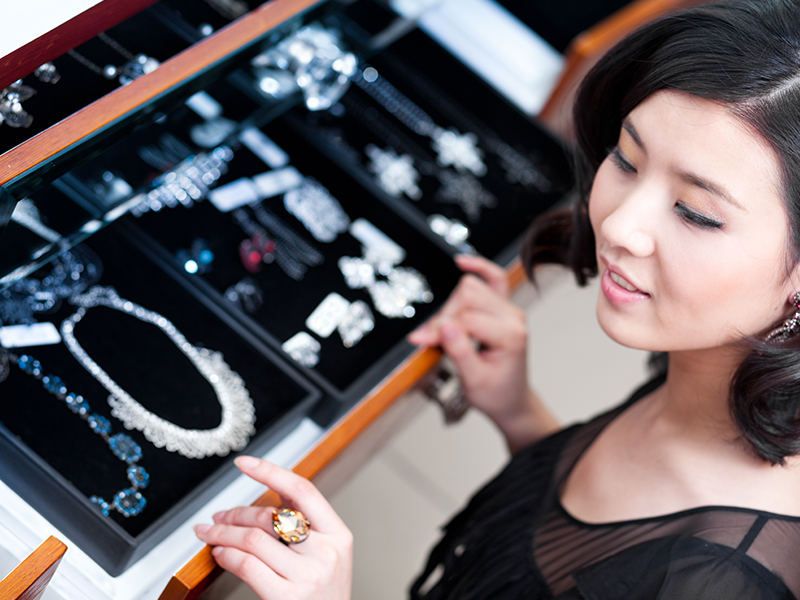
Jewelry is being chosen more deliberately, shaped by personal meaning, long-term value, and the role it plays in a customer’s life.
What can appear contradictory on the surface—strong dollar sales alongside softer unit movement, rising prices paired with more selective shoppers—is, in fact, a market reorganizing itself around two distinct modes of purchase.
Not a divided customer. A dual mindset.
What’s Changing
According to McKinsey & Co.’s State of Fashion 2026 report, jewelry continues to outperform the broader fashion category, driven by consumers seeking “long-lasting investments, self-expression, and self-gifting.”
That strength stands in contrast to the wider luxury sector, where growth has slowed to low single digits after several years of price-led expansion.
Jewelry is moving differently because it is being valued differently. It is no longer purchased solely as adornment or for occasion. Instead, it has taken on a more layered role: a form of personal expression, an emotional marker, and increasingly, a perceived store of value.
As Jean-Christophe Babin, CEO of Bulgari, observed in a Vogue article published earlier this year, “Clients are comforted by purchasing a product whose value increases over time.”
That shift is also evident in current consumer research. Findings released earlier this year by Jewelers Mutual Group indicate that buyers are becoming more intentional, tying purchases to personal milestones, everyday moments, and self-expression rather than traditional occasions. Jewelry is not being abandoned in a more cautious environment—it is being chosen more deliberately.
Taken together, these signals point to a consumer who is not stepping back, but becoming more selective about what—and why—they buy.
Dual Tracks
What has emerged is not a clean split, but two distinct tracks that often coexist within the same consumer.
On one side is everyday fine jewelry. Here, lab-grown diamonds, silver, vermeil, and lighter-weight gold are expanding access and increasing purchase frequency. Consumers are buying more often, driven by self-purchase and self-expression—layering, stacking, and rotating pieces in ways that mirror broader fashion habits.
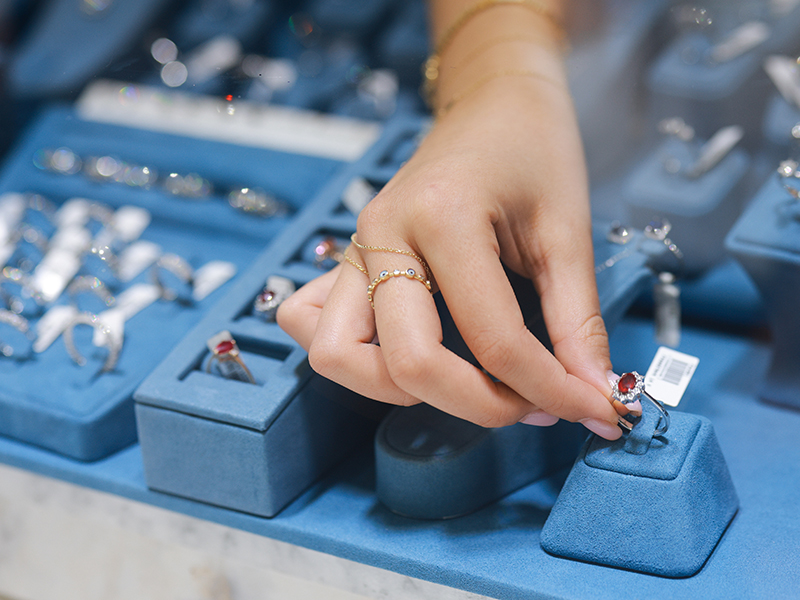
Jewelry showcases should balance quick-turn styles with lasting pieces, reflecting how consumers buy for both now and later.
On the other side is investment and heirloom jewelry. Natural diamonds, high-karat gold, platinum, and exceptional gemstones are increasingly framed around permanence. Purchases are less frequent and more deliberate, often tied to milestones, legacy, or redesign. They carry narrative weight and are expected to endure.
These are not competing categories. They are complementary.
Independent diamond market analyst Paul Zimnisky has noted that lab-grown diamonds are expanding access to the category, while natural diamonds are increasingly defined by rarity, provenance, and emotional significance. Two value systems—accessibility and scarcity—now operate side by side.
That dynamic is reinforced by Bain & Co.’s Luxury Goods Worldwide Market Study, released late last year, which points to jewelry’s relative strength as a function of pricing discipline. Entry points remain attainable, even as other luxury categories have moved beyond reach for many consumers.
As Federica Levato, senior partner at Bain & Co., noted in the Vogue article, meaningful jewelry purchases remain available at accessible price levels, an increasingly rare position within luxury.
At the same time, the high end continues to hold, supported by material value, rarity, and emotional permanence.
The result is not fragmentation, but expansion at both ends.
Operational Pressures
This dual-track market is taking shape under real operational pressure.
Gold prices remain elevated. Supply chains continue to shift. Tariffs and sourcing complexities are adding cost uncertainty. And at retail, the pattern is increasingly clear: fewer units, higher tickets.
Insights from Edge Retail Academy show that while dollar sales have held—particularly through key selling periods—unit volume has softened, placing greater pressure on conversion and clienteling.
At the same time, market analysts are seeing growing polarization within the category itself. Edahn Golan, an independent analyst focused on global diamond pricing and market trends, has pointed to pressure in the middle of the market, even as both accessible and high-value segments find demand.
That “missing middle” is where many retailers have historically operated, making this moment less about chasing growth and more about defining position.
Design is already responding. Lighter-weight gold construction, engineered forms, increased use of silver, and modular customization are not just aesthetic shifts. They are strategic responses to cost pressures while preserving presence and perceived value.
What It Means for Holidays
As the industry moves into the second half of the year, the opportunity is not in identifying a single dominant trend. It is in recognizing the mindset behind the purchase.
One customer walks in looking for something to wear tomorrow—expressive, personal, and within reach. Another wants something that will last—emotionally, materially, and symbolically. Often, they are the same person, just not in the same moment.
Retail environments that blur these intentions risk weakening both. When everything is positioned as special, everyday purchases lose spontaneity. When everything is framed as accessible, lasting value becomes harder to communicate.
Clarity is no longer a branding exercise. It’s a sales strategy.