

The Heirloom Revival at the Bench
Redesign Rising
With metals prices high and uncertainty lingering, heirloom jewelry is finding new life as customers choose to remake what they already own.
By Deborah A. Yonick
(Originally Published by MJSA May, 2026)
Over the past year, the jewelry industry has focused heavily on volatility.
Gold recently set a new all-time high and remains near those elevated levels. Tariffs have reshaped pricing across the gemstone supply chain. Manufacturers and retailers alike have been recalculating costs as policy shifts and global pressures alter the economics of a piece almost overnight.
At the same time, another shift has been gaining momentum at jewelry counters and workbenches: the revival of heirloom jewelry.
Instead of beginning with a new purchase, more customers are arriving with inherited or unworn pieces and asking how existing stones and metals might be redesigned for contemporary wear.
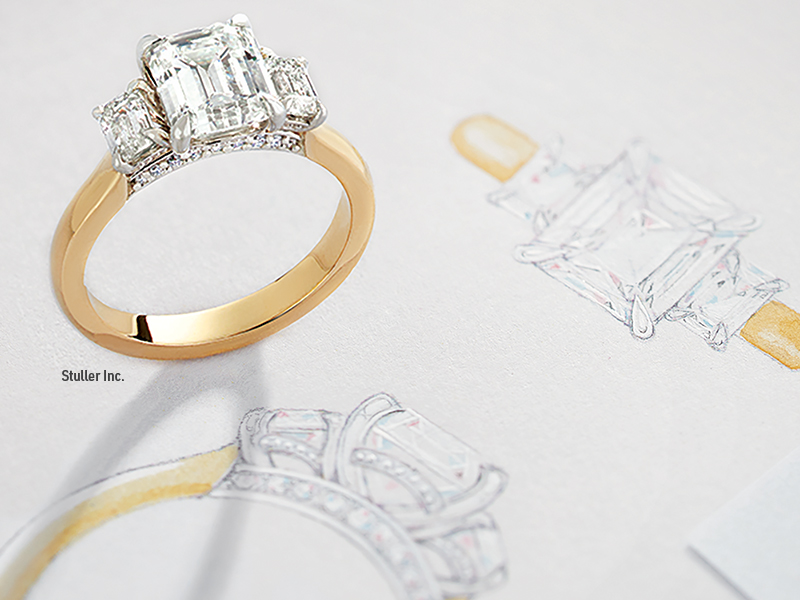
Pieces created decades ago are returning to the bench, where they are being adapted to suit new styles and new wearers.
Data tracked by The Edge Retail Academy shows custom design, repair, and redesign representing a significant share of activity among independent jewelers. In January and February 2026, repair revenue rose 31 percent year over year, while custom work increased 14 percent.
“In periods of economic or broader uncertainty, we reliably see increased demand for redesign and repair as consumers look to make the most of what they already own,” says Kate Szirmay, business coach for the Scottsdale, Arizona–based jewelry retail consulting and training firm. “It’s the jewelry equivalent of renovating your kitchen instead of buying a whole new house.”
From the Counter to the Bench
Consultations for many jewelers increasingly begin not with the display case, but with a small assortment of pieces placed on the counter: inherited rings, outdated mountings, or gemstones removed from jewelry that no longer suit the owner’s style.
Studios focused on custom design are seeing the shift firsthand. Philadelphia-based Bario Neal regularly collaborates with clients to incorporate unworn stones or jewelry into new designs, allowing pieces to evolve while preserving the history attached to them.
“We believe that heirloom jewelry can carry a memory, and our custom design process, often involving the repurposing of heirloom materials, allows clients to honor their history while reinventing it for their own vision,” says jewelry designer and co-founder Page Neal. “This personal, creative, and collaborative approach, supported by our in-house workshop, ensures a distinct, high-quality final product that serves as a conduit for meaningful memories of celebrations and life events.”
The pieces clients bring in are not always traditional heirlooms, Neal notes. Many reflect changing tastes, life transitions, or designs that no longer align with how they want to use or wear their jewelry.
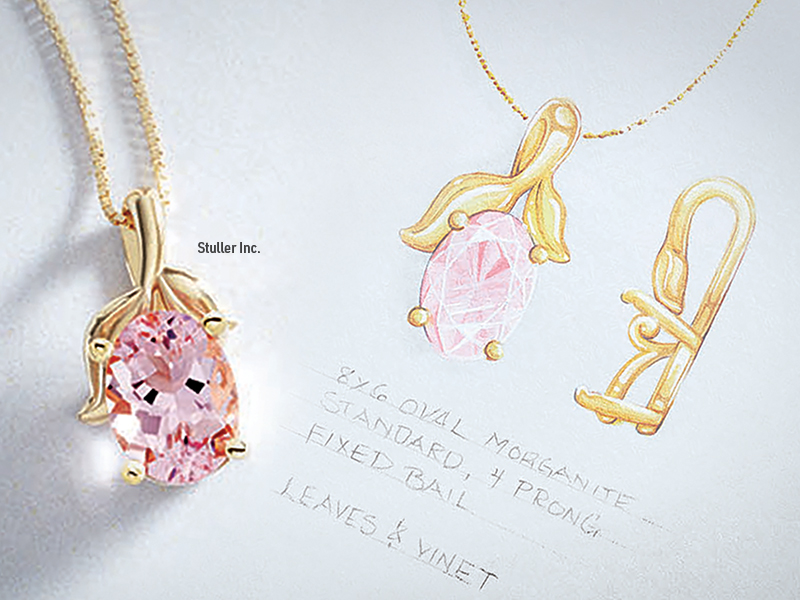
The trend is equally visible from the manufacturing side. Suppliers serving independent jewelers say requests tied to existing stones and redesign projects remain an important part of business.
“Custom is growing in all areas,” says Emily Graffagnino, executive director of custom and private manufacturing with Stuller Inc. in Lafayette, Louisiana. “Bridal rings are always at the top of the list in popularity. Heirloom center stones are being [used not only] as center stones, but also as accent stones within bands and engagement [rings].”
Colored gemstone looks have been trending across categories, and so have requests for remounting heirloom color, Graffagnino adds. “We see larger carat total weight pieces, such as line bracelets or necklaces, being used in the production of smaller pieces for multiple gifts,” she says.
Why Redesign Is Gaining Momentum
A significant portion of jewelry owned by consumers spends most of its life unworn, often stored in drawers or safes. Redesign offers a way to bring those dormant assets back into circulation while preserving their sentimental value.
Economic conditions also play a role. With gold prices at record levels, repurposing existing materials can make financial sense. Resetting a family diamond or melting down inherited gold allows customers to create something new while offsetting the cost of precious metals.
The pattern is not new. Periods of rising gold prices have historically prompted similar waves of jewelry recycling and redesign. During the 1970s gold price surge, jewelers reported an increase in customers bringing in older pieces to be melted down or reset. A comparable pattern emerged following the 2008 global financial crisis, when high metal prices and economic uncertainty encouraged consumers to repurpose family jewelry rather than purchase entirely new pieces.
Vintage and heirloom popularity has been building for several years, says Graffagnino, who attributes part of the current momentum to the ongoing “great wealth transfer” from aging Baby Boomers. “At the heart of it, customers want to honor people, moments, and ideals through custom creations that feel unique and authentic to them,” she says.
The current heirloom revival reflects those same practical considerations, but it also speaks to changing consumer attitudes about jewelry. “Younger buyers are especially drawn to jewelry with meaning, history, and a lower environmental impact,” explains Szirmay, who sees a strong future for the category. “Redesign allows them to honor the past while creating something that fits their style today.”
A Practice Rooted in the Trade
The trend underscores the role jewelers have always played in the lifecycle of jewelry. Resetting stones, melting down gold, and reworking existing pieces were standard practice long before sustainability became a marketing theme.
Redesign work requires balancing technical considerations with an understanding of what a piece represents to its owner. Stones worn by one generation are reshaped for the next, allowing jewelry to evolve while retaining the history attached to it.
The broader jewelry market will continue to navigate uncertainty. Metal prices fluctuate, trade policies shift, and supply chains evolve. But the materials that define jewelry—gold, platinum, and gemstones—were chosen centuries ago for a reason: they endure.
The heirloom revival is less a new trend than a renewed appreciation for that durability. Pieces created decades ago are returning to the bench, where they are being adapted to suit new styles and new wearers.