Better Control at the Bench
Prevent That Dent!
Making a set of nonmarring plier sleeves.
By Helen I. Driggs
(Originally Published by MJSA May, 2026)
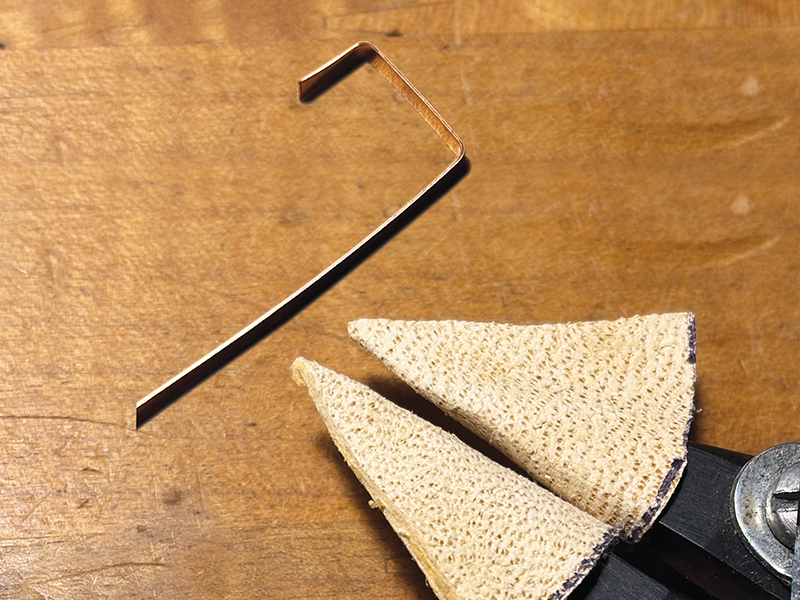
Most of the time, I am delighted to possess great hand strength—especially when jars of jam or olives are involved. But at the bench, delight becomes dismay when my iron grip accidentally leaves plier marks in thin or annealed metal. I do “dress” my pliers by rounding off sharp edges with abrasives, but soft copper calls for more, so I made a set of chamois gloves for my parallel pliers.
1. I always keep a spare sheet of artists’ chamois leather around the house for my myriad creative pursuits. It’s the perfect material for shielding jewelry metal from accidental marks, and I’ve used chamois for everything from hammer socks to nonskid bench pin covers while stone setting.
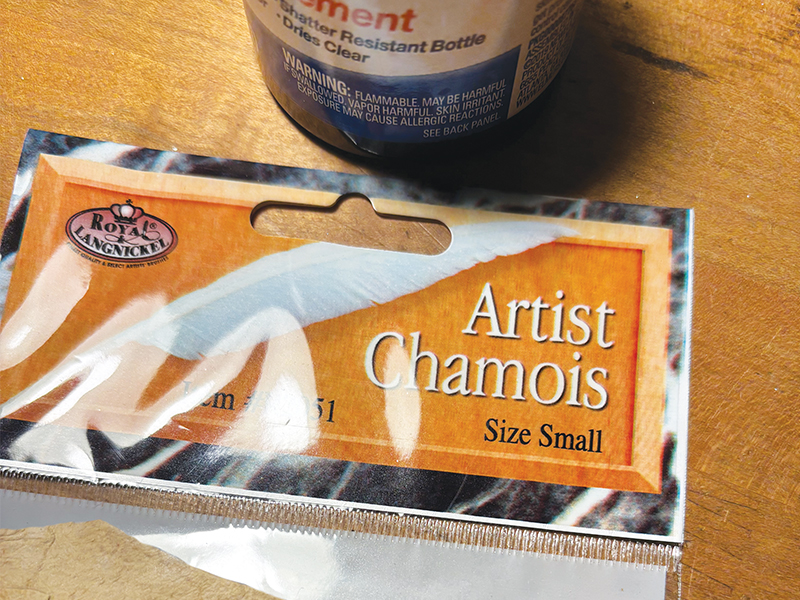
2. To make these plier sleeves, mark a circle with a diameter about twice the length of the plier jaws. Then cut the circle in half. To test the fit, cut one of the half-circles in half to create a quarter section of the original circle. Reserve the other half-circle piece.
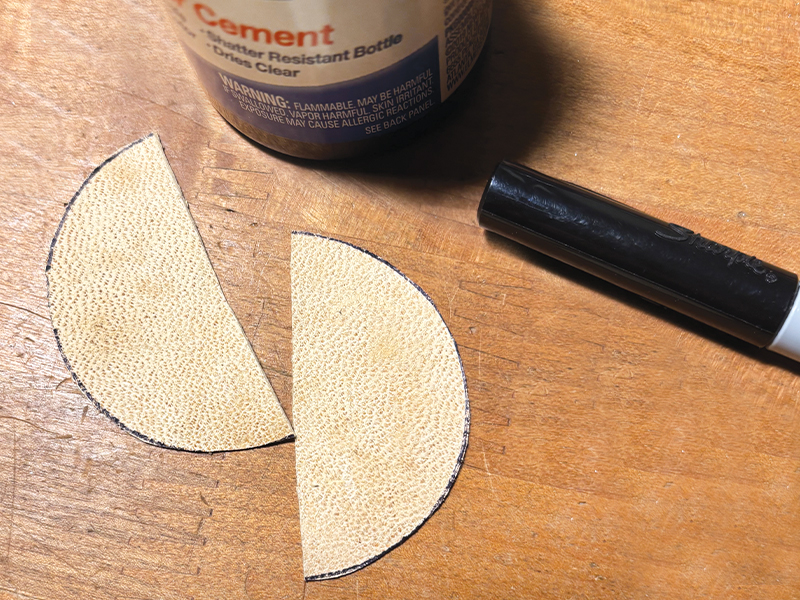
3. Verify that the section is as long as the plier jaw from tip to base.
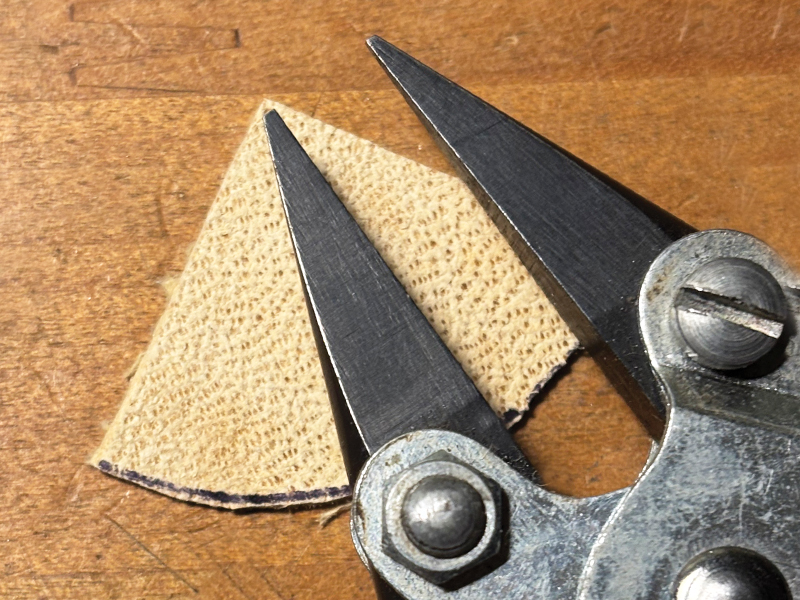
4. Also make sure it’s wide enough to wrap around the base of the jaw with about 3 mm (or so) extra on each side. If it’s too snug at the base, use the reserved piece to cut a slightly larger section with a longer arc.
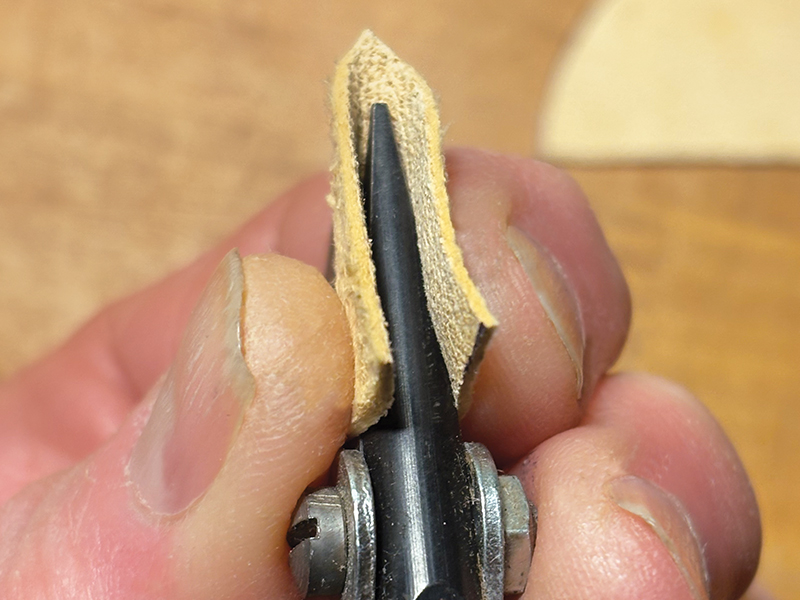
5. Once you have a sleeve that fits, use it as a pattern to cut one for the other jaw. I prefer using contact cement on chamois, but Gorilla Glue will also work. Run a thin line of glue along the edges of the rough side of the chamois. If using contact cement, let it sit for a minute or so before joining.

6. Press the edges firmly together to join them.
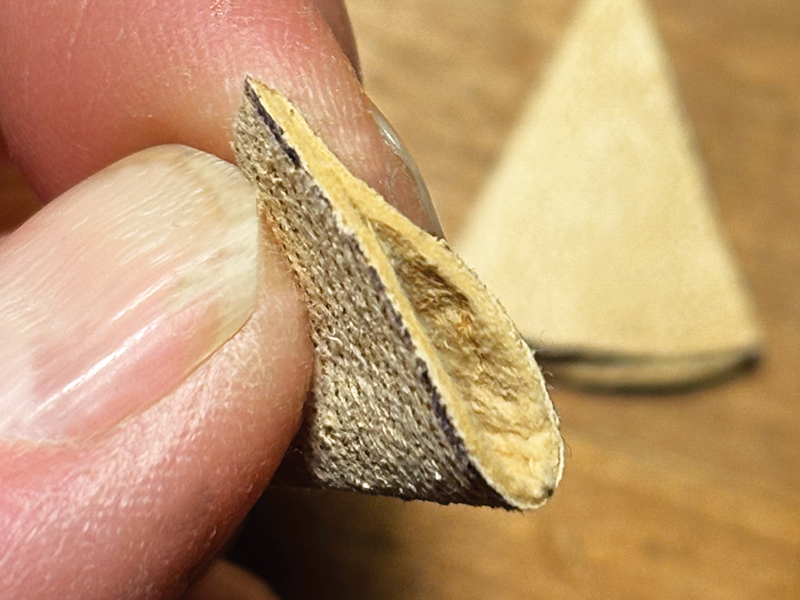
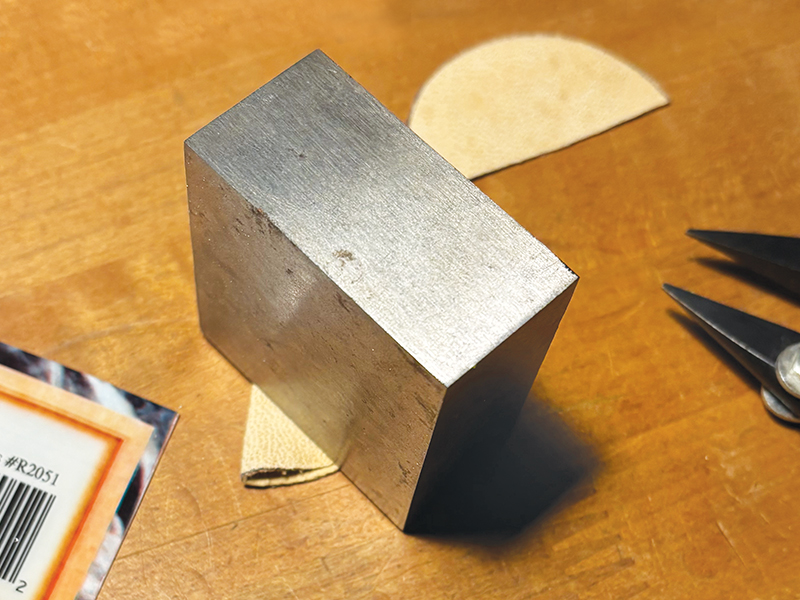
7. A heavy bench block makes a great weight while the glue dries overnight.
8. Voilà! These neat, removable sleeves won’t mar soft copper bezel wire but still make strong, crisp corner folds.