

The New Strategy Behind Jewelry Design
Rethinking Metal
A quieter shift in how jewelry is designed and made
By Deborah A. Yonick
(Originally Published by MJSA March, 2026)
Across the supply chain, metal is being treated less as a fixed cost and more as an active design variable shaped by intention, engineering, and restraint.
Gold prices continue to dominate jewelry headlines, but price alone tells only part of the story. Across workshops and production floors, a more consequential shift is underway. The most important metal story today isn’t simply what gold costs. Rather, it’s how jewelers are rethinking metal itself—how much they use, where they use it, and what role it plays in finished design.
Without much fanfare, manufacturers and suppliers are revising long-held assumptions about weight, alloy choice, and metal hierarchy. These changes are not short-term reactions to market volatility. They are structural adjustments that are reshaping both production strategy and design language as the industry moves deeper into 2026.
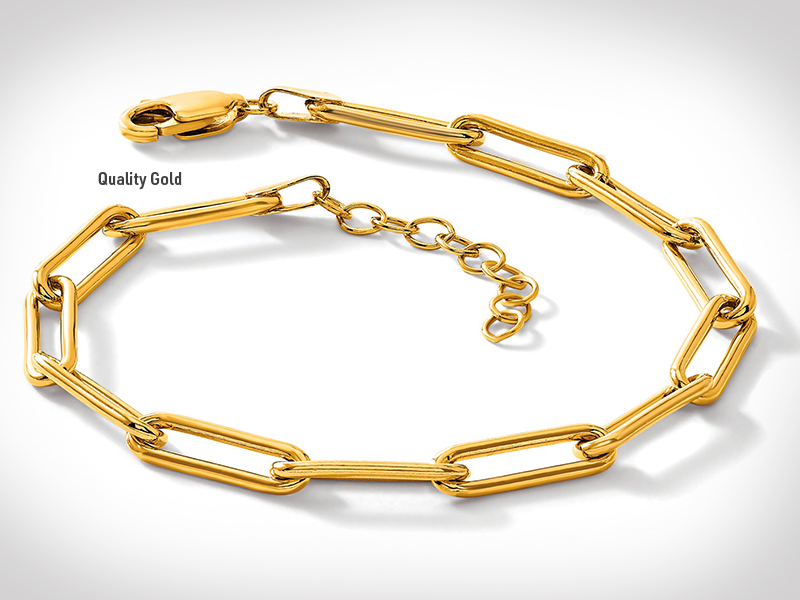
For decades, metal weight functioned as a proxy for value. Heavier pieces signaled permanence, quality, and a rationale for price. That equation is loosening—not because consumers value gold less, but because spending limits remain fixed even as prices rise.
From a wholesaler’s vantage point, that reality plays out daily. At Quality Gold in Fairfield, Ohio, National Sales Director Jeff Wynkoop says consumers don’t simply double their budgets when gold prices climb. If a customer walks into a store prepared to spend $1,000, that expectation doesn’t suddenly expand to $2,000. The pressure shifts to the jeweler to deliver presence, meaning, and satisfaction within that constraint.
That pressure has accelerated a move toward intentional lightweighting—not as a cost-cutting shortcut, but as a design discipline.
Engineering Weight, Not Just Reducing It
At Stuller Inc. in Lafayette, Louisiana, that discipline begins in CAD. According to Emily Bute, executive director of product development, digital design tools have fundamentally changed how weight is managed.
“CAD allows us to be more deliberate with design choices,” Bute explains. “We can review volumes within the files as we go and make adjustments in refined ways to achieve our goals for tolerances, dimensions, and overall weight.”
That capability has expanded how manufacturers approach scale and form. Voluminous, metal-forward designs that once required significant mass can now be produced through techniques such as electroforming, while cast pieces increasingly incorporate hollowed areas or internal scoops that would have been less common in the past. Durability and quality remain non-negotiable, Bute notes, but the path to achieving them has evolved.
Customer behavior is changing as well. “I’ve noticed more customers asking questions to validate the weight or dimensions of pieces than in the past,” she says. “Everyone is being very intentional and clear with their purchasing choices.”
The result is jewelry that doesn’t feel insubstantial, but purposeful. Metal is expected to perform specific functions. It supports structure, defines form, and frames stones, rather than simply adding heft.
Recycled Gold Moves from Differentiator to Default
That emphasis on intention extends to sourcing as well. Stuller’s fabricated metals program uses 100 percent SCS-certified recycled gold, silver, platinum, and palladium, reflecting how recycled metal has shifted from a marketing point to an operational norm.
That same transition is evident further upstream. At Hoover & Strong in North Chesterfield, Virginia, the move toward recycled and refined precious metals has been decades in the making.
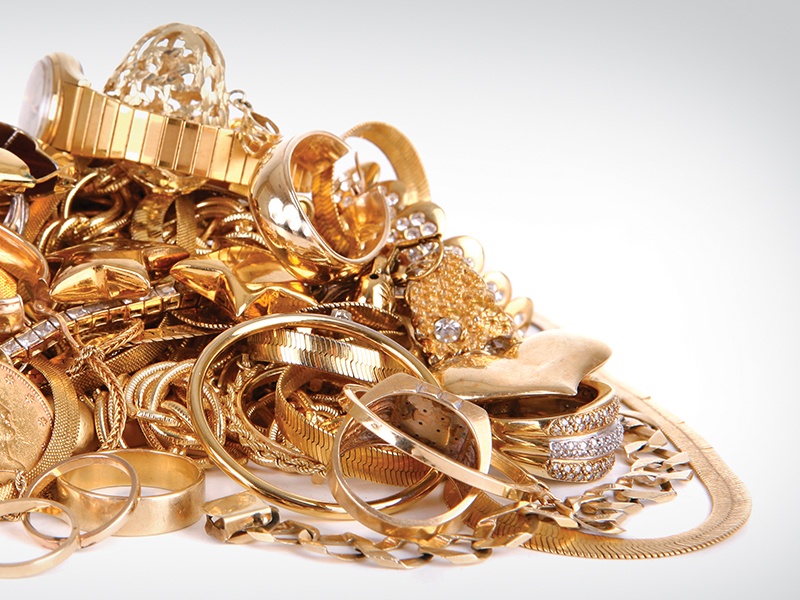
With metal prices high, scrap is moving through the system faster than it can be refined, reinforcing recycled metal as an operational norm rather than a marketing choice.
The company introduced its Harmony recycled precious metals line in 2008, when gold averaged around $900 an ounce and jewelers routinely held deep inventories. At the time, recycled material met only part of production demand. Today, the situation is reversed. With gold prices near historic highs, scrap flows in faster than it can be refined, while purchases of newly mined raw material have slowed.
All of Hoover & Strong’s gold, silver, platinum, and palladium now comes from recycled jewelry, dental, and industrial scrap. The company emphasizes that recycled gold is refined to pure 24k before being re-alloyed. Metallurgically, it is identical to newly mined gold. Performance, including color, malleability, and strength, is determined by alloy formulation, not by the source of the original material.
According to company president Torry Hoover, consumer expectations have evolved as well. Customers are far more informed and more likely to ask where metals, diamonds, and gemstones originate. Responsible sourcing is no longer a niche concern; it is part of baseline expectation. In this environment, recycled gold functions less as a differentiator and more as infrastructure.
Selective Use Replaces Blanket Application
As metal costs have risen, premium materials haven’t disappeared, but they are being used more selectively.
Rather than defaulting to a single metal throughout a piece, manufacturers are reserving platinum for high-stress components, deploying higher karats where color and tactile experience matter most, and combining materials strategically to balance performance and cost. Bute notes that findings have become a key area of flexibility. “We’ve developed very weight-conscious shanks, settings, and components to lean into this shift, while still pushing design boundaries,” she says.
Design trends reinforce that approach. Larger diamond carats and solitaire engagement styles can support lighter overall metal weights, further favoring selective placement over blanket application.
What Silver Can Do That Gold No Longer Can
Silver is also being reassessed, though not as a stand-in for gold. Instead, it enables forms that gold, at current prices, no longer easily supports.
Large, chunky silhouettes in solid gold have largely disappeared from fashion-forward collections. Silver, by contrast, allows scale: bold chains, oversized bracelets, and statement forms that would be cost-prohibitive in gold.
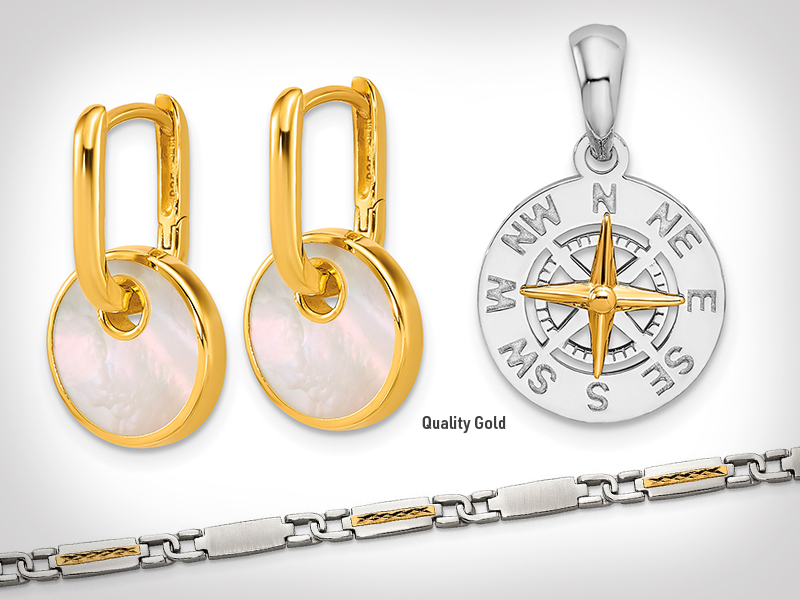
Gold-plated, gold-filled, and mixed-metal construction allow manufacturers to balance scale, appearance, and cost as solid gold becomes more selectively applied.
At Quality Gold, Wynkoop points to steady interest in gold-plated sterling, gold-filled jewelry, and plated alternative metals, particularly in yellow tones, which remain dominant across fashion and bridal categories. Mixed-metal pieces, however, remain a tougher sell at retail. While they may make technical sense, Wynkoop notes they often introduce complexity for consumers who want clarity about what they’re buying.
Metal Strategy Is Design Strategy
Perhaps the most important shift is philosophical. Metal is no longer treated as a fixed input calculated after a design is complete. Instead, metal strategy is increasingly integrated at the concept stage.
“We discuss this topic in our daily design, sample, and CAD reviews,” Bute says. “Development and research are constant, and we’re continually working to dial in our standards to be as accurate as possible when it comes to metal weights.”
Making these decisions earlier shortens development cycles, reduces costly revisions, and produces jewelry that feels more resolved because it is designed with real-world constraints in mind from the outset.
What This Means for the Trade
For jewelry makers, the implications are practical and immediate. Designing with metal strategy in mind saves time and margin downstream. Weight alone no longer defines value—engineering and intention do. Flexible metal strategies help cushion market volatility without sacrificing design integrity. And metal itself has returned as an active design element, not just a cost line item.
As 2026 unfolds, the manufacturers best positioned to navigate metal market swings won’t be the ones chasing prices. They’ll be the ones who have already reconsidered how metal functions inside their work.
The real story isn’t what gold costs today. It’s how the industry is learning to use metal with purpose, precision, and restraint, and how those choices are reshaping jewelry itself.