

Shifting Signals, Smarter Strategy
No Big Bang
How 2025 market signals are shaping strategy for 2026
By Deborah A. Yonick
(Originally Published by MJSA February, 2026)
The latest 2025 market reports point to a sector that is neither booming nor busting, but quietly evolving. Steady growth is forecast for the U.S. jewelry industry, now valued at nearly $78 billion, with competitive advantage increasingly rooted in transparency, digital fluency, smart assortment planning, and superior service.
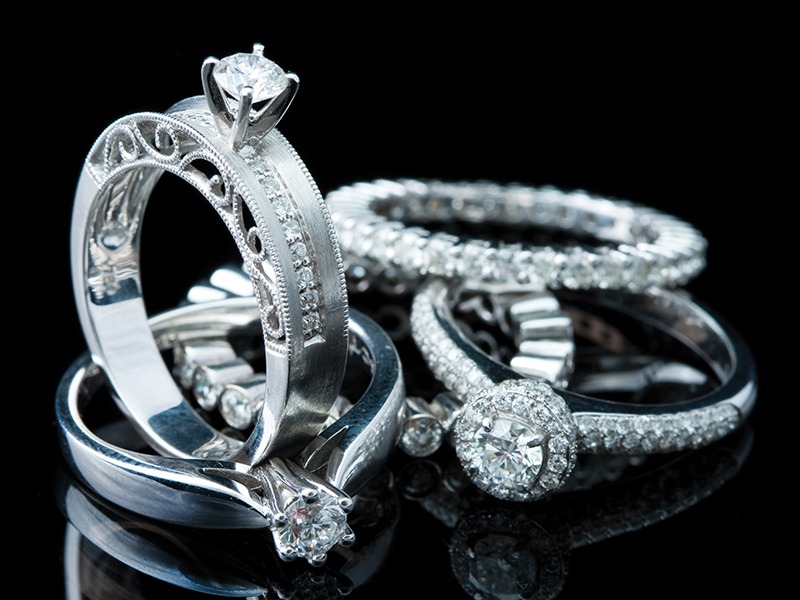
As luxury spending eases and retail growth levels out, jewelry continues to move forward on steadier ground.
To understand where opportunities lie in the year ahead, it helps to look at the trends that took shape in 2025.
Luxury is slowing, but jewelry remains a bright spot.
McKinsey’s 2025 luxury outlook shows spending easing after several accelerated years. Yet within that softening, jewelry continues to demonstrate relative resilience, supported by sentiment-driven purchases, personalization, and self-purchase.
Bain & Co. similarly anticipates cautious luxury spending in the near term, with improved momentum in 2026 and jewelry positioned to benefit early.
The takeaway is clear: jewelry enters the new year on firmer footing than many discretionary sectors—not immune to pressure, but comparatively stable.
Retail growth is moderate, so plan accordingly.
The National Retail Federation’s 2025 projections point to a stabilizing retail environment, with low single-digit growth across consumer categories. With post-pandemic demand receding, growth in 2026 will need to be earned, not assumed—favoring calculated purchasing over speculation.
From an Edge Retail Academy data perspective, 2025 sent clear signals jewelers should heed as they plan the year ahead, says Sherry Smith, director of business development.
“While 2025 delivered record holiday dollar sales, much of that growth was price-driven, not demand-driven,” Smith explains. “Our data shows declining foot traffic and three consecutive months of lower unit sales in Q4—even during peak holiday weeks.”
That divergence between revenue and volume makes inventory discipline even more critical as uncertainty persists. Tariff policy remains in flux. Combined with lingering inflation, volatile metal prices, and shifting supply chains, disciplined, agile buying is no longer optional—it is essential.
“We’re advising retailers to focus on what they can control—manage inventory tightly, maintain disciplined buying practices,” Smith adds.
But buying smarter is only part of the equation.
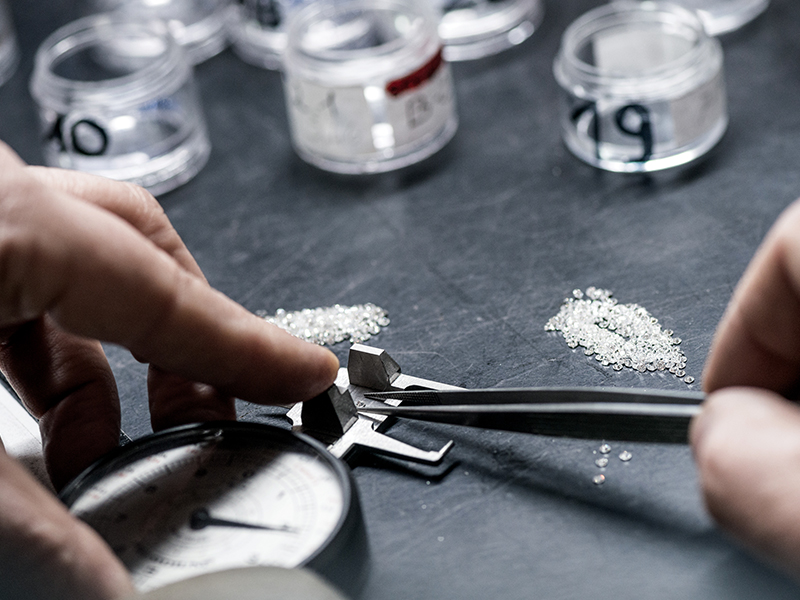
Lower lab-grown diamond pricing is recalibrating value, opening new design possibilities rather than displacing natural diamonds
“Conversion rate is becoming one of the most critical key performance indicators for jewelers,” Smith says. “When fewer customers are walking through the door, every interaction matters more. Improving conversion by even a few points can materially impact results in a lower-traffic environment.”
And one of the biggest growth levers may already be inside the database.
“Clienteling can no longer be viewed as a nice-to-have,” Smith underscores. “Our data suggests that building repeat visits, nurturing existing relationships, and reactivating past clients will be essential strategies to combat lower foot traffic in 2026.”
Benchmarking continues to show that core categories—bridal, gold basics, and signature collections—deliver the most reliable turn and margin. But how jewelers sell those categories in 2026 may matter as much as what they stock.
Customers are becoming more intentional—and more digital.
Online jewelry sales continued to rise in 2025, with U.S. e-commerce revenue estimated at approximately $16.8 billion, or about one-fifth of the total market. But the shift extends beyond transactions. AI-driven search, creator-led content, and social commerce increasingly shape discovery and evaluation long before a purchase is made.
Digital touchpoints influence buyers at every price tier, including luxury. As a result, product photography, gemstone detail, and transparent copy are now essential for both SEO and AI-driven discovery. For 2026, the priority is less about competing with marketplaces and more about being findable where customers are searching.
Lab-grown diamonds are reshaping pricing, not replacing natural.
Reports place the global diamond jewelry market near $200 billion in 2025, with both natural and lab-grown contributing. Lab-grown is now firmly established in the bridal and fashion categories, and its lower pricing has recalibrated expectations around scale and styling. Analysts note that lab-grown diamonds have been priced as much as 90 percent below comparable natural stones—a gap that continues to reshape how consumers think about value.
This dynamic gives lab-grown an edge in design flexibility and margin, enabling larger silhouettes and colored stones at attainable price points. For natural diamonds, the mandate is different: differentiation through rarity, heritage, provenance, craftsmanship, and longevity. The strongest strategies for 2026 recognize these segments as complementary, not competitive, each serving distinct consumer motivations.
Sustainability is shifting from marketing to mandate.
In 2025, sustainability claims faced sharper scrutiny. Terms such as “recycled gold,” “ethical sourcing,” and “traceability” are increasingly questioned, prompting brands to support their language with verifiable action—from Pandora’s move to fully recycled precious metals to Tiffany & Co.’s traceability initiatives and digitally native labels emphasizing recycled and ethically sourced materials.
Whether or not a jeweler pursues certification, the pressure to substantiate sourcing claims is growing. For 2026, the sourcing story must be specific, credible, and transparent. Sustainability is no longer a flourish; it is a purchasing criterion.
Self-purchase is reshaping demand.
A 2025 nationwide survey by BriteCo found that roughly 80 percent of U.S. adults now buy fine jewelry for themselves rather than waiting to receive it as a gift, underscoring how self-purchase has moved into the mainstream. Millennials are leading the shift, with 86 percent of those aged 30–44 reporting self-purchases.
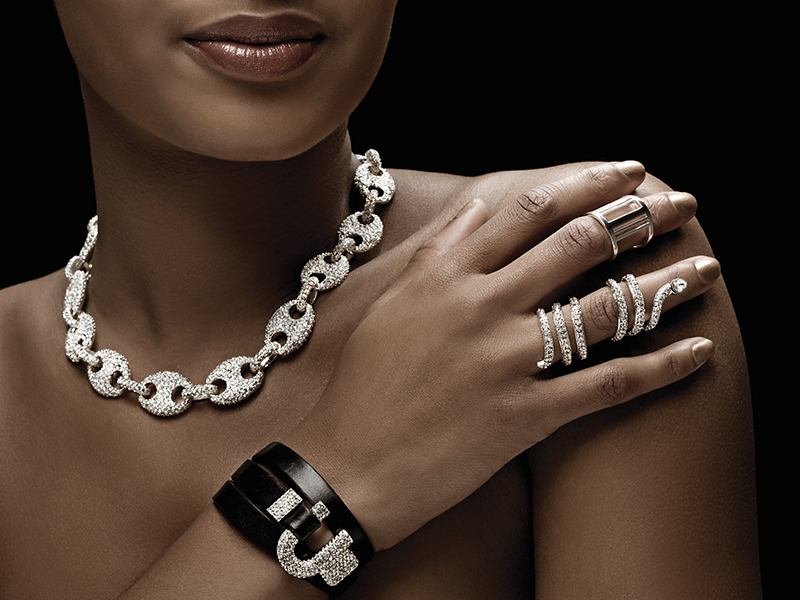
As self-purchase becomes the norm, jewelry is increasingly chosen as an expression of identity.
As Dustin Lemick, founder and CEO of BriteCo, puts it, “Fine jewelry is no longer just a gift someone gives you. It’s something people choose for themselves—to express who they are, to celebrate what they’ve achieved, and to invest in something that lasts.”
Design trends point to expressive modernism.
Looking beyond pricing dynamics, 2026 design forecasts from Jewelers Mutual Group highlight expressive, sculptural aesthetics—fluid shapes, mixed metals, and distinctive gemstone cuts that support personal style and everyday wear.
That direction is echoed by Amanda Gizzi, senior vice president of corporate affairs for Jewelers of America. “Following a year of high gold prices and a decade of high gold fashion, look for white metals to have a major moment this year. Silver, platinum, and even white gold will share the spotlight with yellow gold. Large, open links and jewelry with relief styles will also shine. Colored gemstones, hand-crafted details, long earrings, and natural diamonds will round out the trending styles for the first half of the year.”
Together, these signals suggest that margin protection in 2026 will rely less on stone size and more on storytelling, craftsmanship, and visually striking silhouettes—boldness executed with refinement.
Resale and value retention are mainstream.
The broader secondhand luxury market, which includes fine jewelry, reached nearly $38 billion in 2025 and is projected to grow at close to 10 percent annually. This reflects consumers’ increasing focus on longevity, authentication, and sustainable ownership.
Jewelers offering authentication, trade-in programs, estate reselling, and refurbishment are positioning themselves not simply as sellers, but as long-term partners in ownership. In a climate that scrutinizes value, service becomes a decisive competitive advantage.
What this means for 2026.
The jewelry sector is not bracing for crisis, nor anticipating runaway growth. It is entering a phase where strategy matters more than momentum.
For manufacturers, that means designing with intention—responsible materials, compelling narratives, and adaptable pricing.
For retailers, it means tighter assortments, a stronger digital presence, sourcing vigilance, and marketing aligned with core motivations: identity, transparency, value, and emotion.
Jewelers who act now on these emerging signals will not only adapt, but also lead.