

How Rising Precious Metal Prices are Reshaping Designers’ Decisions
Designing Under Pressure
How rising precious metal prices are reshaping design decisions, production methods, and relationships with retailers
By Shawna Kulpa
(Originally Published by MJSA February, 2026)
Volatility in precious metal prices is nothing new, but the recent surge in gold and silver has pushed many designers into unfamiliar territory. When gold climbs to levels that once seemed unthinkable and silver follows close behind, the usual adjustments—raising prices, trimming margins, or absorbing short-term increases—stop being sufficient. Instead, designers are forced to confront more fundamental questions: what materials define their work, how much flexibility they truly have in production, and how far they are willing to bend before their brand no longer feels like their own.

For some, the response has been to narrow focus and hold firm. For others, it has meant rethinking materials, processes, or even the audience they design for. Conversations with two designers working in different segments of the market illustrate just how wide that range of responses can be—and how deeply price pressure now reaches into every aspect of jewelry making.
Holding the Line in a Luxury Market
Martha Seely
Martha Seely Designs
Carlisle, Massachusetts
For Martha Seely, rising metal prices are not simply a budgeting challenge. They strike at the core of how her work is positioned and sold. After years of developing a reputation in the luxury space, Seely is wary of changes that might dilute what her jewelry represents to retailers and clients alike.
“Luxury is not silver,” she says bluntly. “And luxury is not 10k gold.”
That conviction limits some of the most obvious cost-saving options available to designers. While substituting materials might lower production costs, Seely sees those shifts as more than technical adjustments. They alter how a piece is perceived—and whether it belongs in the stores she has spent years trying to build relationships with.
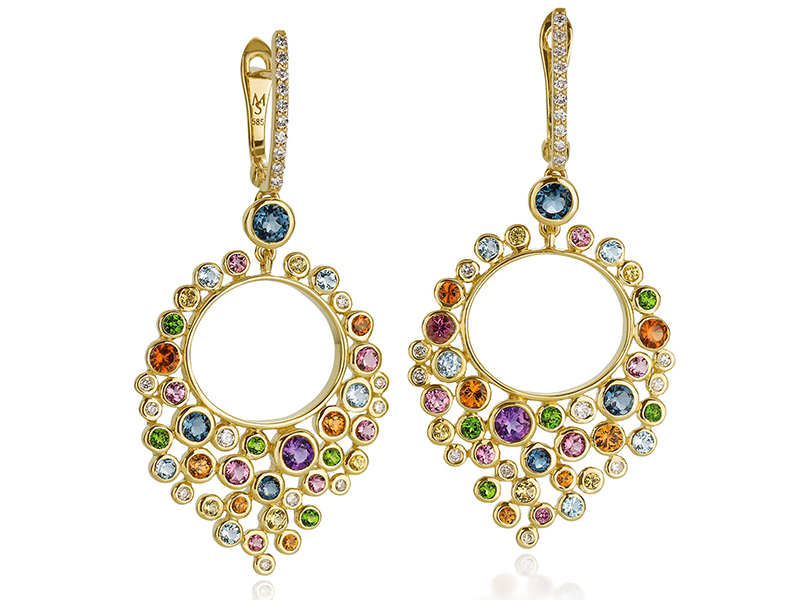
Seely’s work has always leaned toward higher-end materials and detailed gemstone combinations, choices that helped distinguish her jewelry early on but now carry a higher price tag than ever. Gold, platinum, and diamonds signal luxury to retailers and consumers, and deviating too far from those expectations risks repositioning her work entirely.
That concern is amplified by retail realities. Many stores still expect designers to offer pieces in 18k gold, particularly at the luxury level, but may also push for memo terms that leave designers carrying significant financial risk. “I don’t want to be somebody’s banker,” Seely says. “If a store wants luxury materials, they need to commit to ordering them.”
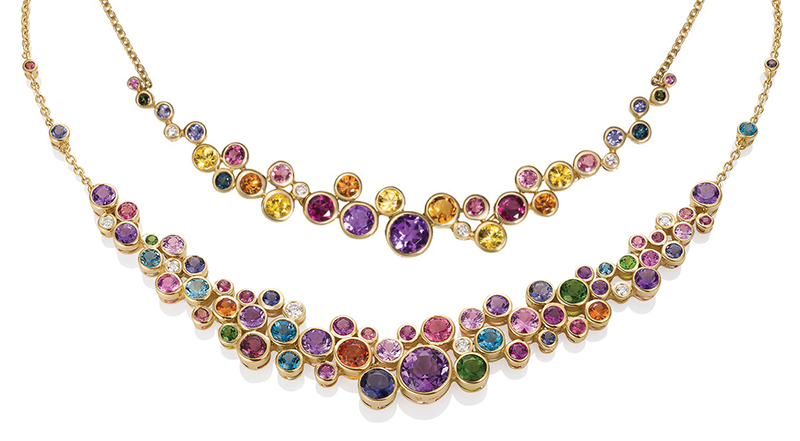
Gemstone-intensive designs help Martha Seely balance material costs while preserving a luxury aesthetic.
The pressure to accommodate retailers while protecting cash flow has only intensified as metal prices climb. Seely is reluctant to “turn on a dime” by radically changing her materials or aesthetic, particularly now that she feels her work is finally being recognized by the type of retailers she has long aimed to reach.
That doesn’t mean Seely has stood still. Instead, she has focused on incremental adjustments that preserve her design language while addressing cost and production challenges.
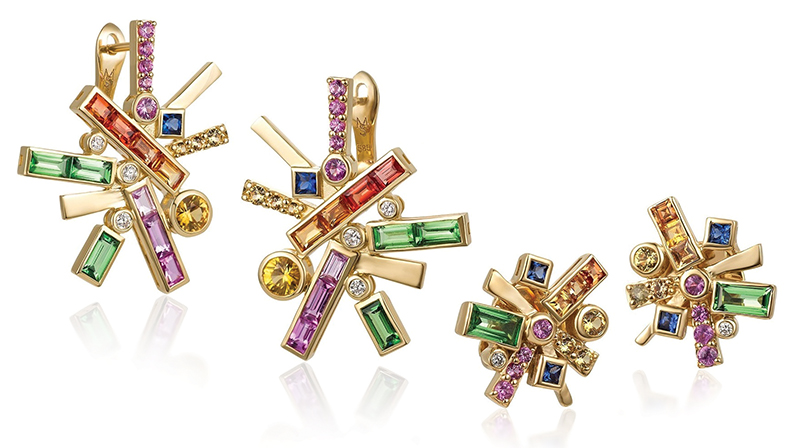
Seely’s recent work includes smaller-scale creations, as well as pieces that feature less metal and more colored stones (e.g., multi-station necklaces, designs that can be interpreted in multiple gemstone configurations). Lab-grown diamonds have become a practical option for samples, allowing her to show scale and sparkle without tying up capital in natural stones. In some cases, she has explored platinum when it briefly made economic sense compared to white gold, even accounting for the added labor platinum requires.
Seely has also begun looking more closely at alternative alloys. Palladium-based alloys offer some of the visual qualities she associates with luxury, though retailer resistance remains a concern, since many of these alloys also contain some silver. “A lot of stores don’t even want to see silver,” she notes, regardless of how advanced or durable the alloy may be.
These adjustments are not about chasing trends or reacting impulsively to price spikes. They are calculated attempts to manage cost while staying true to the work that defines her brand.
Rising metal prices have also exposed another pressure point: Long lead times from the manufacturers she uses to produce her work. Prices can fluctuate between the moment a piece is designed and when it is finally produced, compounding financial strain.
Seely describes projects that stretched from last fall into the new year, missing submission deadlines for competitions and disrupting planning for trade shows. In response, she has begun exploring relationships with individual bench jewelers, hoping that closer collaboration might offer more flexibility and control.
“If a store wants luxury materials, they need to commit to ordering them. I don’t want to be somebody’s banker.”
“That doesn’t change the price of gold,” she says, “but it may change how much time and money I lose waiting.” Time, increasingly, is as costly as metal.
Despite her concerns, Seely’s recent holiday season offered a reminder that demand for luxury jewelry has not disappeared. A trunk show she held at a nearby independent retailer exceeded expectations, with some clients purchasing multiple pieces.
“One woman came in, picked up a pair of earrings, and said, ‘I really want these,’” Seely recalls. “She never looked at the price.”
The experience reinforced a complicated reality. Wealthy clients, largely insulated from economic volatility, are still willing to invest in jewelry they connect with emotionally. The challenge lies not in finding buyers, but in finding and maintaining the right retail partners to reach them.
Designing for Value Over Metal Content
Jayne Redman
Jayne Redman Jewelry
Falmouth, Maine
Jayne Redman approaches the same market conditions from a very different starting point. Known for sculptural, botanically inspired forms, she has long rooted her work in the art jewelry world rather than the luxury segment. That distinction shapes how rising metal prices affect her design and production decisions.
“I’ve always thought about the color of the metal more than the value,” Redman says. “My customers are responding to the work and the design, not to the status of the material.”
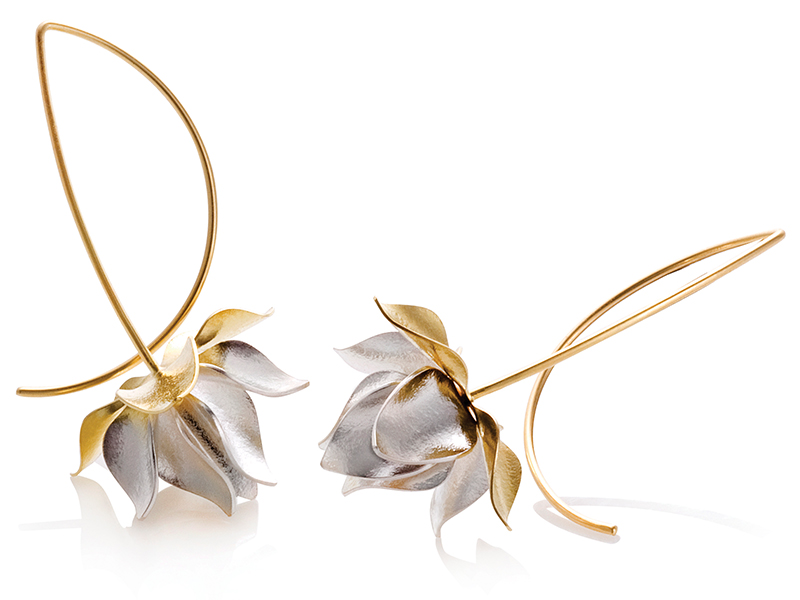
Redman’s audience tends to be fashion- and art-oriented, with buyers choosing pieces based on form, movement, and how the jewelry feels when worn. Some prefer silver, others gold, but metal content has rarely been the primary driver of a sale.
That makes it easier for her to shift emphasis away from gold as prices rise. While she still offers gold versions of her designs when requested, she no longer produces gold pieces on speculation. “It’s a bit easier for me to focus more on the all-silver part of my collections or bi-metal, and [move] away from the solid gold approach,” she says. Silver, even at elevated prices, remains accessible to her customer base and central to her work.
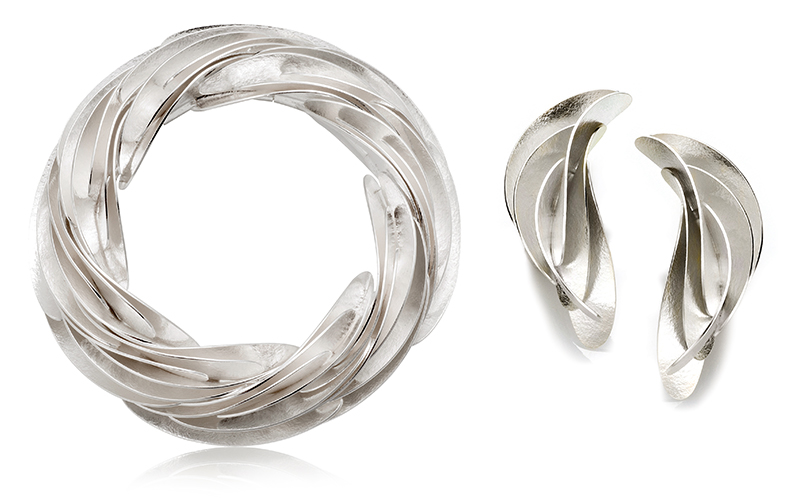
Redman’s production process also buffers her from some of the pressures faced by designers who rely heavily on casting. She forms her pieces from sheet, using consistent gauges and custom forming tools to create structure and strength.
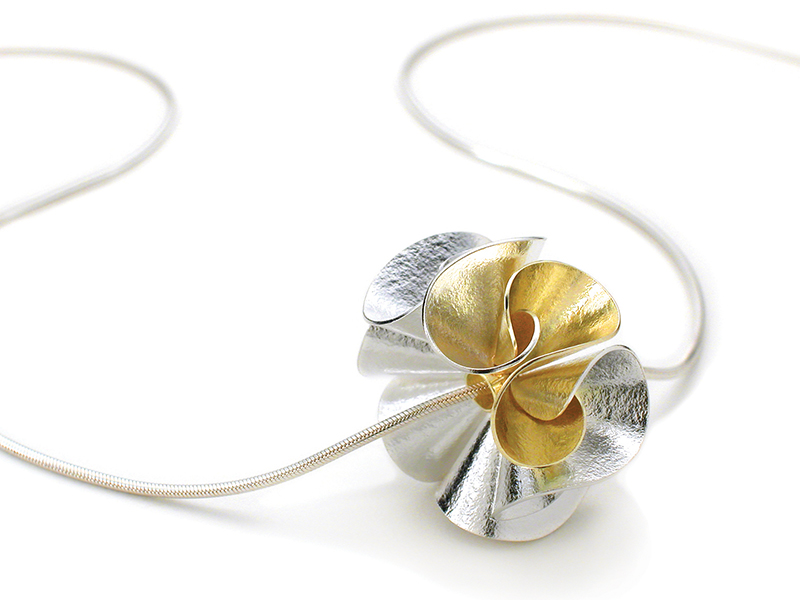
That flexibility is not new: Redman has long designed her work with material variability in mind, building collections that could shift between metals and finishes without altering their underlying form.
“I’m always using 26 gauge,” she explains. “So, I’m not really thinking about making things heavier or lighter the way I might if I were casting.”
Those choices were made long before metal prices surged, but they now provide flexibility. Because structural integrity is built into the design, Redman doesn’t feel compelled to redesign pieces to shave weight or reduce materials use.
When offering the same design in different metals, however, adjustments are sometimes necessary. Gold’s strength allows for thinner or narrower elements than possible with silver, and Redman modifies proportions accordingly to ensure durability without compromising the visual effect.
“I’ve always thought about the color of the metal more than the value. My customers are responding to the work and the design, not to the status of the materials.”
Redman has seen how price volatility changes consumer behavior. When gold first began its sharp climb, some of her clients rushed to purchase gold pieces. “They were anticipating that the price was going to go higher, so they wanted to get it while it was still in their price range,” she explains. More recently, interest has shifted toward bi-metal designs that offer a balance of color and cost. Keum-boo and other techniques that introduce small amounts of gold into silver pieces have gained renewed appeal, allowing designers to incorporate warmth and contrast without the expense of solid gold.
Redman is also intrigued by materials beyond traditional metals. Polymers, resins, and cast plastics—used by artists to introduce bold color and dimensionality—have caught her attention as potential avenues for exploration.
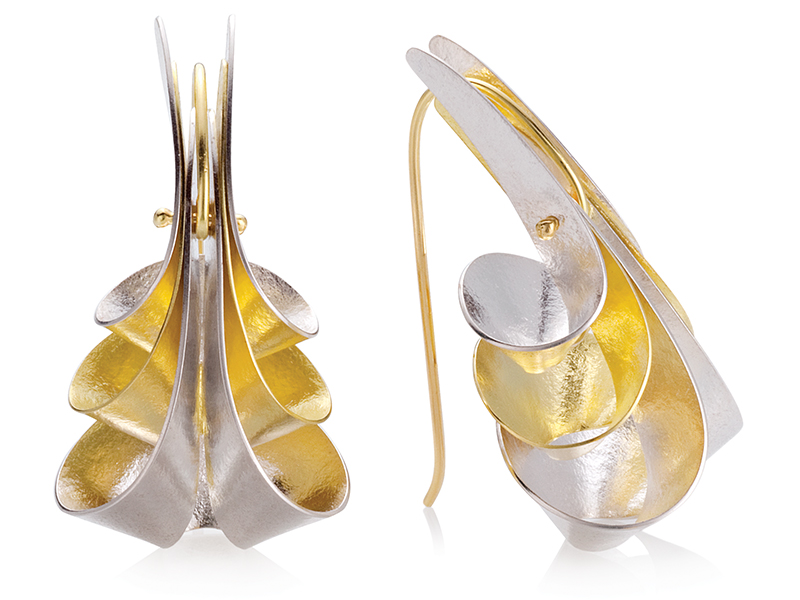
Jayne Redman’s sculptural designs emphasize form and surface over metal content, allowing her to remain flexible as precious metal prices fluctuate.
For now, those experiments remain on the horizon. Redman divides much of her time between jewelry and her growing tool business—she produces a line of bench tools and accessories. Learning an entirely new material system requires time and focus that she can’t afford right now. Still, she views alternative materials as creative opportunities rather than purely economic solutions.
“I think people are always going to want to adorn themselves,” she says. “It might not always be with the highest-priced metal, but it will be with something meaningful.”