

When Saving Money Costs You Later
The Margin Trap
Real margin protection comes from building quality, reliability, and process, not just reducing costs.
By Andrea Hill
(Originally Published by MJSA January, 2026)
As I write this in December, we appear to be heading into a strong holiday season and a steady economy. By the time you read this, the rush will be behind you and attention will be turning to 2026. Whatever the economy does next, margin stability will depend as much on the business choices you make as on outside market conditions.
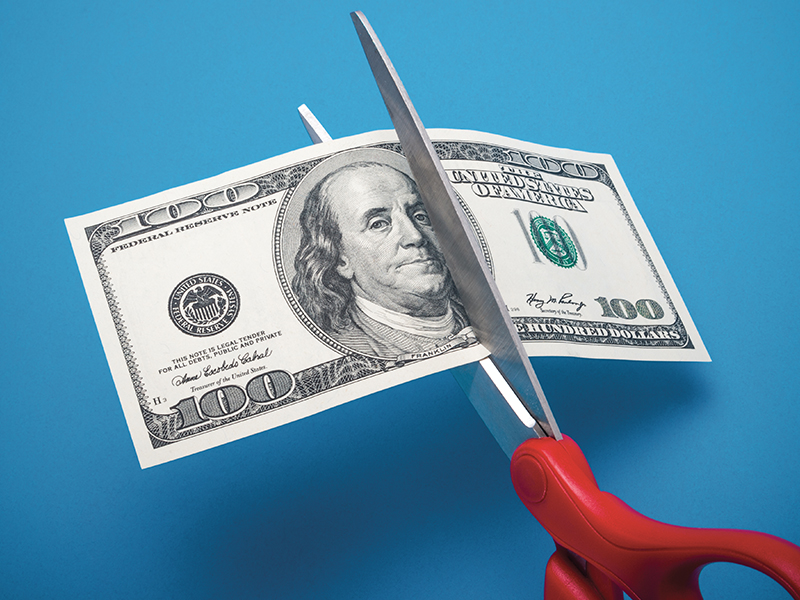
If the economy contracts, most companies will react with familiar moves: trim expenses, protect cash, reduce exposure. Those actions can buy time, and sometimes they are necessary. The trouble comes when they become the default. Cost-cutting can stabilize a business briefly, but it cannot build the capabilities that determine long-term competitiveness. In jewelry manufacturing, those capabilities determine quality, delivery, pricing power, and customer loyalty.
Cost-cutting and value creation are often treated as opposing philosophies, but they are simply different tools. One keeps you alive in the short term, and the other ensures you have a future worth surviving for. The challenge is that many shops confuse them or treat cost-cutting as a strategy.
The Hidden Cost of Playing Defense
When a shop reduces hours or delays maintenance while ignoring the workflow issues that cause rework and bottlenecks, expenses may drop slightly, but the problems that erode margin remain. These decisions feel prudent because they are visible on a spreadsheet, but the hidden costs often go unseen as they accumulate.
Every business has a floor under cost-cutting—the point at which cuts begin to degrade quality, reliability, or the customer experience. That line is hard to see until you’ve crossed it. If defect rates rise, touch times increase, customer complaints grow, or customers go quiet, the problem may not be the economy at all—you may have cut below healthy capability.
There is also a difference between one-time efficiencies and structural efficiencies. Canceling a low-value service or renegotiating a lease delivers relief once. But rethinking how you schedule work, quote jobs, or track metals provides a permanent lift. Many shops exhaust the one-time opportunities and stop there, believing they have “tightened up.” In reality, they have handled the easy part and left the system itself unchanged.
The Trap of Chronic Austerity
The deeper issue for many manufacturers is the opportunity cost of chronic austerity. Running lean becomes a habit. Equipment upgrades get postponed. Training budgets disappear. New process ideas are put off. Over time, this posture creates an outdated cost structure that is almost impossible to overcome during growth cycles. When the market rebounds, companies that have been underinvesting for years cannot capture the demand. They are too constrained by aging systems.
Meanwhile, competitors who invested even modestly during the downturn begin widening the gap. They quote faster and more accurately, deliver more consistently, and handle complexity with less stress. Their margins improve because they quietly built capability while everyone else was shrinking.
Building Margin Through Capability
Value creation rarely comes from dramatic moves, but from small, cumulative improvements, such as better pricing discipline, root-cause analysis, process refinements, equipment investments with clear payback, and systems that minimize rework. These improvements may seem small, but they add up.

If you are unsure of a direction, start with a few questions. Does the change make you cheaper or better? Does it improve your ability to produce the right work at the right quality? Does it strengthen customer lifetime value or simply lower this month’s expense line? These questions help you avoid confusing shrinking the business with strengthening it.
A company that shrinks its way to break even may appear stable, but internally, it becomes fragile. Stability built on cuts and low investment posture is deceptively brittle.
In uncertain markets, survival does not belong to the companies that cut the deepest. It belongs to the companies that treat cost discipline as a temporary tool and capability building as the real work. That way, when customers return with evolving expectations driven by technology, those businesses will be ready.
Marketing Without the Markdown
In uncertain markets, many companies cut marketing or turn to discount-driven messages. Both feel safe in the moment, but they reduce margin over time. If operations must focus on capability building rather than austerity, marketing must do the same.
The role of marketing in a tight economy is to protect the value story. In slow or uncertain times, customers pay closer attention. Marketing should make it easy for them to see the quality, reliability, and value you bring. The shops that maintain steady visibility and clear communication come through these periods with stronger pricing power.
Effective downturn marketing focuses on three things. First, reinforce what buyers rely on most: accuracy, repeatability, and dependability. Customers will pay for certainty when the market feels uncertain. Second, highlight the improvements you are making, even small ones. A friction-free quoting process or more consistent quality is meaningful to a customer who has been burned elsewhere. Third, keep communication steady. Staying in touch on a predictable rhythm reassures customers that you are stable and focused, even when the market feels uncertain.
You do not need more or cheaper marketing. You need marketing that clarifies why your work is worth its price. Companies that continue to tell that story, even at a modest level, emerge with stronger relationships and better margins. That is the value-creating path in a challenging economy.