

A Firsthand Look at the Mess, Magic, and Molten Metal of Casting
The Diary of a Mad Caster
A firsthand look at the mess, magic, and molten metal of casting
By Shawna Kulpa
(Originally Published by MJSA August, 2025)
Casting may be the most behind-the-scenes process in the jewelry world, but it’s also one of the most critical and complex. In this hour-by-hour diary, David Baird of Master Casting & CAD in Chicago opens a window into what a typical day looks like in a modern casting studio. From print inspection to metal pouring to a few donut breaks along the way, he shares the rhythm, pressure, and hidden victories that power the bench behind the bench.
8:07 a.m. Before the Buzz
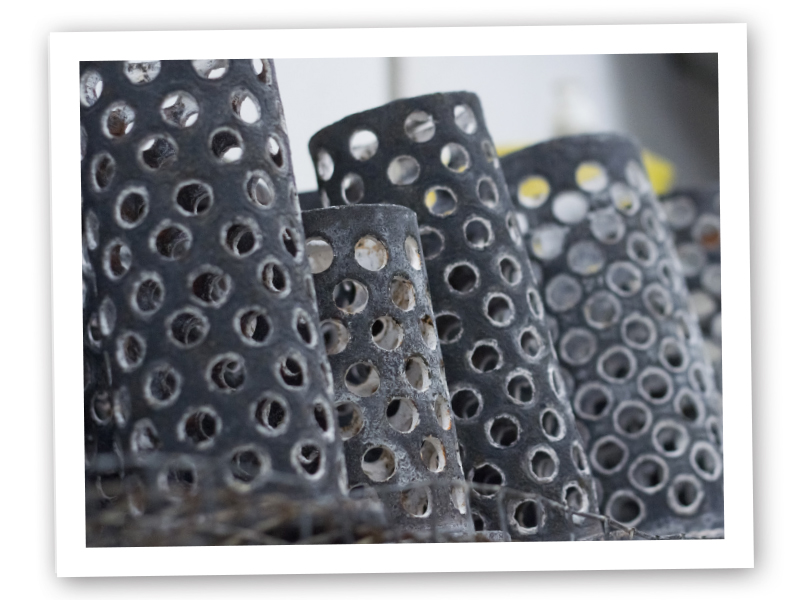
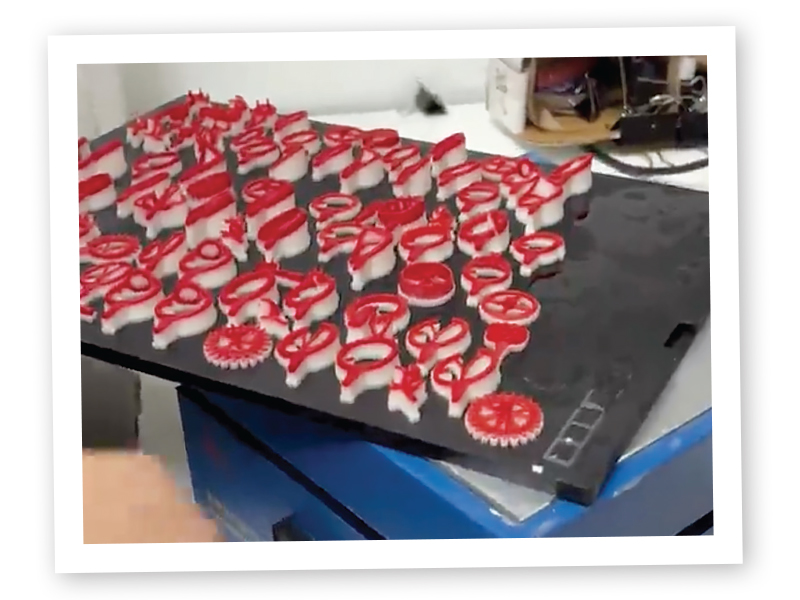
The 3-D printers have been running overnight, quietly turning files into waxes while the rest of the world sleeps. I unlock the door, coffee in hand, and head straight to the trays. There they are: dozens of tiny, delicate parts still clinging to their supports. Rings. Bezels. Pendants. Custom pieces. Some are flawless. Some need a second look. But first, into the bath they go to dissolve the support material.
8:34 a.m. Sorting & Strategy
Once the waxes are free of their supports, it’s then onto sorting. We sort the prints by metal type—14k yellow gold here, 14k white gold there, 18k and platinum in their own lanes. Each job has a labeled envelope and a tiny ID tag that was added to each 3-D model prior to printing. The tag contains the last three digits of the job number so we can keep track. It’s tough when you have rings and pendants that sometimes look very similar. With hundreds of parts moving through the shop, those codes save us from chaos later.
A custom pendant that’s being cast with client-supplied 18k rose gold goes in its own envelope. It’ll be cast in its own flask. We do that with all customer-supplied jobs to avoid any chance of cross-contamination with other alloys. Casting with outside metal is always a risk. We don’t know its exact formulation, how it’s been handled, or how it’ll behave when melted down. It can create porosity, cast unevenly, or even cause damage to our equipment. Plenty of shops refuse these jobs for exactly those reasons.
But we’ve learned how to manage those risks—and more importantly, we understand why customers ask it. Whether it’s heirloom gold from a grandmother’s wedding band or metal left over from a previous piece, there’s often deep sentiment involved. When it matters that much, we’ll do everything we can to make it work.
9:16 a.m. Quality Control, Part I
When everything is sorted, we start the first quality check, inspecting each wax for any issues. If a prong didn’t print right or an engraving didn’t come through, it’s now or never. A bad wax is a bad casting, no exceptions.
I usually go through four or five trays of models. It’s a lot to inspect, but this is where problems get caught early. We check every detail: prong sharpness, wall thickness, symmetry, engraving legibility. On tiny parts such as earring components or intricate filigree, even a slight distortion or missing element in the wax can throw off the final result. Sometimes it’s obvious, like a logo that didn’t print clearly. Sometimes it’s subtle, like a slightly warped seat that won’t hold a stone properly.
All of the prints pass muster this morning. I bring the custom pendant to our stone-setting department to check the fit of the client’s sapphire. It’ll be tight, but they assure me they can do it.
9:28 a.m. Microwave Mishap
After wrapping up print inspection, I head to the kitchen to reheat the same cup of coffee for the third time. I punch in 45 seconds (or at least think I do), get distracted answering a Slack message, and return to find the cup has boiled over. I guess I added a zero to the end of the time. The inside of the microwave looks like a coffee crime scene. Sigh.
After cleaning up the mess, I start to head over to begin treeing today’s prints when I bump into one of the CAD guys at the water cooler. We swap weekend plans and printer gripes—the usual: a raft of tiny prongs that didn’t fully form on a rush job, some support structures that were too thin and collapsed mid-print. Five minutes later, I’ve committed to troubleshooting one of his files later today.
9:43 a.m. Tree Time
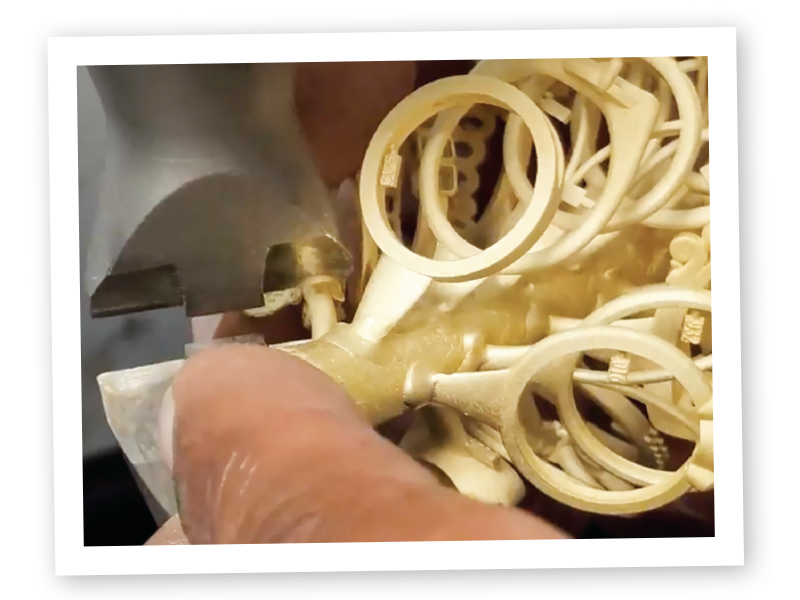
Building casting trees is part puzzle, part sculpture. The goal: Metal must flow. Since metal also freezes first in the thinnest areas, we look to the thickest parts of a model to see where we can attach a sprue. Place it in the wrong spot, and the metal won’t fill.
Some trees are simple, with maybe a dozen models attached. Others are towering sculptures with 80 pieces branching off. Each wax gets added to the tree by hand. Sometimes we’ll need to attach multiple sprues to a model to ensure a complete fill. We recently cast a family crest ring that required multiple sprues since we couldn’t place just one sprue on the top of the ring because of the crest design. It adds work for the finishing team, but I’d rather file off an extra sprue later than redo an entire job.
9:49 a.m. Spotify Shuffle Win
Today’s shop playlist hit just right. Nothing like building trees while Zeppelin’s “Immigrant Song” blasts in the background. Rock on!
10:08 a.m. Ooh, Someone Brought Donuts
They’re from the good place. This never happens. I grab one and make a mental note to start eating better. Again.
10:31 a.m. Last Night’s Burnout Concludes
Time to check the ovens. The flasks that were invested yesterday have been running overnight, slowly baking away the wax and preparing the molds for casting. The burnout cycle is long and carefully timed and temperature-controlled to ensure every bit of wax residue is cleared from the mold. The ovens are calibrated and well-maintained, but we still check on them throughout the day.
Even the best equipment can fail at the worst possible moment. A sensor glitch or a temperature spike might not sound dramatic, but in casting, it can be the difference between success and scrap. When you’re hours deep into production, you don’t want to find out too late that something didn’t burn out the way it should have.
So, we watch the numbers. We log the times. And we hope the machines behave.
10:49 a.m. Meanwhile, Metal
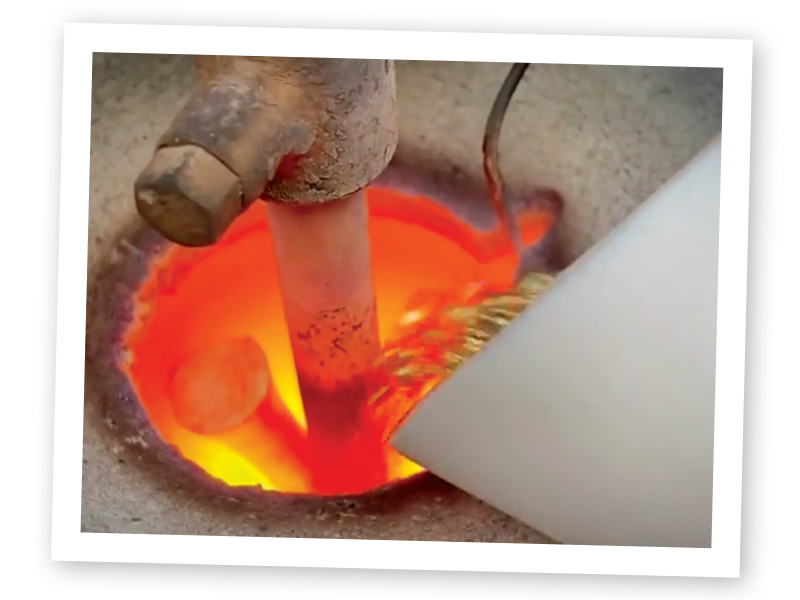
Yesterday’s flasks are ready for casting. All of the metal for today’s cast is weighed, alloyed, and melted to spec. Casting is fast, but unforgiving. One misstep, and you’re remaking the job. If you pour the metal too soon, you risk not filling the mold completely. If you’re too late, you risk burning the metal, which can cause porosity or make the metal too brittle.
Once the pours are complete, we let the flasks cool for just the right amount of time, then quench them in water. Steam hisses. The investment dissolves, revealing metal forms where wax once was. It’s time for the next round of quality control.
This is the moment of the truth: Did we get it right?
11:16 a.m. Quality Control, Part II
Once the trees have cooled, we cut off each of the models. In addition to being weighed, every model gets a close inspection. Did the metal flow correctly? Any porosity? Did that delicate filigree survive? We compare each casting to the original file, using the embedded ID tag to match them back to their jobs.
The inspection reveals a few issues. One ring came out with minor porosity on the inside of the band. It’s nothing that we can’t take care of with the laser welder, but we’ll flag it just in case. And one delicate prong snapped off a tiny stud earring during investment removal. We’ll reprint that one tonight and cast it with tomorrow’s batch. We then send the models off to the polishers for cleanup.
11:48 a.m. CAD Consult
One of the CAD techs drops by with a question about a fragile-looking shank. We examine the render together—a split-shank design with very narrow bridges where the two arms taper and meet the base. It’s thin, maybe too thin for the size of the stone it’s meant to support, especially in 14k gold, which lacks the strength of platinum.
I suggest bumping up the thickness slightly at the thinnest point or modifying the design, so the arms rejoin sooner for added support. It’s a small tweak, but it could mean the difference between a clean cast and a cracked shank. We’ll run the revised model by the client before moving ahead with printing.
12:39 p.m. Lunch, Kind Of
A sandwich at my desk while checking reorder notes. One of our burnout ovens is on the disabled list while we await parts, so I send an email to the manufacturer in Italy hoping for an ETA. I hate when machines break down. Every new part seems to cost thousands, and without knowing how long it will take to get the replacement part, we don’t know how long the machine will be down. These are the things that keep us from doing the fun parts of the job—the casting!
2:38 p.m. Mixing Matters
It’s time to mix the investment to cast today’s models. Gary, who heads up this part of the process, carefully measures the powder and water, following the manufacturer’s instructions to the gram. Investment can be finicky—get the ratio wrong, mix too fast, or miss the timing, and you could end up with bubbles, cracks, or an incomplete burnout.
He suits up with gloves and a respirator (no one wants to breathe in investment dust) and combines the powder and water into a creamy slurry.
After mixing, the container goes onto a vacuum table to pull out trapped air. Then it’s poured into the flasks slowly and steadily to avoid splashing. The goal is a clean pour that fills every crevice without introducing new bubbles.
This step still catches new casters off guard. It looks straightforward, but it’s incredibly sensitive to timing, humidity, and technique. If the investment doesn’t set just right, nothing else that follows will matter.
2:52 p.m. Onboarding & Cautionary Tales
Spent 20 minutes walking a new production assistant through the investment setup. She’s sharp, but like anyone new to casting, she underestimated just how fussy this part of the process is. Gary, who’s seen it all, couldn’t resist sharing his infamous centrifugal casting story: Once, a bad investment mix went unnoticed until the machine spun up…and flung molten gold across the entire room. No one was hurt, but it took hours to recover all the gold and redo the job. She laughed nervously.
3:27 p.m. Prep & Print Talk
While I wait for the investment to finish setting, I catch up with the print crew. One of the jobs in the queue is being printed with customer-supplied sprues. That always calls for extra attention. Everyone has their own approach to sprue placement—some good, some not so good. I tell them to remove the customer’s sprues and add our own before we mount it on the tree. Better safe than sorry.
3:42 p.m. Final Prep
We clean the shop. Reload the printers. Check alloy levels. I notice that we’re low on a couple of alloys, so I contact our metal supplier before it becomes a problem. And then I head over to talk to the CAD team. If a model failed, we troubleshoot it before it prints again overnight. Today, it’s a pendant with a sunburst pattern—too many thin, pointed rays extending outward, and one of them didn’t completely fill during casting. We review our options and decide we’ll add a second sprue closer to that area. Better to revise now than risk another incomplete casting.
On the way to the CAD department, a designer stops me and asks, “Does this look printable?” I walk them through the issues I see with it. She’s working on a halo-style ring with a super-thin undergallery. I point out the areas where the supports may not hold during printing. If we don’t adjust the geometry now, it might not print cleanly. She nods and heads back to make the changes.
4:17 p.m. Rechecking the Queue
I run through the next day’s queue, looking for any flagged notes: tight deadlines, metal substitutions, or backup pieces for any tricky designs where there’s a higher-than-normal risk of failure. Fourth quarter is coming, and we’ll soon be running longer days and weekends. Better to spot complications now.
5:12 p.m. Nightly Double Check
Before leaving, I stop by the printers and burnout ovens one more time. Everything looks good so I head out for the night.
5:33 p.m. Rush Hour Traffic Reflections
Most days, I’m not the one pouring metal anymore. But I still feel the rhythm of the work. When a tricky job casts clean on the first try, it’s a little victory. When an 18k rose gold piece behaves (for once), it feels like magic.
Casting isn’t just a process. It’s a system of judgment calls, second guesses, and invisible wins. You rarely get credit for the ones that go right, but you always remember the ones that don’t.
And every night, as the printers fire up and the shop hums into silence, I think: tomorrow, we do it all again.
Making David’s Day Easier
Want better castings and a happier production team? Here’s what jewelers and designers can do to make a big difference.
- Don’t attach your own sprues. Unless you’re 100 percent sure they’re in the right place to maximize metal flow, let the caster decide on spruce placement.
- Avoid overly delicate features. Fine text, thin walls, and ultra-skinny prongs don’t always translate from CAD to casting.
- Include clear metal specs. When submitting your order, be clear about your metal request, especially if it’s a less common alloy or a sentimental job using a client’s gold.
- Mark deadlines realistically. Rush jobs happen but giving the shop time leads to better results.
- Respond quickly to file checks. If your caster raises concerns, a fast yes/no can keep your job on track.
- Keep a record of what worked. If a model cast well, note the specs for next time.
- Good casting is a partnership. The more informed and responsive the jeweler, the better the outcome on both sides.