How to streamline and secure your hoop earring fabrication process
By Helen I. Driggs
(Originally Published by MJSA April 2025)
Hoop earrings are enjoying a comeback with teen and adult jewelry lovers, and my students can’t seem to make enough of them. Silver huggie styles that fit snugly against the earlobe are especially popular with my teen makers. Meanwhile, hoops with straight posts and butterfly clasps—rather than curving wires that allow the earrings to dangle—are the most-requested designs in my classes. To streamline the fabrication process while maintaining safety, I use these time- and material-saving techniques with my students.
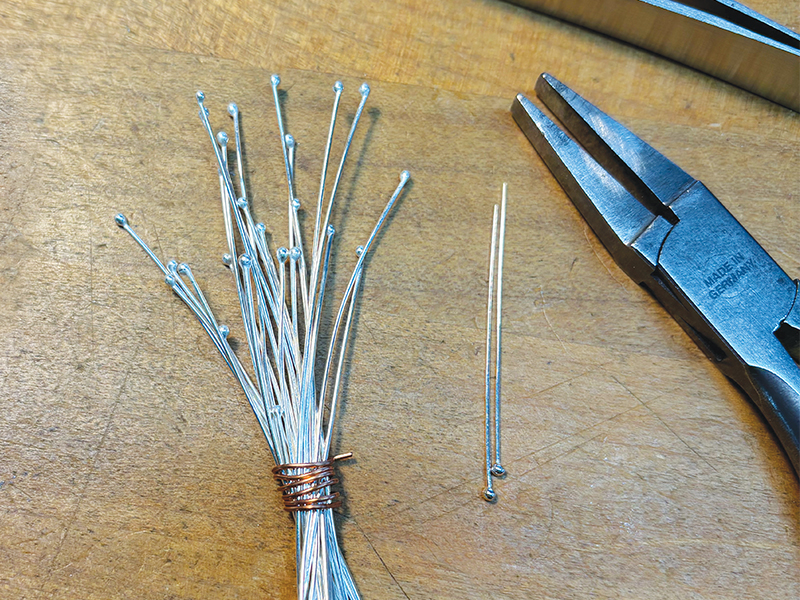
1. I save the short sections of 22-gauge sterling silver wire left over from other projects and cut them into 1-, 2-, or 3- inch lengths. Then, I ball up one end of each wire and quench, pickle, and tumble them. Keeping bundles of these prepped wire sections on hand makes it easy to create posts or ear wires as needed.
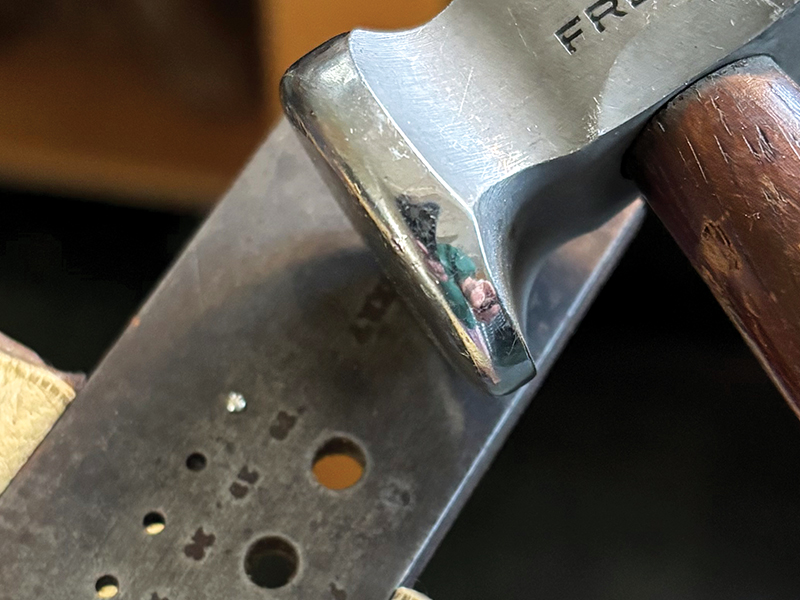
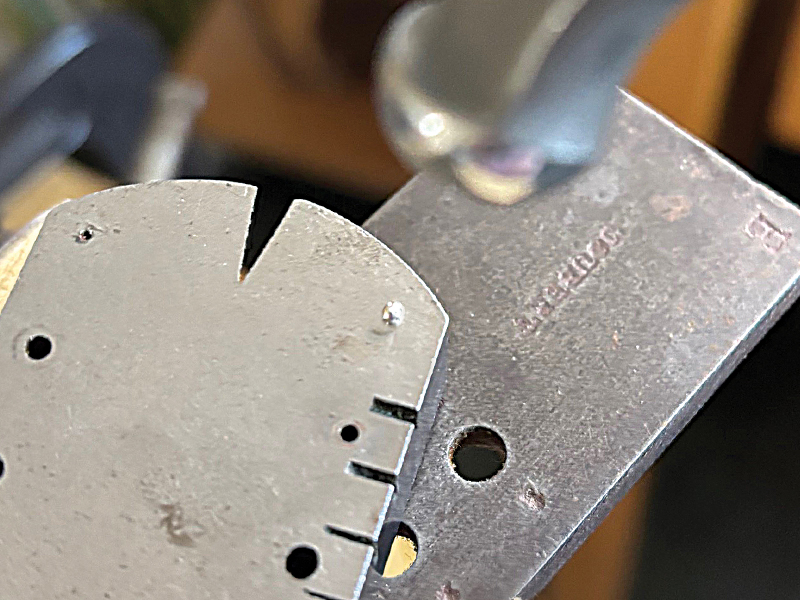
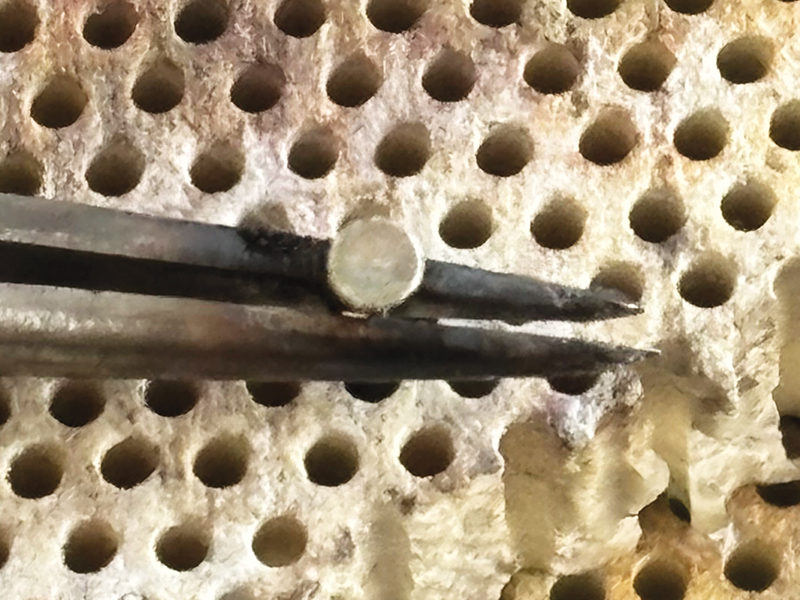
2. To form the earring posts, I flatten the balled end of a wire using a hammer and a draw plate mounted in my vise.
3. If the balled end is too small and slips through the smallest opening of the draw plate, I use a tiny rivet block instead. Holding the unballed end while hammering prevents the wire from bouncing.
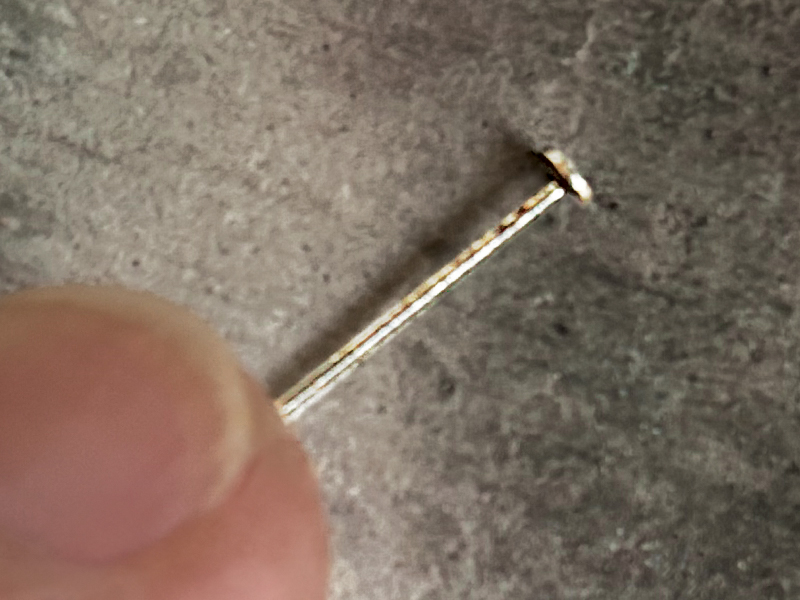
4. The goal is to create a flat head on the wire that matches the approximate diameter of the hoop earring’s gauge—in this case, 16-gauge.
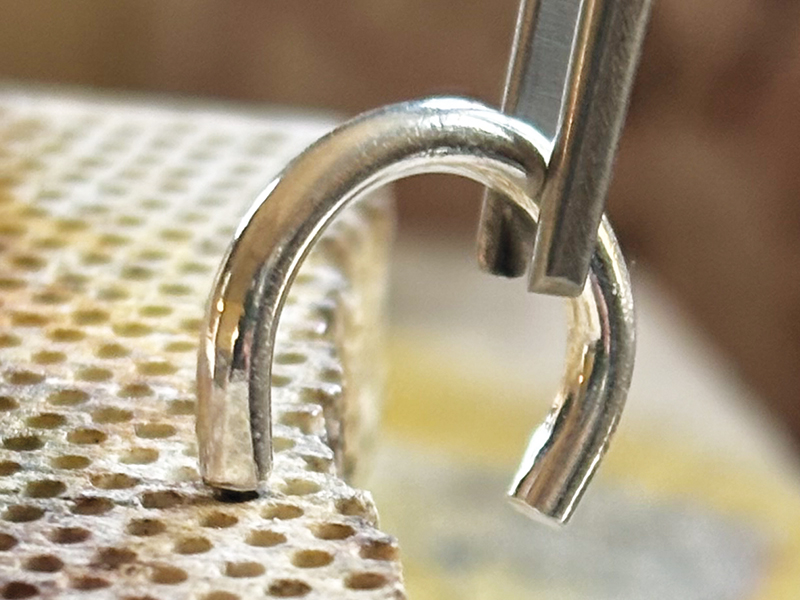
5. The easiest and safest way to solder the earring post to the hoop is to first sweat a small chip of hard solder onto the flat head. To do this, I insert the post into a hole of a honeycomb ceramic solder block.
6. Next, I lower the fluxed and finished hoop onto the post and reheat the solder to join the pieces. A third hand holds the hoop in position, while the honeycomb block keeps the post straight and shielded from excessive heat. I focus the flame on the heavier hoop, watching for the solder to flash as it liquefies, and remove the flame immediately once the join is formed.
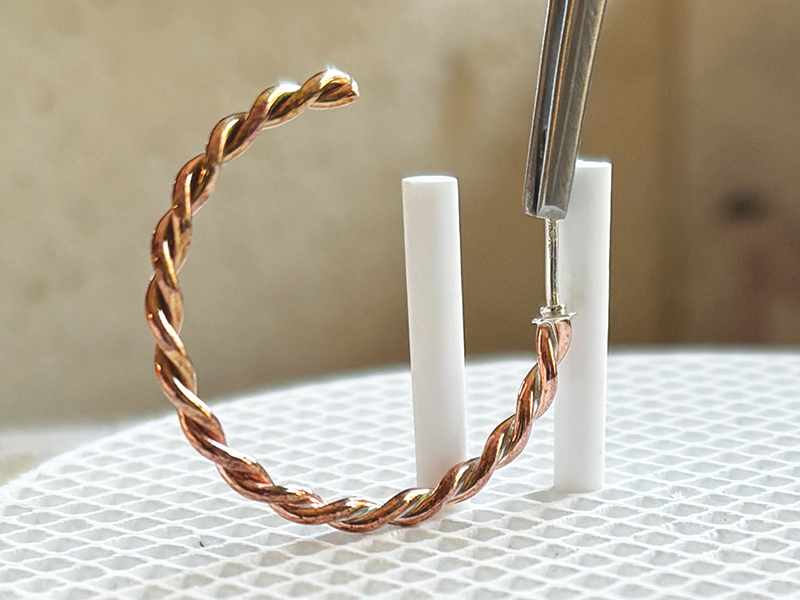
7. For larger-diameter hoops, a ceramic block with insertable pegs helps ensure the earring post is correctly aligned and provides support during soldering. Positioning larger hoops facing up offers better balance during this process.
To finish, snip and sand the post to the desired length and do a short tumbler run to work-harden and polish them.
Manage Consent
To provide the best experiences, we use technologies like cookies to store and/or access device information. Consenting to these technologies will allow us to process data such as browsing behavior or unique IDs on this site. Not consenting or withdrawing consent, may adversely affect certain features and functions.
Functional
Always active
The technical storage or access is strictly necessary for the legitimate purpose of enabling the use of a specific service explicitly requested by the subscriber or user, or for the sole purpose of carrying out the transmission of a communication over an electronic communications network.
Preferences
The technical storage or access is necessary for the legitimate purpose of storing preferences that are not requested by the subscriber or user.
Statistics
The technical storage or access that is used exclusively for statistical purposes.The technical storage or access that is used exclusively for anonymous statistical purposes. Without a subpoena, voluntary compliance on the part of your Internet Service Provider, or additional records from a third party, information stored or retrieved for this purpose alone cannot usually be used to identify you.
Marketing
The technical storage or access is required to create user profiles to send advertising, or to track the user on a website or across several websites for similar marketing purposes.
A Fresh Look. A New Website. A Stronger Membership.
We’re excited to unveil Jewelers of America’s refreshed brand and redesigned website, reflecting our growing community and continued commitment to the jewelry industry.
With JA and MJSA now united under one membership, we’re bringing together more resources, expertise and connections to support every facet of the jewelry industry.
Take a look around to see all that JA offers — members can login to access member-only content like benefits, the Knowledge Vault and Advocacy resources.
Questions? Contact us at members@jewelers.org or call/text (800) 223-0673.