

Make a Fast Jig for Matching Hinge Knuckles
Filing Finesse
A handy tool for creating identical tube sections in a flash
By Helen I. Driggs
(Originally Published by MJSA October 2024)
A tube-cutting jig is a great tool, but the width of the sawing slot on most models can slightly throw off measurements when fabricating hinge knuckles or riser tubes for cold connections. Often the sawn end is not perfectly perpendicular either. This handy jig helps you create a series of accurately filed and identically measured tube sections all at once, instead of filing them individually in a miter jig. While you can solder or weld your jig together, I prefer to use Superglue on a job-by-job basis.
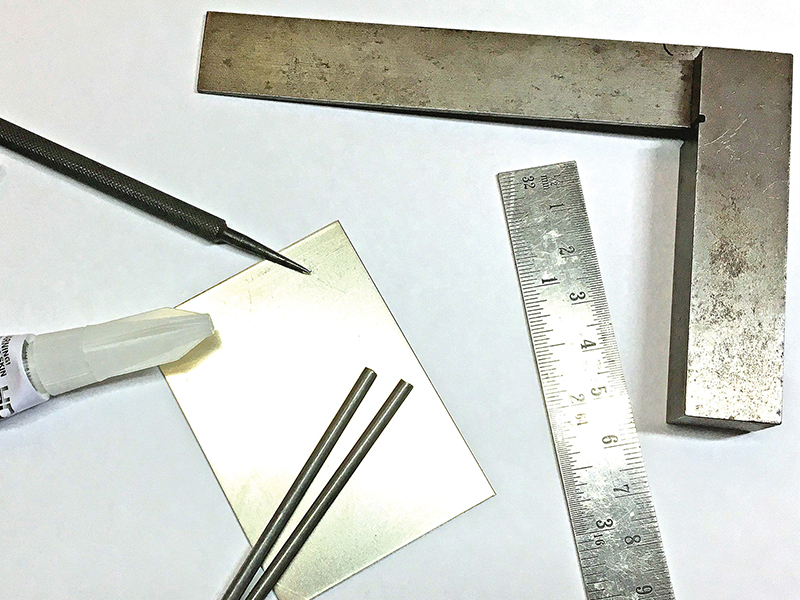
1. To make your own jig, you’ll need two steel rod sections with diameters matching the height of the tube sections you plan to cut, a scrap of sheet metal, a sharp scribe, an L-square or ruler, and Superglue.
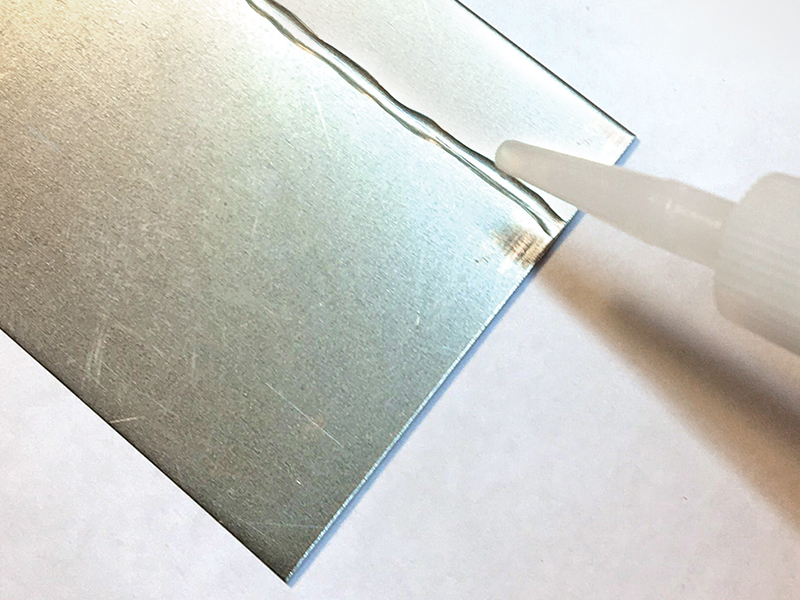
2. Scribe a sharp line on the sheet metal and apply glue along the scribed line.
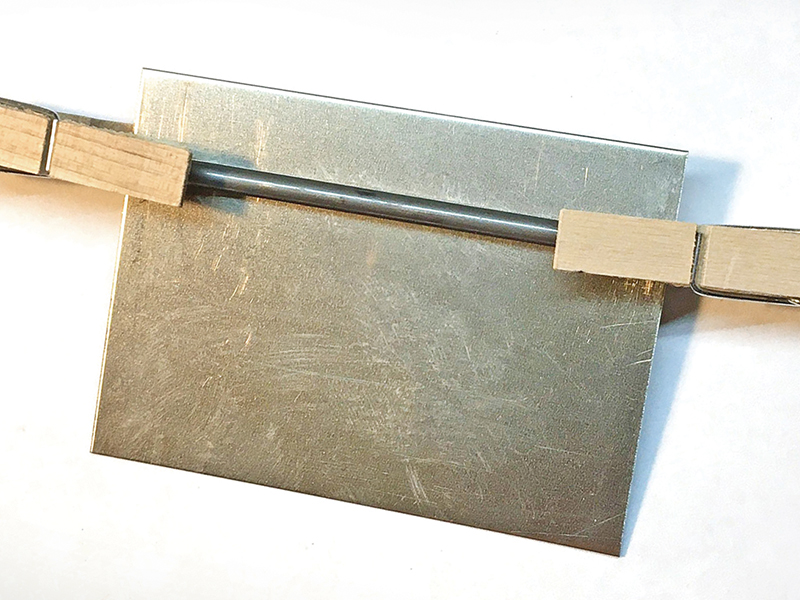
3. Working quickly, align one rod along the scribed line before the glue sets. I used clothespins to hold the rod and sheet together firmly, allowing the glue to set for several hours.
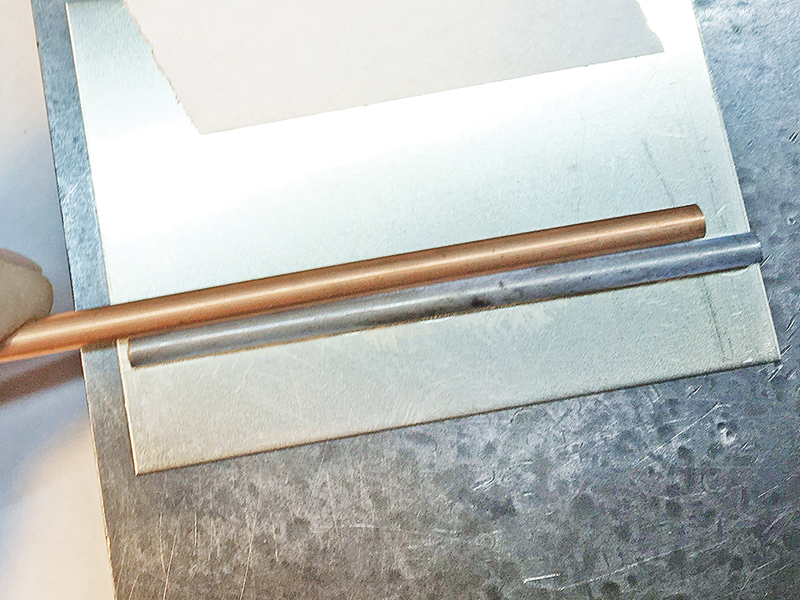
4. Using the tubing you intend to cut, press it firmly against the glued rod and scribe a second line parallel to the first at the widest part of the tube.
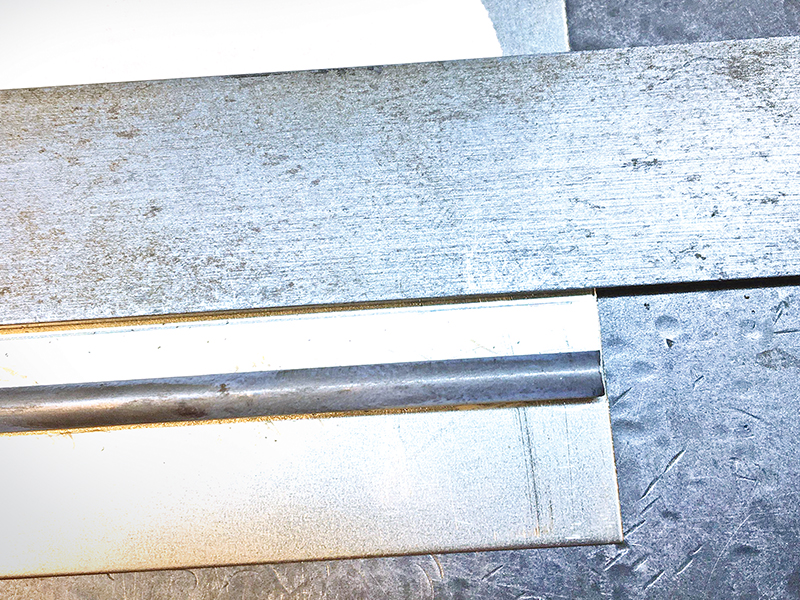
5. Verify the spacing is accurate with the L-square. I taped the metal sheet to a bench block for stability. Then, glue the second rod along the second scribed line and allow the glue to set for several hours.
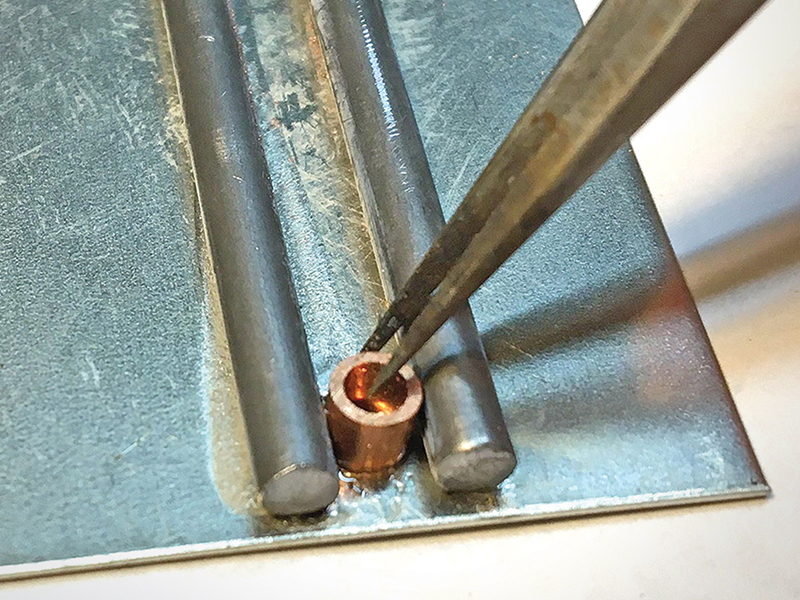
6. Cut the desired number of tubing sections using a tube-cutting jig, plus one extra section. Glue the extra section at the end of the channel between the rods to serve as a “stop” for the other tube sections.
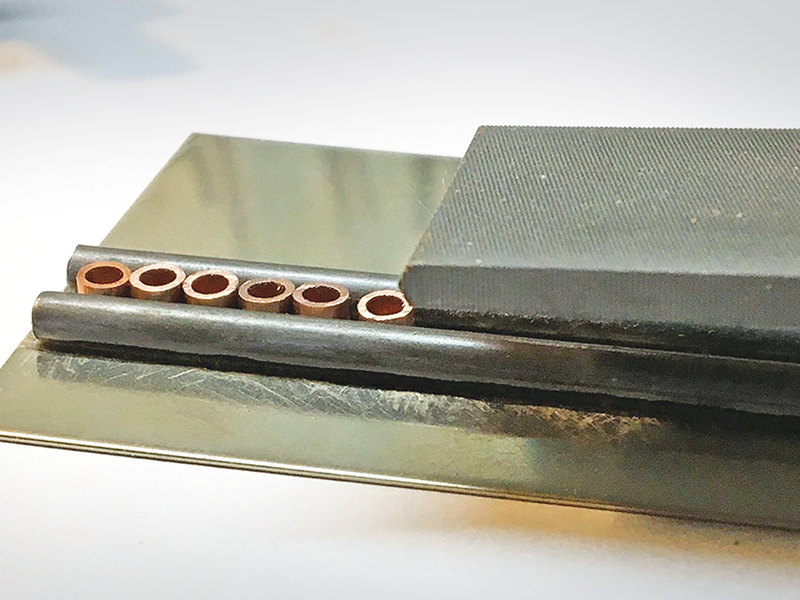
7. To use the jig, align all the tubing sections within the channel and against the stop. Gently file the sections as a group. The steel rods ensure that the file rides evenly over the tube ends, filing them to the same height with flat, even tops—essential rivet risers, hinge knuckles, or decorative elements.
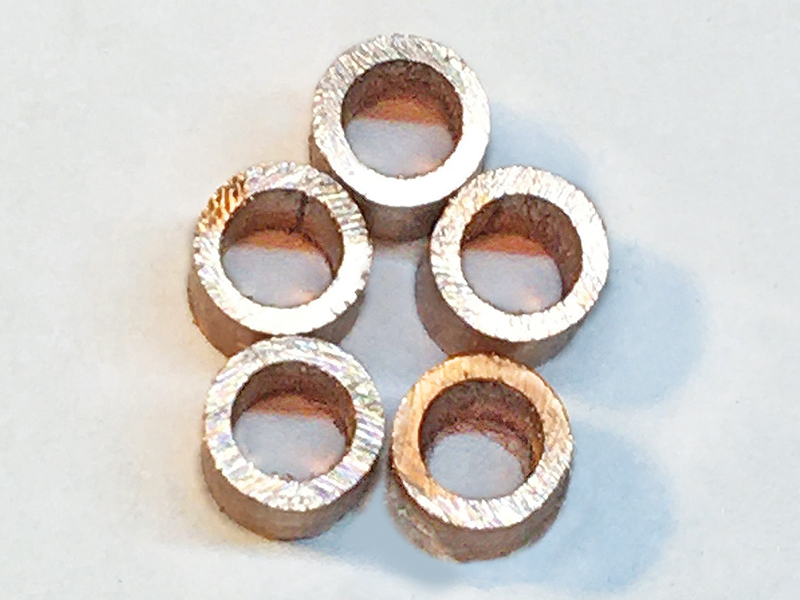
8. Voilá! Five identical tube sections in a flash.