

Marketing and Selling to Generation Z
Zooming Forward
To market and sell to Generation Z, you first must understand what motivates them
By Sharon Elaine Thompson
(Originally Published by MJSA April 2024)
It’s inevitable that jewelry consumers get younger. Most designers, manufacturers, and retailers are accustomed to that. But Generation Z—the 69.6 million consumers born between 1996 and 2012 who are also known as Gen Z or, sometimes, Zoomers—are different, even from their parents, the Millennials.
“Generation Z represents a vital market for retailers to attract due to their significant purchasing power, trendsetting influence, and status as the future of consumer behavior,” says New York City–based fine jewelry publicist Francesca Simons. But if you still depend on tried-and-true marketing ideas, chances are good you will be invisible to this younger demographic.

Generation Z is a unique and diverse group—more than half identify as BIPOC, more than 20 percent have at least one immigrant parent, and one in three identify as LGBTQ+.
Yet the long-term health of your business may depend on reaching them. While Baby Boomers have driven the luxury market for much of the last 60 years, by 2029, all Boomers will be 65 years old or older. They are rethinking their jewelry purchases, and even selling or gifting the jewelry they have.
On the other hand, by 2031, Generation Z will all be over 18 and entering their luxury purchasing years. The fashion industry already knows that “if you get somebody who’s a brand fan or a brand advocate, even at 17 or 18 years old, they could lock into that brand for 40 years,” says Marty Hurwitz, CEO of the marketing research group The MVEye in San Diego. That’s a lot of discretionary spending.
If you want to market and sell to the Zoomer generation, you first have to get to know them, because they are not like previous generations only younger. Being aware of who they are, what is important to them, and how that affects their buying decisions, may be vital to your business’s survival. So, who is Gen Z?
Gen Z Is Diverse
To start with, Gen Z is the first American generation in which more than half of the cohort identifies as BIPOC—Black, Indigenous, people of color. According to a 2020 report from the PEW Research Center, more than 20 percent have at least one immigrant parent. “Young people are proud of their unique identity,” says Valerie Fletcher, vice president of design & product development at ODI Jewelry in New York City. “With social media, there is a much greater access to culturally significant jewelry and ethnically diverse jewelry designers.”
On the whole, these are very progressive and inclusive people who support gay marriage and the use of gender-neutral pronouns. In fact, cultural intelligence company Collage Group, in its January 2024 Generational Demographics report, says that one in three Gen Zers identify as LGBTQ+. One in three. This is why gender-neutral jewelry is “critical to the jewelry industry,” says Hurwitz. “Some of the newer jewelry brands are very aware of these opportunities and the customer bases they represent. I think you’ll see more of that going forward.”
This is why, says Hurwitz, “We can’t keep selling white diamonds to white males that want to give them as a gift to their wives or wives-to-be. That’s still a business, but that’s not all of the business.”
Gen Z Cares About Values
Generation Z is values oriented. Even more than their parents, Generation Z is concerned about the environment, racial and gender equality, mental health issues, and social justice.
“They are educated, informed, and often activists,” says Fletcher. They are “acutely aware of the environment, climate, and sustainability. They are concerned about where their products come from, who makes them, and what quality of life those people experience.”
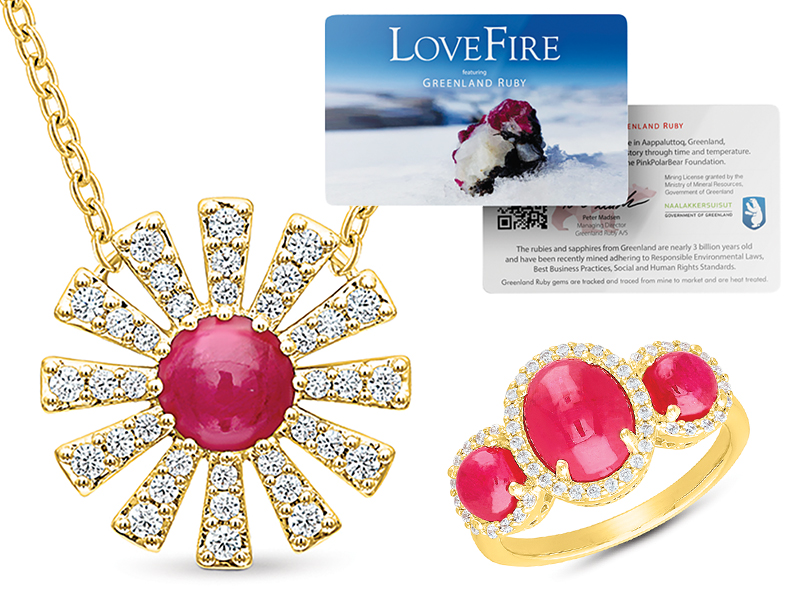
Because Gen Z is values oriented, ODI Jewelry highlights how its Love Fire line, which features rubies and sapphires from Greenland, benefits miners and their communities.
They expect their favorite brands to be equally values oriented and willing to raise awareness of, and take stands on, sensitive issues. They look for evidence of shared values and transparency in your business’s communications, social media, and advertising.
“It’s important to show that your manufacturing not only avoids harm, but also improves the environment where it is produced, and the lives of the people in the community,” says Fletcher.
For example, ODI’s Love Fire line features rubies and pink sapphires from Greenland and “gives back by supporting local artisanal miners and funding wildlife research and community projects in the area,” explains Fletcher.
Gen Z Is Always Connected
When it comes to reaching out to Generation Z with your message, it’s very important to remember that they’ve never known life without a smartphone, which many of them have owned since they were children. Their phones are the first place they go for information, education, recommendations, friendship, entertainment, and shopping. “If you want [your message] to be where they are looking,” says Fletcher, “you need to have a strong presence on social media and a user-friendly website.”
More than half of the Gen Z cohort spend three to four hours a day on social media. Much of that time is spent watching videos. Platforms such as TikTok, Instagram Reels, and YouTube are particular favorites—at least right now. But social media tastes change rapidly, and companies need to be ready to change with them.
While Boomers grew up with an onslaught of television ads in addition to magazine, radio, and newspaper advertising, their exposure to marketing was nothing compared to the tsunami of advertising Generation Z faces every day. Some marketing pundits think this makes Gen Z “marketing intolerant,” as they are bombarded with literally thousands of advertising messages per day.
“I’m not sure I agree with that,” says Fletcher. “They appreciate content that is relevant to them, especially videos that are funny or creative.”
Because digital natives spend so much time scrolling for information online, they are like sharks (in a good way), snapping up bits of intelligence that are important to them and moving on. They have little patience with long-winded advertising. “They respond to short, engaging messaging,” says Fletcher, messaging that “is not a hard sell/call to action, but more of a gentle nudge or reminder from brands that they already like.”
Gen Z Craves Authenticity
Mostly what Gen Z is looking for, even more so than their parents, “is authenticity,” says New York jewelry designer Marla Aaron. They’re finding it on social media, in particular, on TikTok.
Authenticity means that something is “real”—or appears real—rather than created by a professional, such as videos shot with a phone rather than smoothly produced.
“The veneer is stripped away,” says Aaron. “There is no hiding behind brand language. Storytelling has to be real. You can’t create a story out of nothing.” Aaron points to her social media as an example. “You’ll see it’s pretty devoid of artifice. There’s not a lot of Photoshop. It’s funny. We sell fine jewelry with humor. We sell fine jewelry in a very improvisational sort of way. It’s not contrived.”
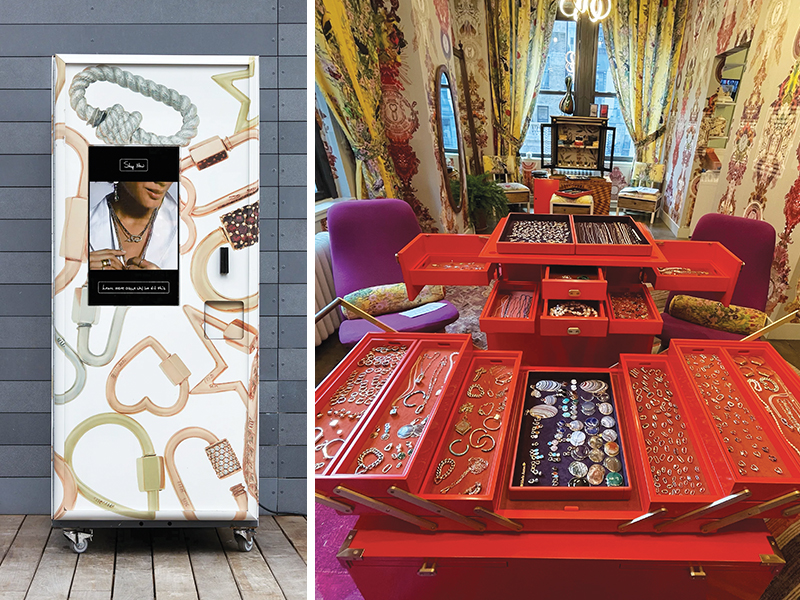
To appeal to Gen Z and their love of novelty, Marla Aaron uses nontraditional ways to sell her jewelry, including stocking it in vending machines and transforming her showroom into a living room where jewelry boxes replace cases.
Gen Z wants to engage with your store and product in an authentic way as well. Aaron says they are “completely alienated by the tired trope of how luxury goods were sold to them before,” in locked cases with a salesperson standing behind them.
She believes the way she presents jewelry is more appealing not only to Gen Z but to all her customers. “In my showroom, we don’t have jewelry cases,” says Aaron. Guests are welcomed into the showroom as if into a personal living room. They sit on a couch, very often with a drink in hand, and a large rolling “jewelry box” is brought out and unfolded in front of them. In this relaxed and inviting environment, “the jewelry is out for them to play with,” she says.
Gen Z Likes Novelty
Gen Z responds to entertainment in marketing as well, and they are attracted to playfulness and novelty. One of the most innovative marketing approaches Aaron has tried that appealed to a wide variety of ages is her use of a vending machine from which to sell her work.
She was inspired to offer her jewelry in this novel way after seeing the large variety of products sold in vending machines in Japan. “I think I lost my mind when I went into a Shinto temple and saw a vending machine,” she says. She was contacting her first vending machine manufacturer by the time she got off the plane at JFK, she says.
She eventually installed the vending machine, for a limited time, at four different venues, the first at the Brooklyn Museum. “Every single time we installed it,” she says, “the average value of what we sold was higher.” It was such a success she is developing the next iteration of the project.
Gen Z Can Be Influenced
Gen Z consumers depend on recommendations when they buy, especially from influencers, such as artists, musicians, or sports figures, or even someone their own age who produces the perfect mix of information and playfulness in their social media channels. In fact, according to Morning Consult’s “The Influencer Report,” 24 percent of Gen Z women decide what to buy based on what their favorite social media influencers recommend.
The best way to reach Gen Z with your message, then, is to partner with one of those influencers, getting them to talk about your product or brand in their channels. It is, however, the “biggest and most expensive way,” says Hurwitz. And the bigger the influencer, the more expensive it is.
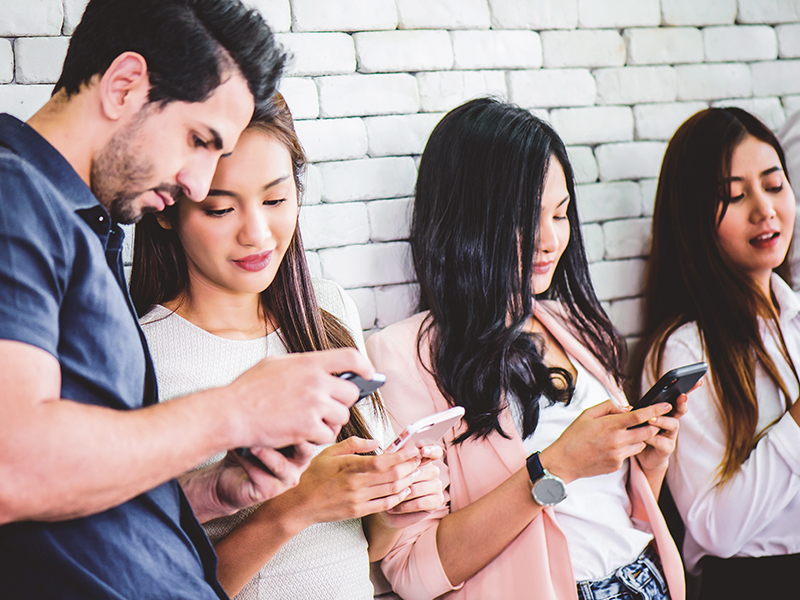
When making a purchase, Gen Z often relies on recommendations from friends, influencers, and others on social media.
A collaboration with another brand that already has a Gen Z following is another way to reach that demographic. “A jewelry designer might link up with a fashion designer who has traction with a younger audience,” says Hurwitz. “They collaborate on a collection, and maybe they use that collaboration to do a pop-up store in a popular location. This is very effective.”
But endorsements don’t need to come from just the big names to resonate with Gen Z. They are moved by recommendations from friends or people in their age group they engage with on social media. Those recommendations often come in the form of user-generated content (UGC), which can include videos they make of themselves buying, reviewing, or gifting a product. According to a Stackla study highlighted in a 2021 Forbes article, an estimated 80 percent of Generation Z consumers buy as the result of UGC, so it’s important to get members of the generation involved with your business or product. Make it fun. Have your Gen Z employees make videos and post them on your website and social media.
Gen Z Is on a Budget
Gen Z is the most highly educated generation to date. However, achieving that college education has come at a price. Gen Z spends more than 6 percent of their income on school debt “compared to just 1.8 percent average of all consumers,” according to the Collage report. In addition, 36 percent of their income goes for housing. Then there are the increased costs for transportation, food, and energy. This economic environment is definitely affecting what Gen Z buys.
One thing they are buying are lab-grown diamonds, not only because they are perceived as being kinder to the environment, but also because they’re cheaper. Hurwitz recently spoke with a 20-something year-old woman who, after researching information online, went into a retail store. “They showed me lab-grown diamonds and mined diamonds and told me they were exactly the same other than the origin,” she told Hurwitz. “One was 50 percent cheaper than the other. I thought it would be fiscally irresponsible of me to buy the mined diamond.”
With student loans, inflation, and high mortgage rates, Gen Z is getting a late start in life, says Fletcher, and they have less discretionary income. But in many cases, she adds, the lower income is the result of a lifestyle choice.
“The 40-hour work week is not working for Gen Z,” she says. “They don’t want to spend five days a week doing something they don’t love.” College degrees notwithstanding, she says, some of them “would rather be a barista and have good work/life balance,” than follow a more traditional corporate path.
As a result, “they love thrifting, recycling, and upcycling,” says Fletcher. “They tend to buy retro fashion, and, because they also see themselves as creators, they will recut/restyle items from their closet.” In addition to reducing waste, this also feeds their “appetite for individuality and self-expression.”
Yet this doesn’t eliminate their desire for fine jewelry, says Fletcher. “With less money to burn, they are more likely to invest in a meaningful piece that will be a permanent part of their jewelry collection.”
And there are plenty of Gen Z customers who are not stopped by price point. “There are Gen Zers wearing very expensive pieces of our jewelry,” says Aaron. “In fact, I have a store in Mississippi where I would say probably 90 percent of our customer base is Gen Z.”
Gen Z Likes Exclusivity
Gen Z consumers love events and shops that open in pop-up locations for a limited time. They love being the first to own something that’s blowing up the internet. They love experiences that they can record and post online. They love deals and discounts. In fact, discounts, especially those offered for a short time only, can often motivate them to buy. A limited-edition product drop can give them all of this and be very successful.
“I was very inspired by how sneakers are sold to young people thanks to one of my sons, who dragged me to see a sneaker drop,” says Aaron. So, she tried it at her company. Now, she says, “We do a specialized drop every year.” Once that product is gone, it’s gone. “I think we have a lot of Gen Z customers for that.”
Product drops give Gen Z consumers an excellent reason to provide you with their e-mail address: They’ll want early notifications so they don’t miss the next drop or one-time event.
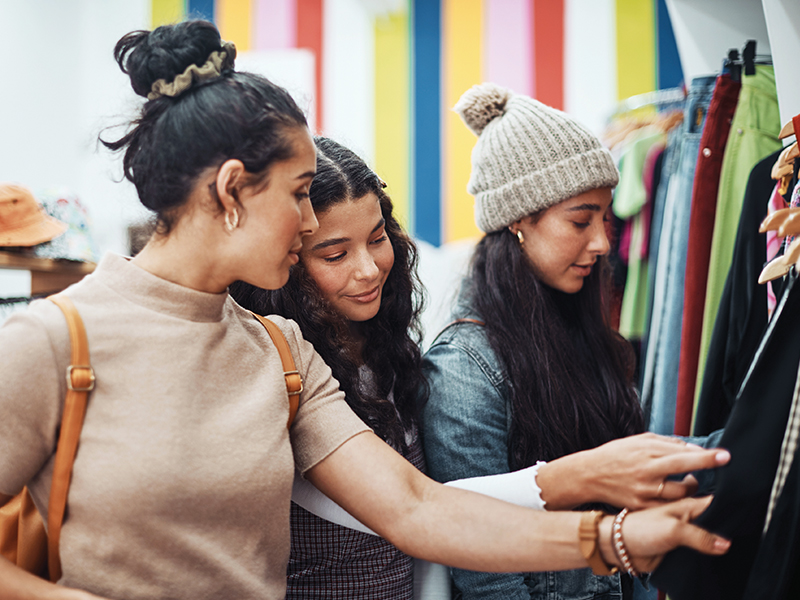
With little discretionary income, Gen Z relies on thrifting, recycling, and upcycling to showcase their individuality.
The characteristics of Gen Z are profoundly shaping product design, manufacturing, and marketing strategies, says Simons. It’s necessary for designers and manufacturers to integrate technology into their products, prioritize diversity and inclusivity in their offerings, and emphasize sustainability throughout the production process.
“To foster loyalty in this demographic,” says Simons, “retailers should prioritize authenticity by communicating genuine brand values, offering personalized experiences, demonstrating social responsibility, engaging with consumers through digital platforms, and building community connections.”
Hurwitz emphasized something even more basic. “The number one most important thing,” a small jewelry retail business should do, he said, “and the number one thing that we don’t do, as an industry, is go out and aggressively hire employees that look like the customers we’re trying to sell to.” Yet at this time, he says, most jewelry businesses “don’t have a career path for those people. We need to, as an industry, set up vehicles to find and hire young people. We’re still a heavily dominated white male industry, and that has to change.”