

Creating Smooth Transitions Using Boolean Intersection
When Form Meets Function
Tips for creating clean transitions in CAD
By Darla Alvarez, GIA Jewelry Design and Technology Instructor
The cleanliness of transitions can make or break the aesthetic appeal of a design. Sometimes, it is difficult in CAD to create clean transitions when incorporating functional moving components. In this example, we will fix a problematic transition in an earring hinge using existing geometry with Boolean Intersection.
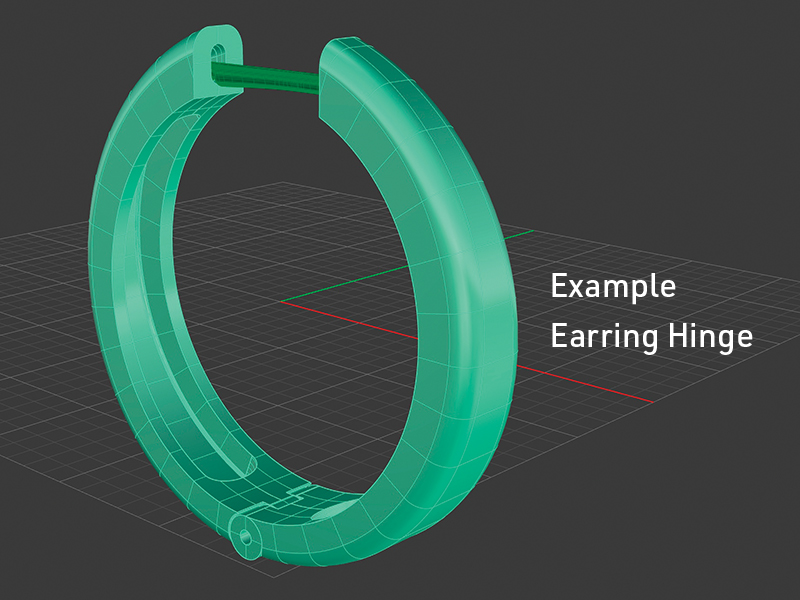
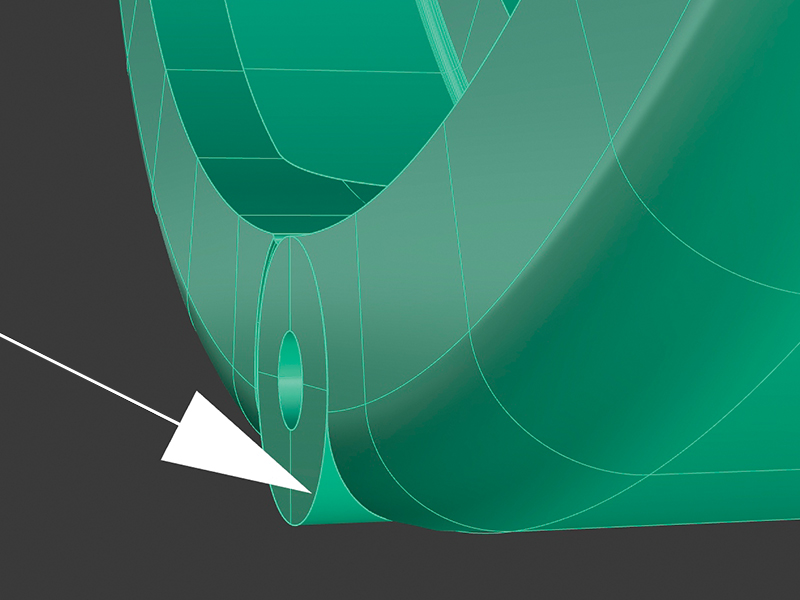
1. This model earring is functional, but the hinge at the bottom disrupts the smooth curve of the earring. To fix it, we have to back up one step, to before the hinge and earring parts were Boolean unioned.
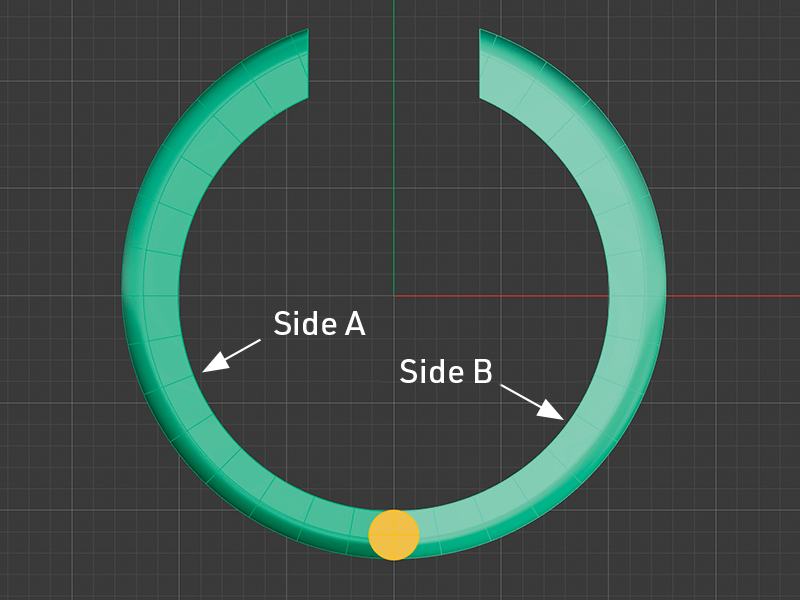
2. We start by making a copy of each earring half using Copy Objects in Place. One copy is for Boolean Difference; the other is for Boolean Intersection. Purge History from the copies. Place one copy of each side of the earring on a separate layer and turn off the layer.
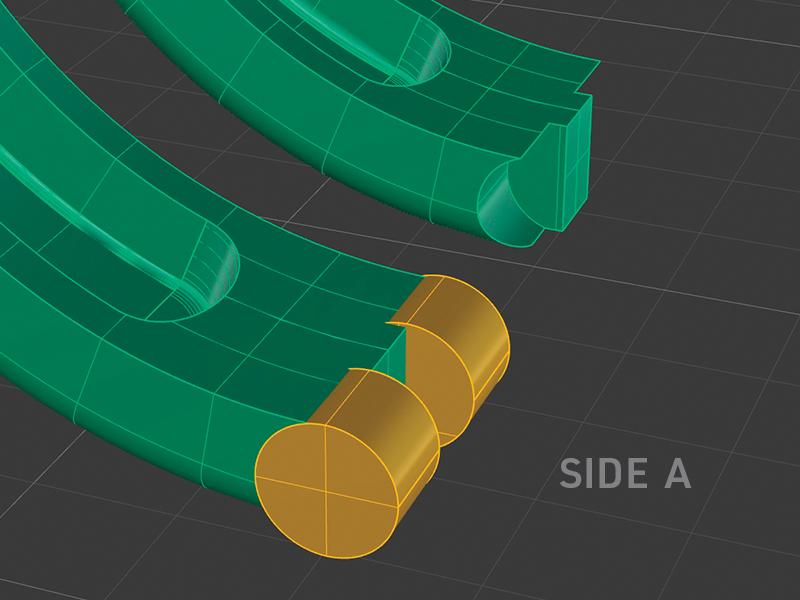
3. The knuckle cutters we use are scaled up 5 percent larger than the model’s hinge knuckles to allow the hinge to turn freely. Boolean Difference the two light orange knuckle cutters from side A.
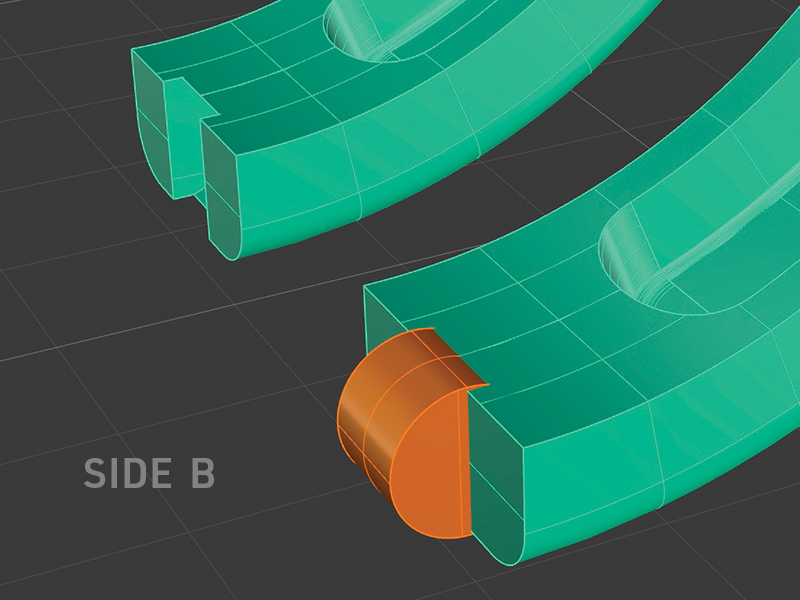
4. Boolean Difference the remaining dark orange knuckle cutter from side B. The image shows both before and after the Boolean function. This is the point at which the earring was Boolean unioned. We will continue with one more step that will create a better transition between the hinge and earring.
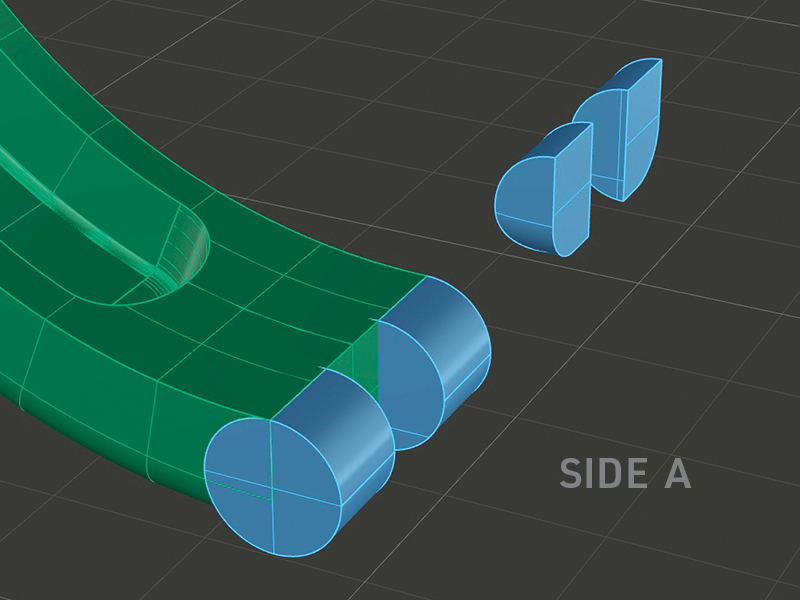
5. Turn off the layers for the Boolean differenced earring halves. Turn on the copied earring halves layer from earlier. Boolean intersect the hinge knuckles with the earring in the same order as the Boolean difference. Boolean intersect the two light blue knuckles with side A.
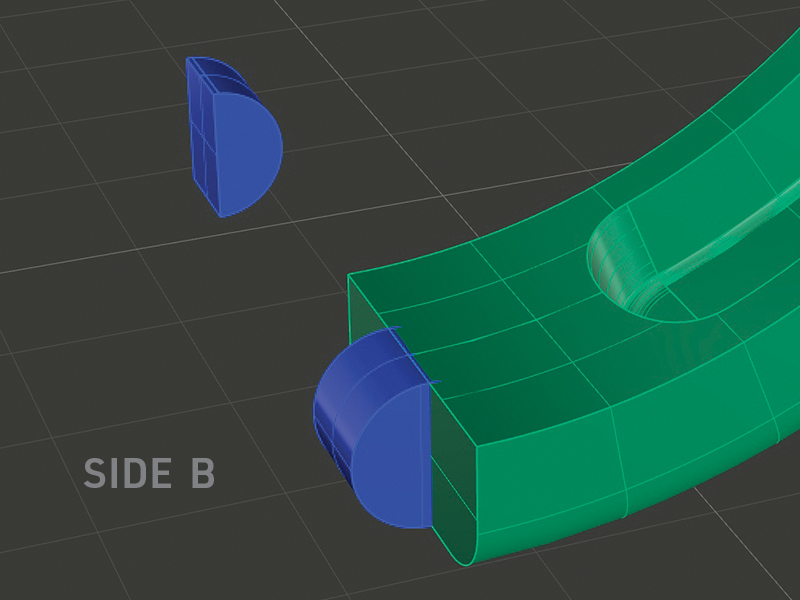
6. Boolean Intersect the remaining dark blue knuckle with side B. This image shows both before and after the Boolean function.
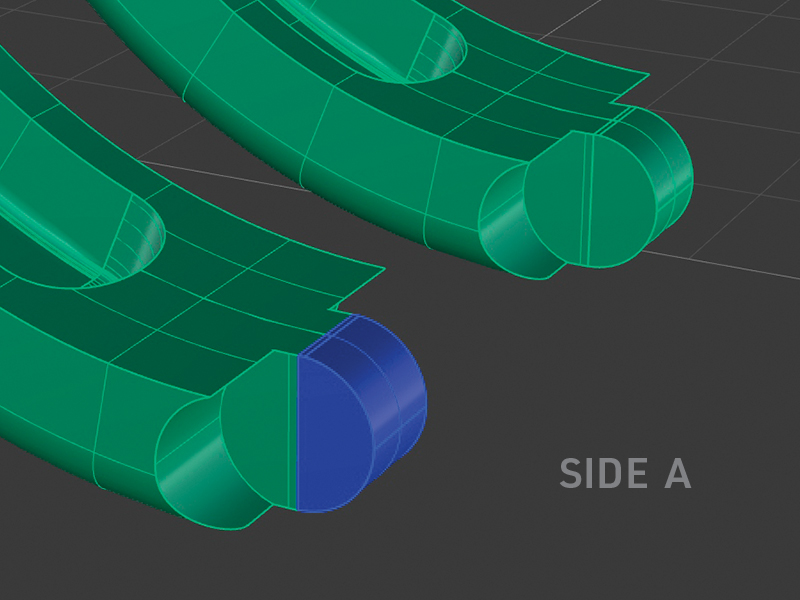
7. We will now Boolean union these pieces to the Boolean differenced earring halves. Turn on the layer for the Boolean differenced earring halves. Boolean Union the single dark blue knuckle to side A.
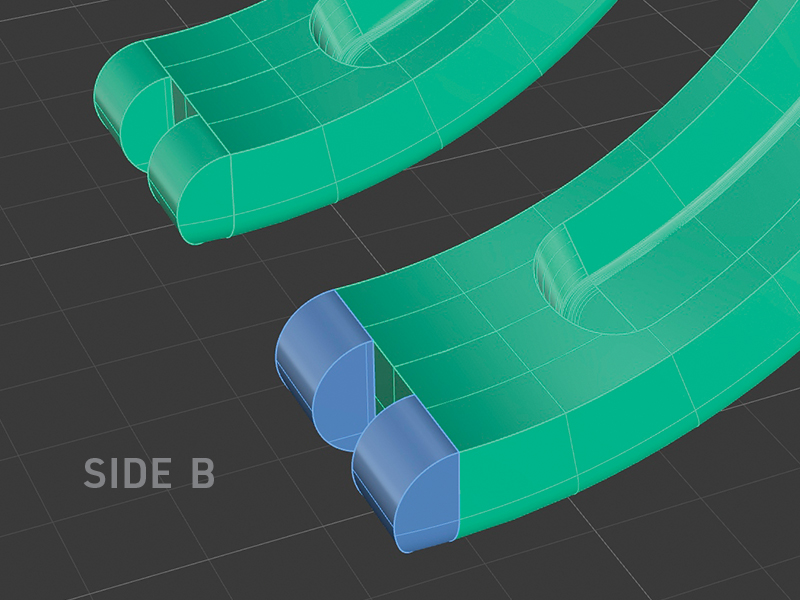
8. Boolean Union the remaining two light blue knuckles to side B.
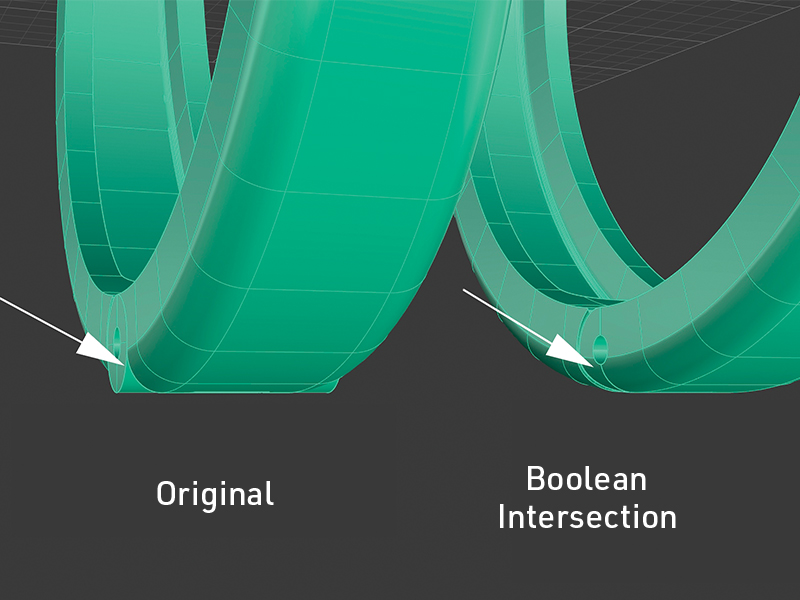
9. Our final steps are to Boolean difference a hole in the knuckles for a pin and to use Fillet Edge to remove sharp edges that may affect hinge movement or manufacturing.
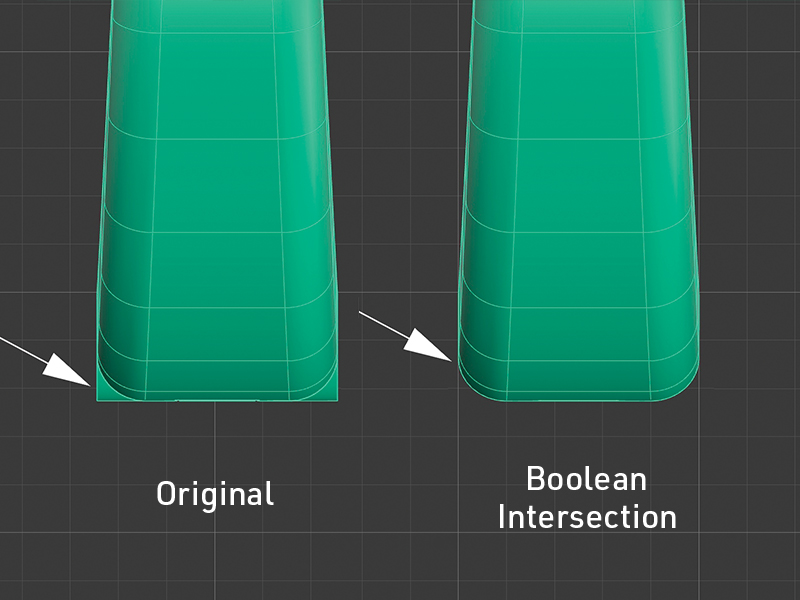
10. The first example earring is perfectly functional, but our finished Boolean intersection earring unites beautiful form with practical function.