

Picking the Right Refining Partner
For Richer Returns
To ensure a successful partnership with a refiner, first consider your wants and needs
By Sharon Elaine Thompson
(Originally Published by MJSA October 2023)
Choosing a refiner is a bit like getting engaged: It’s the beginning of a (hopefully) long-term relationship. After all, these are the people you will trust to turn your scrap and sweeps into cash or new metal that you can reinvest in your business. And just like choosing a life partner, choosing a refiner involves more than simply selecting the first one that catches your eye. To ensure a successful partnership, first consider your wants and needs and then look for the refining partner that can best meet them.
Identify What You Bring to the Relationship
Before you can start searching for a refining partner, you should first look at your business and identify what you want a refiner to handle. What metals will you be refining? How much and what type of scrap will you be generating? How often would you ideally be sending in materials for refining?
This is all information you want to have handy as you start your search, as refiners will want to know this so they can accurately quote anticipated costs as well as offer advice on ways you can maximize your refining returns, such as by separating scrap by metal.
Because this will be a long-term relationship, think about your future needs as well as your current ones. You may only be fabricating in sterling now but could move to gold or platinum in the future. If so, be sure the refiner you choose can process the types of metal you may use. Manufacturers who plan to grow by acquisition, in the future may need a refiner who can handle transportation and refining of toxic plating solutions even if they don’t need such services now.
Ask Your Friends and Colleagues for Recommendations
Maybe you’ve been in business a while and need to change refiners, or perhaps you’re just getting started and need to partner with your first refiner. David Siminski, vice president of global sales and marketing at United Precious Metal Refining Inc. in Alden, New York, suggests starting your search where everyone starts: online. Online searches can help you find refiners and the services they offer.
Next, ask other jewelry makers or designers you know, or those in your Facebook groups or on sites for jewelers such as Ganoksin, who they use and why. Asking peers for referrals is one of the best ways to find a refiner. If you don’t know the jewelers making the recommendations, visit their websites and see if they work in similar materials and thus would have similar refining needs.
Also take a look at trade journals. “Who has a presence? Who supports the industry? Who have you never heard of, and who else do you hear about all the time?” says Siminski.
Many refiners have booths at trade shows, too, and will be happy to answer your questions about services and setting up an account, adds Siminski. Shows are a great place to meet the faces behind the businesses you’ll be working with and to begin building vital relationships.
Look at What They Bring to the Table
Just as not all potential romantic partners bring the same things to the table, not all refiners offer the same services. Knowing in advance the type of services you want will be critical as it allows you to focus on those offering what you need.
For example, if your company buys jewelry manufactured in bulk from different suppliers, you’ll likely want a refiner that offers analytical services so it can spot check your order to see that the metal is not under-karated, says Siminski.
If analytical services are important to you, a good question to ask is “if they have their own lab and if the lab is certified, and what capabilities it has,” says John Antonacci, vice president of sales and marketing at Gannon & Scott in Cranston, Rhode Island. “A fire assay is really where it’s at, especially for jewelry manufacturing,” but there are other assay processes, he says. Does the refiner’s lab have those capabilities as well? “You want to make sure they have all the tools available to do the job correctly.”
Alternatively, you may need a refiner who can recover precious metal content in pre-packaged jewelry, such as carded chains or findings. Manufacturers of highly sought-after brands might want to work with a refiner that can certify that a retired line is completely destroyed, guaranteeing that the pieces will never show up on a secondary market.

Knowing in advance the type of services you want will be critical as it allows you to focus on those refiners offering what you need.
Jewelers aren’t limited to using refiners focused only on serving the jewelry industry. However, if you’re considering a refiner that processes metal from multiple different industries, check to see if it offers milled precious metal products or casting grain as a payout option.
If you want to buy precious metals from the same refiner who processes your scrap, remember that every refiner/precious metal supplier produces proprietary alloys that differ slightly from other refiners. Not all alloys look or work alike, so it’s a good idea to compare the colors (white, yellow, pink, green) and karat range (from 9k to 22k) of their gold alloys and ask questions about workability. You may be able to choose gold engineered specially for casting or fabrication, stamping, chain making, or you might want alloys that oxidize less during casting or are more fluid for greater success in casting fine filigree. Also, look at the forms of precious metal the refiner can deliver such as casting grain, bullion, sheet, wire, tubing, and solder.
If the sourcing or environmental impact of your precious metal choice is important to you or your customers, ask about the refiner’s policy on ethically mined or recycled metal. “Ask what they are doing in terms of ESG—environmental, social, and governance,” says Antonacci. “Do they have policies in place to address that, and are they doing things correctly?”
Build a Foundation of Trust
The key to any good relationship is establishing trust. “Refining is a relationship business,” says Siminski. “I’m asking you to give me your money in the form of metal,” whether that is hard scraps, sweeps, or buffs, grinding wheels, rags, and other bench detrius. “You give it to me blindly and expect to be paid for it.” You need to have confidence that you’ll be paid fairly for all the metal recovered. In fact, one of the key questions jewelry makers ask each other, says Siminski, is “Who do you trust?”
It’s important that you know your material is being taken care of ethically and responsibly, says Antonacci, especially when dealing with the caustic chemicals involved in the refining process. He explains that if your refiner is not doing something right and they run into legal trouble, “[the Environmental Protection Agency] has the right to go after everybody who has sent [the refiner] materials. As the generator of that waste, [you’re] ultimately responsible.” This is not a hypothetical, says Antonacci. “It’s happened in the past.”
If you’re skittish about the refining process, consider asking if the refiner allows witnessing, says Antonacci. “Witnessing” is just what it sounds like: the company supplying the material to be refined can be present during the process.
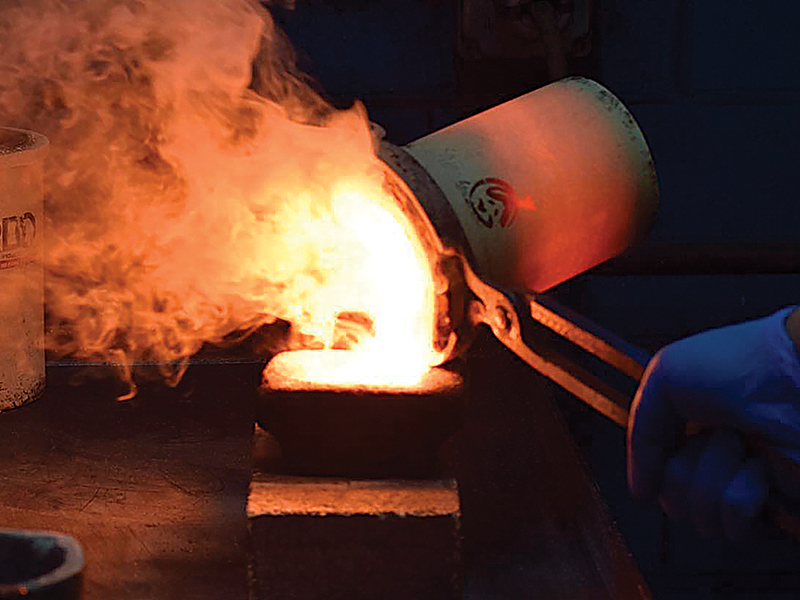
Since you’ll be sending your refiner your metal scraps and sweeps, you’ll need to trust that you’ll be paid fairly for all the metal recovered.
“It’s so you have that peace of mind,” says Antonacci. “You should be able to come in, witness the material being weighed, verify the weights, witness the process happening, witness the sample taken, and then take that sample to whatever lab you want” for confirmation.
Because processing of metal recovered from something such as old carpeting or plating solutions can be a multiday affair, some refiners may provide office workspace for a retailer or manufacturer to work during the process.
If you or someone from your company cannot be present, you can hire a third party to witness the process for you. “Some are better than others,” says Antonacci, “so you’ve got to vet them as well.”
However, not all refiners will offer witnessing, says Siminski, primarily because it slows down the process of taking in, recording, and processing all the boxes and barrels of material they receive every day. In addition, there is the question of security. “Most refineries have more money than most banks,” says Siminski. And it’s not only security of the products they are concerned with, but also the security of their employees.
Get On the Same Financial Page
Before entering into a long-term relationship, you need to have a clear understanding of the other party’s finances. In the case of refining, you have to know a refiner’s fees.
Fees are usually a percentage of the value of the precious metal recovered from the scrap you send in. They usually vary depending on the type of material you want processed. For example, bench sweeps may sometimes need to be burned, milled, screened, blended, and possibly melted, which could incur multiple fees. Pure gold scrap just needs to be melted. In addition, precious metal yield (and thus the final fee) can be far less compared to the volume processed and the number of steps in processing when it comes to processing something like sweeps, sludge, or old carpeting.
Most refiners have either a minimum amount of waste they accept or a minimum fee that covers small amounts. For example, Siminski notes that if the fine gold market today is $2,000, at 58.5 percent—roughly the amount of fine gold in an ounce of 14k gold—the value of the gold recovered would be about $1,170. If the refiner charges 5 percent of that (fees vary by refiner), their fee would be only $58.50, which is hardly enough to cover the labor involved in receiving, recording, analyzing, and processing the material. So a minimum of, say, $100 might be charged instead. If you send in four ounces of 14k, the recovered value is four times that, so the refiner will charge their customary percentage and not a flat minimum fee.
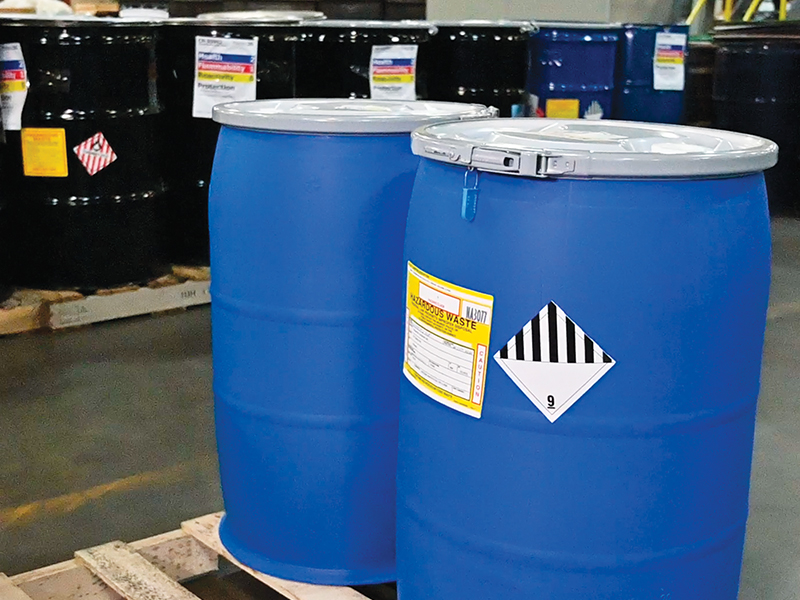
Work with your refiner to maximize your returns, which could mean sending in scrap and sweeps less frequently to avoid minimum charges and separating your refining by type and metal.
Ask the refiner about what metals it pays out on. If you are going to send in jewelry made with mixed metals—from gold-filled and bi-metals to pieces containing materials such as titanium or meteorite—be sure you understand what the refiner can and cannot recover from those pieces and how those metals will affect what you will be paid. If you scrap large amounts of gold-filled, for example, you may want to know if the refiner pays out on the copper content, says Antonacci.
Also be aware that very small amounts in the refining mix may not be payable at all. For example, he says, one gold ring in a 55-gallon drum of silver will not add up to a payable gold amount (a good reason to keep your scrap separate by metal type).
When looking for a refiner, be sure you understand all the different fees that will be charged for the services you’ll be using and ask about how to maximize your return—for example, perhaps by sending in scrap and sweeps less frequently to avoid minimum charges. (Always separate your refining by type—keeping sweepings separate from pure gold scraps, gold and silver separate from platinum.) You should also ask about their payment options, such as check, wire transfer, credit to your account, or milled product, as well as payment turnaround times.
Good Communication Is Key
Communication with your refining partner is vital, so establish right from the beginning if this is a company that will take your questions and give you fast, accurate answers. Be sure, as you shop for a refiner, you are getting the information you need to make your decision and that you’re made to feel comfortable doing so. Even if you have what feels like a strange question, “when in doubt, ask your refiner,” says Antonacci. They’ve probably heard it before.
As you navigate the path to finding your ideal refining partner, remember that this decision isn’t just a transaction—it’s the start of a lasting relationship. Just like a meaningful engagement, this partnership thrives on trust, communication, and a shared vision of the future. Your refiner isn’t just a service partner; they’re a vital collaborator in your journey from scrap to value. So, as you decide, envision a partnership that grows, just like the most cherished relationships in life.