

Create a Tool for Nicely Rounded Rivet Heads
Double Duty
How to create a punch from steel rod to create better rivet heads
By Helen I. Driggs
(Originally Published by MJSA August 2023)
I make mixed material work and I rivet a lot. One of the biggest issues I face in cold-connected work is getting nicely rounded rivet heads within pieces that are curved, such as areas deep inside domed or curved shapes and forms, and balancing the piece while I do that. So, I made this simple little punch from steel rod to help me work.
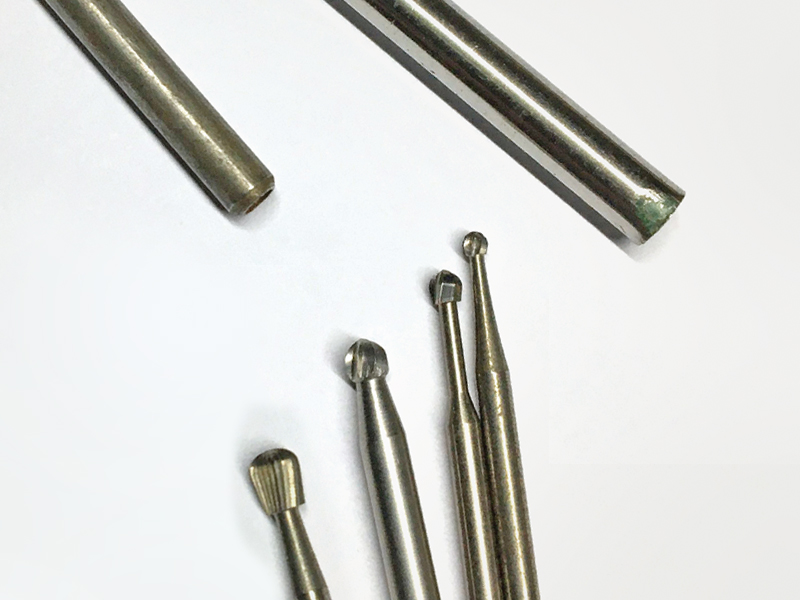
1. To make the punch, saw off about 3.5 inches of 3 mm steel drill rod with a hacksaw. For the rest of this project, you’ll need a set of coarse ball burs ranging from about 1.5 to 2.5 mm, some sanding discs, a flexible abrasive wheel and a steel bristle brush to cut, sand, and polish the drill rod after you’ve modified it.
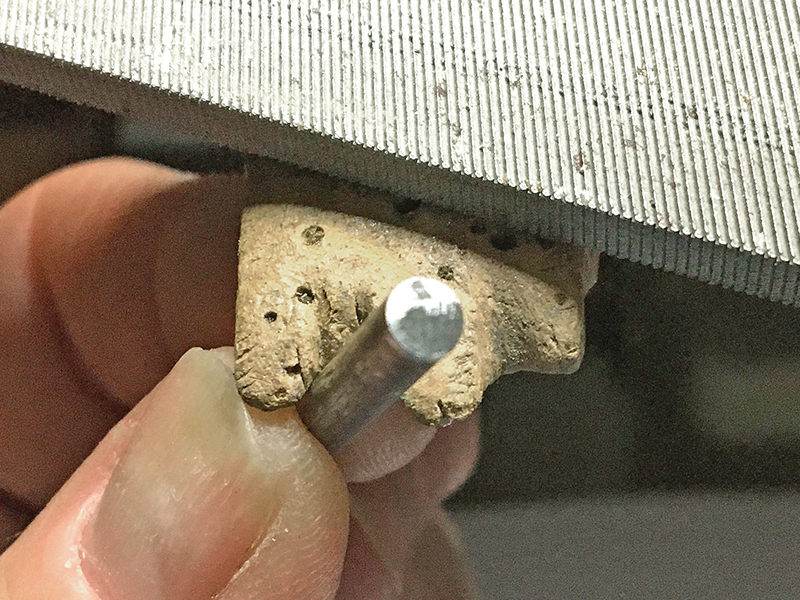
2. Use a flat utility file to true up the end of the rod, especially if you used a hacksaw to cut it to the correct length.
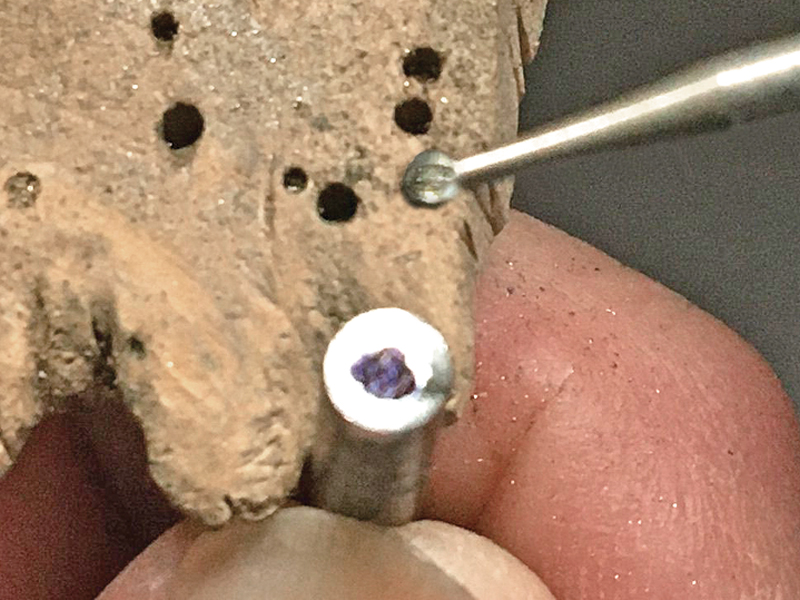
3. Place a center dot with a permanent marker on the filed end of the rod and begin burring a divot with the smaller bur. Switch to a larger bur to gradually increase the size of the indent.
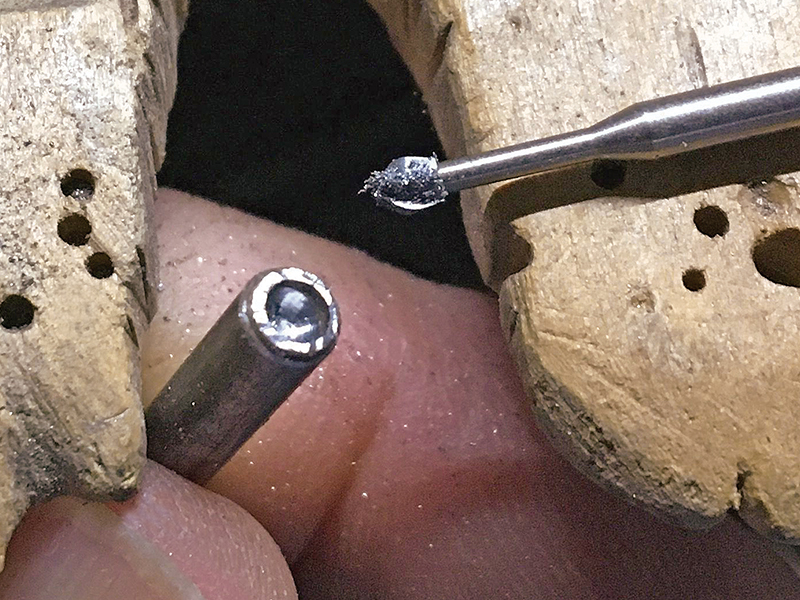
4. Work slowly and lubricate the steel bur often to avoid dulling it. Aim for a centered hemisphere that is about
2.5 mm deep.
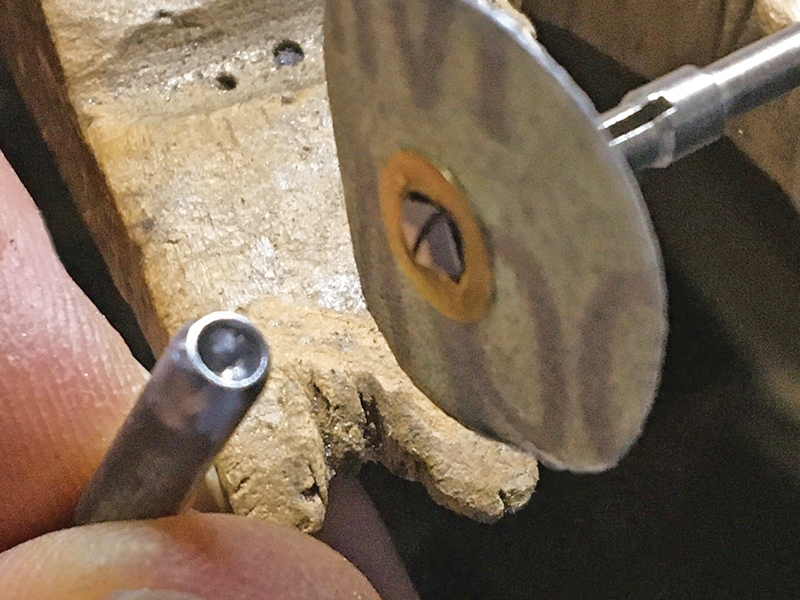
5. Use a sanding disc to thin and smooth the edges of the steel rod after you have burred the hemispherical indent in the end.
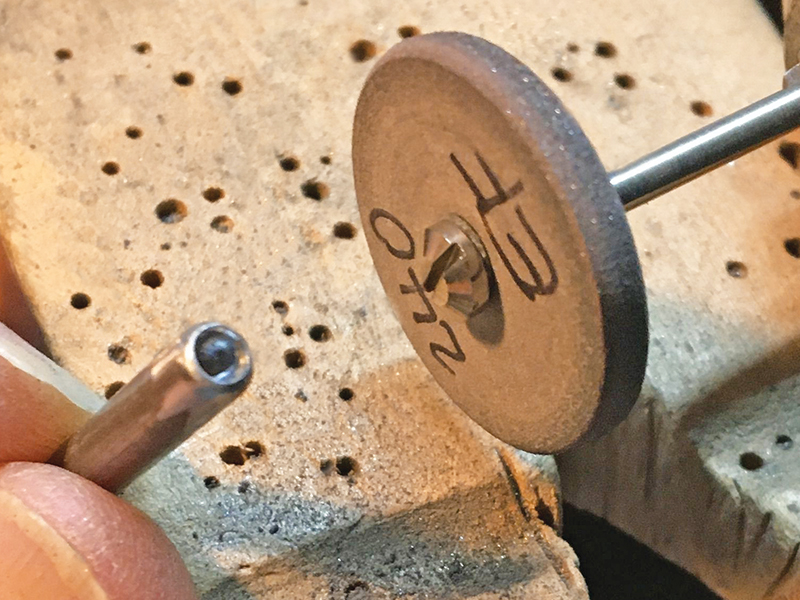
6. Switch to a finer grit flexible abrasive to pre-polish the steel and to refine the surface.
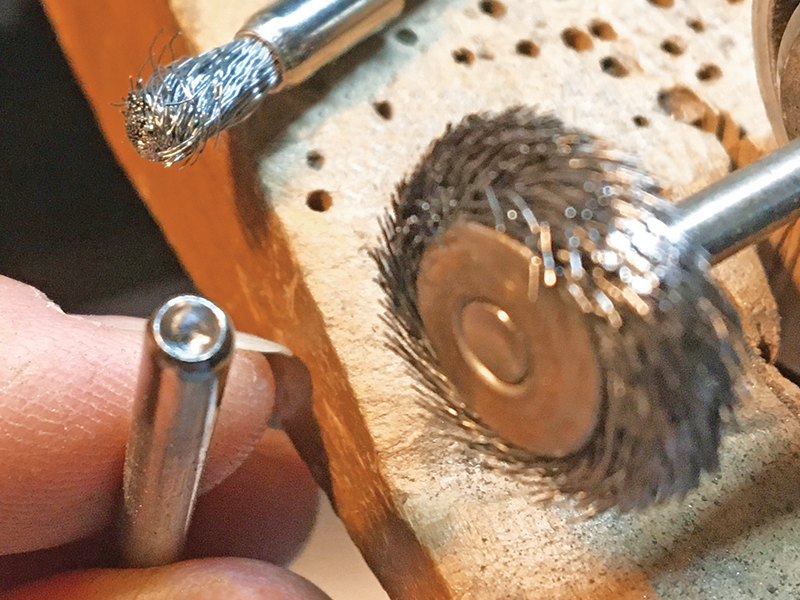
7. Finish with a good all-over burnishing using a steel bristle attachment. I used a round brush for the outer surfaces, and a cup brush for the inside of the indent.
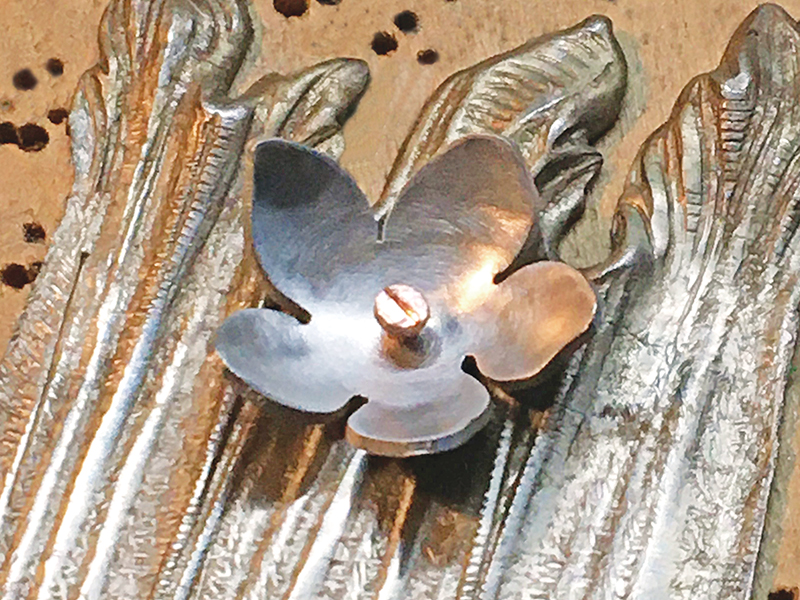
8. Most of the time, there will be hammer marks like these left by the cross peen of your rivet hammer after you’ve formed a rivet head. It’s very hard to remove them when the rivet sits on the inside of a curved form. To prevent this, I first finish the rivet using a block.
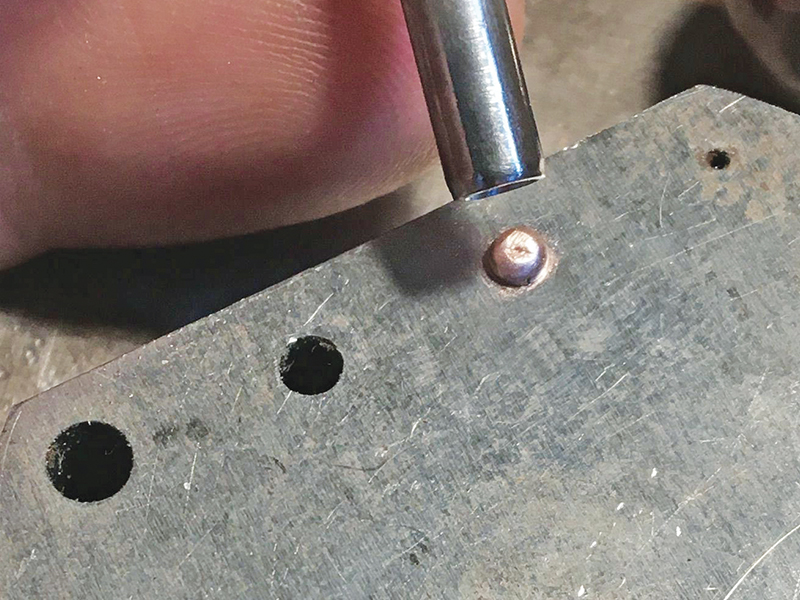
9. Insert the rivet into the nearest fitting hole of the block, position the punch over the head, and gently hammer while pivoting the punch over the rivet head to smooth and round the metal and conform it to the hemispherical indent.
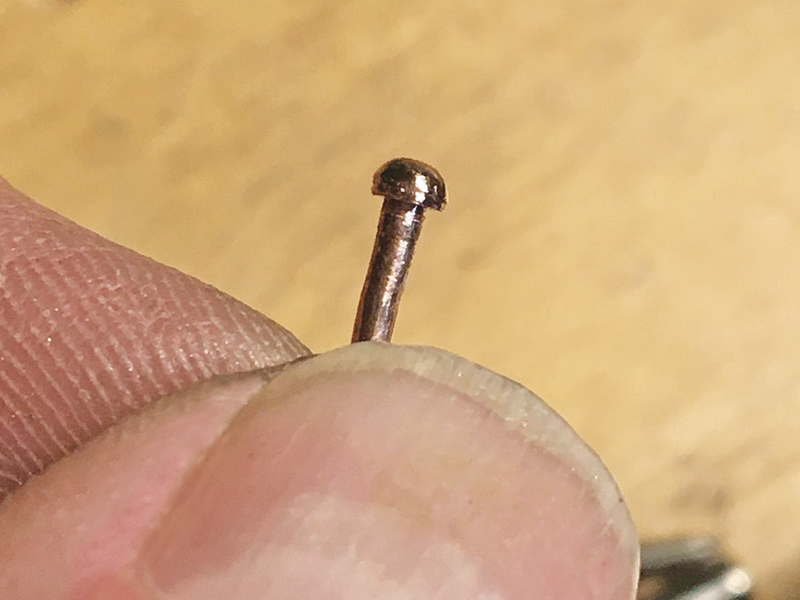
10. Examine the rivet several times as you work to ensure it is well shaped before installing it into the piece.
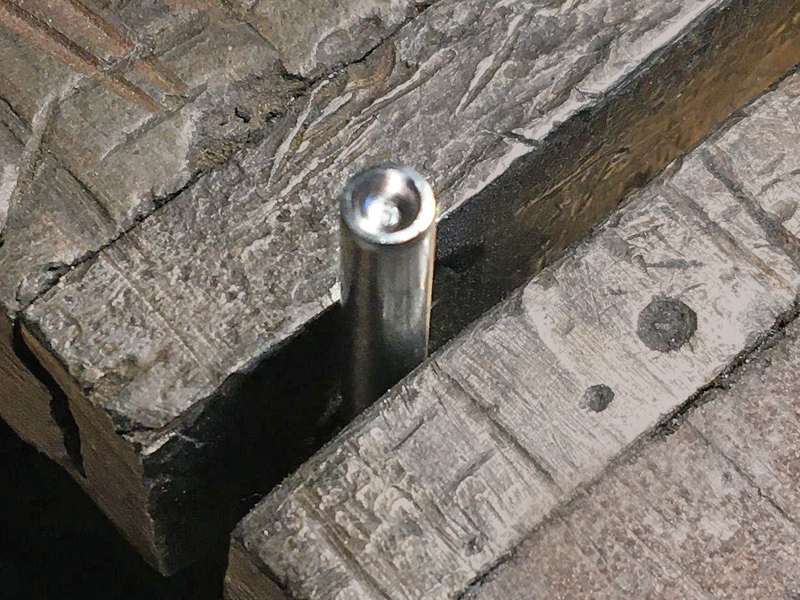
11. To install the rivet without deforming or flattening the carefully rounded head, insert the punch into a vise with the indent facing up.
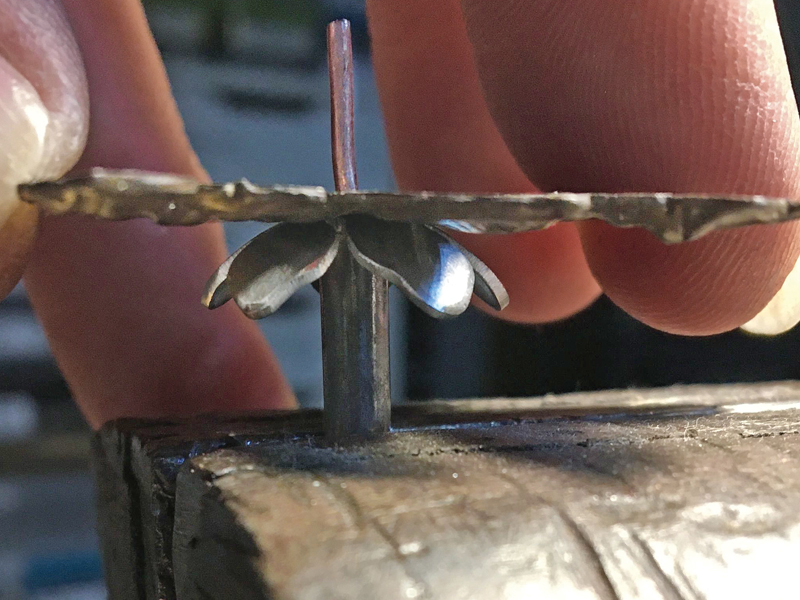
12. Position the rivet head within the indent, with all of the layers of the piece in position. The punch makes it easy to snip off the excess rivet tail, upset the wire, and form the rivet tail without the parts slipping away, and it also creates a stable surface to hammer against.