

Tool Testing: The Ikohe Mini Dust Collector
Clean Sweep
Testing the Ikohe mini dust collector and vacuum station
By Melissa Muir
Keeping your bench and work area and the air you breath clean while polishing should be a priority in your studio or bench area. An ideal system will not only be strong, but it will also be quiet, small, and even portable. A newly introduced mini dust collector by Ikohe checks all of the boxes, especially for artists and professionals with smaller work areas or who have space constraints.
About the System
Specifically designed for metalsmiths and jewelry artists working with silver, copper, gold, and other precious metals, the mini dust collector’s filtration system comprises two filter bags and a HEPA filter that is designed to eliminate 99.8 percent of dust particles as small as 0.3 microns as well as capture fine shavings of precious metals during cutting, filing, and polishing. Not only can it help to create a cleaner and healthier work environment, but it also enables the recovery and recycling of valuable metal shavings. Simply add the full HEPA bag to your refining collection container and have it refined with your other scraps and sweeps.
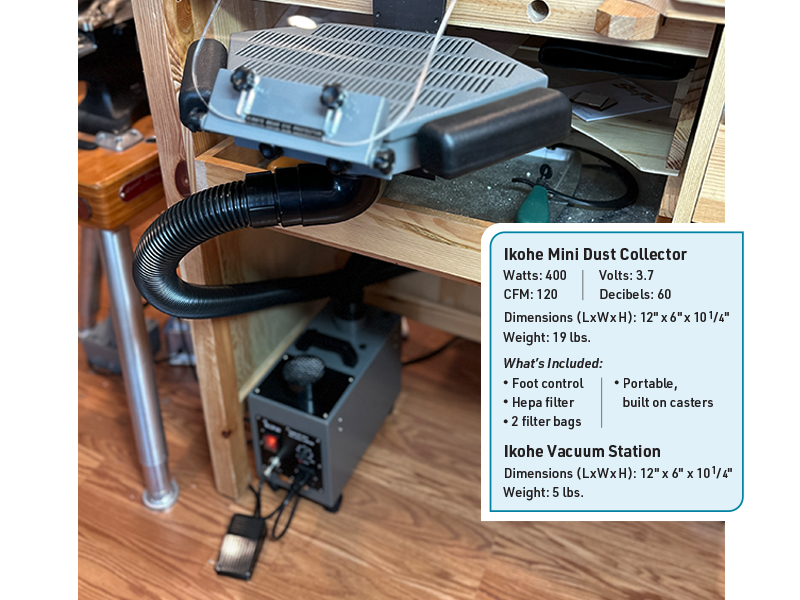
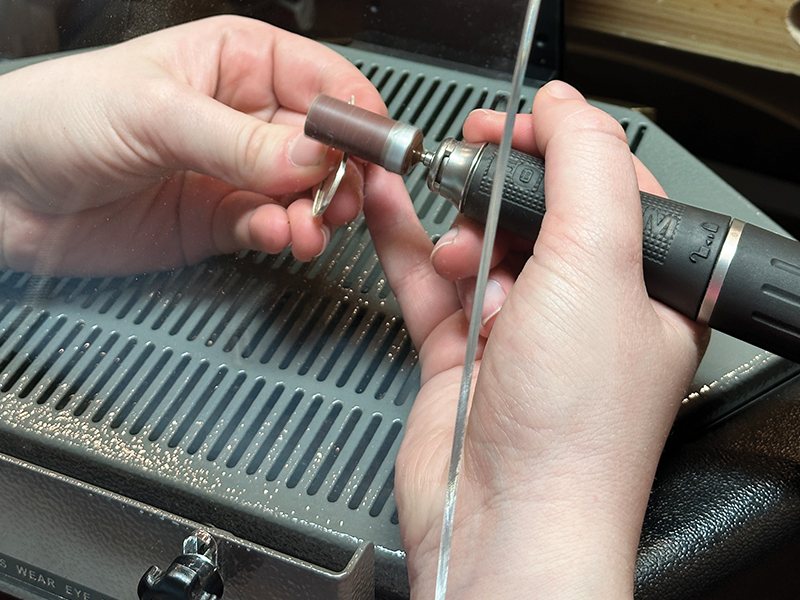
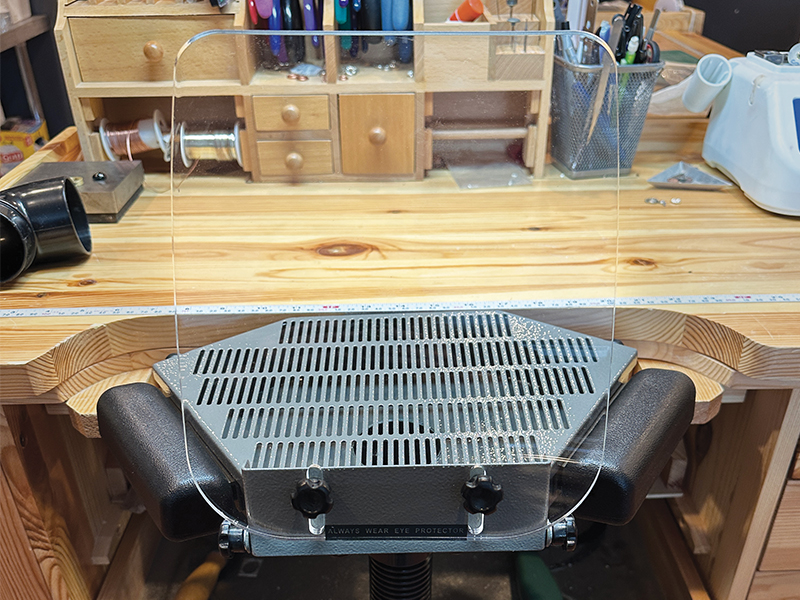
Although it can be used as a standalone unit, the dust collector is designed to be paired with the Ikohe vacuum station, which attaches to a benchtop with a GRS-style mounting plate. The vacuum station provides the user with a larger working area and wrist rests for ease of use during polishing and grinding operations. The vacuum station also features an adjustable acrylic shield for easy visibility and safety.
Connecting the two is easy, as the dust collector’s hose can be hooked up directly to the vacuum station or you can use the included elbow to direct the hose in a desired direction. Because the collector connects to the bottom of the station, it pulls the dust down through the station’s perforations.
In addition, using the vacuum station with the GRS Style bench mount allows me to have the table level with my benchtop for a large work area, or I can use my GRS slide and lock system for a more comfortable experience while sitting at my bench, as it makes it so I don’t have to raise my hands too high. It brings it to a more natural position, putting less strain on my shoulders, arms, and wrists.
Alternatively, the dust collector’s hose has a 2.25 inch opening so it will work with other systems on the market, including Foredom’s fishmouth and lighted work chambers.
I found the system to be quiet. The vacuum’s documentation indicates that it runs around 60 decibels. To give you an idea, a whisper is said to be 30 dB and a normal conversation is around 60 dB. While I do have to speak a little louder while running the collector, I was able to hold a conversation quite easily. For comparison, it was slightly quieter in my studio than my JoolTool vacuum and comparable to my Foredom MADC20. It has a variable speed that allows the machine to be a little quieter at lower speeds and louder with more power and speed.
There are two options for running the system: a foot pedal and an on/off switch. When using the foot pedal, the system runs as long as the pedal is pressed.
Measuring 12 inches long by 6 inches wide by 10.25 inches high, the dust collector has a small footprint and fits under my smaller benches without being in the way of my feet or other accessories, though the hose can be in the way of the catch tray or items stored in the tray area. The attached wheels move smoothly, and the whole system is lightweight and easy to move. Both the power and foot pedal attach at the front of the machine, which allows you to tuck the machine nicely into a corner.
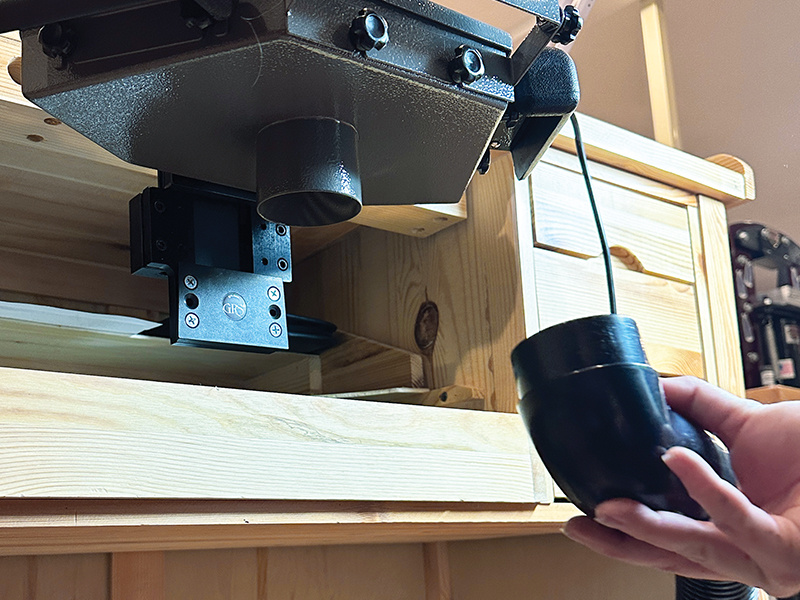
The intake hose attaches at the top of the machine, dumping directly into the HEPA filter bag, which is easy to remove and replace. The system comes with two bags but uses only one at a time.
Cleaning the surfaces is easy to do with a soft damp cloth. The vacuum station top can be removed easily for cleaning around the hose connection point.
How Well Does It Work?
I put this system through a number of tests. First, I pulled out a new cotton buff and ran it along the side of a bench block to release all loose cotton fibers, expecting the excess fluff to fly around and land on the surrounding surfaces. I was pleasantly surprised to find that I could hardly see any of the excess fibers floating around and the lightest of layers landed on the acrylic shield of the vacuum station.
Next, I pulled out a silicone wheel and shaping stone. Running the wheel on the stone to create a knife-edge point made a lot of dust. While the system didn’t prevent all of the dust from landing on my hands or shaping stone, once again, I didn’t see any dust flying up and the surrounding surfaces remained free of all but the very finest of particles.
For the next test I used a cotton buff with Foredom’s Platinum White compound to polish a silver bracelet. Again, I saw very few airborne particles and only a very light film was left on the vacuum station table and acrylic shield.
While it is a more open system than contained ones such as the lighted work chamber, I was pleasantly surprised by how little dust was present. I believe the location of the vacuum hose directly below the table helps to keep things flowing down and away from the user’s face. The curve of the acrylic shield also helps to keep things contained and directed back down toward the suction.
This system seems to be quite effective. While it does not have the power of larger machines, it works quite well for a single bench.
MJSA would like to thank Stuller Inc. in Lafayette, Louisiana, for providing the Ikohe mini dust collector and vacuum station.