Customize Shank-Bending Pliers for a No-Mar Finish
Well-Dressed Pliers
“Dressing” your pliers for a mar-proof finish
By Helen I. Driggs
(Originally Published by MJSA June 2023)
No matter their price tags, most off-the-shelf pliers will need to be modified at some point during their work life. My convex/concave ring shank pliers are a good example because although they are 98 percent perfect for my hand size and preferences in terms of grip, action, and fulfilling their purpose, their hardened steel jaws can really mar ring stock, pattern wire, and other jewelry metal that’s thicker than 20 gauge. This is why I decided to “dress”—grind, sand, and polish—both jaws for a mar-proof finish when I use them.
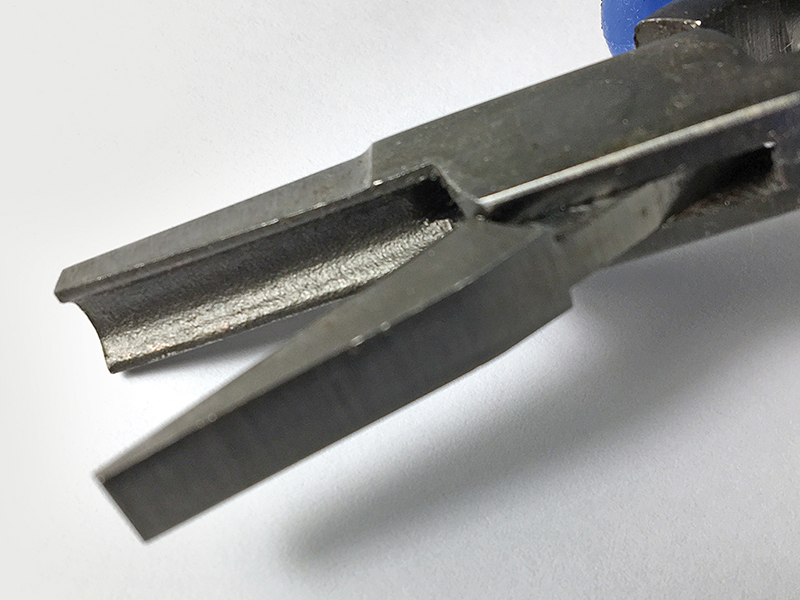
1. A peek at the plier jaws reveals the very crisp 90-degree angle of the concave jaw, which is the major dent-producing culprit when bending thicker stock.
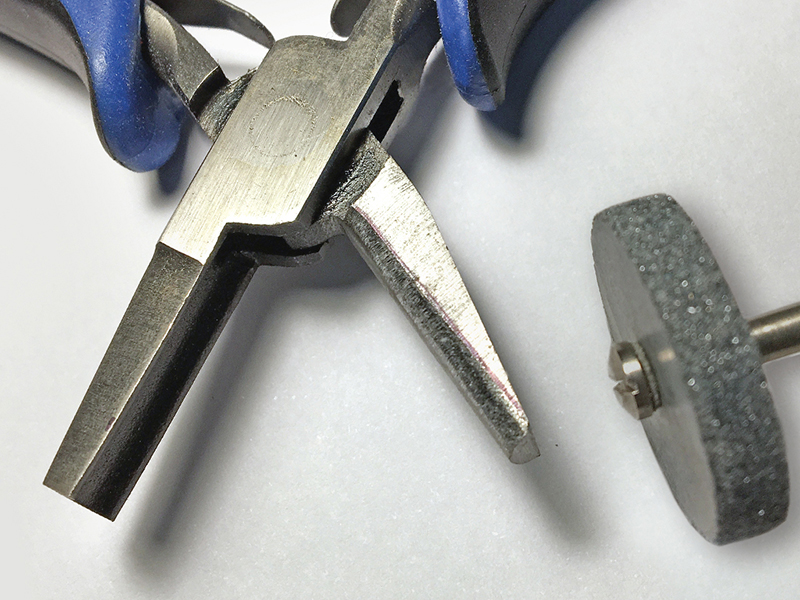
2. The convex jaw has a severe drop-off on the edges that needs to be sanded, and it also doesn’t meet up perfectly with the lower jaw when the pliers are closed. To figure out where to make the adjustment, close the pliers tightly and draw lines along the seam where the jaws meet on both sides of the tool.
3. A Heatless Mizzy grinding attachment is great for rounding off the drop-off to the line drawn on both sides of the convex jaw of the tool, and also to grind off the sharp corners of the concave jaw.
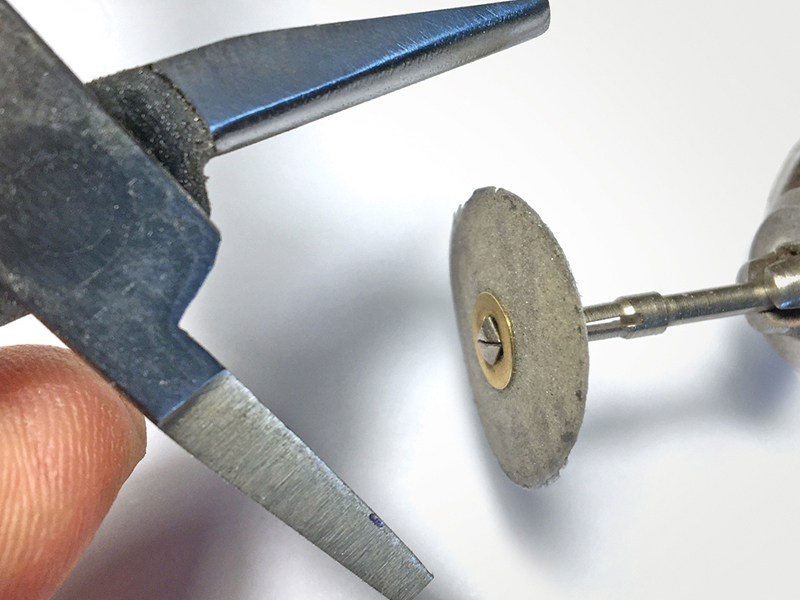
4. Sand the ground areas smooth on both jaws by progressing through coarse and medium abrasive disc attachments. I like sanding discs for this task because they reach easily into the plier jaws and the brass-centered versions can be flipped over on the mandrel for reaching into tight spots without handpiece interference.
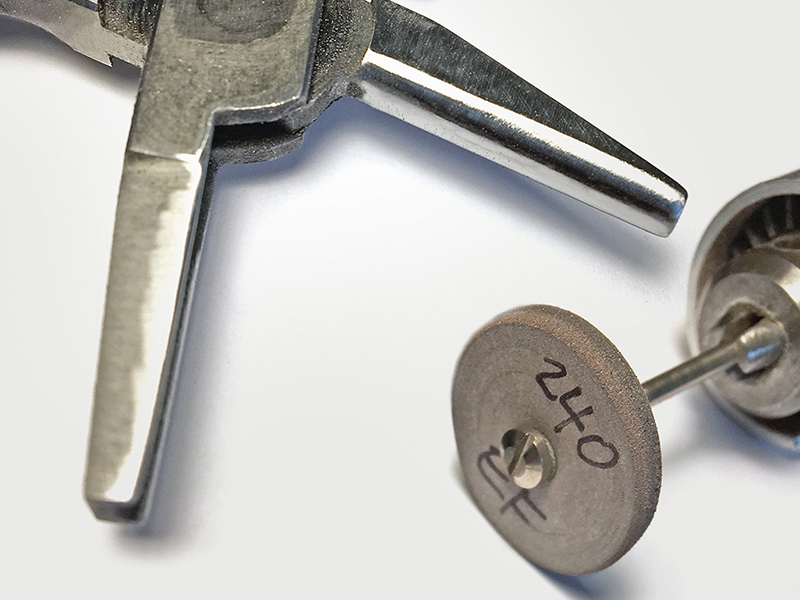
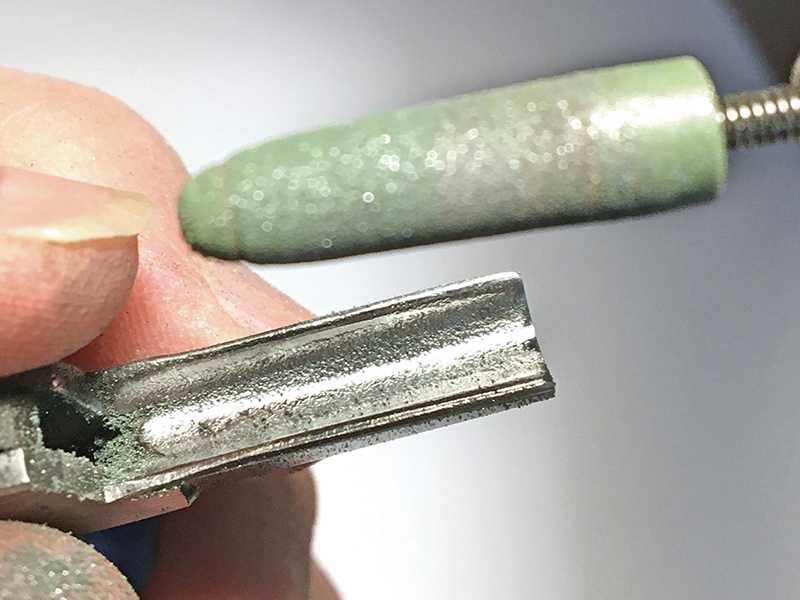
5. After sanding out all the ruts and scratches, switch to flexible abrasives, using a 240-grit wheel or cylinder to polish the sanded areas on both plier jaws.
6. The cylinder tip makes it easy to clean up the channel of the concave jaw.
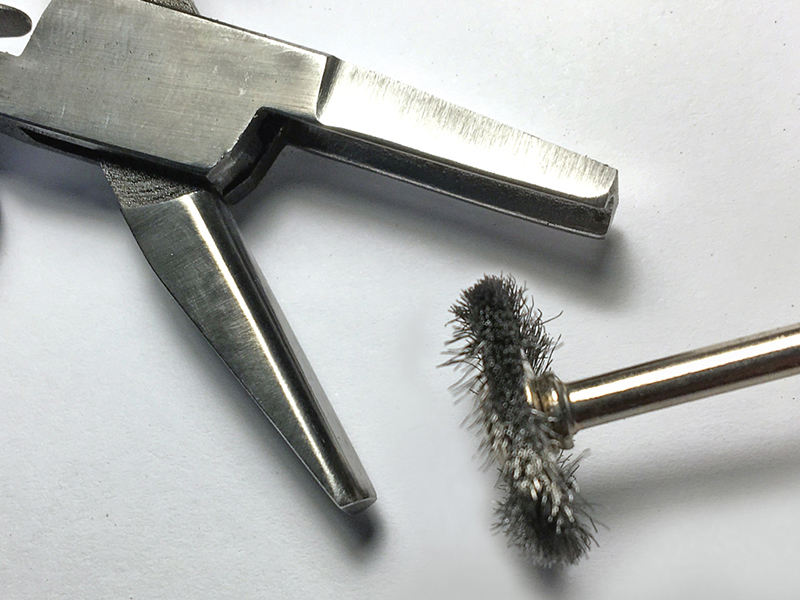
7. Finally, burnish the plier jaws all over with a steel bristle brush, aiming for a very high polish.
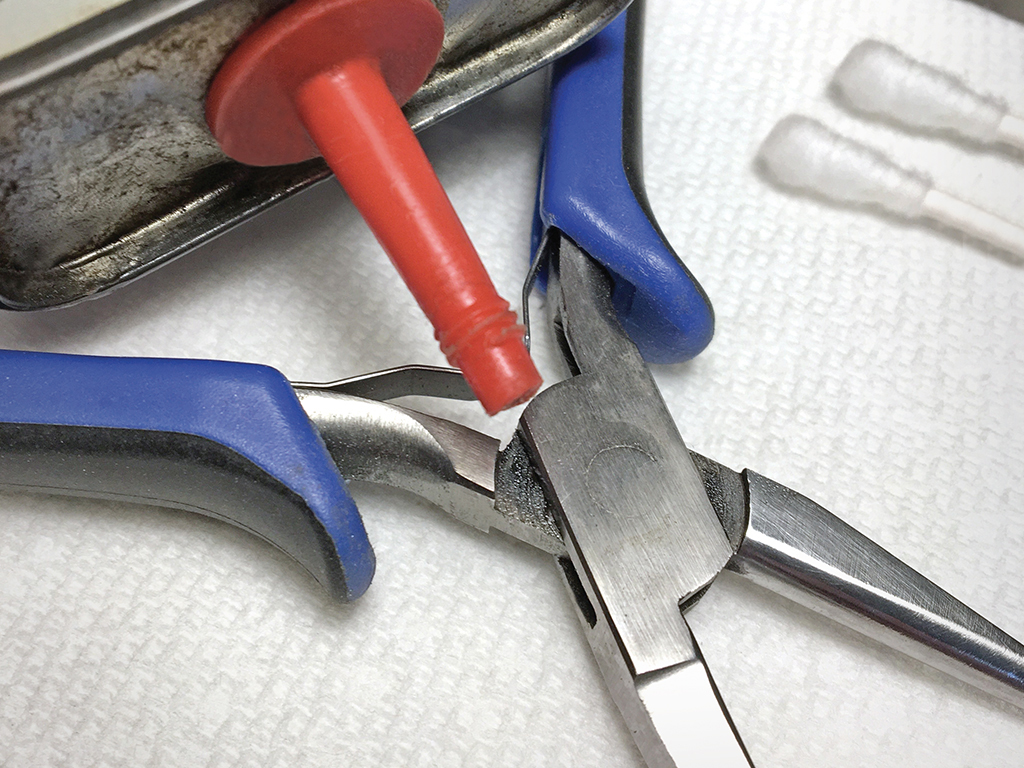
8. Since I was there, I also lubricated the box joint with light machine oil (I use sewing machine oil for my hand tools) and cleared away any lingering abrasive dust with a cotton swab.
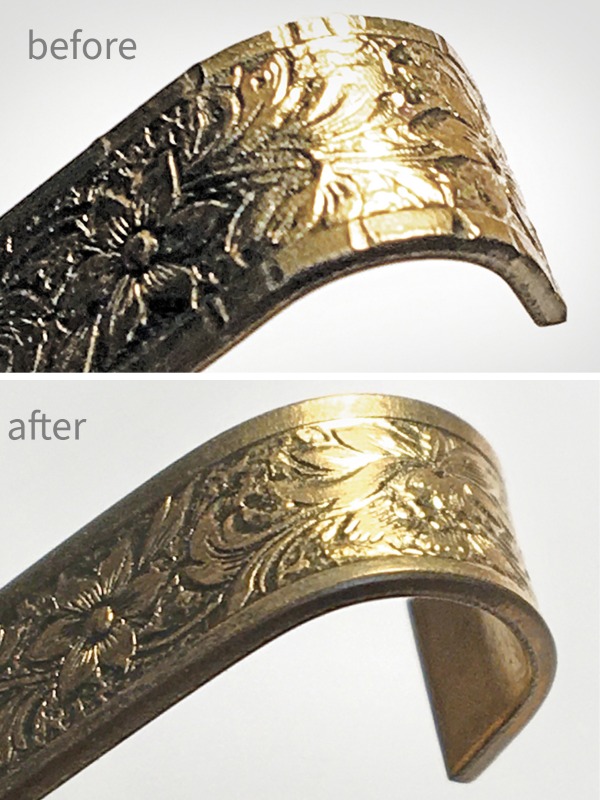
9. These before-and-after photos show the time invested in dressing pliers is well-spent. This patterned wire is no longer damaged or dented with ruts caused by too-sharp edges on the plier jaws.
Manage Consent
To provide the best experiences, we use technologies like cookies to store and/or access device information. Consenting to these technologies will allow us to process data such as browsing behavior or unique IDs on this site. Not consenting or withdrawing consent, may adversely affect certain features and functions.
Functional
Always active
The technical storage or access is strictly necessary for the legitimate purpose of enabling the use of a specific service explicitly requested by the subscriber or user, or for the sole purpose of carrying out the transmission of a communication over an electronic communications network.
Preferences
The technical storage or access is necessary for the legitimate purpose of storing preferences that are not requested by the subscriber or user.
Statistics
The technical storage or access that is used exclusively for statistical purposes.The technical storage or access that is used exclusively for anonymous statistical purposes. Without a subpoena, voluntary compliance on the part of your Internet Service Provider, or additional records from a third party, information stored or retrieved for this purpose alone cannot usually be used to identify you.
Marketing
The technical storage or access is required to create user profiles to send advertising, or to track the user on a website or across several websites for similar marketing purposes.
A Fresh Look. A New Website. A Stronger Membership.
We’re excited to unveil Jewelers of America’s refreshed brand and redesigned website, reflecting our growing community and continued commitment to the jewelry industry.
With JA and MJSA now united under one membership, we’re bringing together more resources, expertise and connections to support every facet of the jewelry industry.
Take a look around to see all that JA offers — members can login to access member-only content like benefits, the Knowledge Vault and Advocacy resources.
Questions? Contact us at members@jewelers.org or call/text (800) 223-0673.