I make my own pinstems for brooches using durable brass, nickel, or steel piano wire. The downside of working with a durable metal is that it’s time- consuming to bring it to a fine, symmetrical, and sharp point. I normally swear by snap-on sanding discs for my flex-shaft for their speed and convenience during the clean-up phase of metalwork, but they don’t work in this case. Instead, you’ll need some good, old-fashioned center-punched sanding discs and a compatible screw mandrel to get this job done.
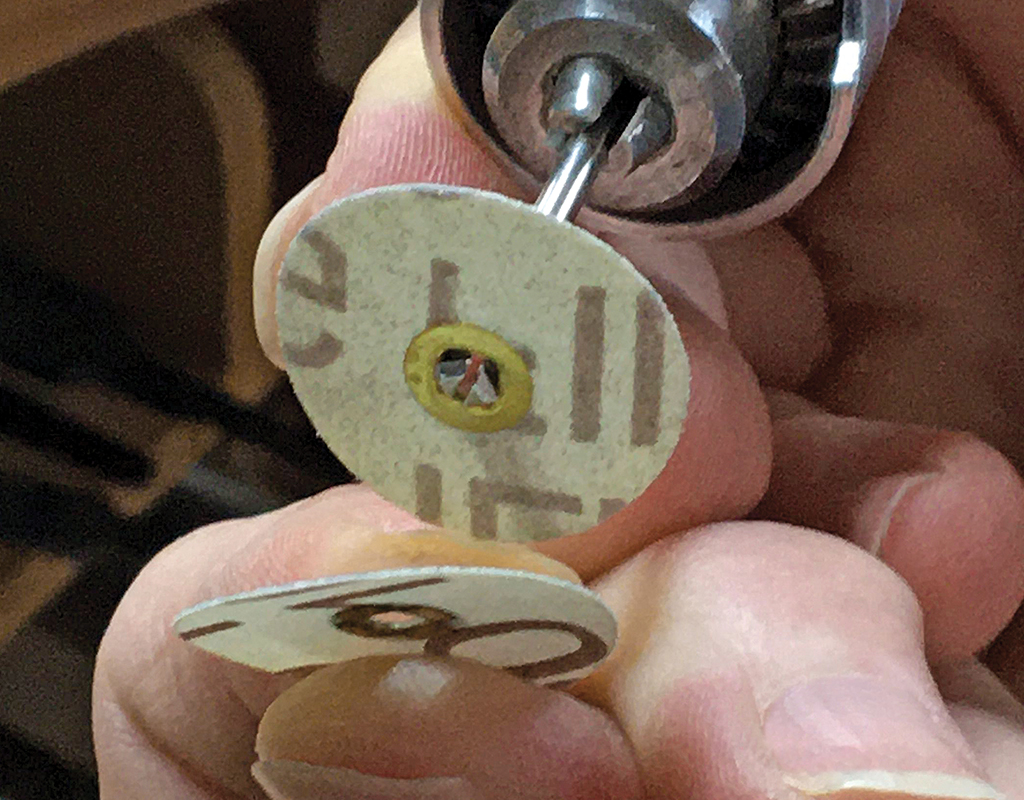
1. The reason the snap-on discs don’t work is that the square mandrel that is compatible with the discs’ brass center mounting area does not allow enough clearance to mount two discs.
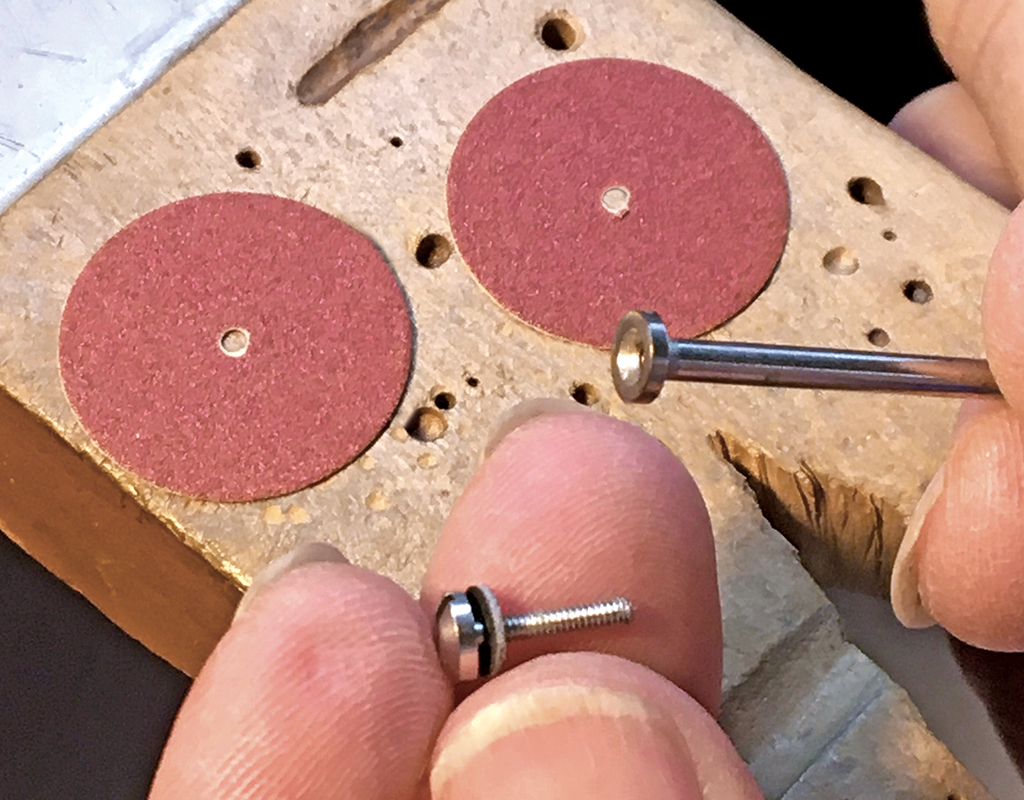
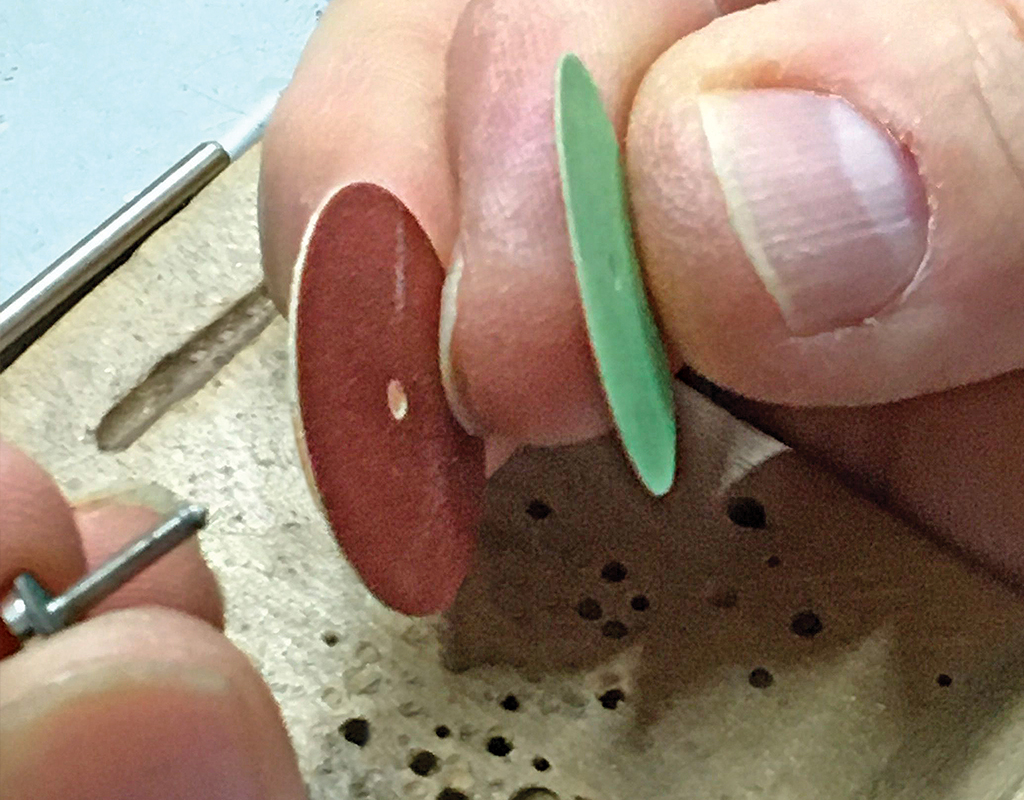
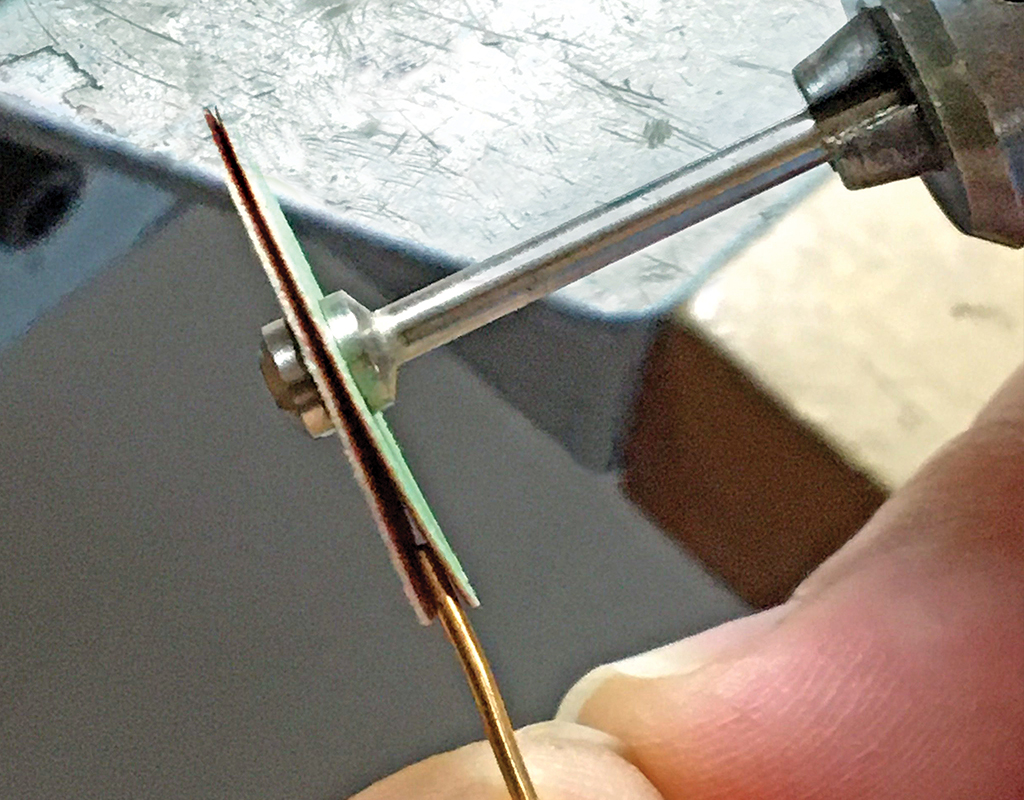
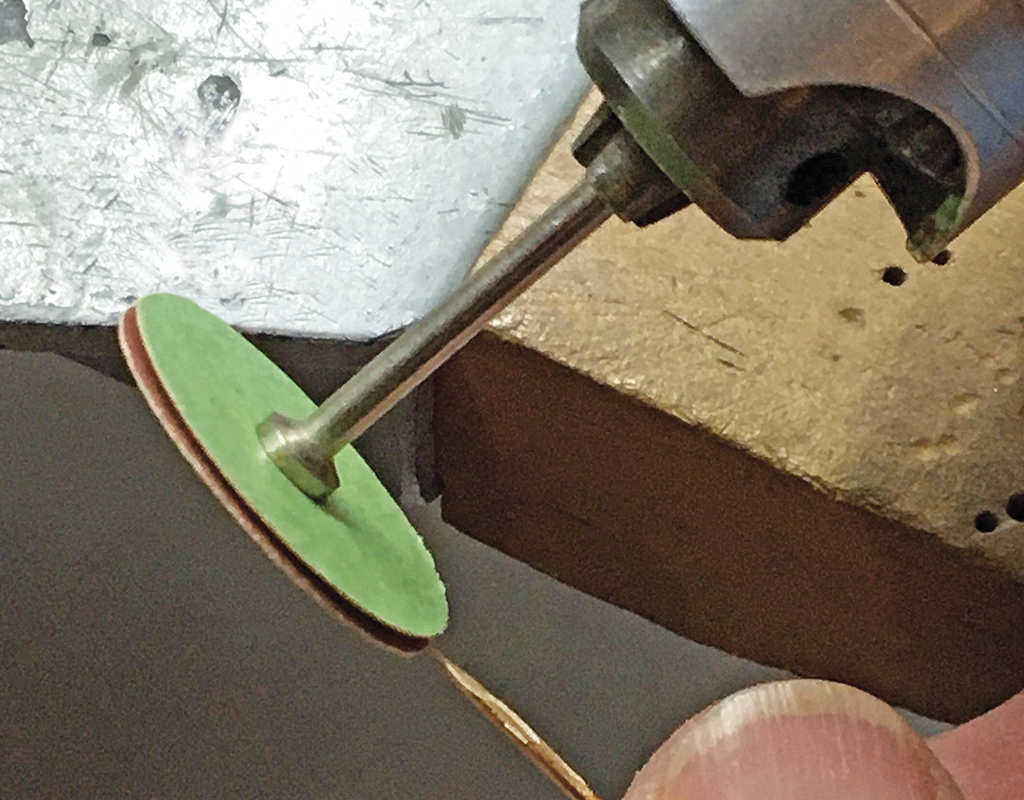
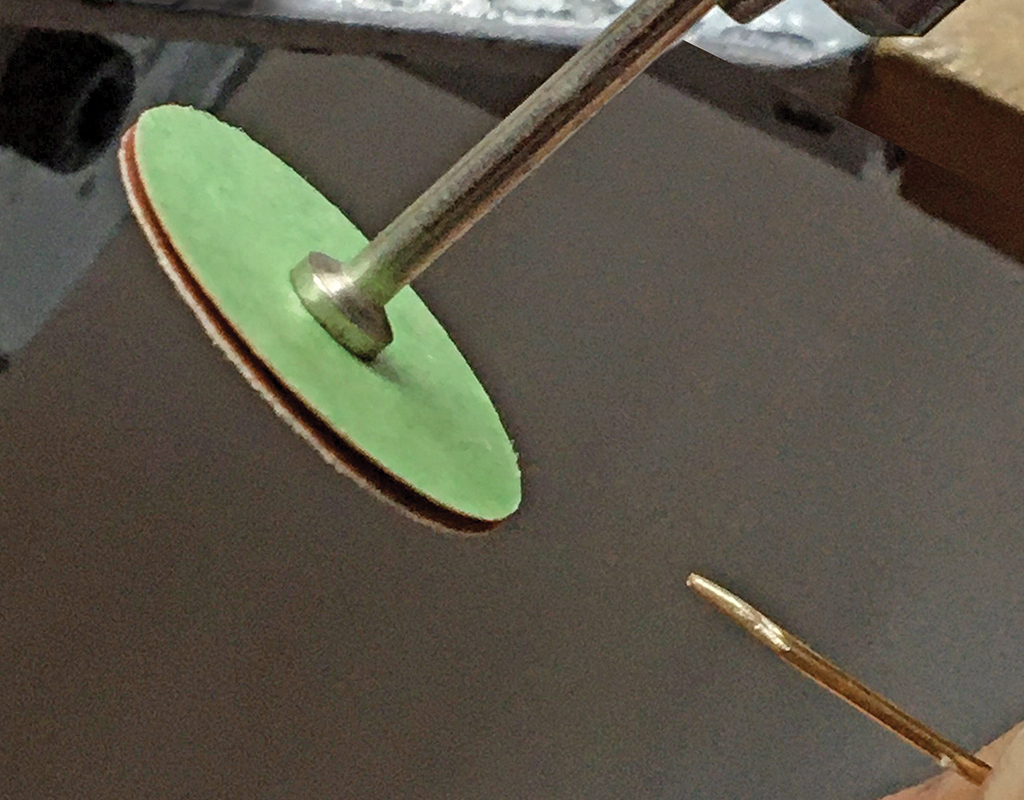
2. Classic screw mandrels allow you to stack two center-punched sanding discs face-to-face on the mandrel. It’s a good idea to start with a coarse grit to remove metal quickly.
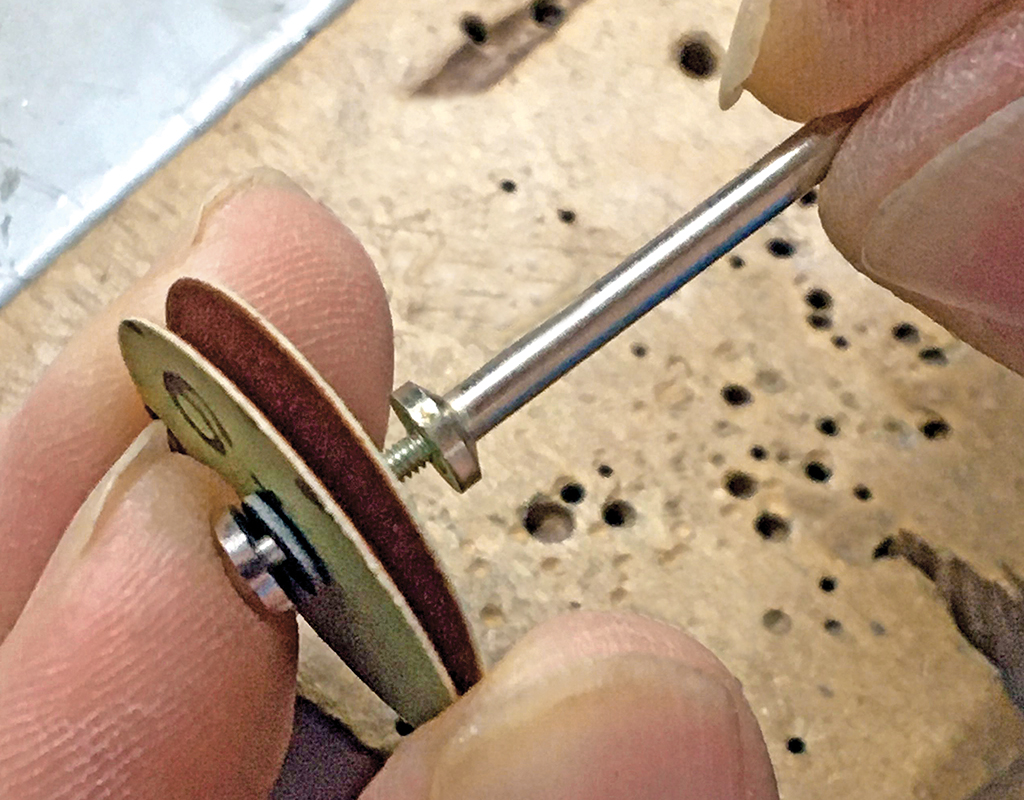
3. Insert the screw through the pinholes on both discs (these are Adalox aluminum oxide discs) and insert the screw into the mandrel.
4. Tighten the screw so the discs are securely mounted and take care to not lose the miniature washer that protects the disc’s backing paper from tearing.
5. To abrade wire, insert the wire tip between the discs and run the motor at a slow-to-moderate speed. I brace my handpiece on my bench pin to keep it flat and steady, which makes holding the pinstem wire perpendicular to the sanding discs much easier.
6. Once you have created a symmetrically pointed tip on the wire, switch to a finer abrasive grit.
7. This process is much faster and more efficient than hand-filing a taper in the wire and then sanding it, and I find the wire is less likely to bend as I do so. Progressing through finer grits of paper and then polishing the wire creates a sharp, smooth, and beautiful pinstem in a fraction of the time it takes by hand.
I also use this sanding method to thin the ends of tabs and wire prongs when creating cold-connected settings and parts. Slightly thinning or tapering the metal makes it much easier to push those tabs or prongs against whatever object I am mounting in the piece.
Manage Consent
To provide the best experiences, we use technologies like cookies to store and/or access device information. Consenting to these technologies will allow us to process data such as browsing behavior or unique IDs on this site. Not consenting or withdrawing consent, may adversely affect certain features and functions.
Functional
Always active
The technical storage or access is strictly necessary for the legitimate purpose of enabling the use of a specific service explicitly requested by the subscriber or user, or for the sole purpose of carrying out the transmission of a communication over an electronic communications network.
Preferences
The technical storage or access is necessary for the legitimate purpose of storing preferences that are not requested by the subscriber or user.
Statistics
The technical storage or access that is used exclusively for statistical purposes.The technical storage or access that is used exclusively for anonymous statistical purposes. Without a subpoena, voluntary compliance on the part of your Internet Service Provider, or additional records from a third party, information stored or retrieved for this purpose alone cannot usually be used to identify you.
Marketing
The technical storage or access is required to create user profiles to send advertising, or to track the user on a website or across several websites for similar marketing purposes.
A Fresh Look. A New Website. A Stronger Membership.
We’re excited to unveil Jewelers of America’s refreshed brand and redesigned website, reflecting our growing community and continued commitment to the jewelry industry.
With JA and MJSA now united under one membership, we’re bringing together more resources, expertise and connections to support every facet of the jewelry industry.
Take a look around to see all that JA offers — members can login to access member-only content like benefits, the Knowledge Vault and Advocacy resources.
Questions? Contact us at members@jewelers.org or call/text (800) 223-0673.