

Adding Surface Texture to Sheet Metal
Toolmaking for Texture
Adding custom-design surface interest to sheet metal
By Helen I. Driggs
(Originally published October 2022)
Surface texture is a guaranteed way to create design appeal on an ordinary flat sheet of metal. I try to avoid using the manufactured hydraulic plates, pre-textured metal sheets, and rolling mill plates that everyone else uses by making my own texture plates and tools in my shop. All it takes is a bit of tool or mild steel, a little ingenuity, and some patience. Here are a couple ways I do it:
Mild Steel Mill Plates
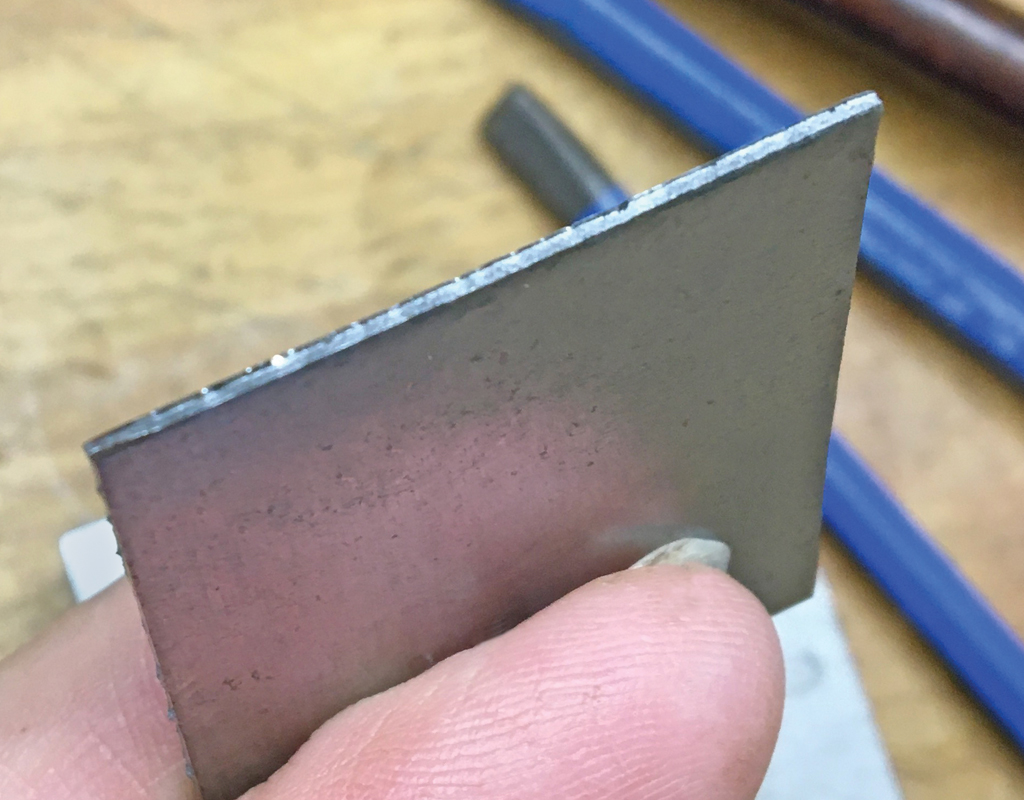
1. I like to use 16-gauge mild steel for making rolling mill texture plates. Mild steel (also called low-carbon steel) has a carbon content from 0 to 0.30 percent and is strong but not impossible to move—unlike stainless—so it’s the perfect metal for punching and chiseling your own embossing plates.
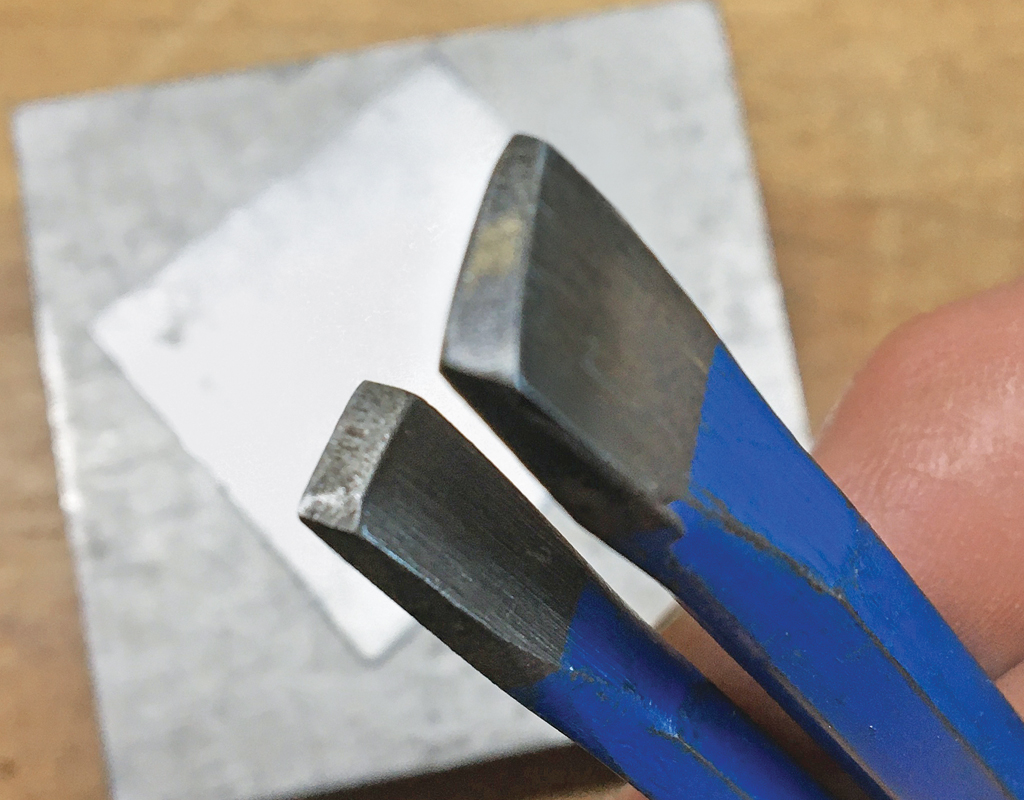
2. Using a belt sander, I round the sharp corners of an ordinary hardware store cold chisel. Knocking off the corners creates a more pleasing stamped groove on the steel.
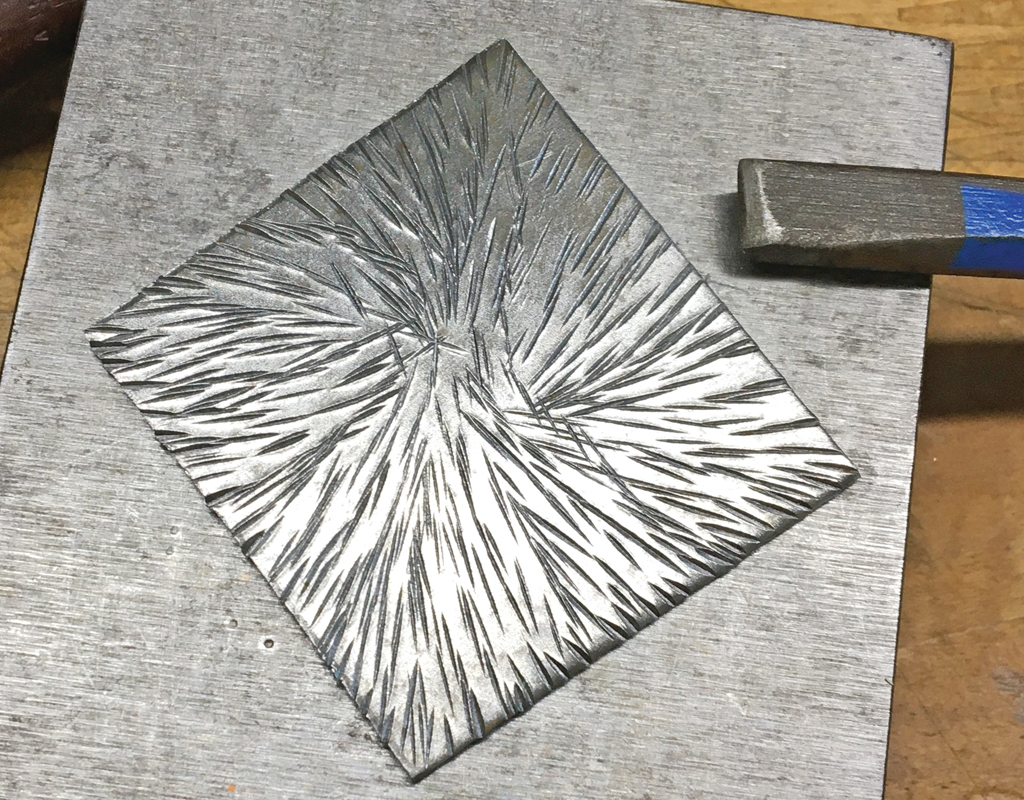
3. Use the modified chisel to create an allover pattern on the steel plate.
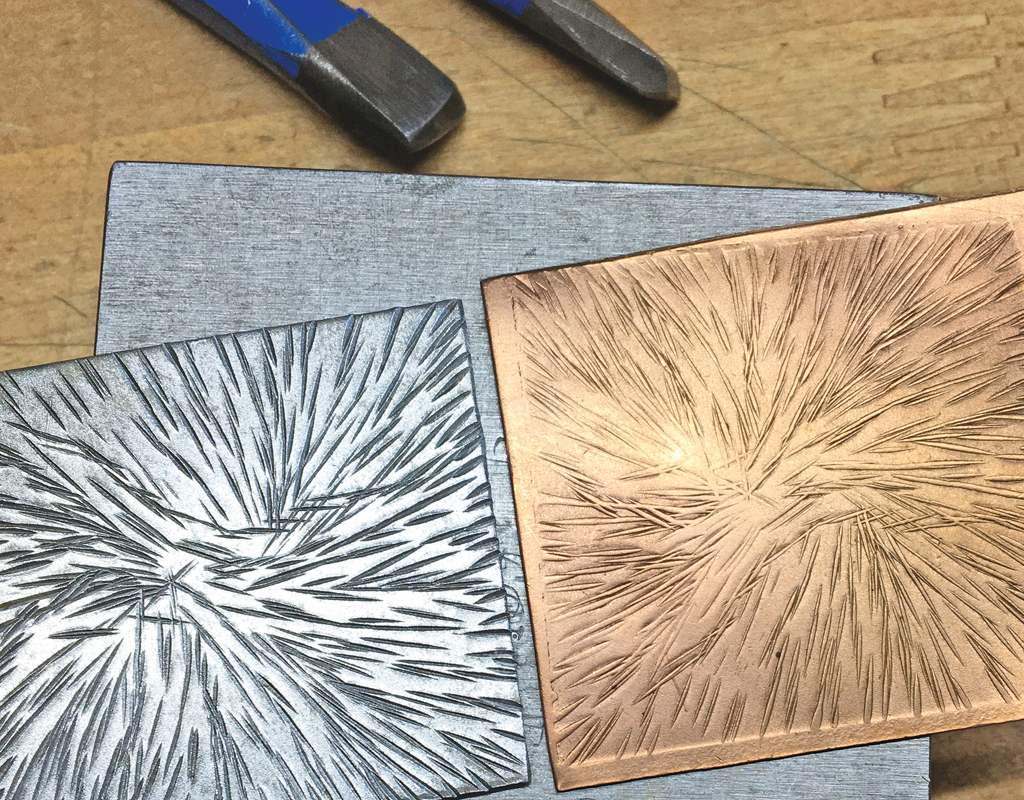
4. After roll-milling the metal, everything you chiseled into the steel will be raised above the surface of the metal you emboss. Note: Ensure you encase the chiseled steel plate and the jewelry metal within a sheet brass sandwich to protect your mill rollers from being indented by the steel printing plate.
Yellow Brass Printing Plates
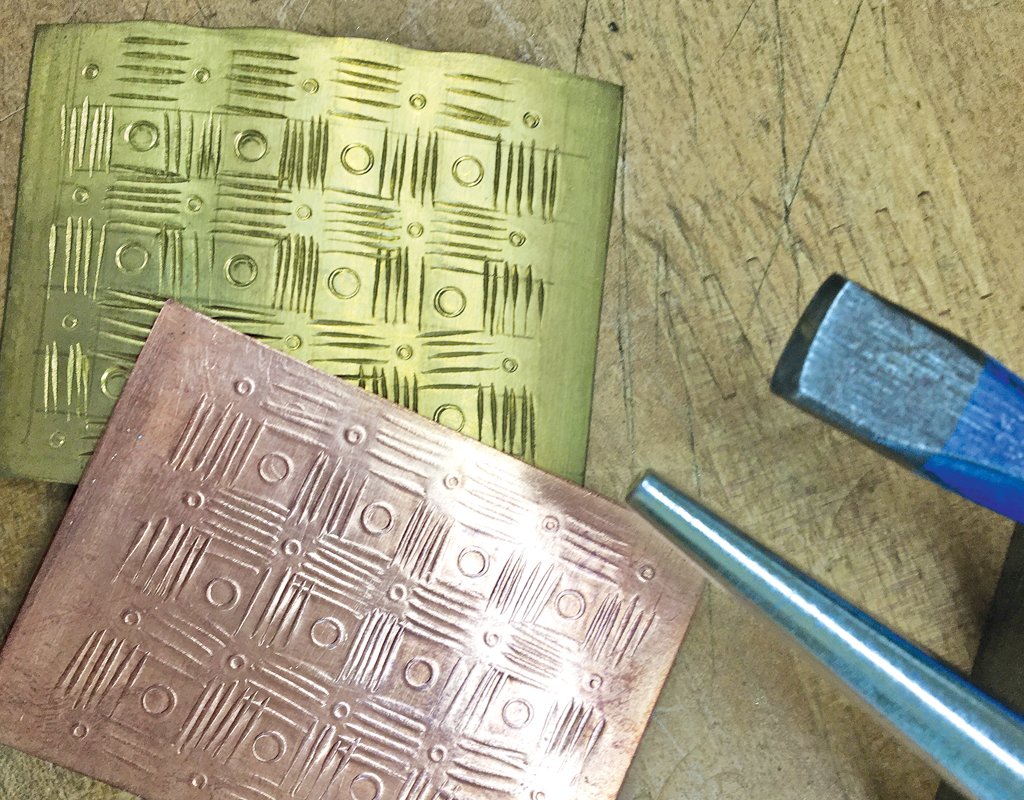
5. Yellow (or cartridge) brass also makes an excellent printing plate for the rolling mill. It won’t last through as many embossing sessions as steel, but it has a two-fold usability advantage: Simply flatten it out with a hide mallet on a steel block and saw it up into components after it no longer prints as deeply. Here, I used a chisel and a nail set to texture the brass embossing plate, then transferred the design to copper sheet.
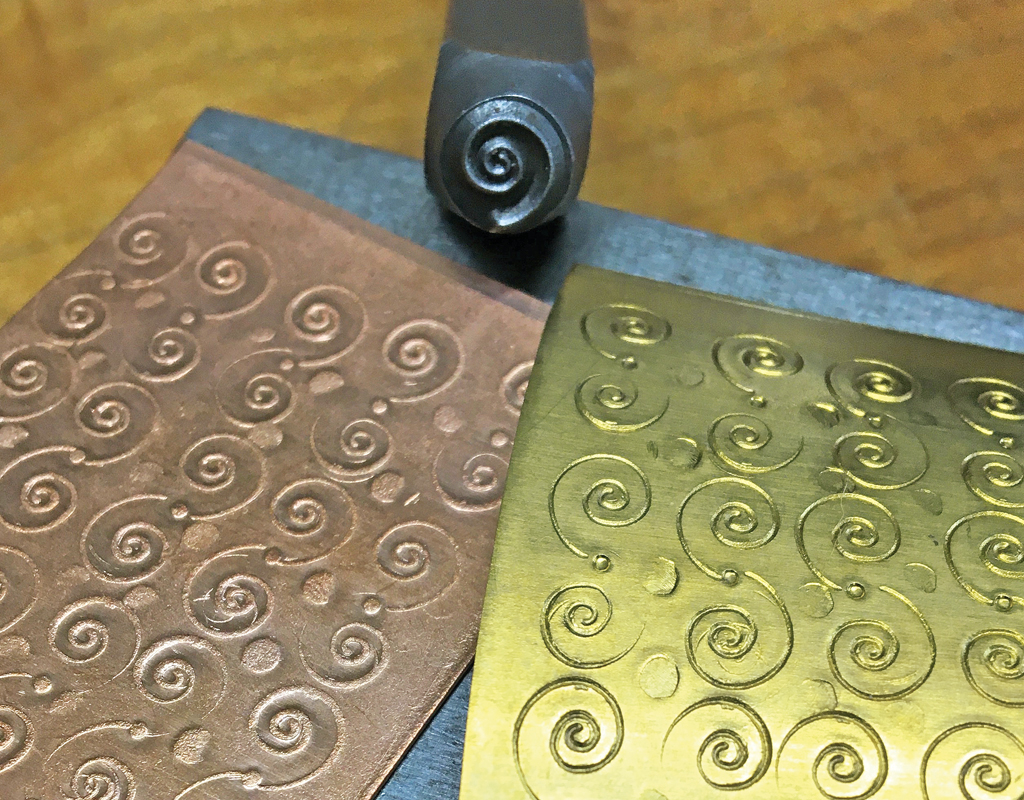
6. Commercially made metal stamps can be used to create allover patterns as well. This spiral stamp was the basis for an allover pattern I hammered into yellow brass.
Hardware
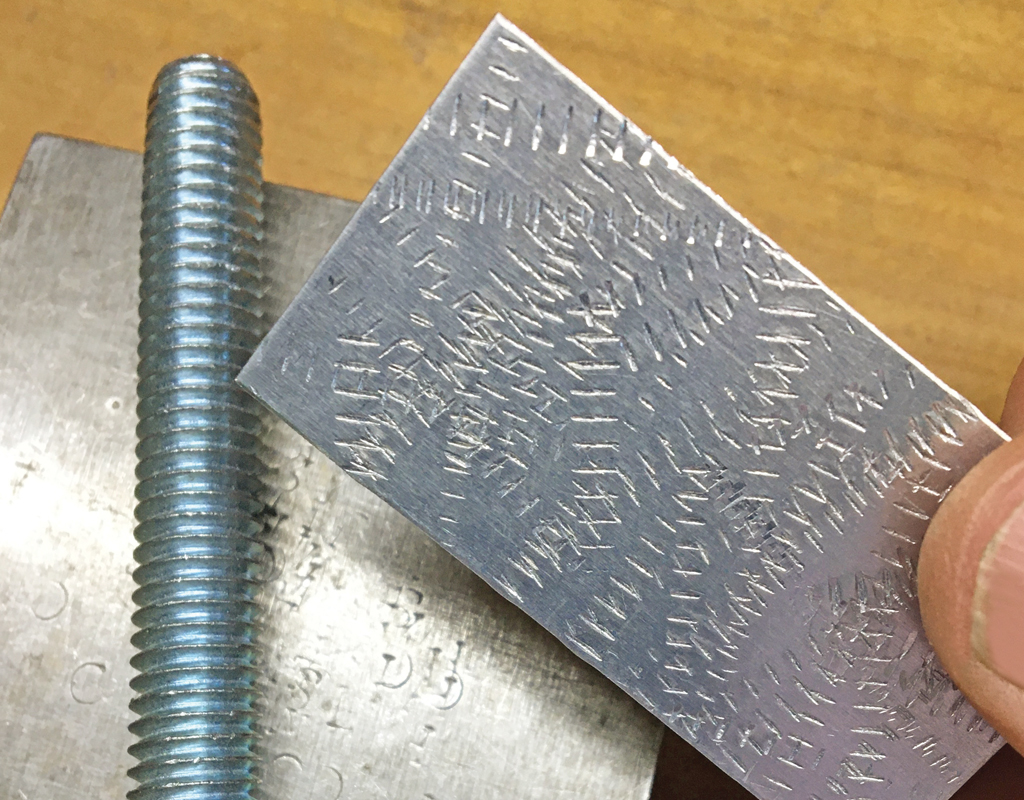
7. Steel hardware can be used to directly texture jewelry metal. In this example, the threads of a carriage bolt were directly impressed into silver sheet by hammering with a heavy ball peen hammer.
Look around your shop—any bit of steel, including hardware, worn files, old drill bits, binding wire, and saw blades, or even sandpaper or paper toweling, can be used to create custom, one-of-a-kind textures on your next piece.