

A Guide to Sampling & Assaying Procedures
Sampling & Assaying Primer
Advice to help you get the best return
(Originally published October 2022)
Whether it consists of hard scrap, bench sweeps, floor sweeps, polishing dust, sludge and solutions, or any combination of the above, your refining lot is more than just an assortment of precious-metal leftovers; it’s money. How much money depends on a variety of factors—from the tracking and capturing of metals to the final preparation and shipment—but the final determination relies on the sampling and assaying of your lot.
To analyze metals, refiners typically choose from among several methods based on the lot’s makeup and the metals it contains. Each method has its own advantages and disadvantages, and some are used in tandem. For designers and manufacturers, knowing more about these assaying methods, as well as the commonly used sampling techniques, can lead to a better working relationship with their refiners. To help with that, the following pages contain a quick primer on how these methods work.
Sampling
For most metal lots, refiners typically use one of three methods: drill, pin, or dip.
Drill sample: The refining lot is melted down and formed into a bar. A small section is then drilled out of each end of the bar and used as the sample.
Pin sample: The lot is melted down and a glass tube is dipped into the molten metal to draw the sample, which then cools into a pin shape. The pin sample is often cut into several pieces to ensure it is solid; sometimes pins can have hollow spots that hold slag, which will skew the results.
Dip sample: The lot is melted down and a small amount is collected and poured into water to create a granulated sample.
Refiners and independent assayers have their own preferences for which type of sampling to use, but the consensus is that the pin and dip samples tend to be more representative, as they gather a more thorough mix of metals while the sample is still molten. (The accuracy of any sample depends on how homogeneously the scrap has been melted.) Since lower-grade materials (such as gold under 10k) contain more elements that could stratify, the refiner has to take special care to ensure it captures all of the layers.
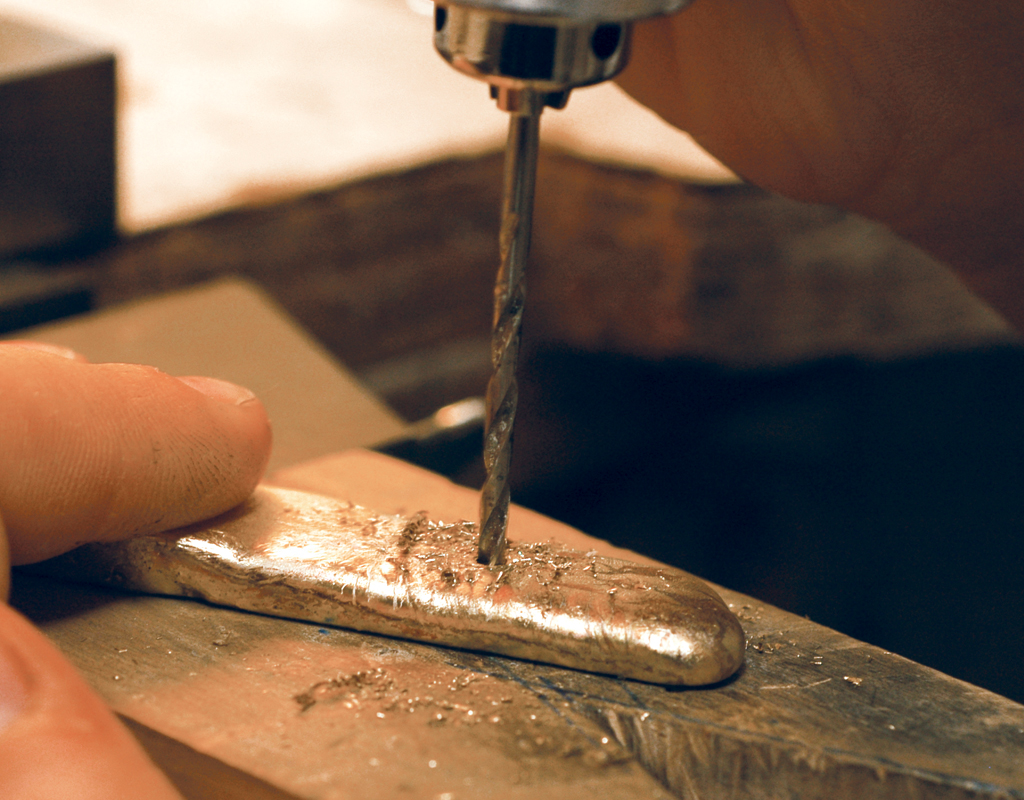
Drill sampling should be done only with higher-grade materials, although pin and dip options are still preferable since they gather a more thorough mix.
Drill samples should be done with only higher-grade materials, although the pin and dip options are still preferable. Some companies may take a drill sample from both the top and the bottom of the bar to improve accuracy.
If you are turning in sweeps or plating solutions, the refiner may use other methods. Sweeps are often incinerated, with the remains pulverized to ensure a fine powder is produced. The powder is poured into a drum, where it may be blended further, and the samples are then drawn through the use of a sampling rod that captures powder from different areas of the drum. Similar rods are also used to draw out samples from plating solutions.
Assaying
Everyone wants the best return on a refining lot, which sometimes leads to the question, Which assay method provides the best result? As one refiner noted, it’s a bit like asking which is better, a planishing hammer or a needle file. Each tool works well for a specific task, and the various assay methods are no different. Most modern assay laboratories will use some combination of the five following methods to arrive at the most accurate results.
Fire Assay
The fire assay method is widely considered the most accurate technique for gold assay. It is also highly versatile: It can be used for both high- and low-grade metals, sweeps, and solutions.
Fundamentally, fire assay involves the collection of precious metals in molten lead. The assayer weighs out an appropriate portion of the sample and, in a small crucible, adds it to a flux mixture that consists mainly of litharge (lead oxide). The crucible is then placed in an assay furnace where droplets of lead form and fuse with the metals. Upon cooling, the metal “button” is placed in a cupel, a porous cup made of bone ash or magnesite. (Higher grades of gold typically skip the crucible-fusion step and are directly cupelled by wrapping the sample in sheet lead.) When placed in a furnace, the cupel acts as a filter by absorbing and oxidizing the molten lead and base metals, leaving behind a bead of only precious metals. That bead is weighed to determine the total precious-metal content.

The “parting” step uses various concentrations of hot nitric acid solution to dissolve and fully leach out any silver, platinum, or palladium from the gold. (For a complete separation, it is ideal to have silver in excess of three to four times the gold content. To get the correct ratio, an assayer will most commonly add a predetermined amount of silver in at the crucible fusion or cupellation steps.) After parting, the now fine gold is washed, dried, annealed, and weighed to determine the gold content. That weight will be subtracted from the original weight of the bead, and the difference will determine what is paid out on the other metals. (If platinum or palladium are present in addition to silver, the parting solution is reserved for analysis by the gravimetric, inductively coupled plasma spectrometry, or atomic absorption spectrometry methods (see below.)
To validate the analysis, assayers will run multiple samples. Additionally, a known control sample is often run alongside the test of a customer’s lot. Because fire assay requires first burning out and then dissolving metals, it can typically take around four to five hours.
Gravimetric Wet Chemical Analysis
This method is used for materials that have a mixture of elements, including base metals. It works particularly well for samples that have high concentrations of silver or platinum group metals (PGMs). The analysis will, through a series of chemical reactions, isolate the metals in a sample so they can be weighed as a pure elemental or chemical compound, usually in the form of metallic salts. It can provide very accurate values when performed by skilled chemists.
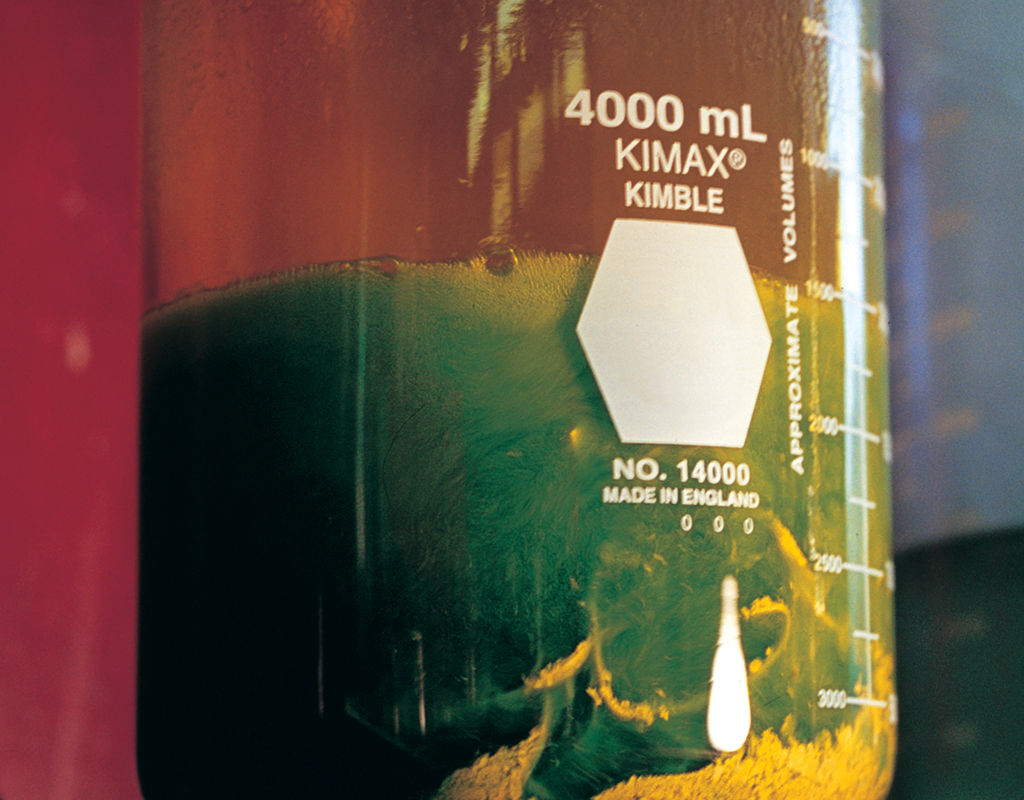
The process starts with dissolving the sample in a suitable reagent, generally a strong acid or base. After the elements are in solution, the assayer will use specific chemicals to precipitate the metals selectively.
Gravimetric wet chemical analysis is a complicated and time-consuming process that can take days to complete. It is frequently used in conjunction with inductively coupled plasma spectrometry or atomic absorption spectrometry to detect trace elements (see below).
X-ray Fluorescence (XRF)
XRF instruments can be broken down into two main categories, handhelds/portables and lab-based machines. Both are non-destructive and use X-rays to bombard a sample with radiation to excite the atoms. The fluorescent radiation that is produced and emitted is then measured by onboard detectors.
Handheld guns are fairly easy to use, require a minor amount of training and experience to use effectively, and produce fast results: In 30 seconds, a refiner can get a good snapshot of the contents of a scrap lot. They are mainly used for sorting scrap, distinguishing alloys, and surveying the content of unknown materials. Because of the speed and accuracy of XRF guns (+/- 0.1 percent), many refiners are able to use the results for preliminary assays and advances. However, the guns analyze only a small point of the surface, and for this reason the uniformity of the sample greatly influences the accuracy. For example, if testing a gold-plated article, an XRF may see only the gold and not penetrate deep enough to pick up any of the base metals. For this reason, many gold buyers will first melt a small lot to make it more uniform and more reliable for the XRF to read. XRF guns also often struggle with differentiating between elements that have similar wavelengths. To compensate for this shortcoming, handhelds rely on complex software to help interpret a result. Most experts agree the accuracy of handheld XRFs are insufficient alone to settle refining lots. The one exception could be for very small transactions, where the lack of accuracy is offset by the lower cost for an XRF assay.
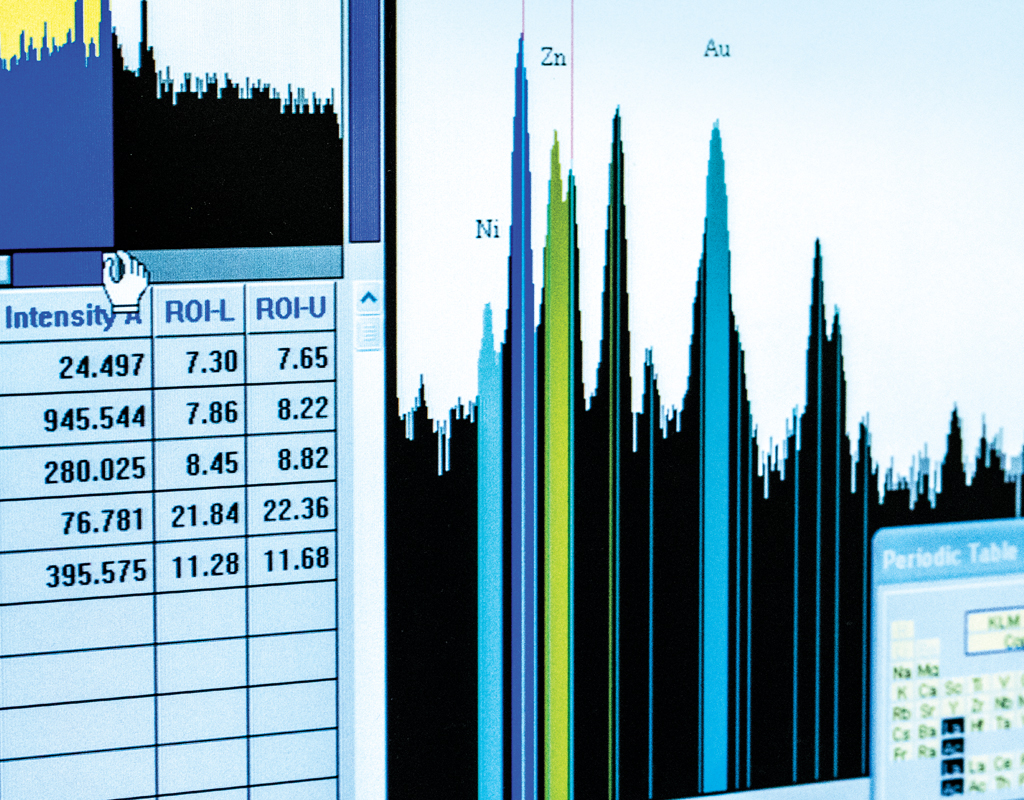
XRF instruments can be broken down into two main categories, handhelds/portables and lab-based machines.
In contrast, laboratory-based XRF instruments are highly accurate. Lab-based machines are much larger, more powerful, can penetrate sample surfaces more deeply, and will have much longer sample run cycles. With the use of special holders, these instruments are also able to handle powder and solution samples. Sample preparation and uniformity is still of great importance, though, and these instruments require highly skilled technicians to operate and develop methods.
As a technology XRF is incapable of detecting very light elements—those lighter than aluminum are largely transparent to X-rays.
Inductively Coupled Plasma (ICP) Spectrometry
The preferred method for assaying platinum and palladium, ICP is designed to detect trace elements in the parts per billion range. It often involves dissolving the samples, which can take several hours, after which the solution is aspirated. The resulting vapor is introduced into a plasma flame, which super-heats it to over 15,000 degrees Fahrenheit, producing a great discharge of energy. The spectrometer measures the energy and its wavelengths to determine the elements present. Taking between three to four hours for analysis, ICP can offer an accuracy of +/- 0.001 percent.
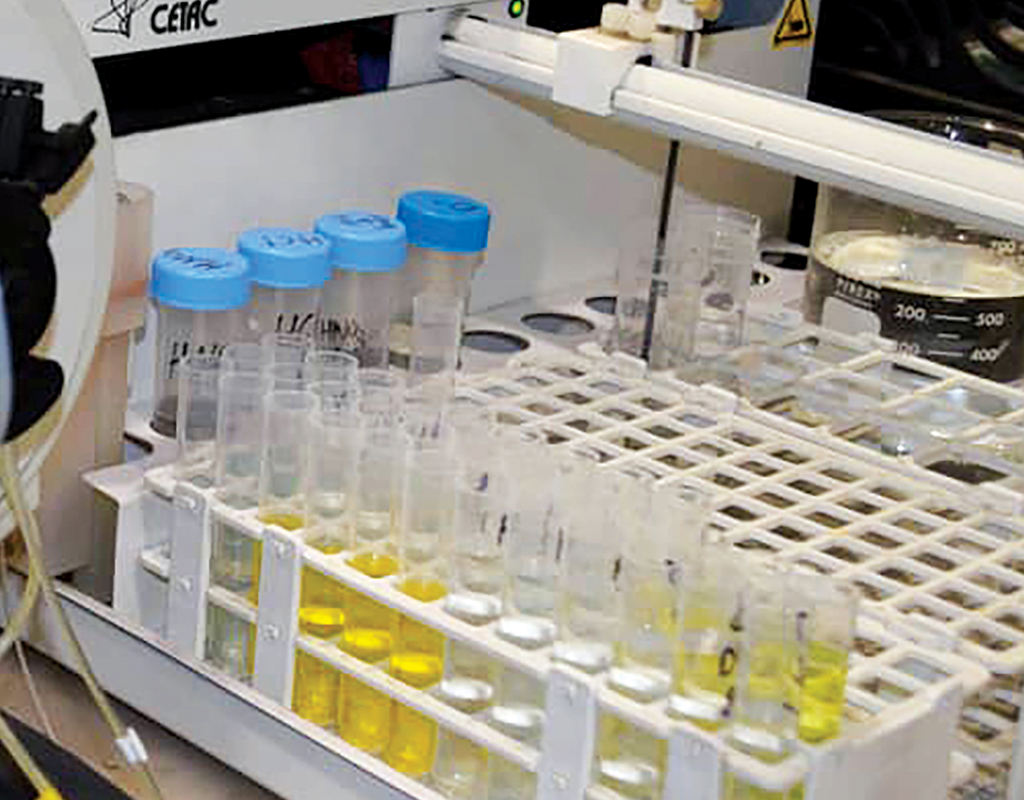
The preferred method for assaying platinum and palladium, ICP is designed to detect trace elements in the parts per billion range.
Although most ICPs analyze samples in the form of a solution, many now are also capable of solid sampling. Solid samples are introduced into the plasma source by vaporizing the sample with a DC arc spark or laser.
As with other instrumentational assaying methods, calibration, standards, and method development are critical for providing reliable and accurate results.
Atomic Absorption Spectrometry (AAS)
Similar to ICP, the AAS method relies on a spectrometer to analyze the energy and wavelengths of the elements present in the sample, although it determines metal concentration in the parts per million range. Also, it uses a gas flame rather than a plasma flame to excite the elements, which produces a lesser discharge of energy, and it can test for only one element at a time and thus can be quite time consuming. Some systems can test the elements successively, speeding up the process, but those machines also come with heftier price tags.

Adapted from the digital publication A Refined Approach:
Tips for Capturing Precious Metals, Choosing a Refiner, and Maximizing Returns, published by MJSA Press.
The book offers a comprehensive approach to ensuring you can effectively manage your metal inventory, capture metal waste, prepare and ship a refining lot, and create a good working relationship with your refiner.
MJSA members can download copies of the publication for free from the MJSA website; nonmembers can purchase copies for $9.99..