

The CEO as Conductor
What’s Your Score?
Business leaders should take a cue from conductors
By Andrea Hill
When I embarked on a career in business it surprised everyone who knew me, including me. I had spent most of my childhood through early adulthood in classical training as a musician, with brief forays into blues and jazz to pay the rent. As paying the rent became more pressing, business seemed to come naturally to me, which informed both my job choices and my graduate studies.
But 35 years later, all those years studying music history and theory have continued to serve me, with far more application for business than I could possibly have imagined. Most notably, I have almost daily occasion to discover that business owners, unlike conductors of orchestras or choirs, try to produce a result without a score.
A musical score that is. The sheet music that tells each instrumentalist or vocalist how to play their part.

When you take your seat in the orchestra, you take it having already studied the music you will play. It may be something as familiar as Beethoven’s 5th Symphony. But will you play it in the key of C minor? Or do you have a conductor who likes to experiment, and has produced a score for E flat major? Every musician in the orchestra will be able to play the symphony in E flat major, but not without a score. The conductor’s job is to make sure not only that each part is played well, but also that every member of the orchestra is equally and individually informed and has the tools they need to succeed.
Oh, and they must be playing all the notes at the right tempo, at the same time, with similar interpretations.
The CEO as Conductor
The primary role of a CEO is as the conductor of the organization. The CEO decides what the organization will play, which is the strategy. She decides how the organization will differentiate itself, which may involve playing something completely original or deciding to play something already known but in a different key. All of this requires communication and clarity, which for a business involves tools such as mission and vision statements and strategic plans. For an orchestra, this is the score.
Business owners tend to fall into one of two categories: Those who wing it and hope everyone’s arrows will align, and those who micromanage the work in an exhausting (and ultimately diminishing) effort to control all the arrows. Observing how conductors work can lead you to a new understanding of how to guide your talent.
As artistic leaders, conductors make countless decisions about what to play and how they want to affect the audience. They think deeply about what they want to achieve and share their vision and goals with the musicians, because the musical vision cannot be realized if the musicians aren’t in alignment with the conductor.
The conductor also intimately understands every role in the orchestra. They may not know how to play every instrument, but it’s their job to work closely with each section, ensure they have the right talent, and see to it that each player is in the right seat. Conductors work very hard at this, because they know that the ultimate success of the orchestra depends on leaving all the most important decisions up to the performers. Performers decide how to interpret the difference between fast and fast with fire. The word loud means different things to violinists and trumpet players. How quiet is quiet? The conductor knows he cannot control the myriad decisions the musicians must make, so he must provide the framework necessary to allow them to succeed together.
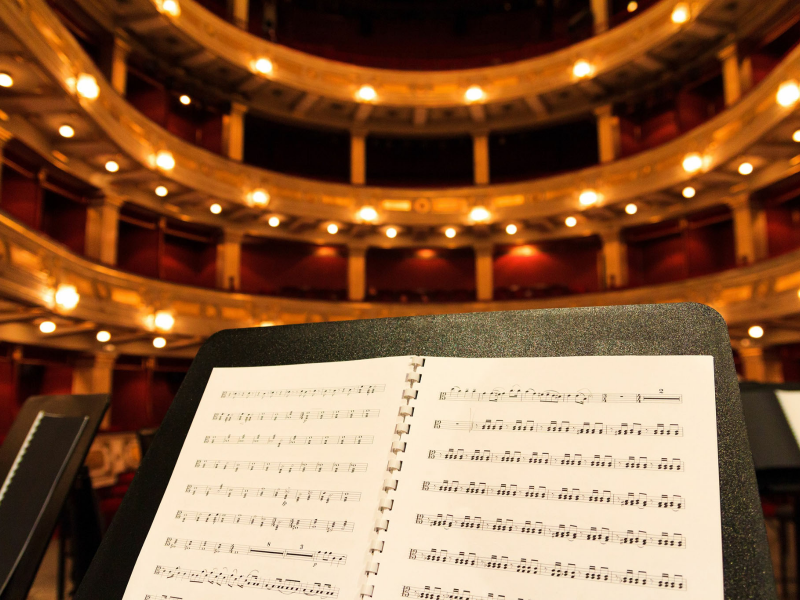
Once the framework and talent are in place, the conductor focuses on being a teacher, but perhaps not in the way you may think. If a conductor has to teach a musician how to play their instrument, they’ve got the wrong musician. The conductor’s teaching role stems from being the only person with the entire score. Each instrumentalist has their own music in front of them, but the cello doesn’t know what the clarinet is playing, and the clarinet doesn’t know what the drum is playing. The conductor’s job is to use the score to help everyone practice the music together, correcting when someone comes in too early, is out of tune, or is interpreting the instructions incorrectly. Section leaders often help with this work, but the ultimate responsibility for making sure each musician is effective within the group lies with the conductor.
Ah, now you’re thinking, “But what about jazz? There’s no score!” It’s true that modern jazz relies heavily on improvisation. But the musicians that are best at improvisation tend to be those that know the theory and practice of music so well that when they work without a score, they can soar. Similarly, organizations that have done a phenomenal job of preparing their teams and providing all the resources necessary for success open the possibility of teams adapting and innovating in ways that are utterly consistent with their goals but in extraordinarily unpredictable and effective ways.
Whether you are leading a business or a department, take a moment to evaluate your performance as if you were a conductor. Is your vision clear? Have you done the work of creating a score that clearly defines the roles and responsibilities of each player relative to what you are trying to accomplish? Do you have the right talent? Does your talent have the right tools? If you have ever sung in a choir, played in an orchestra, or marched in a band, perhaps you have experienced the joy of being part of a group completely in alignment with one another, creating something more exciting than any one person could create alone. If you, as the conductor, can deliver that to your teams, your teams will never let you down.