

Using Cardboard Discs to Achieve a High Polish
In No Time Flat
A solution to polishing small flat surfaces
By Fabio Penuela
Polishing is a crucial step in jewelry making. Here’s why: Let’s say that you have a custom design that calls for flat surfaces. You design it in CAD, print it, cast it, and clean it, respecting all the shapes and forms of the design. But if you do not polish it correctly, all of that effort goes to waste.
We all know that it is not easy to polish small flat surfaces. In these instances, we run the risk of making them domed or simply not flat (as the customer expects). And it gets even more difficult when the job is in platinum because the metal is so dense. Here’s a solution that I’ve found to help in these situations—and it’ll even work on platinum.

1. To try this polishing trick, you’ll need a piece of cardboard. It should be at least 0.05 mm thick and have a plastic film on one side of it. (Many products come packaged in this type of cardboard; lightbulb boxes are my favorite for this project.) You’ll also need a 16 mm diameter leather hole punch, a hammer, a wooden or plastic cutting board, and a disc mandrel. While there are commercially available polishing wheels, they’re not cheap, and I don’t think they’re as efficient as these cardboard wheels.
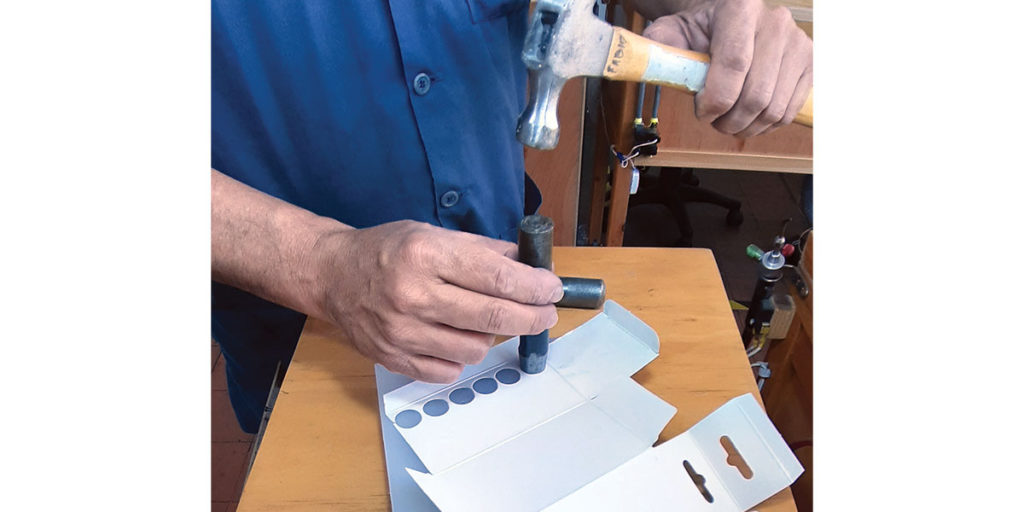
2.Take apart the box so the cardboard is flat. Lay it out on the cutting board and use the hammer and the hole punch to cut out discs. You can cut up to three discs before you’ll need to remove them from the punch; otherwise they will get stuck on the tool.
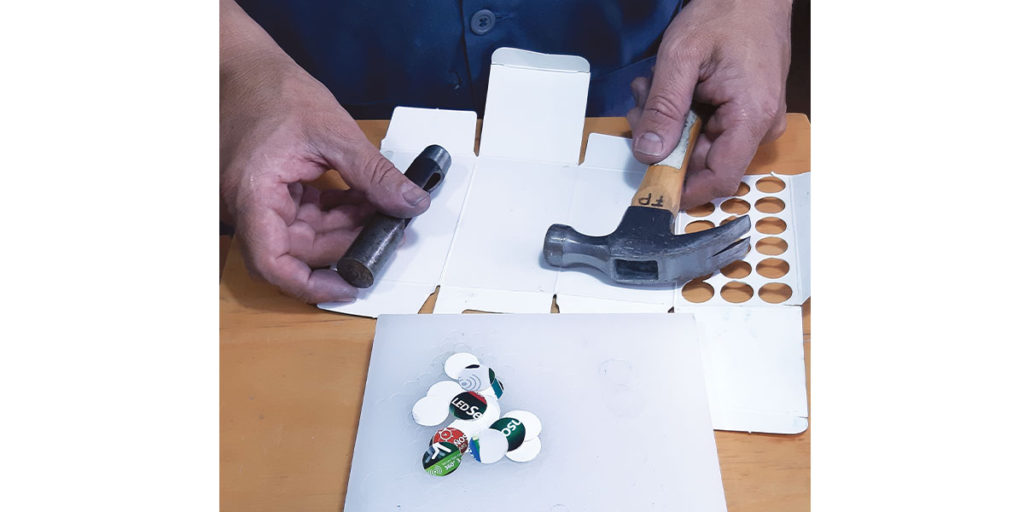
3. You’ll need only two discs for this project but while you have the cardboard and tools handy, you can cut out as many discs as you want.
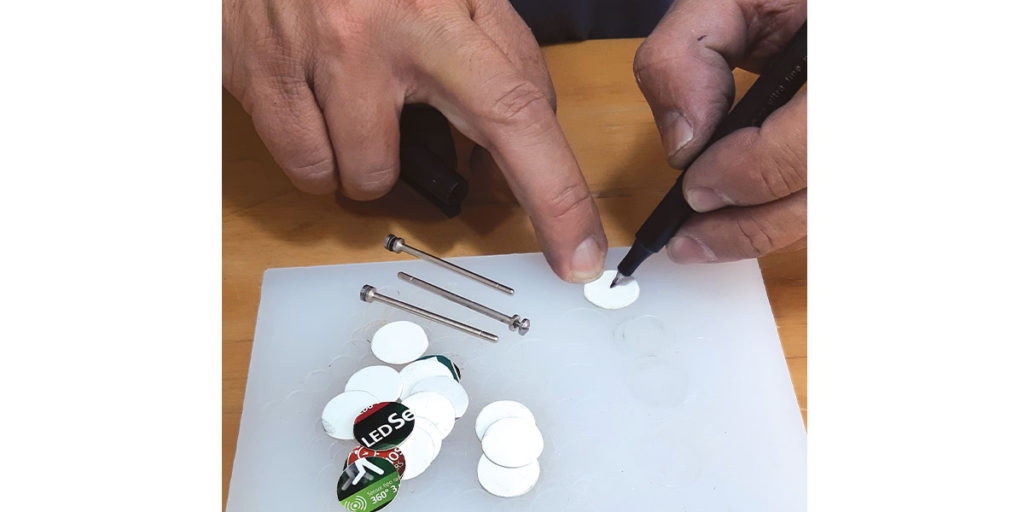
4. Use a pen to mark the center of the cardboard discs. For most jewelers, eyeballing the center point should be sufficient.
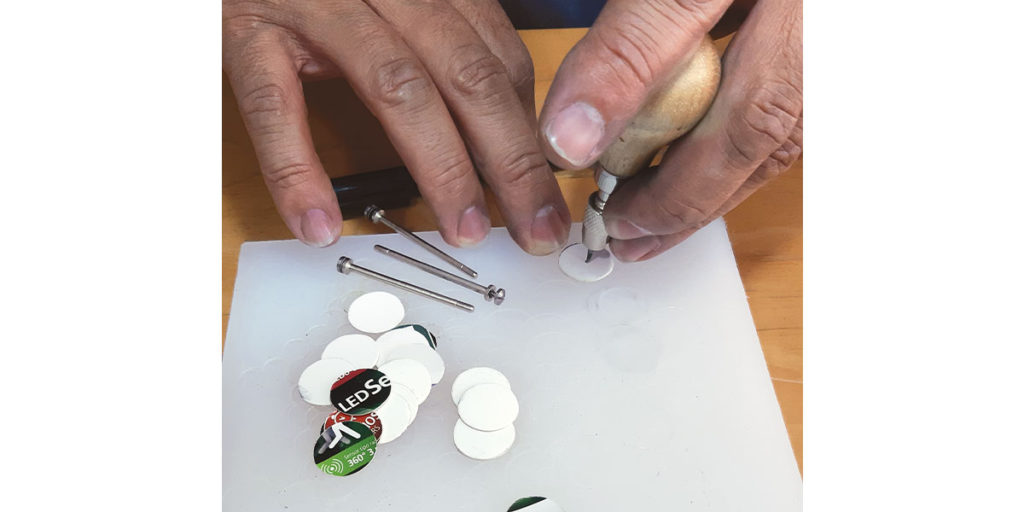
5. Next, use a scriber to make a hole in the center of the disc.
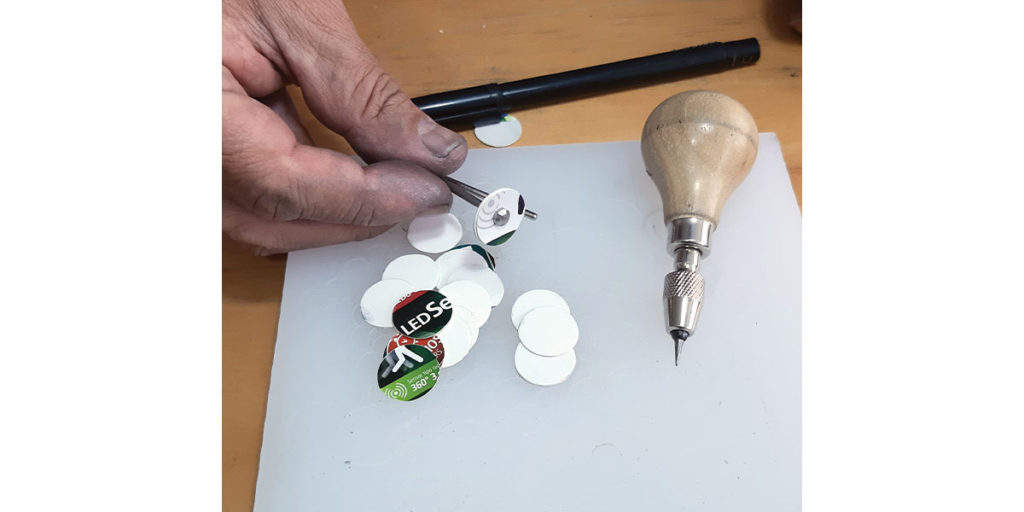
6. Take two discs and put them together on the mandrel. Make sure the plastic film on each disc faces the outside, as this will help the tool last longer. I can usually polish multiple pieces with one set of discs before they get too small to use.
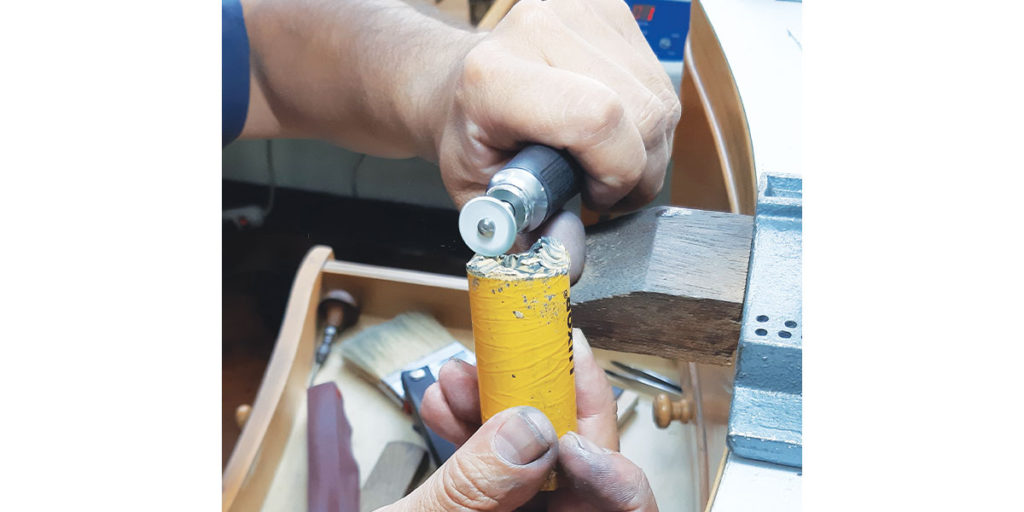
7. Mount the mandrel on a flex-shaft or micromotor and load the cardboard discs with a little bit of polishing compound.
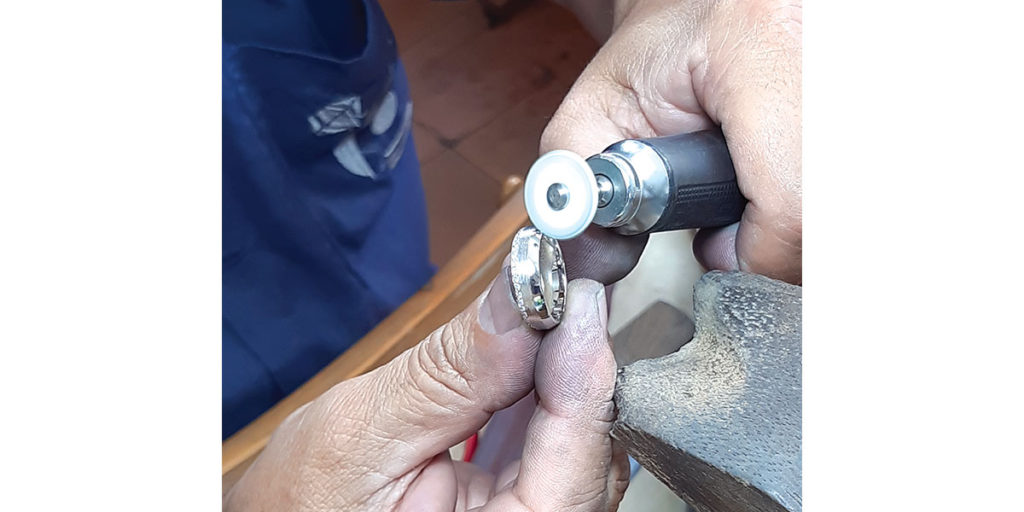
8. Start polishing at a slow speed (6,000 rpm max) the area that must be high polish and flat with the edge of the discs. Because the cardboard is rigid and soft at the same time, it will erase any sandpaper marks and get the piece polished, replacing the buffing process normally done with a soft wheel.
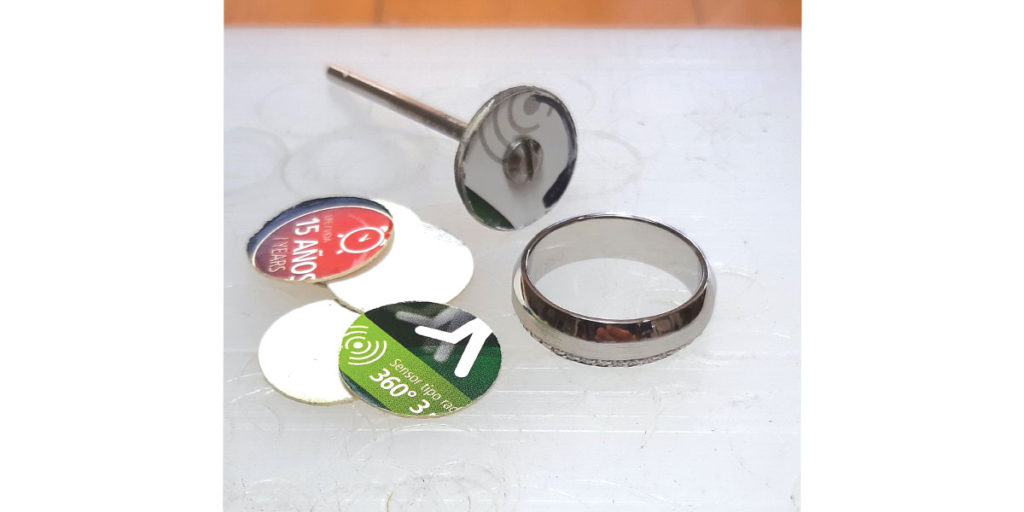
9. This is the best way that I’ve found to give a high polish to flat surfaces, such as the ring shown here.