

Sourcing Jewelry Materials Responsibly
Just the Start
Industry initiatives and projects promoting sustainability
By Sharon Elaine Thompson
Tucson is always hectic, but this year, Eric Braunwart and his staff were unable to leave their booth even to get lunch. What really surprised Braunwart—the founder of Columbia Gem House in Vancouver, Washington, a leading supplier of responsibly sourced colored gems—was why they were so busy. “Ninety percent of the people came to us because of the way we do business, because they want jewelry to tell a positive story. It was a sea change,” he says.
In fact, the future looks set for what Mark Hanna, chief marketing officer for Richline Group in New York City, calls a “sustainability surge.”
“Fine jewelry purchases influenced by sustainability considerations are poised for dramatic growth,” he says. “By 2025, an estimated 20 to 30 percent of global fine jewelry sales will be influenced by sustainability considerations from environmental impact to ethical sourcing practices.”
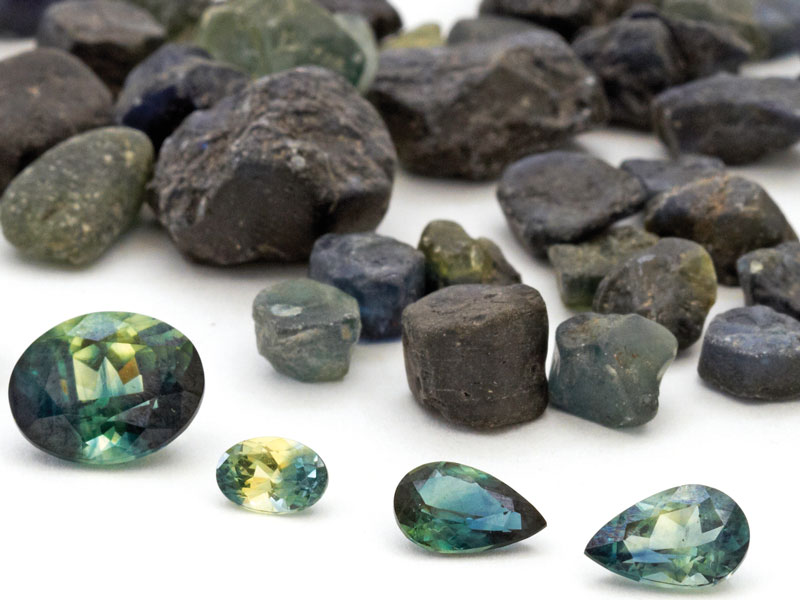
Australian sapphires by Columbia Gem House
Braunwart will be the first to tell you that this interest in responsibly sourced materials did not take place overnight. He began categorizing his gemstones by his Fair Trade Gems Principles and Protocols more than 20 years ago (see page 44 for more information). But gold, diamonds, and colored gemstones have been in the news unfavorably in recent years, with coverage of environmental damage, child labor, smuggling, and money laundering. It’s had an effect on people’s buying sensibilities.
Hanna quotes a 2020 McKinsey study that showed 67 percent of consumers consider the use of sustainable materials an important purchasing factor. “A staggering 83 percent of consumers,” says Hanna, “believe businesses should actively be shaping best practices around environmental, social, and governance (ESG) issues.”
As a result, many industries, including the jewelry industry, have become aware “that this is both a more gratifying way to do business and, given the new consumer demand with Gen Z and Millennials, it’s a wiser way to do business,” says Braunwart.
In fact, says Hanna, “sustainable practices will be one of the major brand and product differentiators.” Despite name recognition and global reach, he says, “sales of branded fine jewelry still account for just 20 percent of the market,” but by 2025, that share is set to grow to 25 to 30 percent. “Sustainable trust will be a major contributor in this quest to convert consumers to branded jewelry and share in the spoils of the collective $80 to $100 billion up for grabs,” he adds.
It’s impossible to look at all the projects and initiatives that surround responsible sourcing in the jewelry industry today. But we’ll touch on a few that you should know about here.
Green Guides
The growing demand for sustainability has meant a proliferation of the terms “responsibly sourced,” “sustainable,” and “fair trade.” The meanings of the terms are open to interpretation.
“Right now, we are in a vague space around sustainability and responsibly sourced material because there aren’t many standards for the U.S. market from the government,” says Tiffany Stevens, general counsel of the Jewelers Vigilance Committee (JVC). Though the Federal Trade Commission (FTC) issued the Green Guides (the last update was 2012), they cover all industries and are so general that they’ve “been interpreted very broadly.”
That will change this year when the FTC reviews and updates the Green Guides. “They will apply to the jewelry industry and JVC will have a big role in bringing the industry together to advocate for how the rules will be written,” says Stevens. “Because this is of interest to the consumer rather than just the jewelry industry, we assume [the FTC will] want to finalize it as quickly as they can.” But that “quickly” may be a year before the new Green Guides are published.
ASM Mining Initiatives
Most initiatives work with artisanal and small-scale mining operations (ASM). It’s important to note that these initiatives are not aid packages or outside fixes, though helping hands are extended as needed between trusted partners. Susan Wheeler of Susan Wheeler Design in Chicago quotes Monica Gichuhi, her Kenyan partner in Virtu Gem, who says that gemstone miners “want trade, not aid.” And reliable trade partners and a stable gemstone market is what these initiatives aim to provide.
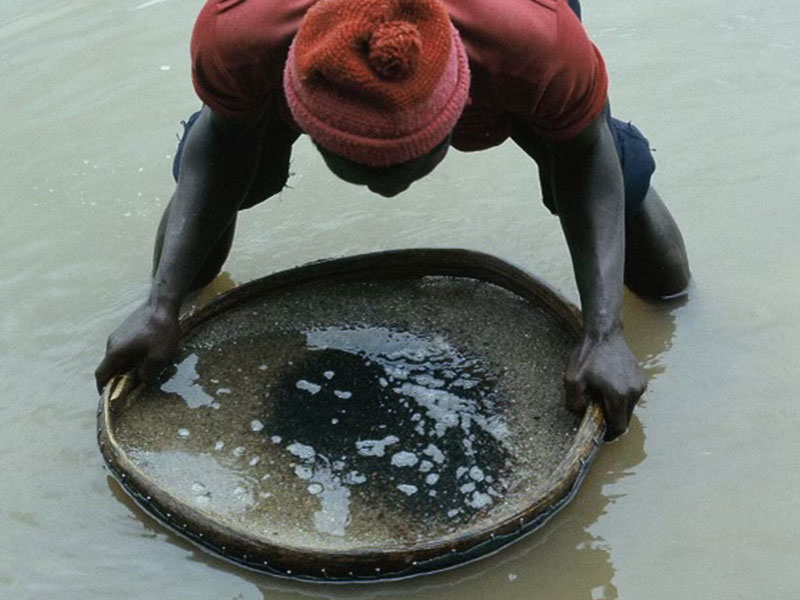
Many responsible sourcing initiatives involve partnerships between artisanal and small-scale miners/cutters/brokers of colored gemstones in the source countries, and cutters/wholesalers/designers outside those countries, as well as nongovernmental organizations (NGOs). The reason for this is that approximately 90 percent of all jewelry-related mining (diamonds, gold, and colored gemstones) in the world is done by artisanal and small-scale miners, independent miners who work, usually seasonally, with simple hand tools. They produce between 70 to 90 percent of all colored gemstones.
The miners, cutters, and producers often have no access to the international markets, like Tucson, where there are few African dealers. “We talked about Tucson to the miners,” says Wheeler. “They said, ‘We’re always told that we shouldn’t show cut stones if we’re from Africa.”
She believes this may go back to a long line of prejudice against stones cut in country, starting with the term “native cut.”
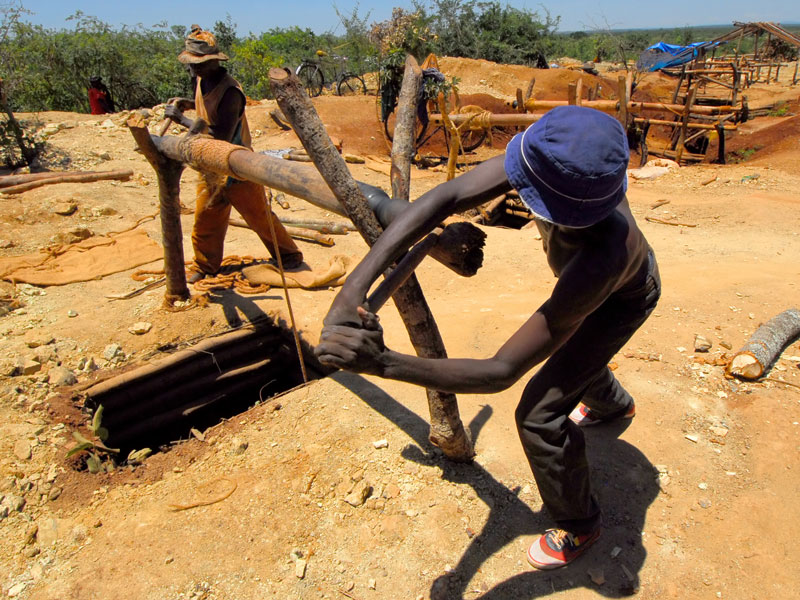
Many initiatives work not just to improve infrastructure and conditions at gemstone mines, but also to get the miners direct access to international gemstone markets.
“That was a derogatory term and devalued the gems cut in source countries,” says Wheeler. “Gemstones should be the same price from the person selling cut stones from the source country as if you bought them from a gem designer in Tucson.”
But equal access is only one part of the issue. The other is infrastructure in the mining areas. “If they’re cutting diamonds or colored stones, and the power goes off for a few days, they can’t fulfill their orders,” says Wheeler. “It’s hard to be on the same playing field if you don’t have electricity four days a week.” This is why most initiatives are focused on getting miners and cutters fairly remunerated for their work, so that there is the money to invest in the infrastructure that can keep their electricity on and keep them connected to the international market.
One meeting place between NGOs working with ASMs in Africa and jewelry industry participants who wanted their purchases to have a positive impact on the mining communities has been the Chicago Responsible Jewelry Conference, a project of the Responsible Jewelry Transformative, a nonprofit founded by Wheeler. Prior to the conference’s inauguration, there was little cross-fertilization between the two types of groups.
Having the NGOs speaking to the jewelry industry members at the conference “broke down some of those silos,” says Wheeler. “After five years of conversation now we’re connecting. Now we have members of the jewelry industry and the NGOs working together, and the U.S. government is speaking directly to the jewelry industry. There is much more dialogue going on.” Because of this, a growing number of initiatives undertaken jointly, have begun having a small, but significant impact.
Tanzania Women Miners Association
An estimated 30 percent of artisanal and small-scale mining workers are women. There are a particularly high number of women miners in Tanzania, Uganda, Kenya, Zimbabwe, Ethiopia, Malawi, Madagascar, and Ghana. While seasonal mining enables farmers and herders in the area to supplement their incomes, women are often excluded from this income stream, even though various reports show that women are more than twice as likely to contribute to the family than men are, and that women invest a higher proportion of their earnings than men not only in their families but also in their communities, leading to greater economic growth.
As a result, several initiatives have been started that focus on working with women miners. One such project was initiated by the Gemological Institute of America in partnership with NGO Pact in Tanzania and Moyo Gems, a responsible miner-to-market gemstone collaboration born in East Africa. It began a basic gemology training program for the 3,000 women (and men) members of Tanzania Women Miners Association (TAWOMA). (Moyo Gems also partners with the Association of Women in Extractive Industries in Kenya [AWEIK] on a similar program there.)
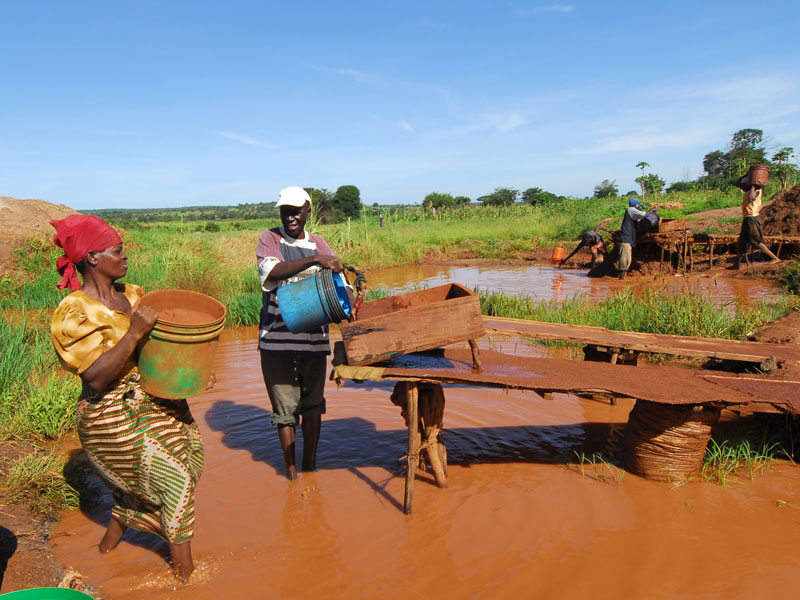
Moyo gems worked with the Tanzania Women Miners Association to teach the miners how to determine gemstone quality and negotiate their own prices.
By teaching the miners the difference between gemstones, and teaching them to determine quality, the women are able to sort their production into grades by quality rather than selling their entire production in bulk. As a result, they are able to earn between 3 to 10 times as much as they had before.
Now, that basic gemology program, plus health and safety training, being a TAWOMA member, and having a legal license to mine are all requirements for miners who want to partner with Moyo Gems. In addition to holding valid mining licenses (often the license is held by a group of miners), miners must dig the gems in the country and all taxes must be paid. Traceability is ensured via blockchain technology. The miners, working with a broker as required by Tanzanian law, negotiate their own prices.
Virtu Gem
In 2020, Wheeler was planning to attend the Africa Gem Exhibition & Conference (AGEC) to be held in Zambia, when everything closed due to COVID-19. This was a blow for those who planned to show their gemstones at the conference. Wheeler, working with partners Monica Gichuhi and Jessica Hudson, quickly transitioned what was to have been the physical exhibition of gems by mining and trade organizations to an online exhibition hall. Virtu Gem was born.
Virtu Gem (virtugem.com) is a not-for-profit initiative that provides artisanal miners, cutters, and traders in Zambia, Malawi, and Kenya access to international markets through mine-to-market sales.
“Virtu Gem is not a trader,” says Wheeler. “It is a platform that lets members sell their gems through the Virtu Gem platform.”
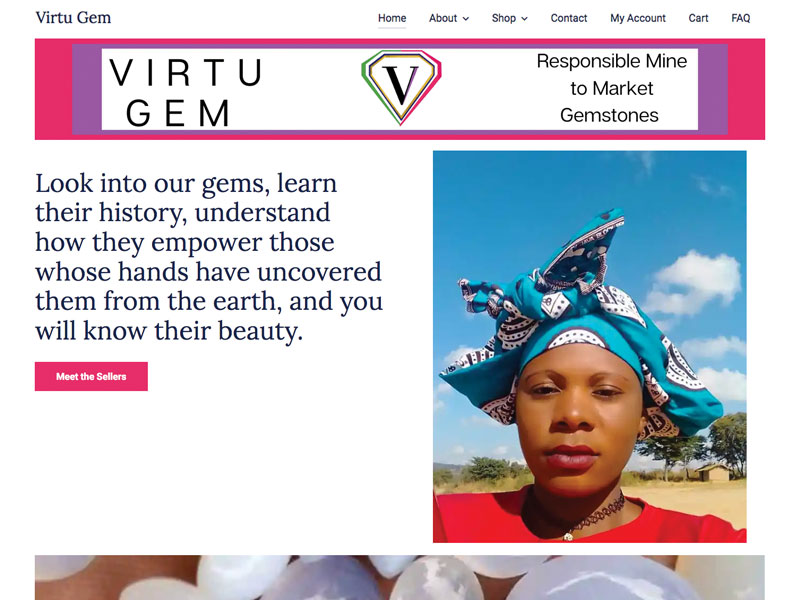
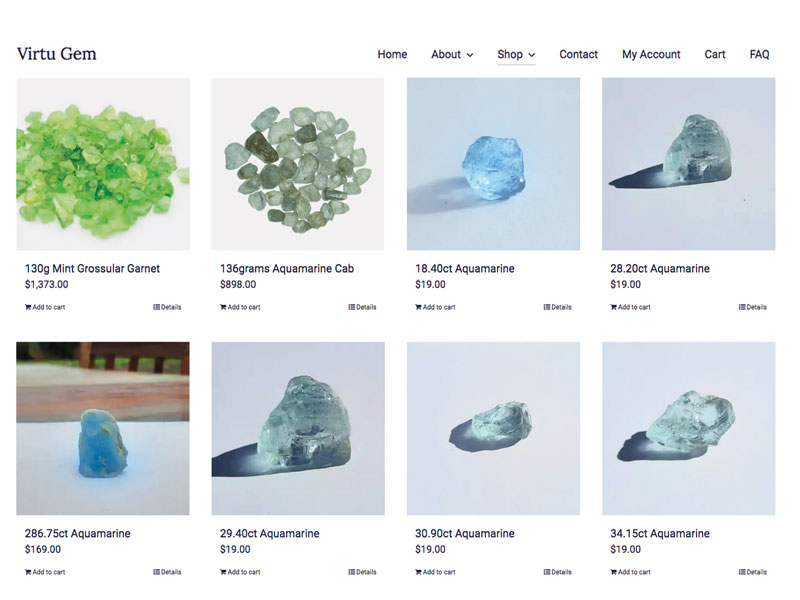
Created after COVID-19 cancelled the Africa Gem Exhibition & Conference, Virtu Gem is an online platform that allows miners, cutters, and traders in Zambia, Malawai, and Kenya to sell their gemstones directly to buyers.
All the gemstones are mined and cut in the source country, uploaded to the Virtu Gem website, and then delivered directly to the purchaser. Traceability from the mine is ensured through blockchain technology provided by Provenance Proof. Virtu Gem’s mine-to-market component “coincides with the nonprofit work of the Responsible Jewelry Transformative in improving mining practices, growing the source country gemstone trade, and teaching value addition to mining communities,” says Wheeler.
Virtu Gem has also initiated the National Gemstone Cut project. To “collaboratively create a national gemstone cut for one specific gem in each country where Virtu Gem operates: Zambia, Malawi, and Kenya.” The project “intends to promote innovation and sustainability in the production of cut-in-country gemstones,” which, according to Virtu Gem’s website, “builds pride, recognition, and demand for source country gem cutting, keeping value addition in the producing countries and employing hundreds of gem cutters.”
Root Diamonds
Diamonds are most often mined, cut, and sold by large global companies. The 20 percent of the world’s diamonds produced by ASM, find their way into that broader stream, but the people who have mined the stones don’t benefit from the value added by cutting and marketing. It’s a model Root Diamonds plans to change. “Root Diamonds will be the only direct mine-to-market diamonds that jewelry designers can buy,” says Wheeler.
Webinar Recording
Industry Update: Initiatives in Responsible Sourcing
Root Diamonds is the brainchild of Fas Lebbie, a native-born Sierra Leonean, who has spent most of his life in the U.S. Lebbie has an all-encompassing vision for Sierra Leone’s artisanal diamond mines in the Kono District. The end goal is to have diamonds and gold both sourced in Sierra Leone, have the diamonds cut there, and the jewelry designed there as well. All of it will be marketed with its unique west African story to the African diaspora around the world. Traceability would be provided by blockchain technology.
Lebbie is being aided by two American diamond cutters acting as his chief advisors: Mickey Brookshire of Mickey’s Diamond Works in Scottsdale, Arizona, and Maarten de Witte of American Diamond Works in Boise, Idaho. Brookshire lives part of the year in Sierra Leone working side by side with the miners.
Like many startups, Root Diamonds is looking for funding. However, says de Witte, most companies, when they think of cutting in Sierra Leone, think in terms of cutting factories. “Nobody is inspired to do factory work,” he says. “Even if you want to pay the miners more money, it’s still a colonial model. You’re making money from those raw materials and you’re leaving. The cutters can’t capitalize because they’re not getting a penny of the value added.
“The run of the mine contains all kinds of colors, just like the Sierra Leoneans themselves.” —Maarten de Witte
“We don’t plan to compete by cutting melee,” he continues. “We want to cut significant stones.” Though the first couple hundred carats of diamonds have been cut by de Witte and Brookshire, with revenue from the stone sales going back into financing the startup, this spring Root Diamonds will begin setting up an artisanal diamond cutting apprenticeship program in Sierra Leone.
De Witte wants to enable Sierra Leonean cutters to develop their own unique diamond cuts. “We’ll teach them to be artisans, finishing diamonds from rough crystal to polished gem,” says de Witte. Then, their own entrepreneurial instincts, he says, will allow these miners/cutters to take the stones “from the wheel to the buyers.”
Because they don’t plan to compete with the cutting factories of India and China, small stones may not be cut at all, but sold into a designer market hungry for fair trade rough diamonds for their work, says de Witte.
“Everyone in our trade talks about having a story [for their diamonds] but very few are really unique,” he says. Root Diamonds is different. Not all the stones coming from Sierra Leone are white and flawless. “The run of the mine contains all kinds of colors, just like the Sierra Leoneans themselves. In fact, different colors best represent the entire community, and that is a real story.”
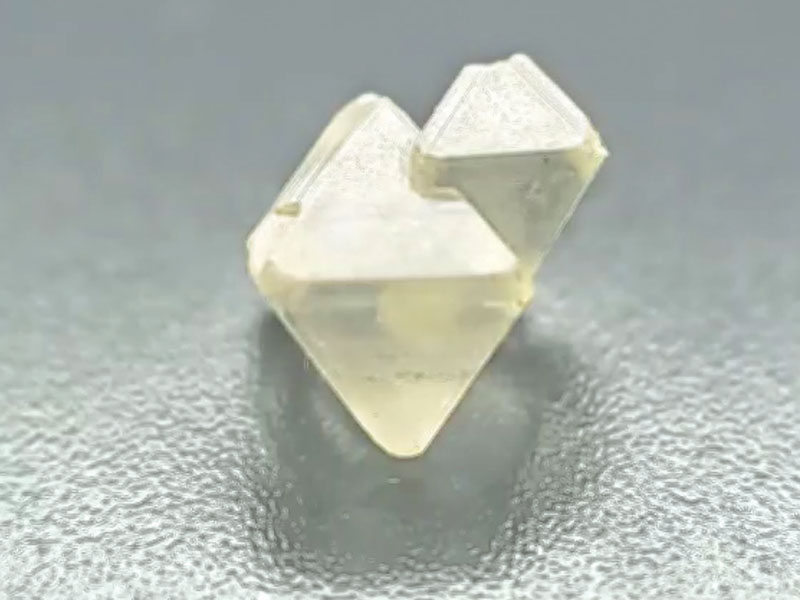
Mother and child rough diamonds from Sierra Leone.
These diamonds may find a very receptive market. “Millennials,” says de Witte, “want to do business with authentic players. They need to hear it from someone they trust, and [this] has a story that has authenticity.”
And it doesn’t matter if the price is higher. “Price is not nearly the object you think it is,” says de Witte. “If you have a story that no one else can tell, people are willing to pay for that.”
In fact, Richline’s Hanna points to a 2021 Plumb Club survey that showed that 72 percent of the more than 1,000 consumers queried said they would be willing to pay more for a piece of jewelry that was sustainably sourced, and 26 percent said they would pay “a great deal” more. (Those surveyed were aged 25-60, college educated, and had $75k+ income.)
While there are more businesses in the jewelry industry becoming involved in creating a more responsible supply chain, there is still a lot of work to be done, first on the supply end. The fairly sudden demand for responsibly sourced stones means there will be difficulty in supplying that demand. But then there will always be supply problems and people involved will need to grow the supply to meet this demand as well. “These are not huge deposits,” says Braunwart. “People want to look at this as a continually improving project. They can’t get enough of it [to supply demand]. That is what we see in colored stones.”
Second, more work needs to happen on the issues of environment and human rights. “We need a lot more action. A lot more conversations about what we are accepting in the jewelry industry,” says Wheeler. “I’d like us to draw the line. For example, say ‘We [as an industry] don’t want diamond and gold from deep sea mining. We don’t want sex trafficking in the mines.’ I’d like to see us acknowledge that certain things are unacceptable.”