

How Sustainability Is Driving Diamond Sales
For Good Reason
Sustainability is key in sustaining diamond sales
By Deborah A. Yonick
Next to food and clothing, fine jewelry ranks as the third most frequently purchased category based on sustainability considerations among consumers.
In fact, sustainability considerations are on par with price and design for jewelry consumers worldwide, according to De Beers’ 2021 Diamond Insight Report, “Sustainability: Shaping the Future of the Diamond Sector.”
GlobeScan, a global insights and advisory consultancy, surveyed more than 8,400 consumers in seven key global consumer markets for diamonds in De Beers’ study. It found that sustainability considerations influence purchase decisions across sectors, with 60 percent of consumers having chosen to buy a product made in a more environmentally or socially responsible way over products that were not.
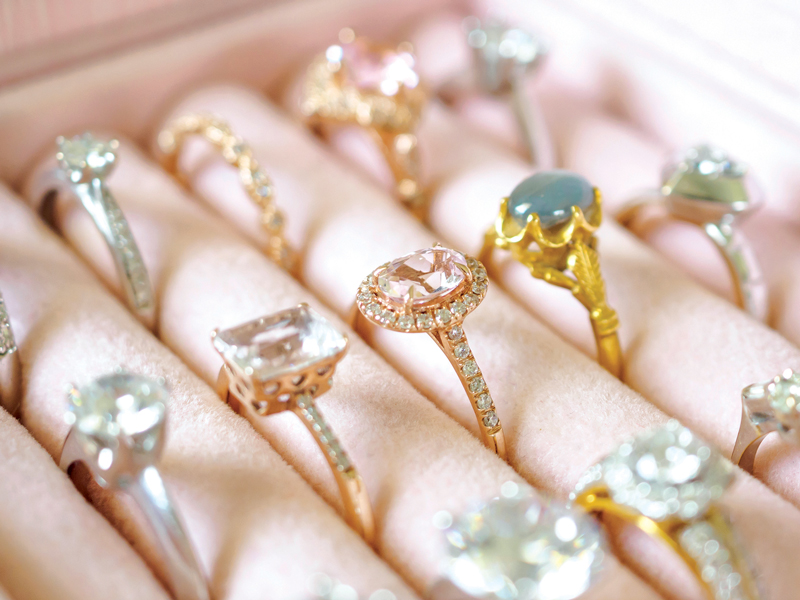
In a recent survey, 60 percent of consumers admitted to choosing products made in a more environmentally or socially responsible way over products that were not.
Sustainability was ranked by 30 percent of consumers as their most important consideration—above price and design—when choosing a diamond, the research found. The top five sustainability considerations for diamond consumers were protection of the environment, fair worker treatment, conflict-free sourcing, supporting local communities, and diamond origin.
The study revealed that consumers consider sustainability to be on par with brand reputation and quality, as well as the physical characteristics of the diamond, such as price, size, and design. This is a powerful indication that communication of sustainability credentials can be a compelling part of a brand’s engagement with consumers when relaying product attributes.
Research also revealed that the more symbolic the event, and the larger the carat size, the more sensitive consumers were to environmental and societal values.
Moreover, 85 percent of those willing to select sustainable options are prepared to pay an average of 15 percent more for diamonds with evidence of sustainability credentials, the survey found.
“If there is one clear message from this report, it’s that sustainability is business-critical,” says Bruce Cleaver, CEO of the De Beers Group. “A tipping point has been reached—sustainability is no longer a trend that’s coming over the horizon; it’s already one of the key considerations in diamond purchases.”
He notes that sustainable conscious diamond consumers are increasingly prepared to pay a premium to have this assurance and are ready to disengage with the category without it. “Sustainability is more than the right thing to do; it is critical to maintaining consumer desire, trust, and loyalty.”
The diamond and jewelry industry must be more proactive in communicating the positive impacts diamonds create for people and the planet on their way to consumers. The report highlights some compelling examples to share, from supporting local communities and delivering large-scale conservation projects to increasing diversity throughout the value chain and working toward becoming carbon neutral.
Critical to this, says Cleaver, will be ongoing investment in tools and technologies that provide consumers with evidence of the assurance they are seeking, including provenance and traceability programs. These innovations enable the industry to communicate to consumers not only the provenance of their diamond, but also its social purpose and positive impact.
Consumers Want Proof
Consumers are proactively looking for brands that match their values, using ethical shopping platforms, carbon trackers, and other technologies to inform their decisions. Credibility is driven by transparency. Experts, such as scientists, academics, and nonprofit organizations, are essential to building credibility, notes the De Beers report.
Nearly half (49 percent) of consumers prefer to have proof of a diamond’s environmental and social responsibility credentials in the form of product certification, 43 percent prefer third-party verification, and 39 percent want an electronic record of the diamond’s journey.

The industry must be more proactive in communication the positive impacts diamonds create for people on their way to consumers.
Leaders in third-party validation, SCS Global Services offers sustainability certification for both natural and lab-grown diamonds. Diamond and gemstone miners and sellers of recycled diamonds can attain SCS certification. SCS also hopes to develop a standard for artisanal mining as well as one for pearls.
The Responsible Jewellery Council (RJC), the world’s leading standard setting organization for the jewelry and watch industry, intends to increase its membership throughout the supply chain over the next decades. To date, RJC has more than 1,550 member companies in 71 countries.
In an open letter dated Feb. 14 to business leaders in the jewelry trade, RJC Executive Director Iris Van der Veken urged the industry to accelerate its pace to achieve the United Nations’ 17 Sustainable Development Goals (SDGs) by the next decade. It’s this urgency of now that has lead RJC to create its “Roadmap to 2030 and Beyond,” giving corporations a framework to embed the priority SDGs into their business strategies and measure success.
The Roadmap illustrates how the RJC’s strategies (members first, partnerships for progress, advocacy for positive change) relate to the UN’s five pillars of sustainable development (people, planet, prosperity, peace, and partnerships), with short, medium, and long-term goals and impact. Among RJC’s priorities are gender equality, inclusive and sustainable economic growth and decent work for all, responsible consumption and production, climate change, and an industry free from corruption, conflict, and illicit activities.
As noted in the De Beers report, digital touchpoints such as social media, apps, and websites are key sources of information for consumers about socially responsible brands and are highly influential in shaping consumer preferences. Sustainability should also be incorporated into diamond jewelry packaging as a tangible reflection of a brand’s wider values.
The Young Will Lead
Sustainability as a consumer priority transcends geography, income levels, and age. The data show Eastern countries just as engaged as Western ones in “doing good” while shopping.
Research reveals that no matter their age, consumers care about protecting the environment. However, Millennials are the generation leading the interest and engagement with sustainability.
Younger consumers are driving the demand for more transparency and integrity, with 68 percent of Millennials and 65 percent of Gen Zs having purchased products with stronger environmental, social, and governance (ESG) credentials, compared to 42 percent of Baby Boomers.
Sustainability considerations also are higher among consumers with a higher education (67 percent) and from affluent backgrounds (70 percent).

With a greater concern for the environment, younger consumers are driving the demand for more transparency and integrity from companies.
“Millennials are leading the charge. Their impact on global purchasing shows it is something our industry should not only take seriously, but weave into the DNA of our own actions,” Charles Stanley, president of De Beers Forevermark US shared in a recent Plumb Club podcast on sustainability in the diamond market. “Millennials are showing a hunger for the brands, retailers, and products they buy to showcase their own impact on these issues.”
Gen Zs expressed great concern for the environment and a willingness to pay more for sustainable products; yet, they feel alienated from nature. These attitudes present an opportunity for brands to empower this generation to connect with their convictions and transform their thoughts into meaningful action as they move through the key life stages of marriage, children, and home buying.
A Return on Responsibility
While it may seem daunting initially and costs can seem discouraging in the short-term, doing nothing is not an option. To capture value and measure impact from ESG commitments, be discerning about key areas to prioritize, align with consumer values and core business competency, set relevant goals, select the right partners to work with, and report on progress in a transparent manner.
The business case for responsible best practices is complex. Yet, in a more inter-connected, post-global health and recession world, the business case is stronger than ever before, believes Mark Hanna, CMO for Richline Group in New York City and an RJC board member.
A vocal activist for sustainability in the jewelry trade since 2007, Hanna advocates for the adoption of sustainability practices as strategic differentiation that can lead to superior financial performance and resilience preparedness.
Hanna focuses on the importance of “return on responsibility” or ROR, the collective benefits for a company to better the world. Engagement in sustainability has deepened since the pandemic, he says, with consumers wanting companies to act responsibly by considering the social and environmental impacts of their business.
Responsibility and sustainability efforts can dramatically change people’s perspective of companies. “Your social purpose should be a priority and communicated to customers, associates, and stakeholders,” says Hanna. He advocates developing a written code of ethics to guide your suppliers and customers. “Define what ROR means to you and your company.”
The ROR model assures companies that their sustainability and corporate social responsibility programs enhance their reputation, attract and retain employees, build supply chain relationships, and meet current and future environmental requirements.
Sustainability is maintaining equitable conditions across not only socioeconomic and geographic barriers, but also across generations and through time, says Hanna. “The specific framework is less important than the core idea that companies can and should integrate social responsibility into their business model and strategy.”