

A Guide to Responsible Sourcing Certifications and Standards
Certified Responsible
Certifications and standards for responsible supply chains
By Shawna Kulpa
RJC, COP, SCS, IRMA, ARM, CRAFT, OECD…
If you’ve looked into responsible sourcing within the jewelry industry, you’ve likely come across many of these acronyms. They may even have you scratching your head in an effort to keep them all straight.
Being a responsible jewelry maker can be tough these days. As Mark Hanna, chief marketing officer of Richline Group in New York City says, “I used to be able to go and shake hands with people and that was my certification.” That’s not going to cut it anymore. As more and more consumers, especially Millennials and Gen Zers, become concerned about where the products they purchase are made and under what conditions, jewelers no longer have the luxury of simply saying “trust me.” Instead, consumers not only want to know the story behind their jewelry pieces—including details about the mining communities—but also have that story verified.
To help with that, jewelry manufacturers and designers can turn to several organizations that have created certifications and standards for responsible supply chains. Below you’ll find a brief rundown of some of the most well-known and established ones within the industry.
Quick Links:
RJC Code of Practices • SCS Responsible Source Certification • SCS-007 Sustainability Rated Diamonds Standard • IRMA’s Standard for Responsible Mining • Fairmined Standard • The Craft Code
Certification Simplification: Prefer a brief visual walk-through of the standards and certifications from this article? Take a look at the video below for an overview.
RJC Code of Practices
The RJC’s Code of Practices covers all precious metals used in the jewelry industry as well as diamonds, emeralds, rubies, and sapphires.
Developed by the Responsible Jewellery Council (RJC), the RJC Code of Practices (COP) was created to serve as a common standard for responsible business practices from mine to market. It was created to align with the Organisation for Economic Co-operation and Development (OECD) Due Diligence Guidance as well as the UN Guiding Principles of Business and Human Rights. First launched in 2009, the COP has been revised twice, most recently in 2019.
As its currently written, the COP covers all precious metals used in the jewelry industry as well as diamonds, emeralds, rubies, and sapphires. Companies that wish to become certified must undergo a thorough audit of the business, though they’ll have the opportunity to address any issues that arise that don’t conform to the guidelines as spelled out in the COP.
“It’s about transparency of your responsible business practices, from internal policies and procedures to how you engage with your business partners,” explains Hanna. “You’re disclosing to the RJC auditor, how you apply the COP and its requirements on responsible business practices, from the time you first source it all the way through to the final manufacturer and delivery to the retailer or wholesaler.”
The COP is comprised of 42 provisions split between six broad objectives as spelled out by the RJC:
- To improve legal and regulatory compliance, strengthen public reporting, and secure a commitment to responsible business practices.
- To increase the use of due diligence in supply chains to uphold human rights, support community development, promote anti-corruption efforts, and manage sourcing risks.
- To better comply with international labor conventions and ensure responsible working conditions.
- To protect the health and safety of both people and environments, and to use natural resources efficiently.
- To adequately control, and disclose information about, products and so avoid misleading or deceptive marketing practices.
- To secure responsible exploration and mining practices that protect potentially affected communities and environments from adverse impacts.
“Certification means that you adhere to every provision that is applicable to your business,” says Hanna. “Each one has been evaluated against how you as a company govern each one of those things.”
Companies that wish to become COP certified must first join the RJC and then undergo a six-step process:
1. The first step is completing a self-assessment, which is available as part of a self-assessment toolkit on the RJC website. The assessment will have companies review their general business practices, including their supply chain policies and attention to a broad range of issues, such as human rights. If during the assessment a company finds that some of its practices don’t align with RJC requirements, it will want to review the issues before the third-party audit.
2. The next step involves having an RJC-accredited auditor conduct an audit of the company. Audit costs will vary depending on the size of the company. The audit will consist of both a document review as well as an on-site visit and management and staff interviews.
3. Once the auditor completes the audit, the company receives a copy of the report. If any non-conformances were found, the company will need to develop a corrective action plan to address them. A timeline will also be established as part of the plan.
“You have to get it done in that timeframe,” says Hanna. “If not, then you have to restart the process.”
The type of non-conformances found will dictate the length of the company’s eventual certification and the need for a mid-term review. If the issues are considered minor, such as incorrect record keeping of one employee’s working hours, the company can still qualify to receive a three-year certification; for major issues, such as not having any formal process for tracking employee working hours, companies can receive only a one-year certification.
4. The RJC then reviews the audit findings as well as any corrective action plans. Depending on the findings, the RJC can then award either a three- or one-year COP certificate to the company or no certification at all.
5. Depending on the findings of the COP audit, a company may be subject to a mid-term review. An auditor will review the business to ensure that it has followed its corrective action plan to close the non-conformances raised.
6. At the end of the initial certification period, the company will need to undergo a recertification audit.
The process can seem lengthy and intimidating, and Hanna admits that for large companies such as Richline, with multiple divisions and facilities, the auditing process alone can take upward of 60 days. “But for someone with a single operation, it could be a couple of days,” he says.
Audit costs depend on the size of an organization. However, while companies are required to use an RJC-accredited auditor, companies should reach out to several for quotes, as the fee will depend on the individual provider.
Despite the time and financial commitment required, becoming certified can help companies optimize their operational efficiency, create safer work environments, protect the integrity of their supply chain, drive growth, and build consumer confidence.
SCS Responsible Source Certification
The SCS Responsible Source Certification applies to the entire supply chain and covers fine metals, alloyed metals, gemstones, findings, and jewelry.
In response to increasing demand within the industry for traceability, SCS Global Services, a global leader in third-party certification, validation, and verification for environmental and sustainability claims, created the SCS Responsible Source Certification to assure customers that raw materials have been ethically sourced and have minimal environmental impact. The certification enables companies to demonstrate their commitment to avoiding conflict materials, preventing environmental damage, and protecting worker safety.
The certification is meant to apply to the entire supply chain, from refiners to retailers, and products covered by the standard include fine metals, alloyed metals, gemstones, findings, and jewelry.
According to SCS, the certification provides assurances in the following areas:
- Recycled metals, gemstones, and jewelry (SCS certifies that all materials are derived from recycled sources).
- Conflict-free materials (metals, gemstones, and other materials from questionable and illegal sources).
- Labor protections (SCS certifies that workplaces meet health and safety criteria, and that workers are treated fairly according to internationally recognized labor standards).
- Ethical sourcing and supplier risk management.
- Environmental impact assessment (SCS establishes basic environmental performance standards and provides a clear pathway for continuing improvement over time).
To achieve certification, companies must first submit an application. After reviewing the application, SCS will put together a proposal for the project along with a timeline. Once the company signs off on the proposal, an SCS technical coordinator will assist the company in pulling together the necessary information to proceed, which includes product data, corporate documentation, and product formulation. At this point, SCS will conduct a certification audit, which involves an on-site inspection. Details of the audit will be shared with a different SCS auditor, who will do an additional check on the company. Any compliance issues identified will be shared with the company, which will need to create a corrective action plan to address them. A final review will then be conducted. If certification is granted, it will need to be renewed annually.
Before companies begin the certification process, SCS recommends that they develop and implement an environmental plan and monitor the results (air emissions, energy and water use, etc.) to establish a baseline. The goal is not to get everything right at first, but rather to track performance levels and demonstrate improvement over time.
Once a company has achieved certification, it can use the SCS Responsible Source Certified logo in its marketing, helping to promote and reinforce its commitment to protecting workers and the environment.
SCS-007 Sustainability Rated Diamonds Standard
The SCS-007 Standard is designed to apply to industrial scale mining and lab-grown diamond production operations, recycled diamonds, and the diamond chain of custody.
Just last year, SCS released its new SCS-007 Sustainability Rated Diamonds Standard to help meet the needs of a growing number of environmentally and socially conscious consumers. The standard is designed to apply to industrial scale mining and lab-grown diamond production operations, recycled diamonds, and the diamond chain of custody.
According to SCS, the standard is based on five pillars of sustainability:
- Verified Origin Traceability: Aimed at providing more than 99 percent accuracy in assuring the origin of each diamond from producer to point of sale. SCS accomplishes this through advanced testing, gem identification protocols, surveillance audits, and sampling across the supply chain.
- Ethical Stewardship: Diamond producers and handlers adhere to stringent environmental and social responsibility requirements.
- Climate Neutrality: Diamond producers are required to meet milestones of climate neutrality, mitigating or offsetting both their current annual climate pollutants and their past legacy greenhouse gas emissions that continue to impact the climate.
- Sustainable Production Practices: Diamond producers are required to achieve quantitatively measurable net-zero sustainability goals. They must avoid, eliminate, or offset any impacts associated with the production life cycle over designated time periods.
- Sustainability Investments: A portion of fees is directed toward uplifting artisanal and small-scale miners and other vulnerable communities. It also supports net-zero goals through efforts that clean the air, protect the climate, and protect endangered watersheds and ecosystems.
Acknowledging that sustainability isn’t a black-and-white issue, the standard relies on a rating scale that’s based on how well a company performs according to the five pillars. At the top of the scale is an A+ rating, where the diamond must have scored a 100 on verified origin traceability and ethical stewardship. A+ diamonds also must be climate neutral (not contributing to climate warming by emitting any greenhouse gases) and offset or mitigate at least 80 percent of the environmental and human health impacts associated with diamond production.
At the bottom of the scale is a D rating. D-rated diamonds must score a 100 for ethical stewardship and at least 80 out of 100 for verified origin traceability. In addition, D-rated diamond producers must be committed to being climate neutral for annual emissions within 24 months of initial certification.
Certified diamonds come with a certificate that can be presented to the end consumer, enabling them to review the path their stone took and assuring them that the stone is from an operation in full compliance with the five pillars.
In addition to mines and producers, companies involved throughout the chain of custody can be accredited, including cutters, polishers, traders, distributors, jewelry manufacturers, and retailers. In its evaluation, SCS considers such areas as processing, storage, segregation from non-certified diamonds, and transportation. To sell certified diamonds, retailers must register under the SCS-007 Sustainability Rated Diamond program to share program-approved information with consumers.
Companies that offer diamond testing and inspection are eligible for technical accreditation. To become accredited, testing and inspection companies must first sign a confidentiality agreement and agree on a scope of work, such as the types of stones being tested (raw, cut, loose, etc.). From there, they will need to provide details about its processes. Once SCS has that information, it will audit and assess the company’s adherence to the standard’s provisions. If the company is found to be in compliance with all the standards, it will receive a provisional Certificate of Accreditation. SCS will then test a sampling of diamonds for independent verification. If no testing errors are found, the company will receive its final Certificate of Accreditation after 12 months.
IRMA’s Standard for Responsible Mining
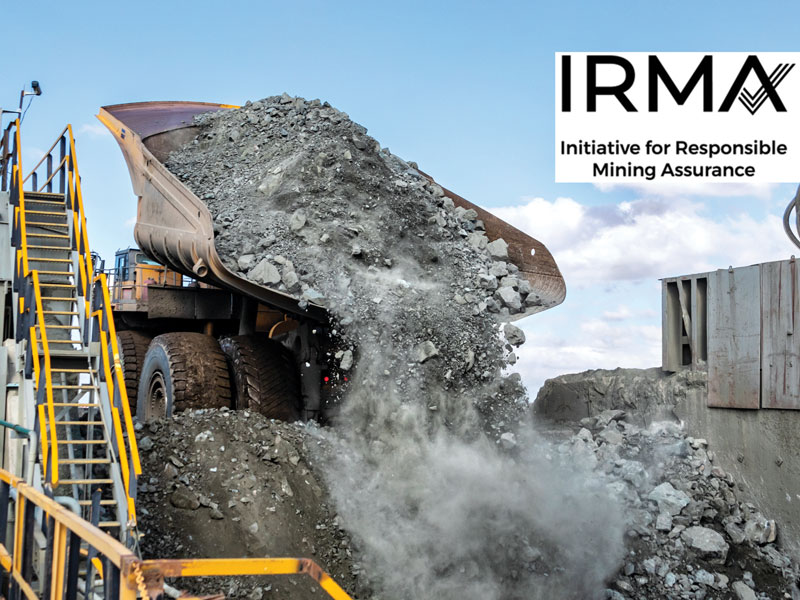
IRMA’s mission is to protect the environment as well as the people directly affected by large-scale and industrial mining.
The Initiative for Responsible Mining Assurance (IRMA) was founded in 2006 by a coalition of nongovernmental organizations, mining companies, trade unions, and businesses that purchase minerals and metals for the products they make and sell. As part of its mission to protect the environment as well as the people directly affected by mining, IRMA created the IRMA Standard for Responsible Mining.
Developed over 10 years and in consultation with more than 100 companies and organizations, the Standard is meant to define what responsible mining should look like at the industrial scale. (IRMA makes it clear that its Standard is intended for industrial and large-scale mining operations only and that it is not applicable for artisanal or small-scale mines.)
As part of the Standard, IRMA developed a list of expectations that third-party auditors will use as benchmarks for responsible mines. Those expectations fall into one of four arching principles:
- Business Integrity, which includes legal compliance, community and stakeholder engagement, human rights and due diligence, mechanisms for complaints and grievances (with access to remedies), and transparency in revenue payments from companies to governments.
- Planning for Positive Legacies, which includes assessing and managing environmental and social impacts; obtaining free, prior, and informed consent; obtaining community support and delivering benefits; preparing for emergencies with response plans; and planning and financing reclamation and closure.
- Social Responsibility, which includes issues related to fair labor and terms of work, occupational health and safety, community health and safety, mining in conflict-affected or high-risk areas, security arrangements, artisanal and small-scale mining harmonious co-existence, and cultural heritage.
- Environmental Responsibility, which includes the management of waste and materials, water, air quality, noise and vibrations, greenhouse gas emissions, cyanide, mercury, and biodiversity.
As designed, the Standard applies to mines themselves and not the companies that own or operate them. In addition, mining companies can choose to enroll only a certain percentage of its mines into the certification process; it’s not all or nothing.
It’s also not all or nothing when it comes to getting certified. Rather than using a pass/fail system where mines have to meet every single requirement perfectly or else they will not be certified, IRMA uses a scoring system that allows mines to demonstrate improvement over time.
Currently, there are two mines that have completed their audits: Anglo American Platinum’s Unki Mine in Zimbabwe, which mines platinum, palladium, gold, ruthenium, and iridium, and Carrizal Mining’s Zimapán Mine in Mexico, which mines lead, zinc, copper, and silver. There are also nine mines with ongoing audits, which includes Rustenburg Platinum Mines Ltd.’s Amandelbult Mining Complex in South Africa, which produces gold, iridium, palladium, platinum, rhodium, and ruthenium. The status of their audits can be found on the IRMA website (responsiblemining.net).
IRMA membership is open to both mining and purchasing companies. Mining companies must schedule a third-party audit of at least one mine site within 12 months of joining. Purchasing companies that join can attend IRMA’s members-only meetings.
Fairmined Standard
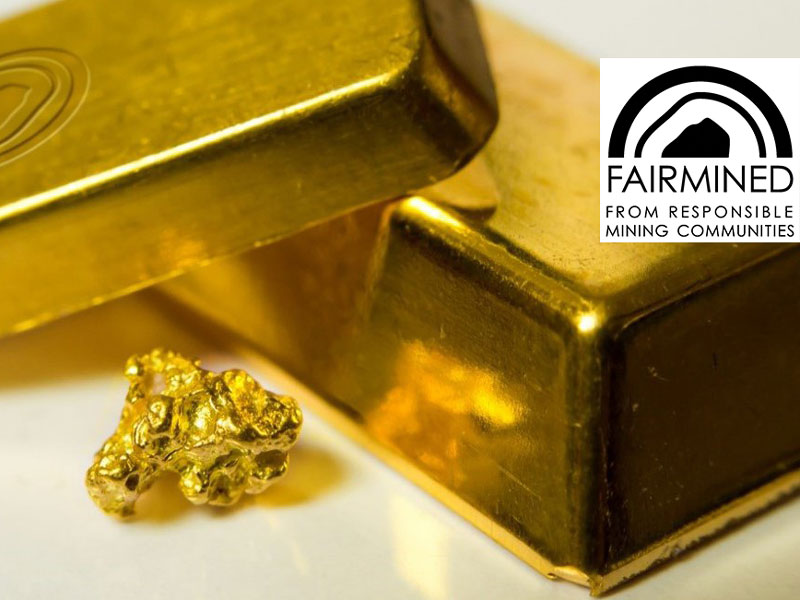
The Fairmined Standard was developed to improve working conditions for artisanal and small-scale miners, and promote responsible environmental management.
Applicable to gold, silver, and platinum, the Fairmined Standard was created by the Alliance for Responsible Mining (ARM) to develop opportunities for artisanal and small-scale miners, improve their working conditions, and promote responsible environmental management. It’s also designed to give these miners access to fair markets to sell their goods.
To qualify for certification, mines must first complete an application for assessment. Once the application is approved, the mining organization will undergo a third-party audit, which includes on-site inspections as well as a review of the organization’s documents. Mining organizations must have legal title that enables them to work in their mining area. They must also comply with entry-level requirements that are based on a series of organizational, work-related, environmental, and traceability criteria. Such requirements include paying all taxes, fees, royalties, and tributes as required by applicable legislation and verifying that all mining operations and processing plants follow national environmental laws. (The full list of requirements can be viewed on the Fairmined website, fairmined.org.)
Once the auditor confirms that the organization complies with all the Fairmined Standard requirements, the mining organization will be issued a certification that will be good for one year. The group will then need to be audited annually to verify continued compliance and renew their certification.
There are two types of Fairmined certification: Fairmined Certification and Fairmined Ecological Certification. The difference between them is that Fairmined Certification allows for the responsible use of limited toxic chemicals (namely cyanide) while Fairmined Ecological gold must be extracted and processed without the use of any toxic chemicals. The certification process for both is similar, but the criteria for ecological metals are more demanding.
Metal that is certified as Fairmined is sold at a fair price but comes with a premium, which Stewart Grice, vice president of mill and refining for Hoover & Strong in North Chesterfield, Virginia, estimates to be about 15 percent of the purchase price. That premium goes to benefit the miners and the mining community, whether it’s used to install electricity and water supplies or build hospitals and schools for the community, helping buyers know that the metal they’re buying “is definitely not from some shanty-town oppressed mining community run by drug lords,” says Grice. “It’s all above board and very good karma.”
Fairmined metals can be sold only by certified Fairmined suppliers, of which there are currently 29 worldwide. (Most of the suppliers are in Europe; of the rest, six are in North America, four in South America, and two in Asia.) Similar to the mines, suppliers must submit to a paper audit every year as well as an on-site audit every three years to retain their certifications.
The most critical thing for suppliers is tracking the supply of Fairmined metal—both from where they obtain the metal and to whom they sell it.
As a Fairmined supplier, “you can sell it to anyone, they [ARM] just want to know who you sold it to,” explains Grice. His company is among the certified suppliers, and as such, he says, “I have to enter every sale I make to a Fairmined licensee—the invoice number, date of the sale, what I sold them, weight, karat. Their job is to confirm that. If I sell to any non-Fairmined licensees, I have to classify as such but no customer details need to be provided.
“It sounds complicated, but it’s fairly simple,” he adds.
While anyone in the jewelry industry can purchase Fairmined metal, only those who have become Fairmined licensees can label the products made with the metal as being Fairmined. Jewelry makers interested in becoming Fairmined licensees must agree to comply with the Fairmined Standard requirements as well as any audits and self-assessment reports.
“Jewelers can contact ARM and start the process,” says Grice. “They’re good at helping people who want to become a licensee. They’ll walk them through the process.”
The CRAFT Code
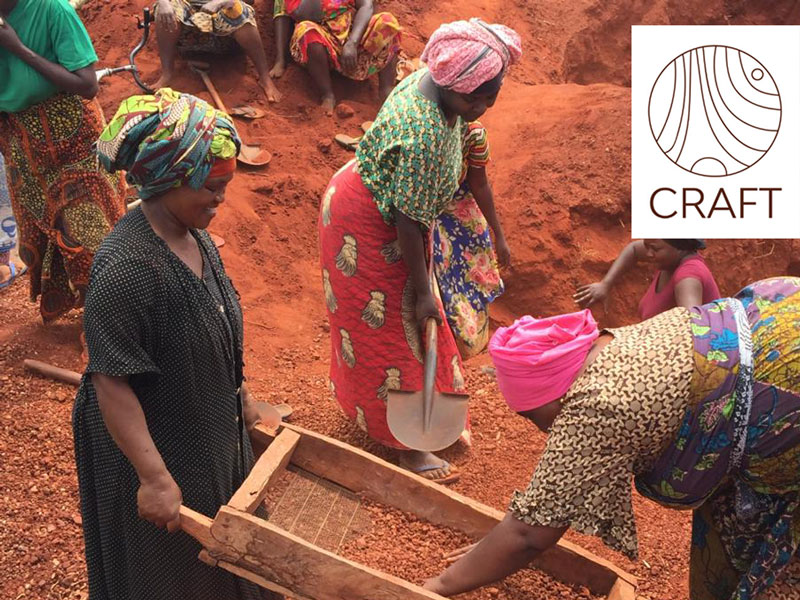
CRAFT was developed to help artisanal and small-scale miners avoid child labor, illicit trade, and uncontrolled use of chemicals.
Acknowledging that not all artisanal and small-scale mining operations can meet the Fairmined Standard, ARM, in cooperation with RESOLVE (an NGO dedicated to finding solutions to social, health, and environmental challenges), developed the Code of Risk mitigation for Artisanal and small-scale miners engaging in Formal Trade (CRAFT). Initially applied to the gold supply chain only, the code is now non-mineral specific so it can be applied to additional mining operations.
CRAFT is designed to help both buyers and miners avoid critical social and environmental risks, such as child labor, illicit trade, and uncontrolled use of chemicals. According to Cristina Villegas, director of Mines to Markets at Pact (an international nonprofit) and a member of the CRAFT Advisory Board, CRAFT was developed to serve as a stepping stone for those artisanal and small-scale miners who want to be responsible but lack the resources needed to achieve the more comprehensive Fairmined Standard.
“As beautiful as the Fairmined Standard is, only a few small-scale mining groups in the world have managed to achieve it,” she says. “CRAFT helps the everyday artisanal or small-scale miner meet the technical and social requirements of global industry’s changing expectations.”
Unlike the Fairmined Standard, CRAFT doesn’t require third-party assessment, which helps to keep the costs down for the miners. Instead, CRAFT relies on due diligence by the miners themselves, who must explain how they meet the requirements and annually provide evidence.
The code consists of five modules. The first four cover the requirements aligned with the OECD Due Diligence Guidance; a mining operation must meet all of them if they wish to engage with formal markets. The fifth module has requirements that go beyond the OECD guidance; these requirements are aspirational, something toward which the mines can continually strive.
Module 1: The mining operation must provide a report on its organizational structure, the location of its operations and transport routes, and the products mined and processed.
Module 2: The mining operation must provide proof that they are legitimate. According to Villegas, this could mean possessing a valid mining license issued by the Ministry of Mining in that country.
Module 3: This module covers issues that are directly controllable by the mining operation and include things such as proving that the mines do not use forced labor, violate human rights violations, or have the site or transportation routes illegally controlled by non-state armed groups. This module has a pass/fail criteria, and the mining operation has to meet all of the requirements to pass.
Module 4: This module covers societal welfare, community rights, and security issues, including security provided to mine workers. A mine must verify that it pays all taxes, fees, and royalties due to the government, and resists bribery to conceal or disguise the origin of materials. Like Module 3, this module has pass/fail criteria and the mine must meet all requirements.
Module 5: This module emphasizes progressive improvement in a wide range of areas, from human rights and occupational health and safety to societal welfare and the use of natural resources. Because it was designed to be aspirational, it has no pass/fail criteria.
“The idea is that they can always do better, so as long as they show some form of improvement, they’re in the clear,” says Villegas, noting that CRAFT is a code and not an official certification.
For artisanal and small-scale miners, CRAFT can provide better access to formal supply chains, more legitimacy of their activities, incentives to eliminate bad mining practices, and a practical roadmap for moving forward. Buyers get the confidence that they’re buying materials from miners who are complying with the OECD Due Diligence Guidance and the knowledge that they’re contributing to best practices and the economic development of these mining areas.
“The idea is for small players not to be left behind by the responsible sourcing movement,” says Villegas. “Artisanal and small-scale miners have very different financial capacities than larger scale mines and most want to improve, so this effort is really important in terms of social justice and inclusion of those with the fewest resources and the biggest challenges.”
If you’re feeling overwhelmed from the various standards and what each one means, just take a deep breath. Then review the standards and, if you have questions, reach out to the suppliers that have achieved them.
“Buy from the initiatives that can prove what they’re doing,” say Villegas. “And if you have an existing supplier, engage with them and ask what they’re doing. There are lots of different ways to make change.”