

Tips for Reusing and Repurposing Broken Sawblades
Second Chances
Ideas to help you reduce, reuse, and repurpose broken sawblades
By Helen I. Driggs
My parents grew up during the lean years following the Great Depression, so I learned not only Yankee ingenuity, but also their waste not, want not frugality and clever ways of using outdated, worn-out, or otherwise unwanted objects. These days, I’m feeling a bit of déjá-vu and trying to exhaust every possibility for using every scrap of metal or material in my shop. Not only does this save money, but it also helps the planet by not throwing away anything that might be reborn after a little creative thinking. Even broken saw blades have their uses. Here are a few ways to reuse them before they hit the steel scrap box.
Corral Them
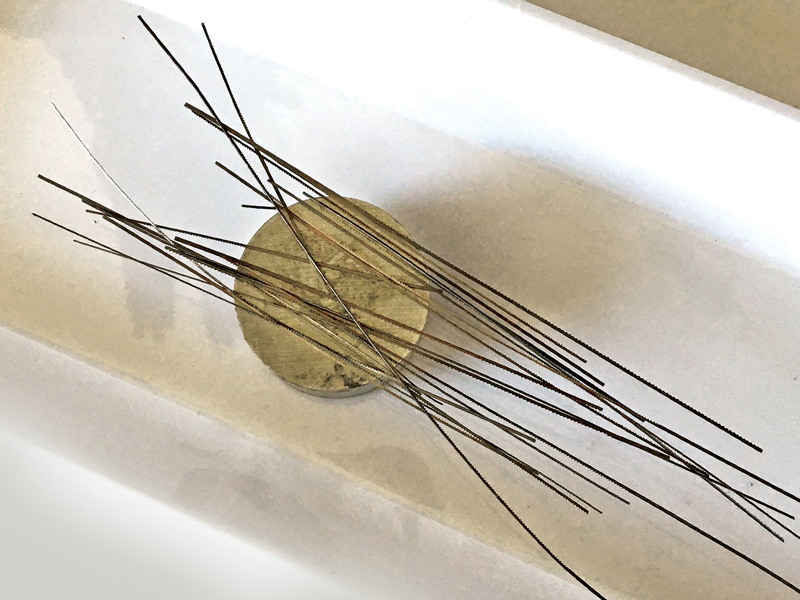
Before you can reuse broken saw blades, you have to collect them. I place a small magnet in a longish, white, sushi take-out container in my sweeps drawer to immediately cull broken saw blades (and other worn-out steel burs and dull drill bits) from my scrap so that all that remains in my sweeps drawer at the end of every work day are sweeps.
Use Them as a Texture Source
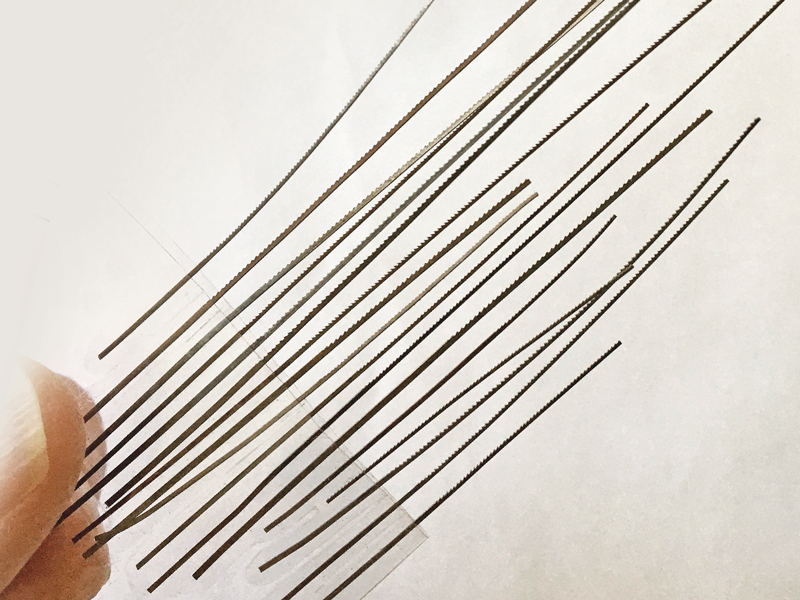
Blades make an interesting rolling-mill embossed texture in dry, annealed metal. A row of saw blade ends stuck to and enclosed within a piece of packing tape can be sandwiched between two sheets of jewelry metal and run through the mill. Always enclose the saw blade sandwich with-
in a sheet of bond paper to protect the mill rollers.
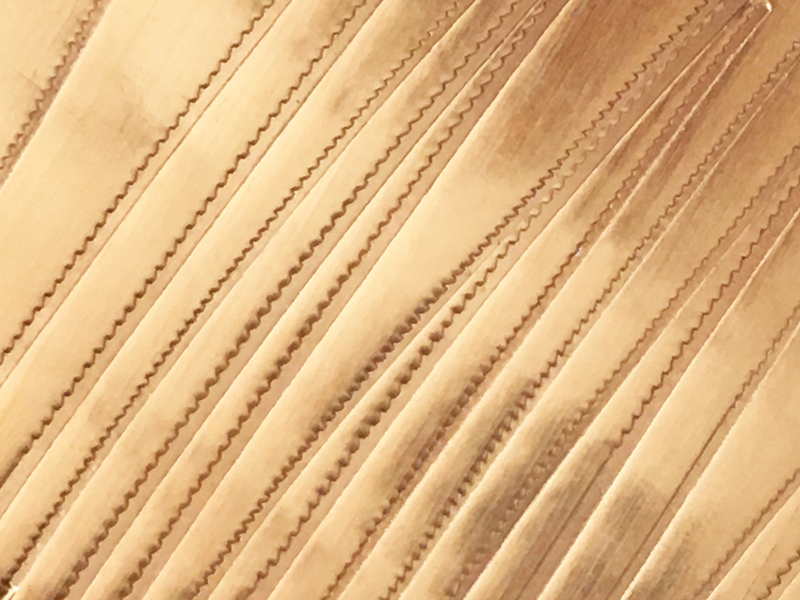
The resulting linear design (above, right) created by the blades is a very nice way to add texture to the back side of a pendant or bracelet link.
Make a Micro-file
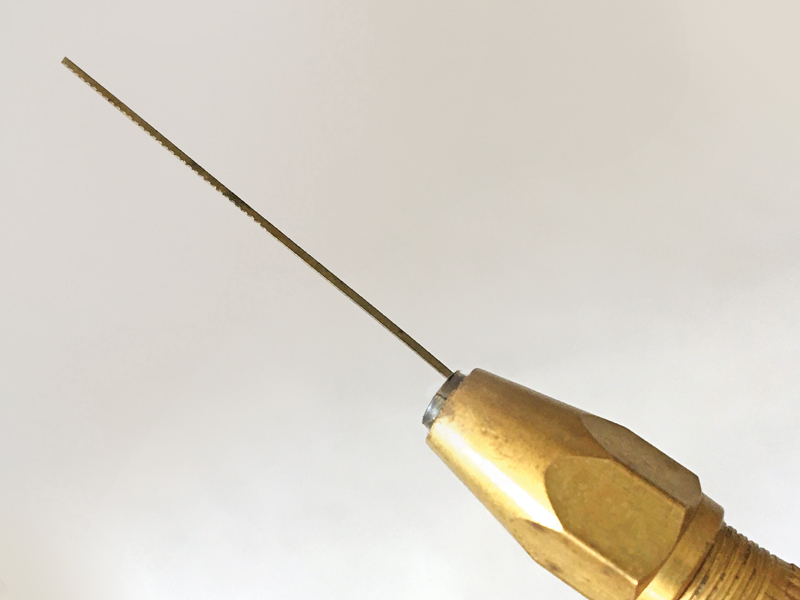
Your pin vise can tightly grip a short section of coarse saw blade to become a micro-file.
Use the micro-file to clean up tiny, narrow openings you might not be able to reach even with the tiniest of files.
On Duty at the Solder Station
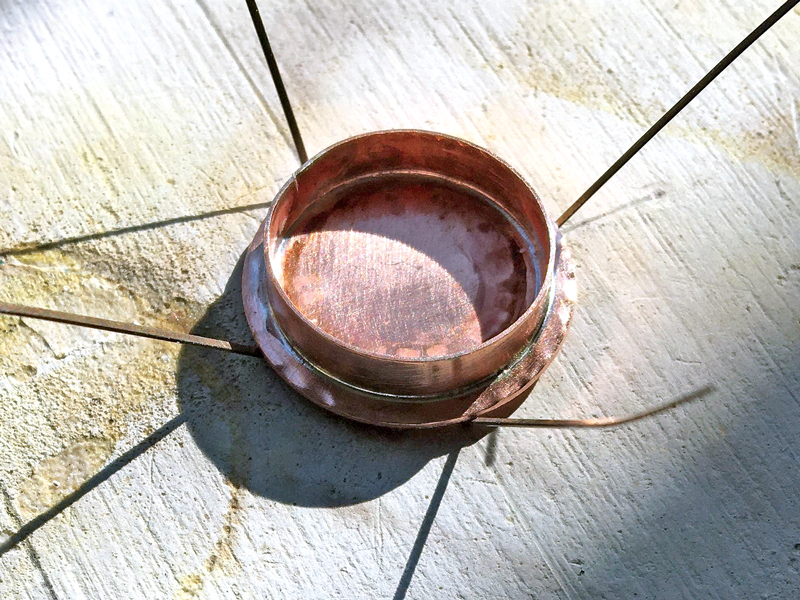
Using pliers, I push short sections of saw blade into my soft solder block to raise up a flat-backed piece and to prevent it from sticking to (and tearing up) my soldering board when the flux adheres to it.
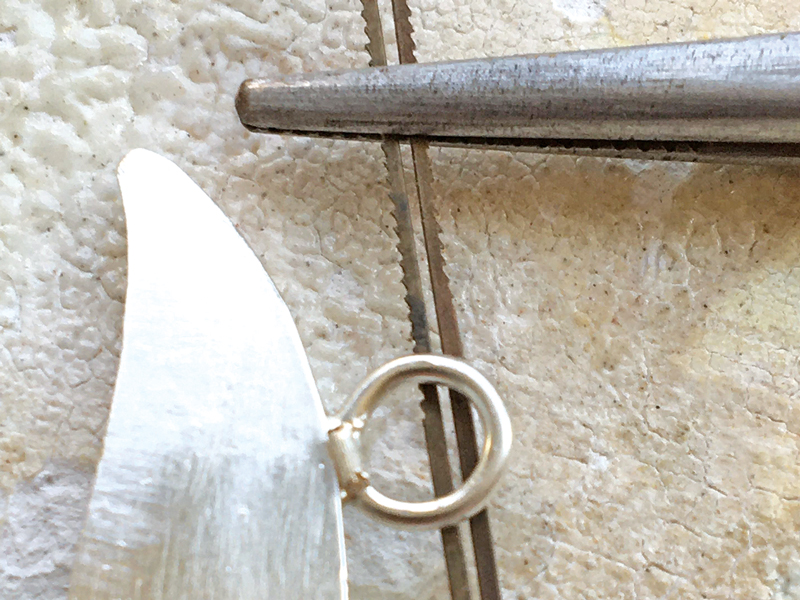
Insert two short sections of saw blade into a pair of locking soldering tweezers with serrated jaws. With the blades parallel, balance a jump ring and chip of solder against the edge of a pendant backplate for effortless soldering. Solder won’t stick to the steel blade, and the thin saw blade bridge provides a level surface to raise even the smallest jump ring off the solder board without sticking and without acting as a heat sink.
Mixing Sticks and Applicators
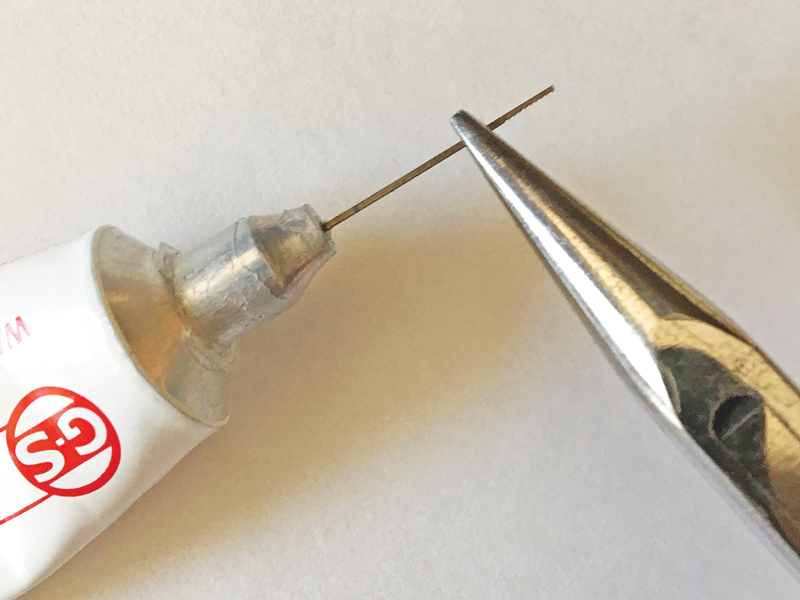
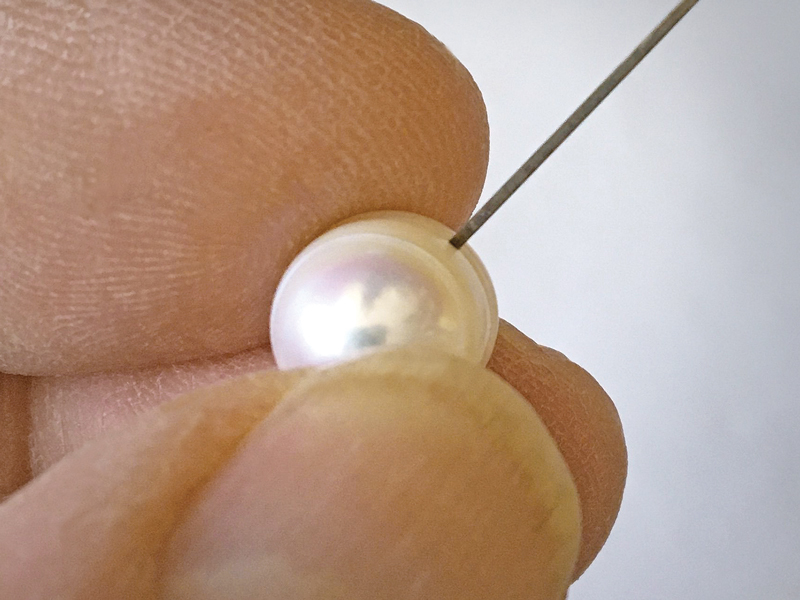
Using narrow pliers, I push a short section of blade into my inevitably leaky epoxy tube to scoop out just the right amount of glue to fill the hole of a half-drilled bead or pearl.
The thin blade can carry the glue deeply into the pearl much more efficiently than a toothpick could, so the pearl is more likely to stay clean and stay put once it’s placed on the peg of the earring or pendant to cure.