

Buying and Selling Lab-Grown Diamonds
The Allure of Lab-Grown Diamonds
Interest in lab-grown diamonds continues to grow. Are you ready?
By Shawna Kulpa
They’re here and they’re not going anywhere.
Lab-grown diamonds have been around since the 1950s, but with the technology today having advanced to the point where gem-quality stones can be readily produced, they’ve taken the jewelry industry by storm. Marty Hurwitz, CEO of MVI Marketing in Austin, Texas, estimates that the lab-grown market now accounts for about 12 percent of the total diamond retail business. He thinks that figure could possibly double this year, as interest in the stones in several international markets is escalating.
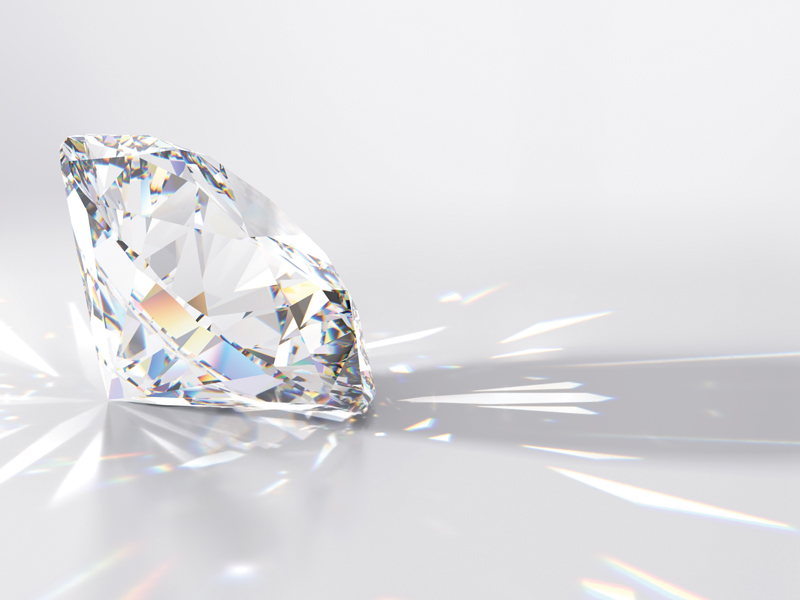
“They’re a wonderful option for certain customers,” says Alon Bernstein of B&B Diamonds in Austin, Texas. “Lab-grown diamonds offer…a big look without spending [the type of money required to buy the same size mined diamond].
If you’re still on the fence about these stones, read on to discover some of the reasons why you may want to introduce them to your work (they not only offer a bigger look, but also a bigger profit margin), as well as what you’ll need to know about selling them.
Growing Interest
According to Hurwitz, interest in the stones is coming predominantly from Millennial consumers, although he notes that a good minority of older buyers become interested once they learn about them. “Maybe they purchased a small diamond when they were younger and are looking for a larger diamond now,” he says. “That group is finding out that they can get a bigger stone for their budget.”
That’s the primary appeal for most jewelry consumers: Lab-grown diamonds offer them the chance to get a larger or higher quality stone for their money. While people of all ages like to get more for their money, it’s particularly appealing for a generation strapped with student loans but wanting to start the next phase of their lives, which often involves marriage, children, and mortgage payments.
“For the consumer, size is the big appeal,” says Harold Dupuy, vice president of strategic analysis at Stuller Inc. in Lafayette, Louisiana. “For the same budget, they can get a larger stone. It makes a difference.”
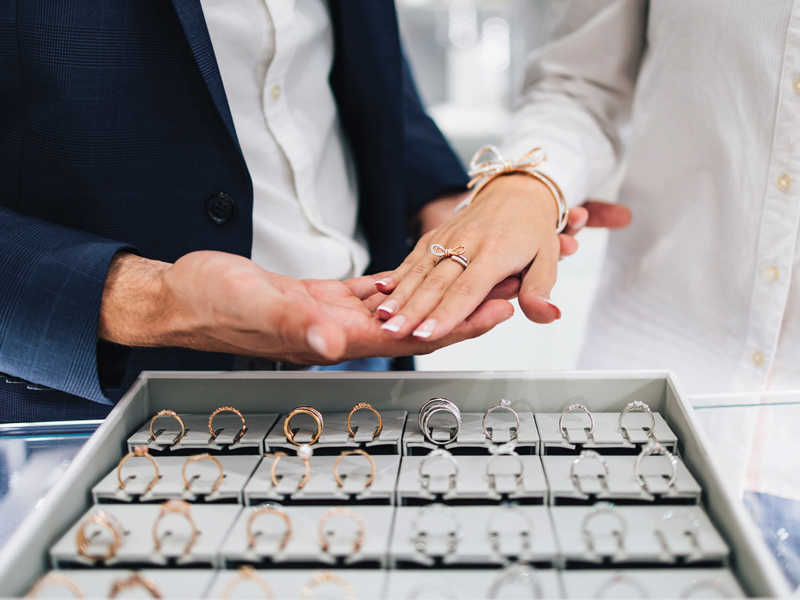
“When saying lab-grown diamonds will have no future value, one is missing the real meaning of the purchase: It’s not an investment, it’s a symbol of love.” —Harold Dupuy
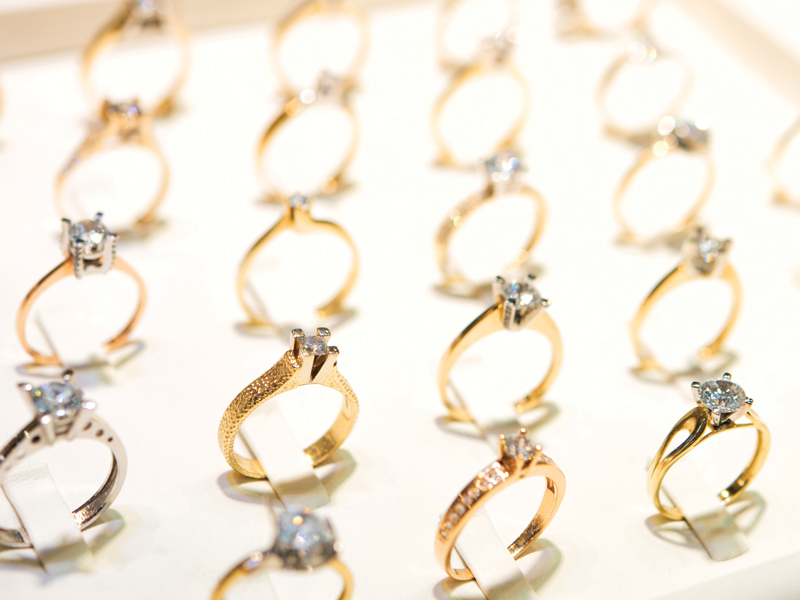
While some jewelers are focusing on highlighting the stones as part of fashion jewelry, others are seeing an increase in interest among bridal customers, primarily because they can get a big look for less. Spend any time scrolling through the engagement ring feed on Reddit and it will become clear: Bridal customers are embracing more affordable stone options for their rings, whether it’s lab-grown diamonds, colored gemstones, or moissanite. And with some growers now capable of producing larger, higher quality diamonds, jewelers should only expect the lab-grown bridal trend to continue to grow.
Jeweler Randy Hays of Celtic Jewel-scapes in Tucson has definitely noticed an uptick in interest among customers. “Public awareness has been getting much more widespread,” he says. “People are asking for them.” Last year, Hays says that “lab-grown diamonds outsold natural diamonds two to one and completely eliminated moissanite sales for us.”
And if you’re selling to those people, you need to make sure you’re prepared to talk intelligently about the stones. While some customers may have already done research into lab-grown diamonds, many will have not and may know only the very basics about the stones.
“If you’re going to sell them, familiarize yourself with how they’re created,” says Bernstein. “It looks bad if you can’t answer technical questions.”
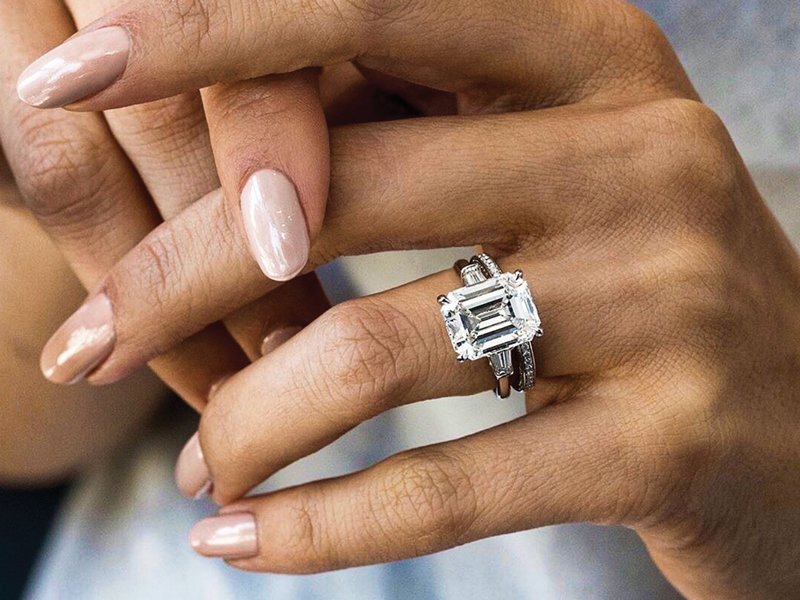
A growing number of bridal customers are drawn to lab-grown diamonds when they discover that they can get a larger or better quality diamond.
For Millennial customers in particular, Hurwitz suggests focusing on the technical aspect of how the stones are created. “They love tech stories,” he says, noting that lab-grown diamonds are “one of the most modern things the industry has to offer right now.”
In addition to giving customers what they want (and at a price point they’re comfortable with), lab-grown diamonds have better margins. While the price difference between a lab-grown diamond and a similar mined diamond will ultimately depend on the size, shape, and quality of the stones involved, a jeweler will typically get a smaller percent of the sale of the mined diamond.
“The margins on lab-grown diamonds are significantly better,” says Bernstein. “As a rule, you can probably double your profit” on lab-grown diamonds versus mined diamonds. “Don’t be afraid to make money.”
“It doesn’t pay for a smart retailer to encourage consumers to spend less on their engagement ring, but consumers love to get a larger diamond for their budget, and lab-grown diamonds are providing them that opportunity,” says Hurwitz.
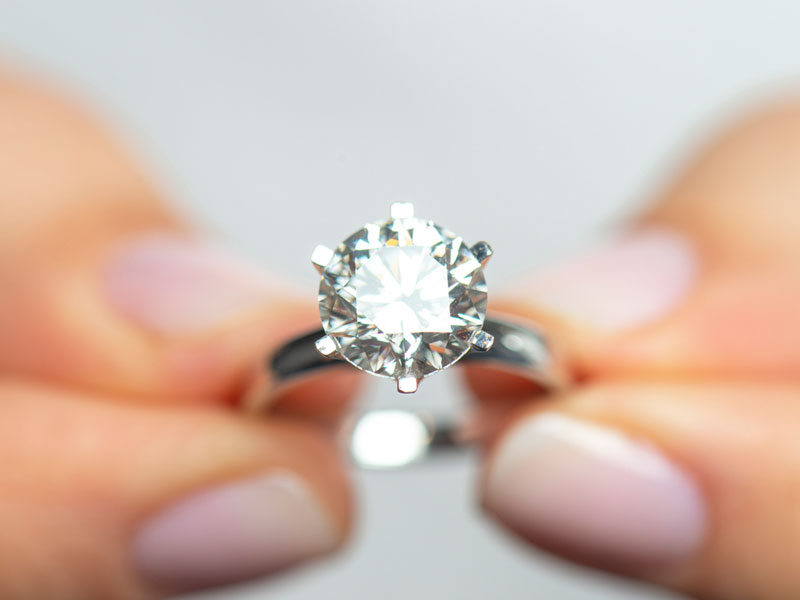
“I just let people know that they’re lab-grown diamonds. I don’t try and dress it up. I’m straightforward: they’re man-made and they’re less expensive. I don’t get much more into it than that.” —Randy Hays
“Most consumers have a budget and generally stay close to that, so they end up buying a larger diamond or higher quality, not reducing their planned spending,” confirms Dupuy, who notes that most surveys indicate that lab-grown diamonds purchased for engagement rings have approximately a 10 to 15 percent higher gross margin than their natural counterparts.
Hays says he doesn’t often have to discuss the differences between lab-grown diamonds and mined diamonds because his clientele often comes to him specifically asking for lab-grown. He estimates that he’s carried the stones for about five or six years, finding that they aligned with his desire to offer significant jewelry that didn’t have an outrageous price point. He says most of his clients don’t “want to spend $5k or $10k on a diamond.”
“I just let people know that they’re lab-grown diamonds,” says Hays. “I don’t try and dress it up. I’m straightforward: they’re man-made and they’re less expensive. I don’t get much more into it than that.”
And Hays always remains neutral on his customers’ final decisions: “Whatever you want, I can provide you with it,” he tells them.
Don’t Make It a Competition
Despite the growing acceptance of lab-grown diamonds among consumers, there are still jewelers in the industry who view them in a negative light when compared with mined diamonds. This can result in misinformation being passed along to consumers.
For example, some jewelers have been known to ask their consumers if they really want to buy a diamond that was “made in a microwave.” Not only is this factually incorrect, but it also demeans a legitimate product that has a place within the industry. And if those consumers later conduct their own research into lab-grown diamonds (as so many often do these days), they’ll discover that the jeweler provided them with wrong information, perhaps forever tainting their view of jewelers and the industry. An industry built on trust can’t afford to have any of its members out there peddling misinformation.
“A lot of jewelers hate the stones,” says Hays. “And they’re projecting onto their clientele what they’re thinking.”
Hays thinks that some jewelers’ resistance to lab-grown diamonds affects their overall sales approach. He knows of customers who are enthusiastic about lab-grown stones but, when they go into a jewelry store, are treated like second-class citizens. They’re told to get a natural diamond, or even that they don’t love someone enough if they’re not willing to spend more on a mined stone.
“As we transition to [lab-grown diamonds] being a significant part of our market, that’s incredibly short-sighted,” says Hays. “You don’t tell the customer what they should desire and what they should be getting. I think a lot of jewelers are making the mistake of being critical.”
“If consumers are walking in and asking about them, don’t debate them,” adds Hurwitz.
MJSA Webinar
Buying & Selling Lab-Grown Diamonds: What Jewelers Need to Know
Members: Watch Replay | Non-members: Order Recording
There’s also the argument that lab-grown diamonds will be worthless the second the customer walks out the door.
“The natural diamond industry has offered the premise that lab-grown diamonds will have no future value,” says Dupuy. “While lab-grown diamond prices have been declining as technology has improved over the past few years, no one can predict the future.” He also points out that natural diamonds aren’t necessarily a good investment for consumers.
“Try buying a natural diamond in a retail store today and return a year later to sell it back,” he says. “What percentage of the original sale price will the consumer receive? Most, if not all, luxury goods you buy today are going to lose value. When saying lab-grown diamonds will have no future value, one is missing the real meaning of the purchase: It’s not an investment, it’s a symbol of love.”
Bernstein cautions that lab-grown diamonds don’t retain as much of their value as mined diamonds typically do, and recommends jewelers focus on selling the product for what it is, not what it could be. “Sell it as a luxury item, not as an investment. Eliminate the entire value conversation.”
Keep ’Em Separated
If you’re going to carry both lab-grown and mined diamonds and diamond products in your facility, you need to have a clear way to keep those stones separated, and also be able to differentiate between them in case your separation methods fail.
“You need to be able to identify your inventory because your reputation depends on it,” says Dupuy. He explains that when Stuller first began to carry lab-grown diamonds, the company decided to maintain a separate space for the stones. “We created separate rooms, separate vaults, separate staff,” he recalls. “You have to pay close attention because contamination can easily occur.”
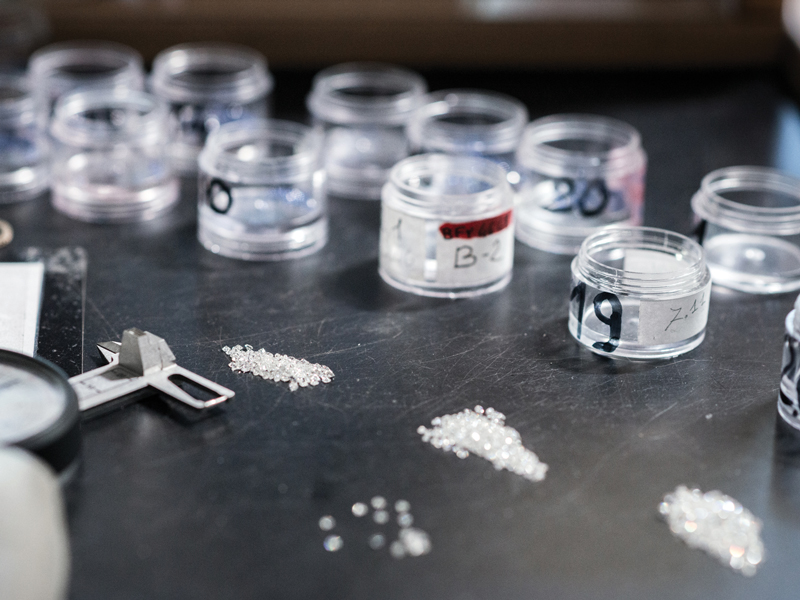
You need to implement a system to keep the stones separate. For example, you can keep natural and lab-grown diamonds in different colored containers, or have a policy so the two types of stones are never handled at the same time.
While not every company can afford to set up an entirely separate space for lab-grown diamonds, you need to implement a system to keep the stones separate. For example, you can keep natural and lab-grown diamonds in different colored containers, or have a policy so the two types of stones are never handled at the same time.
Even with the best work processes though, mix-ups can still occur. This makes it critical that you or a member of your staff be able to differentiate between the two stone types on-site. While many lab-grown diamonds will be inscribed on their girdles, some aren’t. And for those that aren’t, most jewelers won’t be able to tell them apart from their mined counterparts.
“You cannot tell the difference by visual appearance,” says Dupuy. He admits that there are a few indicators that gemologists who have kept up on the technology can use to determine if a stone is mined or lab-grown. Dupuy himself is a Fellow of the Gemmological Association of Britain, but he says that even with his training, he’d have a hard time differentiating between the two. “If I had to make a decision [about a stone], I wouldn’t make it without the use of advanced spectroscopy because Mother Nature can fool you.”
Part of the reason why is because the technology for growing diamonds is constantly evolving, which means indicators that worked on stones grown two years ago may not work on some stones being grown today. “They’re getting better with the recipe,” says Dupuy.
Hays, who is a Graduate Gemologist, says that he actively relied on his gem training earlier in his career. “But I sure wouldn’t want to be identifying things right now,” he admits.
That’s why having some sort of screening device on-hand is critical, says Bernstein. “You have to have something.” And that applies to even jewelers who refuse to carry or deal with lab-grown diamonds, especially if they buy from customers. Jewelers need a way to double-check that what they’re selling is what they say it is. (See “Shopping for a Diamond Screening Device” below.)
Hays admits that he doesn’t have a screening device, but that’s because he doesn’t maintain a stone inventory, doesn’t buy off the street, and rarely deals with natural diamonds. “It would be silly for a lab-grown diamond dealer to send me a mined diamond,” he says. “In my business model, there is zero concern about provenance.”
But even if you have multiple screening devices on hand, if you’re ever in doubt about a stone, don’t hesitate to send it out for further evaluation. In this trust-built industry, it’s always better to be safe than sorry.
And if a lab-grown diamond does slip through the cracks, Bernstein notes that it’s not the end of the world. If a mistake is made, reach out to the customer as soon as you learn about it, be apologetic, explain how the mistake was made, and then offer the customer a solution to fix it.
Use the Right Language
In its 2018 revised Jewelry Guides, the Federal Trade Commission (FTC) spelled out the language that should be used when describing both mined and lab-grown diamonds. According to those guides, a natural diamond can continue being referred to simply as a ‘diamond.’
“If you’re saying diamond, it implies that it’s a natural diamond that comes from the earth,” says Sara E. Yood Esq., deputy general counsel for the Jewelers Vigilance Committee (JVC) in New York City. “You don’t have to say natural. There’s no qualifier necessary.”
On the other hand, a qualifier is need-ed when referring to lab-grown diamonds. The FTC recommends using “laboratory-grown” or “lab-created” as qualifiers, or identifying the specific name of the stone’s manufacturer (i.e., “[manufacturer’s name]-created”). It does allow for some leeway with the qualifier, and jewelers can use other, more creative expressions so long as they still make it clear that the stone is lab-grown.
However, Yood points out that the FTC is keeping an eye on things, so jewelers would be wise to make sure that whatever verbiage they use, it’s crystal clear that the stone in question is man-made. She notes that in 2019 the FTC sent letters to several lab-grown diamond sellers regarding not disclosing things well enough. For that reason, Yood says that the JVC recommends sticking to the three terms specifically spelled out by the FTC.
“If you’re saying diamond, it implies that it’s a natural diamond that comes from the earth.” —Sara E. Yood Esq
Jewelers should also be aware that when the new FTC guides were released, they were revised to remove the term “synthetic” as a description for lab-grown diamonds. Yood believes the FTC no longer recommends the term because “some consumers are confused by the word.” However, she also notes that the term “synthetic” is “often practical when…translating from other languages. In most countries, it’s a fine and approved term. It’s potentially confusing for consumers, but it’s not banned from use.”
Also, be aware that this specific language is reserved solely for lab-grown diamonds. “Simulated diamonds can’t be lab-grown,” says Yood.
While some jewelers may continue to use inappropriate language when describing lab-grown diamonds, Yood believes that they’re pushing their luck. “[The FTC] is paying attention to this,” she says: If the commission saw something, it wouldn’t hesitate to contact the non-compliant business.
Although the FTC guides are just that—guides, and not rules or laws—the FTC does have the power to enforce them. Initially, it might start with a warning letter. If the conduct continued, the FTC could start enforcement against the jeweler. “They have the power to regulate trade and ensure consumers are not being deceived,” explains Yood. That power could involve fines and eventually even a lawsuit against companies that refuse to comply.
Yood also points out that it’s not just the FTC that can take action against non-complying jewelers. “A group of consumers in a class-action lawsuit can sue,” she says. “Competitors and trade associations can also sue you.”

“Lab-grown diamonds require a heavy amount of electricity to grow. They’re replicating Mother Nature with hundreds of thousands of pounds of pressure and extremely high temperatures. It is very difficult to call it eco-friendly.” —Harold Dupuy
In addition to guidelines for how to refer to lab-grown diamonds, there are restrictions on how companies can advertise them and the process used to create them. Although these guidelines fall under a different set of FTC guides (the Green Guides), they still require companies to be accurate in how they represent the stones.
The biggest mistake Dupuy sees jewelers make is to call lab-grown diamonds eco-friendly. “No landmark conclusive study has proved that to date,” he says. While he admits that some lab-grown diamonds are being produced in more eco-friendly ways, such as the U.S.-based WD Lab Grown Diamonds that was granted a Certification Standard for Sustainable Diamonds by the global audit and standards firm SCS Global Services, that’s all that should be used to explain a stone’s origins.
Many consumers, particularly Millennials, are likely to come in believing that lab-grown diamonds are the more sustainable and responsible option. Jewelers would be wise to explain that while the stones weren’t dug out of the ground, there was still a lot of energy involved in making them, and that energy had to come from somewhere.
“Lab-grown diamonds require a heavy amount of electricity to grow,” says Dupuy. “They’re replicating Mother Nature with hundreds of thousands of pounds of pressure and extremely high temperatures. It is very difficult to call it eco-friendly.”
If you know that the lab-grown diamonds you source are produced in an eco-friendlier manner, such as by using solar or hydropower, be sure to stick to the facts when describing the stone’s origins. And when in doubt, be specific.
“Don’t just tell me that your product is good for the environment. I want to know how,” says Yood, speaking for all consumers.
Yood notes that the Green Guides are scheduled to be reviewed this year for the first time since 2012. And given how much attention today’s consumers are paying to eco-friendly and responsible products, she says that the industry should “expect some significant changes.”
She also notes that misinformation isn’t just being used on the public; wholesale suppliers have also been found using deceitful promotions. Yood explains that some suppliers are using the terms “CVD” (Chemical Vapor Deposition) and “HPHT” (High Pressure/High Temperature) on their websites to indicate that the stones they are selling are lab-grown diamonds, but those terms could apply to natural diamonds or treated CZs as well.
“These requirements apply at all levels of the trade,” says Yood. “For the wholesaler selling through its website, just saying ‘CVD’ [on a general page] isn’t enough. Each individual listing needs to carry that information. They need to have the right information so they can make honest sales.”
Finally, regardless of whether you decide to carry them or not, it’s important to recognize that while lab-grown diamonds aren’t going away, neither are natural diamonds.
“Both sectors are growing,” says Dupuy. “It’s a consumer choice and there’s room for both (provided full disclosure to the buyer), and as long as there’s still growth, the total pie grows. It’s a good thing.”
Shopping for a Diamond Screening Device
Any jeweler dealing with diamonds, whether mined or lab-grown, needs to have a device (or two) on-hand that can differentiate between the stones.
According to Dupuy, there are two types of machines on the market: screeners and testers. Most jewelers will get by just fine with a basic screening device, which simply separates most lab-grown diamonds from natural diamonds. Most have high accuracy rates, though Dupuy notes that stones that get flagged for referral need to be sent to an outside laboratory for verification.
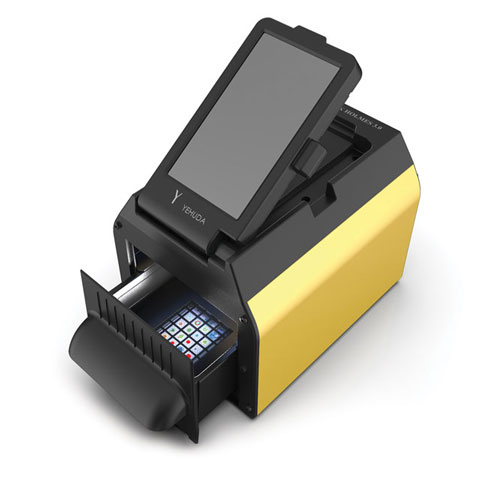
There are several dozen screening systems on the market. Dupuy recommends jewelers look at the Natural Diamond Council’s ASSURE Project for information on the different devices available for jewelers. The project has evaluated 33 devices and, while it won’t tell you the best one to buy, it does provide the test results, allowing jewelers to determine which device will meet their needs.
When it comes to shopping for a screening device, you should first consider your needs and the primary use of the machine. Will you be screening loose stones, mounted stones, or a mix of both? How many stones do you need to screen per day? What size stones will you most often screen? What shapes and color range of stones will you screen? Do you want the results to be immediate and understandable, or is it ok if they need to be interpreted by someone with gemological knowledge? Do you need a device that’s portable? Compile as complete a list as possible, and then use them as the foundation for the questions you’ll pose to a device’s seller.
“Ask a lot of questions,” recommends Dupuy. “Is it ASSURE tested? What’s the false positive rate? False negative rate? Accuracy rate? Speed? Warranty? Service? Training?”
And then there’s perhaps the most important question: What can’t it do? “Every machine has a blind spot,” says Dupuy. “If they say [a machine] can do it all, walk away.”
Regardless of the machine you decide to buy, read the operating manual and follow the directions explicitly. Failure to follow operating instructions will result in less-than-optimal performance.
Finally, don’t count on investing in one machine and then not keeping up with developments in the field. Lab-grown diamond manufacturers are constantly tweaking their growth methods, and as those change, so too will the instruments needed to detect them. Stay up to date on any advancements and make sure you always have a device capable of detecting the latest lab-grown creations.