

On the Fly
Creating an impromptu jump-ring jig
By Helen I. Driggs
It never fails: Students will always ask me to demo something that was not technically on the menu, and when I am far from home, I’ll inevitably need to scramble. I was recently asked about making a large quantity of jump rings and, of course, at that time, I didn’t have my jump ringer set, wooden dowels, or even a set of bent-nosed pliers in my travel toolbox, so I had to make do with what I could scrounge up in the art room. My solution actually worked out well, so if one day you find yourself without a jump ring making set, you may find it helpful, too.
For this project, you’ll need a Sharpie, a ruler, a paint stick, a C-clamp, and a wood dapping/forming block.
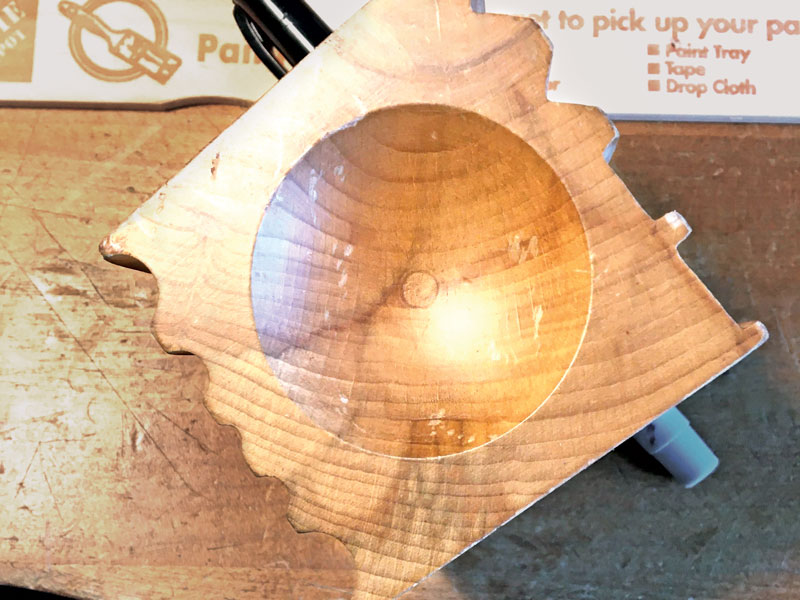
1. When facing this type of situation, first assess what you have on hand. In this case, I had one wood dapping block with curved and V-shaped grooves, a few paint sticks, and quite a few C-clamps for portable bench pins. In a pinch, a scrap or two of plain wood could have worked, but I would somehow still need to carve a V groove in it for the coil of rings to rest in.
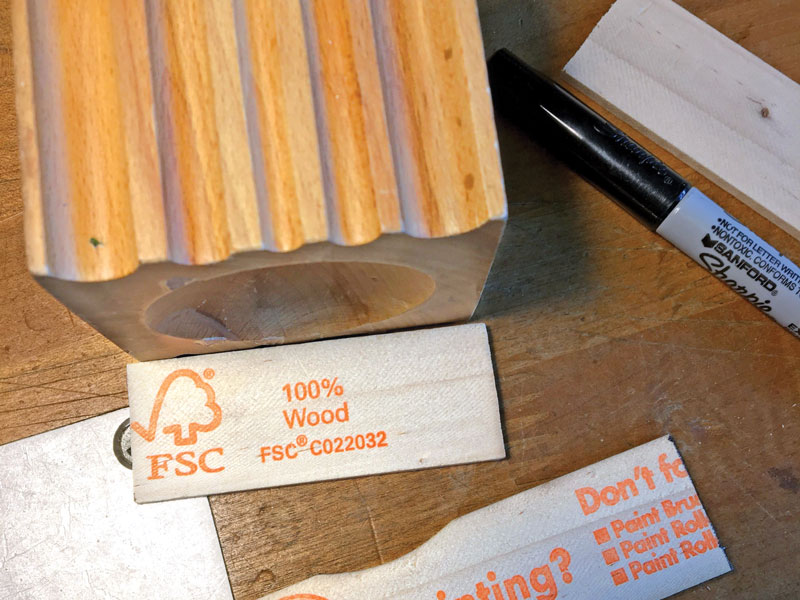
2. First, I sawed a paint stick into three sections: one about 5 inches long, including the dipping area of the stick near the handle, and the second at the width of the block (in this case, 3.5 inches). The third part is a leftover you won’t need for this project.
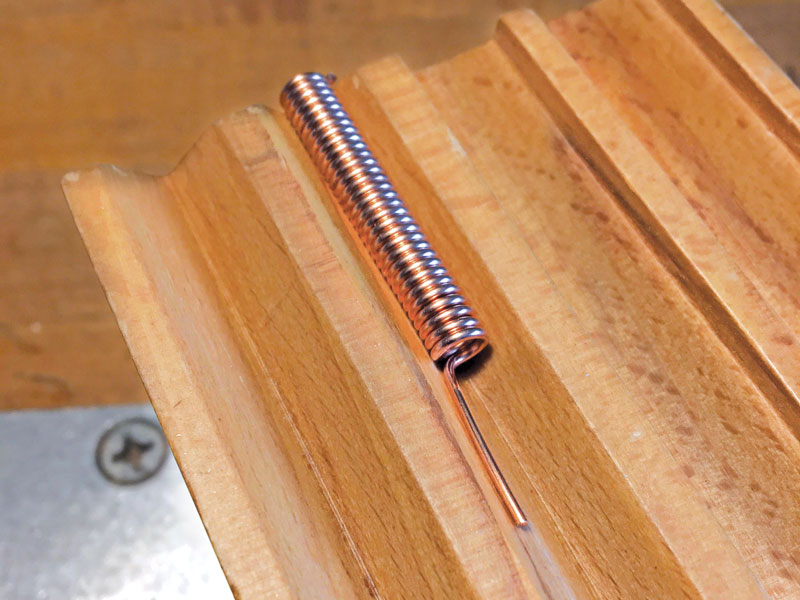
3. To use the jig, rest the non-sawn coil of rings in one of the grooves of the block. For this experiment, the V-grooves held the coil more securely than the curved ones, but use whatever works best for your rings. These rings were made from 18-gauge copper wire coiled on a 4 mm mandrel that I made from a finishing nail.

4. Sandwich the dapping block, rings, and paint stick sections within the C-clamp as shown. The short section of paint stick protects the backside of the block from being damaged by the clamp. Try to position the longer section of paint stick so those dips sit over the coil of rings, making it easier to see what you are sawing.

5. To saw the rings, rest the clamp assembly on your bench pin and saw the uppermost rings at the dip. You will saw into the paint stick, so make a guideline if you need to. A benefit of the large block assembly is securely holding tiny diameter ring coils. This solution saves saw blades, prevents cut fingers, and radically reduces hand fatigue, plus it’s easier to saw a very vertical cut, making it a good option for beginners.
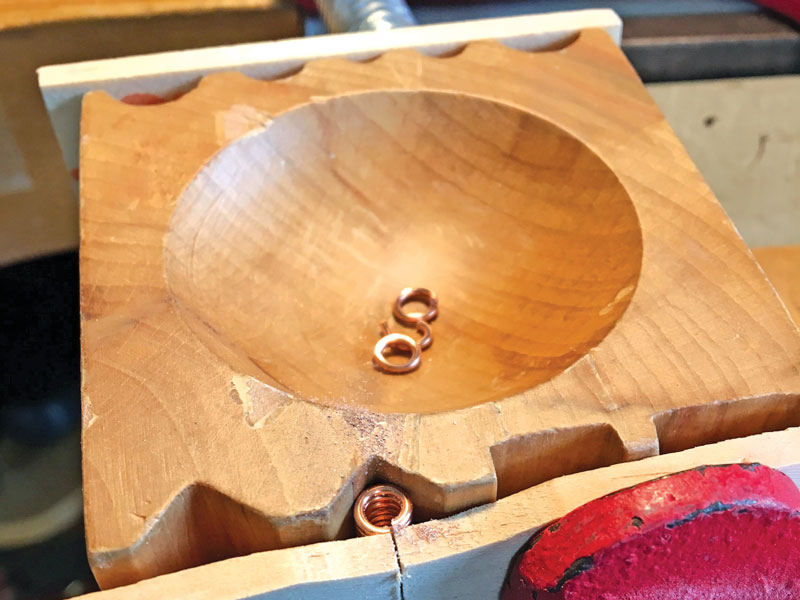
6. You can speedily saw through a coil of rings with them held in this jig, and the bowl in the block is a handy place to collect them as you go. Simply loosen the clamp a bit and push the coil up to expose more rings, using a pencil or center punch as a pusher.