

Cut It Loose
Sometimes subtraction is the best thing for your business
By Andrea Hill
I recently read an article about the genius of balance bikes, which are a toddler bike alternative that teaches children to balance on two wheels by pushing along with their feet rather than learning to pedal with training wheels. The author was pointing out that sometimes the most creative solutions come from removing an element, not adding one.
This is true in business as well. We spend so much time trying to figure out how to add elements to our business: more technology, people, services, products. But how often do you stop to think about the power of removing something from your business? Typically, business owners only use subtraction when it comes to labor or other cost cuts. But cost-cutting is a zero-sum game. Let’s examine a few eliminations that could increase your creativity and productivity.
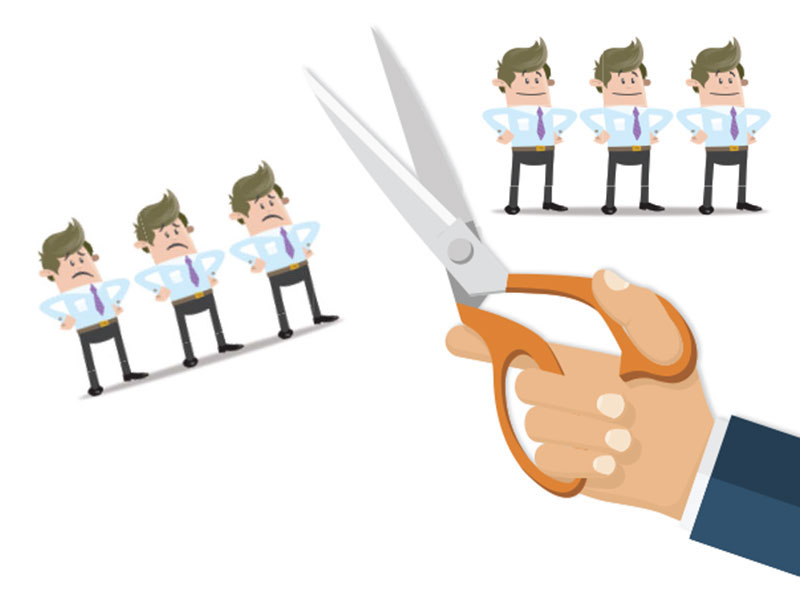
Excess Inventory
This isn’t news, but it’s so important it always bears repeating. A safe full of gemstones that have never been used, drawers full of old findings, and shelves or cases with not-moving finished or semi-finished goods are not just dusty piles of unused cash, they take up precious space. They take up physical space that could be used for other things; time and attention space whenever they must be moved, sorted, or counted; and creative space when we strain to figure out how to use them rather than envisioning what we could design or make from a blank sheet of paper. Sell it, trade it, melt it, donate it, but don’t let dusty old inventory take up any more potential in your business.
Old Styles
Choice is good, except when it’s not. Our industry tends to create endless catalogs of products, adding new styles but never retiring old ones. You have the molds and masters, so why not use them, right? But in most cases, that’s wrong. Except for, at most, a handful of evergreen best-sellers, most businesses benefit from reducing product offerings.
When you keep a tight rein on your product offerings, production management and quality improve, which reduces costs in customer service and support. But the real benefit comes in selling and marketing. Offering too many choices overwhelms buyers and increases the risk that buyers will not select anything at all. Implement product lifecycle management disciplines (which include consistently retiring styles) and your marketing and sales efforts become more focused and effective while making the options clearer and more appealing to your buyers.
Outdated Policies
Organizational behavior and decision-making are often entrenched in company policies that may not have been evaluated for years…or even decades. Outdated policies may fail to comply with new laws and regulations, leaving you exposed to accidents, fines, or even lawsuits. That’s reason enough to do an annual policy review. But what often goes unnoticed is that outdated policies may fail to address new systems and technologies, what those technologies make it possible to do in our businesses, and how those possibilities influence employee and customer expectations and satisfaction.

Organizational behavior and decision-making are often entrenched in company policies that may not have been evaluated for years…or even decades. Outdated policies may fail to comply with new laws and regulations, leaving you exposed to accidents, fines, or even lawsuits. That’s reason enough to do an annual policy review. But what often goes unnoticed is that outdated policies may fail to address new systems and technologies, what those technologies make it possible to do in our businesses, and how those possibilities influence employee and customer expectations and satisfaction.
Policies related to strict dress codes, static schedules, prohibiting distance work, forced (also called stacked) employee ranking, management hierarchies, and employ-ee flexibility can keep you from attracting and keeping the best employees.
On the customer side, policies that prevent you from implementing modern ordering and payment methods, force clients to go through “escalation steps” to resolve problems, get in the way of inter-team collaboration on behalf of customers, cause your salespeople to collect the same information from clients multiple times (usually due to disconnected systems), make it difficult for customers to communicate with top management, or require customers to use communication methods that are convenient for you but inconvenient for them imperil your long-term customer value proposition.
Companies often find they can retire old policies without implementing new ones. Many of the rules that were once necessary to manage employee behavior and customer transactions have now been replaced by systemization. If your team is still following those old rules, they could be wasting time, wasting (or losing) potential, and turning off customers.
Outdated or Unused Systems
I recently advised a client to dump her POS system and just use her website to process sales—even in the store. Sound radical? Well, she was paying for an expensive jewelry industry POS system, but only using it to create repair tickets and insurance documentation. Her processes were otherwise completely manual. Our plan is to implement modern systems that allow her to manage her accounting, inventory, and website seamlessly. But until then, that POS system was like a giant rock parked behind her counter, sucking up cash and delivering extraordinarily little in return. Getting rid of that system was so freeing.
If your computer systems take forever to boot up or load applications, if you’re still using Windows 7 because your computers can’t handle the update to Windows 10, or if your internet access is spotty, you’re missing out on business opportunities that can be pursued with better technology tools. If you’re overspending on support to maintain and repair technology, you’re likely missing out on the cost-savings of newer technology. If your phone system is still hardwired, you’re missing out on the opportunities that come from smart communications and routing available with VOIP systems. And, of course, as technology ages, it becomes more vulnerable to security breaches.

When people consider upgrading systems, they fixate on the cost and effort involved in the upgrade. But it’s at least as important to think about the benefits of getting rid of the old systems.
Unused Space, Tools, Equipment, and Fixtures
At one time, I ran a jewelry manufacturing company that had spent years accumulating manufacturing equipment. There were a lot of treasures, but the collection took up 30 percent of our manufacturing space, waiting for the day when it could be repaired, repurposed, and made productive. We aggressively sorted and organized the lot using the 5S System and freed up all that space, keeping just a few choice pieces.
I’ll never know if the things we got rid of would have eventually become useful and profitable. But I do know that the space was converted into highly productive manufacturing space immediately, and that the few pieces we did keep, which had been waiting for years to be put into action, became productive within months.
I don’t care how gorgeous that old hy-draulic press is. If it’s just a paperweight, it’s taking up space and energy that could be used more profitably.
We humans aren’t wired to get rid of things—it seems there’s a little hoarder in all of us. So, you’ll have to be intentional about eliminating things, since it probably won’t come to you naturally. But if you make the effort, you’ll get surprising, often delightful, and almost always profitable results.