

Words Matter
Understanding the importance of SEO
By Andrea Hill
When my son was a teenager, I could always tell when he was texting with a girl. Every few minutes, he would call out, “Mom, how do you spell…?” I was so glad he was interested in spelling words correctly that I didn’t complain, but I was curious. Why, I asked, did he care about spelling when communicating with girls? His answer was that words matter when you are trying to impress someone.
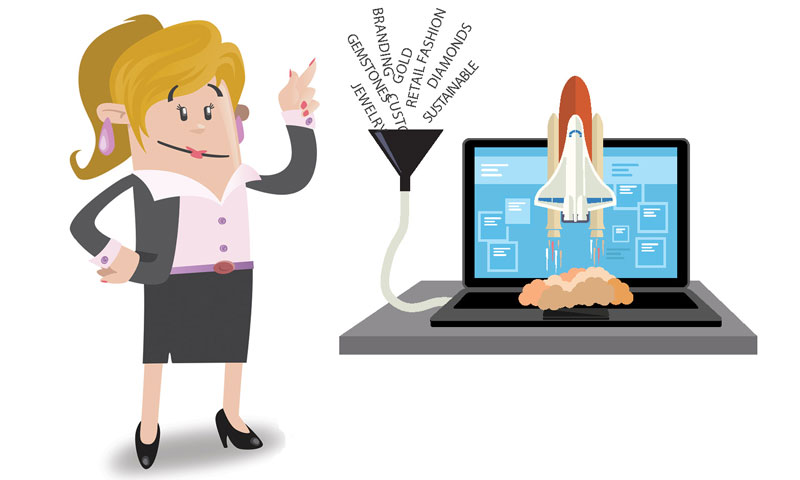
Words really do matter when you’re trying to impress someone. And since you are reading a trade magazine right now, I feel reasonably confident that you are al-ways trying to impress someone.
You may also be one of the multitude of small business owners who devoted time, money, and energy to creating a website and are now wondering why you have so few visitors. If you went looking for help, you’ve probably also received some (expensive) advice on this topic, such as to hire a Search Engine Optimization (SEO) consultant or agency to bump up your SEO or to spend a few thousand dollars a month on online and social media advertising to build website traffic.
Those aren’t bad ideas, but they may not be the right ideas for you. Unless you sell a low-priced (under $50) product that has broad consumer appeal, it can be very difficult to get a sales return for online advertising. But one good surprisingly affordable idea for any company selling any type of product is to start doing a better job of impressing people with words.
But let’s step back a moment. You have heard all the advice about how terrific pictures are the difference between a mediocre website and an excellent website, and it’s true. And you probably know that website visitors absolutely eat up video and GIFs. But what you may not realize is that videos, GIFs, and images won’t do a thing to improve your SEO. That’s because search engines don’t search visuals—they search for words. Words are the fuel of SEO, and SEO is ultimately the most cost-effective and relevant way to bring new visitors to your website.
What is SEO?
According to Moz, a reputable online SEO service, SEO is the “practice of increasing the quantity and quality of traffic to your website through organic search engine results.” As internet users search for services, information, and products, they are presented with links. Those links can bring searchers to your website, and you can capitalize on those visits to turn guests into customers.
Think of SEO links like a savings account. If you started saving in your teens, those savings-plus-interest add up over the years, resulting in a tidy nest egg. Similarly, the more words you produce in your website, the more those words add up as links, and eventually, you build “link juice”—a vast catalog of links that ensure new searchers find your website every single day.
The two simplest ways to add words to your website are through new product listings and blogs. If you carry thousands of products, and introduce new products daily or weekly, then you may not need a blog. Just make sure that you write a descriptive and specific paragraph about every single product. But if you don’t carry that many products, you need a blog. It’s the only other way to regularly add enough new information to keep the search engines happy.
Yes, you need to keep the search engines happy. Search engines are competing for customers too, and the way they compete is to get searchers to the information they seek in the fastest time with the fewest clicks. If they notice that your website hasn’t had new information in a while, if you have very few links, or if customers click to your website and go right back to the original search looking for another answer, then the search engines won’t recommend your site in the future. Search engines look for websites they can rely on.
The Power of the Pen
If you post a blog at least once each week, and if that blog is interesting enough to keep someone on your page when they click the link, and if that visitor then feels curious enough to click on other parts of your website, you can keep the search engines happy. More important, you can convert searchers into customers. In fact, most jewelry businesses would be much better off paying a writer to produce an article a week than paying for extensive online advertising.
So what should your blog be about? It should tell the story of your brand and your products in many different ways. Don’t worry about overlap between stories. You’re not trying to be a journalist writing for subscribers or a tough editor. You’re writing for SEO benefit, to create many relevant, interesting links that will attract people to your website. Don’t worry about being a novelist or the next great essayist either. Spelling and grammar are important, but your goal is to be a storyteller. And you, my jeweler friend, have great stories to tell! You dabble every day in the stuff of luxury—playing with metals, handling diamonds and colorful gemstones, and working with people celebrating important milestones.
Some business owners object to the importance of fresh writing on a website, claiming that “nobody wants to read anything anymore.” I’m not even sure if that’s true (after all, you’re reading this, aren’t you?), but what I do know is this—even people who don’t read, search.
Words are the bait that can bring new visitors to your site. If you do a good job of telling stories that are relevant to your brand and your products, the search engines will find the meaningful words in those blogs and turn them into links. So if you decide to do one thing this year to improve your marketing, decide to blog. Because words matter when you are trying to impress someone.