

Singing the Blues
Blue-hued stones expected to be the talk of Tucson
(Originally Published by MJSA February 2020)
By Deborah A. Yonick
Gemstones in blue hues are expected to be among the favorites at the Tucson gem shows in early February. Blue’s popularity in jewelry is a direct result of fashion’s affinity for the color—Classic Blue is Pantone’s Color of the Year for 2020, and its spring palette includes three other blue hues: Navy Blazer, Mosaic Blue, and Faded Denim.
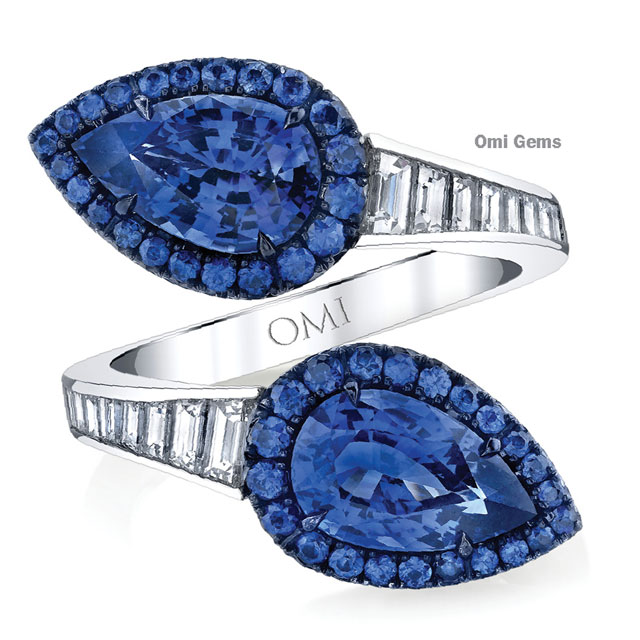
Gemstones in blue hues are expected to be among the favorites at the Tucson gem shows in early February. Blue’s popularity in jewelry is a direct result of fashion’s affinity for the color—Classic Blue is Pantone’s Color of the Year for 2020, and its spring palette includes three other blue hues: Navy Blazer, Mosaic Blue, and Faded Denim.
In fact, during the past 20 years that Pantone has crowned a color of the year, blue shades have topped the list six times: light sky blue Cerulean (2000), Aqua Sky blue (2003), Blue Turquoise (2005), Blue Iris (2008), Turquoise (2010), and Serenity Blue (2016).
As Laurie Pressman, vice president of the Pantone Color Institute, expressed in an interview with the Associated Press: “Everybody’s comfortable with blue. We know it. We like it.” Classic Blue, she said, highlights the relationship between trends in color and what’s taking place in our global culture, reflecting what individuals feel they need that color can hope to answer. The current call is for calm and confidence.
The Reigning Blue Champ
When it comes to blue gemstones, sapphire continues to reign supreme.
“There’s a huge trend for blue sapphire,” says Jason Stephenson, geologist/gemologist from Pala International in Fallbrook, California. According to Stephenson, it’s the most called-upon gem. From 7 x 5 mm stones for filling in mountings to large 30-carat, no-heat Burmas, sapphire maintains its allure, he says.
Sapphire is expected to be the bestseller in 2020 and really has been the strongest performing color stone in the western market for decades, says gem market analyst Stuart Robertson for The GemGuide. Driving this is sapphire’s durability, range of colors and price, and name recognition.
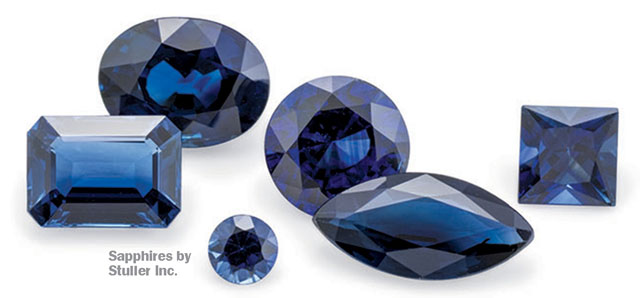
Undoubtedly, blue sapphire sets the standard by which other blue stones are measured, says Ashley Labat, studio manager for Stuller Inc. in Lafayette, Louisiana. “As one of the ‘big three’ precious stones, sapphire’s breathtaking blues have captured our imagination and inspired designs. Within blue, there are many variations from lighter to darker shades, and some with a hint of gray.”
Rio Grande, which has been promoting American-mined gems for the past few years, notes that Montana sapphire is a bestseller. “It can be a more true blue, but [stones] in shades of teal are proving to be popular,” reports Kevin Whitmore, product manager for the Albuquerque, New Mexico–based jewelry supplier.
Other Stones Feeling the Blues
If sapphires aren’t your thing, there will be plenty of other blue stones to be found in Tucson.
In addition to sapphire, Stephenson notes that “rare, collectible stones like blue spinel and Paraiba tourmaline” are also trending.
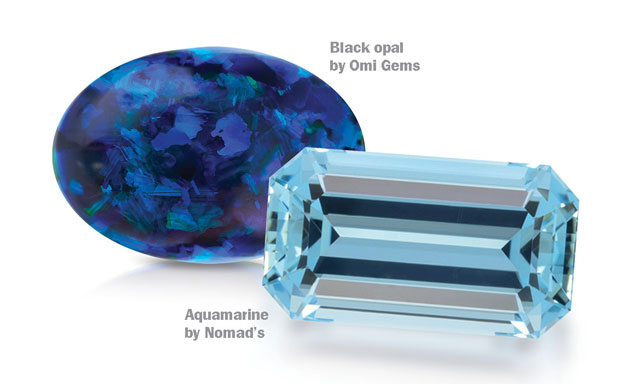
“With Pantone announcing the 2020 color of the year as Classic Blue, we believe this ever-popular color will be even more so for the coming year,” says Naveet Nagpal of Omi Gems in Los Angeles. “We love expressing bold pops of blue with sapphire, black opal, spinel, and blue sheen moonstone.” He notes that all of these gems have been especially popular with his collectors, particularly moonstone paired with sapphire and alexandrite.
Robertson reports in The GemGuide that the wholesale market is seeing more opal, especially boulder. It’s unclear if there has been an uptick in production, he notes, but he has seen interest grow for the gem among young designers and jewelers looking for unusual and affordable color, with prices remaining stable in the major categories.
In a recent AGTA Prism report, gem merchant Bear Williams of Bear Essentials in Jefferson City, Missouri, shared that blue zircon is one of the best values in the gem market today, and a surprisingly hot seller for many of his clients. Blue zircon comes in lively pastel hues with some exceptional stones possessing striking bright blue colors. In addition, zircon has a higher refractive index than sapphire, tanzanite, and spinel, allowing the stone to appear more brilliant.
Beyond Blue
If your inventory is already overflowing with blue-hued stones, there will still be plenty of other colored stones to shop for in Tucson. Robertson predicts that red spinels and garnets will be particularly popular at the gem shows as an alternative to ruby, which has been very expensive in most of the better grades.
And there’s good news if you’re shopping for these stones, as Robertson expects gem price points to be lower in 2020. “In general, active prices have been coming down in recent years for all but the finest material. This trend is one reason growth in demand for gems like zircons, garnets, tourmalines, and beryls will continue in Tucson.”
According to Robertson, key price points in color stone jewelry are under $100, between $200 and $500, and between $1,500 and $2,500. Robertson notes that when he started collecting this data 22 years ago, one of the strongest price points was $4,500 to $7,500. He attributes this shift to the debt load many Millennials are carrying as well as to a shift in what constitutes jewelry, citing growing interest in nonprecious materials.
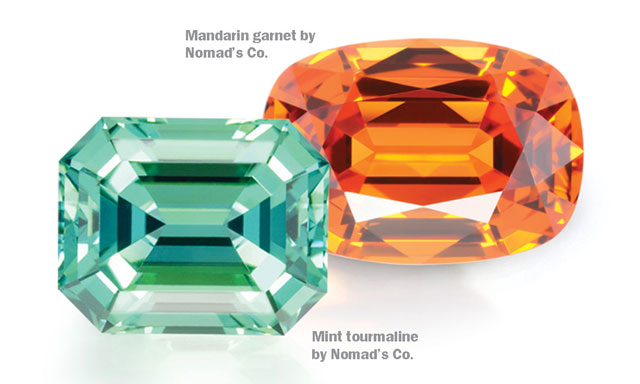
Tracy Lindwall from the New York-based Nomad’s Co. has found that jewelers and designers have been gravitating to less common gem colors in order to tell unique stories about their jewelry. As a result, the gem house plans to bring lots of new gems to Tucson, including tourmalines, tanzanite, chrysoberyl, spinels, garnets, and aquamarine.
“The tourmalines are a vibrant pastel mint, and we’re excited to share this new production from Namibia in Tucson,” says Lindwall. “We also have some beautiful peachy Malaya garnets in small sizes that make great accent stones. [While] the classics are selling well, we find people are looking for unusual colors in each gem type, [such as] yellow/orange tourmalines, peach and mint garnets, and purple and blue spinels.”
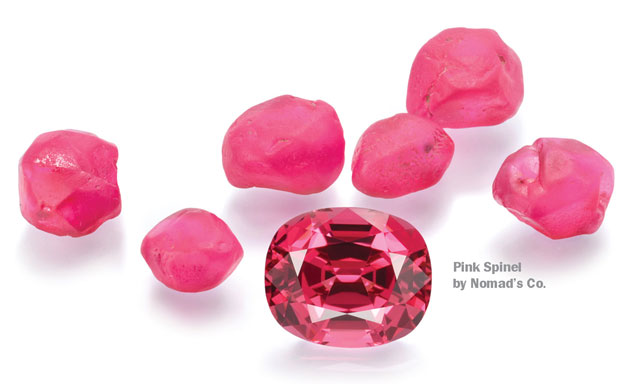
And it’s not just unusual colors that have been catching jewelers’ eyes. “We’ve noticed designers gravitate more toward kites and trillions as well as cuts with unusual facet patterns,” says Lindwall. However, she notes that classic shapes such as oval and antique cushion remain wildly popular and she doesn’t see that changing any time soon.
Beyond Color
Robertson expects to see in 2020 a fairly similar pattern of consumption to last year. “In spite of a general slowdown and shifting marketing models at retail, color stone sales have been outpacing most other product categories,” he reports. “We expect increased growth again this season from online sales and better independent jewelry stores.” He finds the hottest sectors for color have been among young designers, small boutique artisans, and the wedding ring sector.
The big issues of 2020 will revolve around sourcing and supply, says Robertson. “The public is starting to become more aware of environmental and sourcing issues associated with gem and metal mining in certain areas. The trade will have to confront some of these issues, like silicosis in the rural bead cutting plants in India and gold mines in China.”
He underscores that young consumers and designers are turning away from industry product areas of concern. He points to companies such as Columbia Gem House (CGH) and its Fair Trade Gems as finding great success with this demographic via its Instagram outreach.
“These social media platforms have helped dealers like [CGH’s Eric] Braunwart, who [are] operating with verifiable and transparent corporate practices, convey the story of the people and communities that produce the gems these young designers are able to share with their customers,” says Robertson. “The gem trade is not built on rocks; it’s built on the stories about the people, cultures, and places from where stones come. Today, messaging is more important than ever.”