

Best Buy
Tips for buying an established jewelry operation
By Sharon Elaine Thompson
You’ve been working and studying the craft of jewelry making for years, learning the tricks of the trade under grizzled industry veterans. Now you’re finally ready to step out on your own and be the boss. You dream of opening your own shop and having complete creative control over the business—everything from location and layout to products, services, and policies. But before you get too swept up in your dream of building your own business from the ground up, first stop to think about whether or not it would make more sense to buy an existing business.
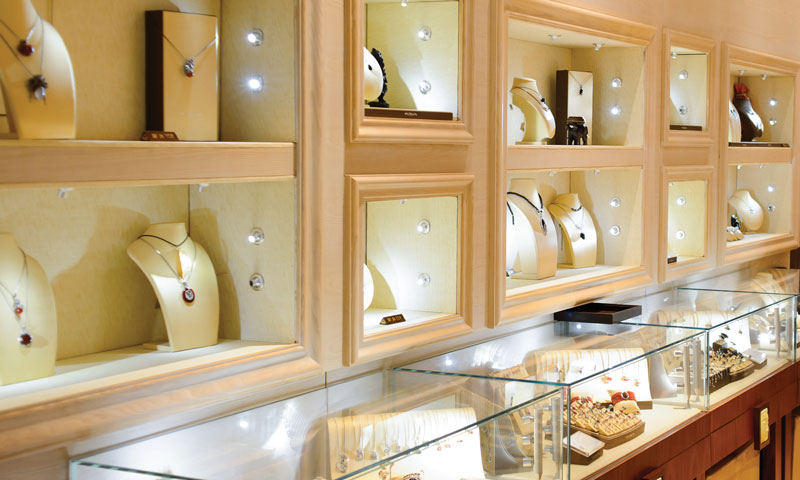
Every year, businesses in the jewelry industry shut down. While some close as a direct result of not being able to survive in competitive times, many others simply shut down because the owners are ready to retire and their descendants have no interest in taking over the family business. This means that there are many up-and-running businesses that could potentially be up for sale…and just waiting for someone like you to come along.
While buying an established business is easier in many ways than having to start your own from scratch, there are some pitfalls you’ll want to avoid. To help walk you through the process of taking over a business, we spoke with industry experts about what you’ll need to be aware of and what you should expect should you follow this path to being the boss.
Is This Right for Me?
The greatest benefit to buying an existing business is that you don’t have to reinvent the wheel. The business exists. The products and services are already in place. The marketing and promotional materials have already been designed and stocked. The management systems are established, and the staff has been hired and trained.
In addition, getting financing is usually easier than if you were trying to start your own business, as the company has already proven it can succeed. It has a clientele and a cash flow. It’ll be ready for business on day one of your ownership.
But that doesn’t mean that there isn’t a downside. The cost is likely to be greater than if you were to start from scratch. Instead of starting small and building up the business over time, you’ll be buying the entire existing business—inventory, fixtures, equipment, intellectual property, and the real estate or lease.
That’s why, before you do anything, you need to think seriously about whether you want to do this and make sure you go into it with your eyes fully open.
Finding a Business
If you decide that this is the path you’re going to take, the first big thing you’ll need to do is to find a successful business to buy. A lot of small jewelry businesses are “not very good,” says Bill Boyajian, an industry consultant who specializes in succession planning for jewelers. “Most jewelers who have a small retail store are more or less working for wages. They’re mom and pops scraping out $80,000 to $100,000 in salary a year.” He once had to advise a client that a family business wasn’t worth buying. “It was bringing in so little and had so much dead inventory, my client was almost better starting from scratch.”
An underperforming business that looks like a bargain may well come with hidden issues, financial or other. “You get what you pay for when you buy a business,” says Andrea Hill, owner of Strategywerx, a small business consulting firm in Chicago. “If a business is really cheap, it may have dead inventory and an underdeveloped customer base. You’re better off buying a very successful business and paying a decent price for it, than to think you’re getting a bargain with a ‘fire sale.’”
The best business to buy is one that’s been around for long enough to establish a good reputation. You should have enough experience with the services offered by the business to be able to do the work, such as watch repair, casting, or custom design, or to evaluate the quality of the service and the employees doing the work. The business should be up-to-date, and the location should be accessible to the business’s targeted customers.
Sometimes the best business to buy is the one you’re working for since you’ll already be familiar with it. “If someone is an employee, and knows the owner doesn’t have any family to take over, buying [the business] might be a natural transition,” says Marlene Richey, an art/business consultant in Melrose, Massachusetts.
If you’re not taking over a known business, finding a successful business to buy is more difficult. However, most business owners start thinking about selling a business long before they put it on the market, and some will mention their thoughts to friends or trusted colleagues. At shows and events, talk to others in the jewelry industry about your intention to buy and see if they can put you into contact with an interested seller. You can even approach the owner of a business that interests you to see if the owner is interested in selling. You might be surprised.
Hire Help
When you find a business you’re interested in, don’t go it alone. You should put together an “acquisition team” consisting of your banker, accountant, attorney, and an unbiased valuation expert. One of the biggest problems Boyajian says he sees in business purchases is that “people don’t have or don’t hire anyone to guide them. For very little money, they could get some good advice. But they don’t.”
Hill agrees. “People think nothing of buying or selling a business without experience or expert help, but you can lose a lot of money. An expert will walk you through a lot of things.”
Even if you have experience at helping others buy and sell businesses, says Hill, it’s still best to hire professionals. “I’d hire an expert to help me. You never want to buy a business based on emotion. If it’s personal, you have emotions involved.” An expert will stay objective and do all the due diligence required.

Hire a professional experienced in valuing a business. They will help you determine a fair price for fixtures, furniture, tools and equipment, inventory, real estate, and goodwill.
Properly Valuing the Business
How do you determine the value of the business you’d like to buy? The best idea is to hire a professional experienced in valuing the kind of business you want to buy—whether wholesale, retail, designer, or manufacturing. He or she will help you determine a fair price for fixtures, furniture, tools and equipment, safes and security equipment, inventory, goodwill, and lease or real estate. You’ll want to run all the aspects of the valuation by members of your acquisition team to determine whether or not you want to include them in the purchase. This also gives you a firm basis for negotiating the final terms of the purchase.
“When I do a valuation of a jewelry business,” says Dan Pharr, a CPA and president and founder of Pharr Valuation in Richmond, Virginia, “I’ll get a lot of in-formation, such as financial statements, income tax returns, inventory, depreciation schedules, loan information, etc. I research the economy, the industry, and the individual. I review operating agreements and other nonfinancial documents. My job is to take the information I have been given and work with it. However, I will have more confidence in audited financial statements than I will in internal financial statements. If I see something that does not look right, I will certainly question it, but I am not there as an auditor.
“There are three approaches in valuing a company: the asset approach, the income approach, and the market approach,” he continues. “Generally, I will use an asset approach method or an income approach method or both and weight each method accordingly. I generally do not use the market approach because there usually is not enough comparable market information to base a valuation.”
Inventory value is the most misunderstood element in selling and buying a business, say the experts. While most jewelers will use the inventory as a significant portion of the value of the business, says Hill, “if the inventory was worth so much, it would already have been sold.” Don’t buy into the fantasy that the inventory is valuable.
David Nygaard of David Nygaard Fine Jewelers in Norfolk, Virginia, has experience in buying businesses. During one particular acquisition, gold prices were climbing and the jewelry store owner thought his inventory should be worth more money than he paid for it.
“But if you paid $1,000 for a ring that’s been sitting in the case for eight years for sale at $2,000, it’s not worth $1,200 to me now,” he says. According to Nygaard, jewelry inventory depreciates quickly and should be valued on a discounted basis depending on its age: Inventory less than six months old is worth only 70 percent of the cost. The older the inventory, the greater the discount until eventually it reaches scrap value.
Hill says the less inventory a business has when you buy it, the better, as long as it’s because the inventory is turning quickly and providing a decent cash flow. “It means they are buying right for their clientele, and the clientele is buying what they’re selling. It’s a smart business.”
Also, if the current business is freestanding and wholly owned, it’s important not to get caught up in thinking the property itself is the value of the business. “If you’re buying a building, that real estate is only as good as the real estate market and the land it sits on,” says Hill.
In addition, equipment, fixtures, tools, and furniture are also less valuable than you might think since it’s all used, says Pharr. If it hasn’t been updated in a while, it’s even less valuable. He once valued a jewelry store in an estate for an employee interested in buying it. The buyer didn’t want the inventory. New, the display cases alone might have cost $100,000, but “all the display cases, furniture, fixtures, equipment, one safe, the signage, and the name came to $30,000,” he says.
Consider the Goodwill
In addition to looking at the value of the physical things that come with the business, examine the business’s “goodwill” because you’re not only buying the business, you’re also buying its customers.
“The true value of a business is in the goodwill,” says Hill. “What you want to know is does the store have a lot of customers? Do they have repeat customers who engage with the business and who proselytize to the community about the business? This is what gives the store value. Building a customer base takes a huge amount of effort and is hugely expensive.”
When evaluating goodwill, says Hill, do an RFM analysis on the business: recency, frequency and monetary. You want to see who bought the most jewelry most recently (say within the last six months), who buys the most frequently, and what is the monetary value of the customers who bought from you. Customers who bought recently, who also buy frequently, and have the highest monetary value are the most valuable.
“Generally, a company that has a high RFM score is a better value,” says Hill. However, you also have to take cash flow into consideration. “High RFM customer scores aren’t necessarily exciting if the company’s overall performance is weak.”

In addition to looking at the value of the physical things that come with a business, examine it’s “goodwill” because you’re also buying its customers.
Then look at the percentage of customers who have high, medium, and low RFM scores. “Do you have 25 percent [of your customers] who have a high RFM score or only four?” says Hill. “If you have to depend on only four customers for your income, you’re in a risky position. If they change where they buy jewelry, if they decide they no longer collect, or if they die, you’re in trouble.” A good customer spread might be 25 percent who are “true believers,” a second 25 percent who are dependable and order regularly, and a third 25 percent who order only once in a while. The remaining customers may have ordered only once. “Then you have a solid customer base, and the goodwill is valuable.”
One powerful thing to take away from a goodwill analysis, says Hill, is that you’ll know if you have a loyal customer base and enough of them that if some desert you simply because you’re new, you’ll still have a viable business.
Securing Funds
Since you’re buying a proven business, obtaining financing usually isn’t too much of a problem. You’ll be asked to make a down payment of between 10 percent and 20 percent of the purchase cost, but that will depend on the strength of the business, your credit, your experience in the industry, and the collateral (such as your home) you can provide. There will also be other fees to pay up front or roll into your financing.
You will quite likely be required to create a business plan for your lender. It should show where the business is now, where you intend to take it, why and how. Start by building on the previous owner’s business plan, which he or she may have prepared as a selling tool. That should include the company’s history and financials, reflecting how the business has performed in the past, as well as capital on hand, debt, and assets. It may also include how the business is structured and managed, and any plans the owner had for growth or expansion. You’ll want to work with your acquisition team to determine the accuracy of the financial information, and to evaluate the previous owner’s description of the market and predictions of sales.
“You might have a section on how you plan to integrate what has been done in the past with your new vision,” says Richey, as well as any plans for how many employees you intend to keep on. Emphasize the strength of the business and how you will capitalize on that. Naturally you’ll want to outline your own vision and objectives for the business and any changes you plan to make on your sales approach, target market, overall business strategy, or management.
Ensure a Smooth Transition
When you buy a business, even if you’ve run a business before or have had years in the industry, if you have good rapport with the seller, you may want to consider negotiating for him or her to stay on for a while. They know the community and can help smooth the transition by reassuring customers that the business is in good hands and help you move smoothly into its culture.
But no matter the rapport, the seller should stay for as short a period as possible to get the buyer comfortable in the business. This includes introduction to systems and processes, staff, key vendors, and key customers. You may set a timeline of a few weeks or months, depending on the complexity of the business and your need for training. You may want to negotiate a short in-house training period, followed by further contractual training or consultation as necessary. However, in order to avoid confusing staff and vendors, from the handover, it should be made clear that all decisions will be made by you. The faster you can fully take the reins, the better.
If the business has staff, as most successful companies likely will, keep them. They know the customers, the systems, the community, and they, too, can help make the transition smooth.
“Look for a good business culture where they treat their employees well, where the employees are scared of the transition be-cause they love the owner,” says Hill. “If you do right by them, you’ll be way ahead of the game. If you gut the store of its employees, you’re setting yourself back.”
“Make the employees feel that they are a valuable part of the business,” adds Richey. “People need to feel that they are contributing and that they are being heard.”
Going out on your own is never an easy process. But buying a business can be the best way to go about becoming your own boss and making your entrepreneurial dreams a reality. As with any business venture, it calls for careful consideration of all the issues—emotional, financial, and personal. When you’ve considered them all, you’re ready to dive in.