

The Time is Now
The Time is Now
Don’t wait for the next recession to start preparing for it
By Andrea Hill
There’s so much talk of recession lately. Will there be one? If so, how bad will it be? The predictions change weekly, but there’s one thing you can count on: There will always be another recession. It’s just the nature of economic cycles. So it’s key—at any time—to recession-proof your business.
The Good News
The good news is that there are aspects of the jewelry business that fit into the recession-proof category. According to a Pew Research study, the “marriage rate appears amazingly insensitive to the business cy-cle.” Engagement ring and wedding band sales are likely to stay steady during a recession. The average amount of overall spending on weddings declined by about 10 percent during the last recession, but there’s no evidence that brides and grooms skipped buying the rings.
Other recession-proof aspects of the jewelry business stem from a “make do” philosophy that takes hold during times of economic stress. Instead of buying new, consumers tend to repair, remake, and reuse—excellent news for jewelry businesses prepared to offer custom, repair, es-tate, and appraisal services. Consignment shops tend to boom during recessions, and consignment is underrepresented as a business model in the jewelry industry.
So the first part of preparing for the inevitable next recession is baking some recession-proof elements into your business. Don’t save this for every eight or nine years when economic pundits start arguing about recession; it should be part of your business strategy every single day. While some recessions take their time ramping up, others happen suddenly, so you need to be prepared.
Who’s Your Customer?
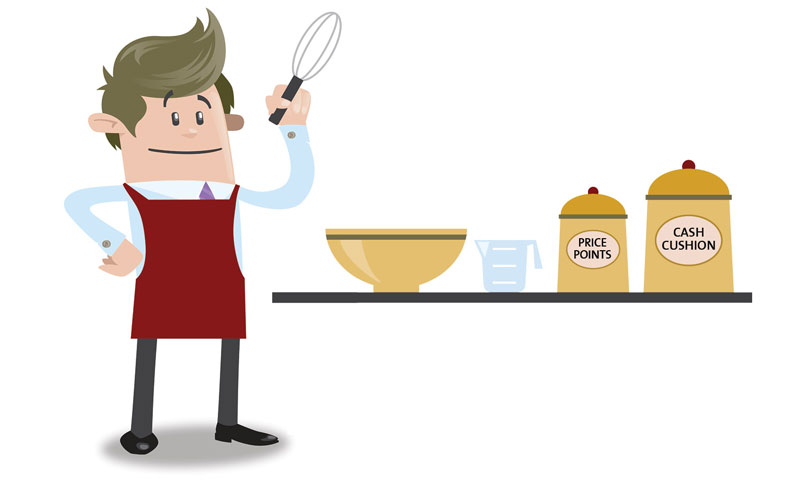
There’s more to preparing for a recession than recession-proofing. You also need to know your customers well enough to know how they’ll react to a recession. Middle-income people tend to react the fastest to a changing economy. They have a small safety net and are conscious of its limits, so they clamp down on spending. Hard. This group will want to see more options in smarter price points. You don’t need to drop your prices (and margins) on what you have but have intelligent alternatives at a lower price. Be prepared to discuss different metal and gem qualities and types.
Higher-income people tend to react more slowly to recessions. In the 2008-2009 recession, high-income people felt very uncomfortable with their economic comfort relative to the suffering that was being reported around them. Their reaction wasn’t to stop spending but to spend differently. Fashions—from cars to clothes to jewelry—became more understated. Think about how your clients are likely to react to the next recession.
Take Stock of Your Relationships
Businesses become risk-averse during re-cessions, and the first place this shows up is in inventory. The ability to carry inventory risk for good customers can help a B2B supplier ride out a recession, but it requires a cash cushion to do this. Beyond inventory, how are your customer relationships? Have you established the strong customer culture and exquisite service that will make your customers loyal during times of stress? You want to be the last vendor your customers consider dropping, so a commitment to relationships, quality, and service is essential.
What about your relationships with your own vendors? If you have strong, mutually beneficial relationships, then the once-in-a-great-while occasion when you need them to float a bill an extra 15 days probably won’t be a problem. But just like you, your vendors will be deciding where to focus their attention during a recession. Are you a trusted partner? Prompt with payments? The durability of business relationships is exposed and tested during times of recession.
Credit Check
Accessing capital is more challenging during a recession, but not for everyone. How is your business credit? Have you worked hard to maintain excellent credit ratings? Banks continue lending through times of recession for companies with excellent credit and sound business arguments. Sometimes a small line of credit is all you need to help you get through a few tight months. And with that: How is your relationship with your bank? Are you happy with them? Do they give you good service? Do you ever get to talk to the same person twice? Do you ever get access to decision-makers? A recession is not a great time to switch banks. If you’ve been considering cutting the cord with your bank, you may want to do it now.
Have a Game Plan
Of course, the most important buffer against recession is to be an excellent business manager. Is your strategy clear—not just to you, but to your employees, customers, and business partners? Is your whole organization lined up behind your strategy? Do you have the right talent and controls in place, ensuring that your margins, inventory levels, inventory turns, cash flow, fill rates, and customer satisfaction levels are all in line with your expectations?
Finally, take time now while you’re not facing economic contraction to plan for the things you will do during a recession. Many companies pull back on marketing, but that is the worst possible choice. Even in a recession, companies must keep marketing, looking for new customers, and making current customers feel confident. So create a recession marketing plan and be ready to implement it at the first signs of a slowdown. Consider how your competitors and customer base may react and how you can keep your messaging open and inviting. Make the plan now so that you don’t have to innovate when you are feeling insecure. After all, someone always makes money during a recession; it might as well be you.