

Savvy Shopping
Six steps to better tool buying
By Andrea Hill
(Originally published May 2019.)
To say my dad is a tool junkie would be an understatement. His workshop was his kingdom, and his tools were his favorite subjects. As children, we could use his tools once we had demonstrated proper respect for the safety requirements and proper use of each, and we maintained that privilege if we re-turned each tool to where it belonged every time. Many years later, when I found myself at the helm of a tools and equipment company, I drew on those experiences to better serve my tool-junkie customers. Here are some recommendations that can help you manage and improve your own tool inventory, increase your productivity, and ensure you spend your tool budget wisely.
Inventory and Assess Annually
Inventory your tool collection every year. If you manage a production shop, make this a team activity. You’re looking for two things: what you have and each tool’s condition. It’s easy to forget that you have that tall plunger set stuffed in the back of your bottom bench drawer or that little bent shank marking stamp from the one time you made a set of 10k rings.
Take out your tools and accessories, organize them by use and type, and inspect them. Clean what needs to be cleaned, set aside the pieces that need to be repaired or discarded, and isolate the items that you think you may not use again for a long time (or ever). Yes, it will take the better part of a day, but the benefits are significant:
- You will have a current mental snapshot of everything you own, which will keep you from ordering something you already have.
- You will recognize when tools need replacement, which will allow you to budget and plan for replacing in a timely manner according to project needs.
- You will be able to plan for refurbishment of tools before you pull something out of storage only to find you can’t use it until you’ve repaired it.
- You can reorganize and reallocate your tools, which will ensure you always have the most important tools close at hand. In a multi-bench environment, you can distribute the right tools to the right benches, which will save you from buying duplicates.
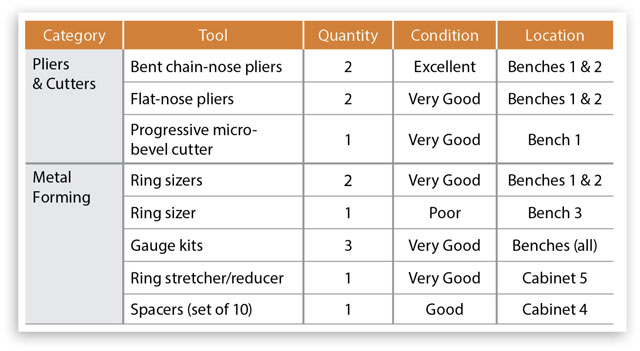
If you don’t already have a tools inventory worksheet (see chart above), it’s time to create one. This is a simple worksheet that you can update as you purchase new tools or discard old ones. It will help you set up a bench quickly for temporary help or new employees, prevent the purchase of tools you already own, and help you quickly identify where you have stored rarely used specialty tools.
Your annual inventory and ongoing record keeping will set you up for better tool utilization, smarter purchasing, fewer project interruptions, and peace of mind.
The Right Tools for the Right Reasons
Production requirements evolve over time as consumers seek different styles or as you produce different collections. The core of your tool collection will remain largely the same, but your peripheral tool requirements will change. Your once-per-year tool inventory and assessment is a terrific time to evaluate upcoming and anticipated project needs and see what you have and need to accomplish your production goals for the next 12 months.
Of course, a good jeweler knows how to use a multipurpose tool in many ways and how to make a specific tool do more than it was designed for. That type of ingenuity can save you a lot of money. The challenge is to know when a special-use tool will save you lots of time and increase your quality over the life of a project or collection.
Expensive Isn’t Always Better, Except When It Is
Expensive tools will usually deliver higher standards of quality, so make sure you need those standards before you invest. For each tool you buy, question the value of that higher standard of quality relative to your needs. If a tool will be in constant use, or if it can deliver a level of finesse that your customers are willing to pay for, then the expensive tool makes the most sense. If not, buy a less expensive tool and save your money.
Skill Level Matters
Some tools come with a level of complexity or additional features that can extend your training curve, so when you are making a tool-buying decision, factor in the amount of time you may need to master the tool. This isn’t to say you shouldn’t buy specialty tools: The right tool can save you money, speed up your operations, and provide thrilling results. Just make sure you are allocating the right amount of time post-purchase to get good at using the tool. Failure to plan for the increased learning curve is the reason many specialty tools get returned to the manufacturer or, worse, end up unused in a back cabinet.
Try-Before-You-Buy
Many tool-selling organizations offer trade show or in-house demonstrations to try-before-you-buy. Take advantage of these opportunities! Spending a day at a trade event just trying different tools is well worth your time, even if you don’t need to purchase a tool immediately. Ask plenty of questions about what each tool is best suited for and what they are not recommended for. When it’s time to buy, you will remember the feeling of that tool in your hands, the conversation you had with the salesperson, and the overall impression the tool made on you.
At a time when cash flow can be tight and productivity determines the difference between profit and struggle, this approach to tool management and purchasing can really make a difference in your shop. And, if you’re a good delegator, you can use these processes to teach your employees the difference between different tools and what they are used for.