

More for Less
A Made in the USA case study
Mark Schneider Design
Long Beach, California
KEY MANUFACTURING INITIATIVE: Implementation of lower-cost silver and cubic zirconia sample lines to supplement retail stores’ high-end inventory
Before: When a company makes a major change to its business plan, often it is done to combat a pressing problem. But when Mark Schneider of Mark Schneider Design changed his plan two years ago, his eyes were on the future. His California-based jewelry business was successful, “but I saw what was happening and what would continue to happen down the road,” says Schneider. “With the economy just coming out of the recession, stores were often reluctant to put in an inventory.”
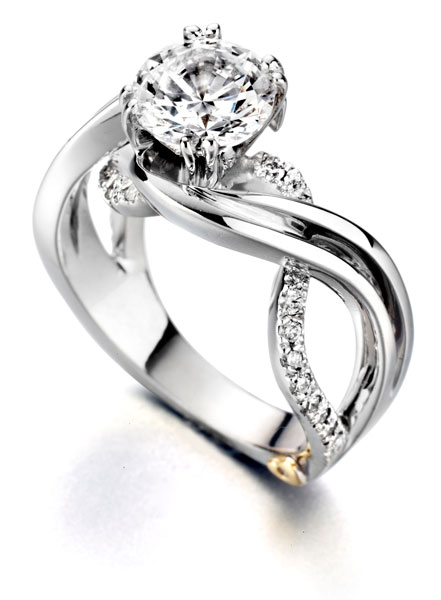
In that post-recession climate, when retail stores built high-end inventory, they typically carried only what they could afford (a conservatism that still holds true today). Schneider also found that once a store sold a design, they often would fail to reorder. “Then my business took a hit because stores most likely sold my top-selling pieces, and now they didn’t have them in stock for customers to see,” he says. And with the competition only a click away, Schneider saw that his retailers were competing with a wider variety of online options, making it even more crucial for them to have a variety of jewelry choices in their stores.
Overall, Schneider noticed a changing marketplace and wanted to respond. “Today, you have to partner with your retailers and take some responsibility for the selling of the product,” he explains. Schneider wanted to create a solution for his retail stores while also encouraging growth in his own business. So he came up with a way to help all involved: the creation of U.S.-manufactured sample lines of silver and cubic zirconia to supplement his retail stores’ inventory.
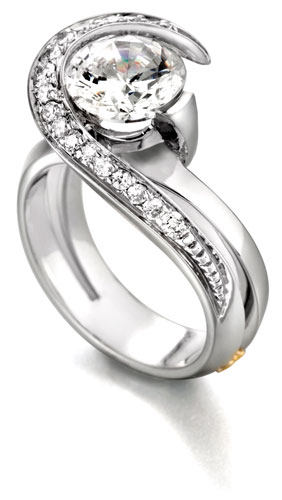
After: The first step was to produce sample lines close enough to the real thing so that customers “wouldn’t be taken aback by the quality of the sample,” Schneider says. “I knew my finished pieces would always look better, but I wanted to have my best foot forward with the samples.”
He also wanted to keep business in the U.S., but couldn’t tie up his own studio because it was busy producing the company’s high-end designs. So he searched for a U.S. manufacturer that could make a good end product at an economical price. “I’m not the first one to be doing samples,” he explains, “but I think I’m one of the few who is actually doing it in this country. In my business, we really promote ‘Made in America.’”
He searched through a number of manufacturers before finding one whose quality of work was what he was hoping for. Of the first batch of samples, he rejected 90 percent because they were not up to par with his standards. Schneider then explored his options with four other manufacturers, although it quickly be-came clear that they could not provide the level of detail he required. He chose to return to his initial manufacturer and work on making improvements. Now, he says, “you can hardly tell the difference unless you look very closely.”
While it took six months to get samples he was happy with, Schneider says the process could have been streamlined by understanding a few aspects about manufacturing silver and cubic zirconia samples. “We weren’t used to working in silver, as most of our pieces were made in gold or platinum, so didn’t make allowances for differences in how the rings would be made,” Schneider says. For example, in his original CAD renderings, the designs didn’t include the pavé settings, as he normally hand cuts them into the castings. However, after Schneider sent off the same designs to be made in silver, the manufacturer let him know that since he was trying to reduce his labor cost, having that much setting work done by hand would not be economical. He decided to have his designs modified to include the settings, avoiding any additional labor costs.
To prevent such issues, Schneider suggests learning as much as possible about the process before implementation, and to hire the right person with knowledge about manufacturing sample lines in the materials you choose. Most importantly, the process should be closely monitored so that any changes can be made early on.
With quality sample lines in tow, the next step was to get his retail stores on board. Schneider guided the stores that already carried his jewelry to follow his “80/20 rule,” stocking his 20 percent best-selling high-end live pieces and then supplementing additional designs with the lower-cost sample lines, the designs of which could all be customized. For example, many of his accounts carry 24 live pieces, which allow the retailer the benefit of closing the sale in store, whereas the sample pieces offer more variety in styles and a larger representation of his designs. His goal is to give the store the option to carry more designs at a lower cost while also giving the customer more to choose from.
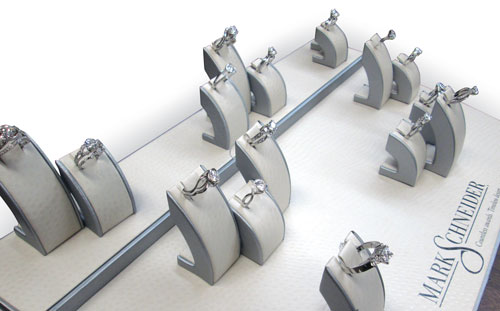
Some of the stores that Schneider already had accounts with chose not to carry the sample lines because they simply didn’t want low-cost samples in their stores. But the line has allowed Schneider to open up new accounts in stores that wanted the option of a low entry-level cost, and he has also expanded the variety of samples and designs in many of the stores that already carried his live pieces. “Before, stores had to buy it live or they just didn’t put it in,” he says. “By putting in the silver samples, it’s made it a lot more affordable [for them].”
When Schneider implemented this strategy, he knew he’d have to weather the initial costs of creating 10,000 samples outside of his studio. He also knew there would be less money coming in initially. He had a 30 percent drop in live orders from retailers because stores were now spending less to build their inventory of sample lines. But Schneider chose to implement this strategy when he did because his company was still doing well financially, and he could absorb those initial costs. “I could see the writing on the wall. I got the feeling that I needed to do this early or I would be out of the game,” he explains. “We did it from an area of strength, not desperation.”
Additionally, he knew the benefits of the strategy would far outweigh any initial loss. As the strategy approaches its first full year of implementation, Schneider has seen a double-digit uptick in his custom orders, now up 20 to 25 percent, which he attributes to a better presence in stores. Although customers have to wait an average of two and a half weeks to receive their finished rings when custom ordering, Schneider says that’s not a deterrent because customers have come to expect that his specialty is designing for their specifications, such as finger size, or swapping out stones, diamond shapes, and sizes. “We market that our rings are custom-made especially for them,” he explains.
While the initial cost of making the sample lines were high, Schneider says that he made up that cost in a short amount of time. “I’ve made it up because I no longer have to carry thousands of dollars of live merchandise while waiting for a store to order,” he explains.
“We carry a certain [number] of rings in stock as a backup, but now I don’t have to spend on building as much inventory [in his studio]. It’s worked out well for us,” he adds. “It’s been an advantage because most of what we do is custom work anyway. I predicted that if I could get the designs in the store at an economical price, I would get more special-order work.”
The sample lines have changed his company, but it’s a change that Schneider sees as continuing to improve his business down the road in a marketplace that is also continually changing: “More stores carrying my line, more opportunity to show my pieces, [increases in] our special order business… It was the right decision.”