

Flexing to Fit In
Made in the USA case study: Superfit Inc.
By Tina Wojtkielo Snyder
KEY MANUFACTURING INITIATIVE: Moving from exclusive production via metal molds to a more flexible manufacturing approach using CAD/CAM technology
Before
Based in Philadelphia, Superfit had a trademarked design with an invisible hinge, allowing a ring to open and close easily and securely. Until 2009, the company offered simple blanks in a number of sizes and metals, and customers could then retrofit them to existing rings (or Superfit would do it for them). Superfit also offered a limited line of finished jewelry featuring the mechanism.
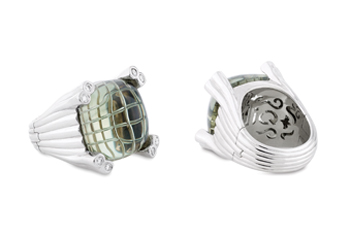
At that time, all products were manufactured using plastic-injection metal molds, which offered the precision and tight tolerances needed to cast a quality product with the hinge mechanism. The drawback of this method was the cost associated with tooling new metal molds for special design requests—a trend that the company noticed was gaining momentum. It costs approximately $2,000 to $5,000 to create a metal mold for a new ring design in one finger size. This simply wasn’t cost-effective, leaving the clients with two choices: Alter a design to one Superfit had in its metal mold inventory, or take their business elsewhere.
After
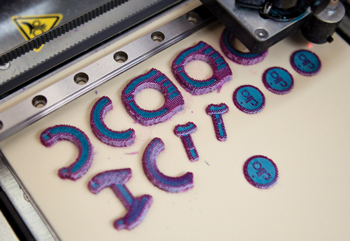
To better meet its customers’ needs for flexibility in design, Superfit had to move beyond traditional metal mold technology. In 2009, the company invested around $120,000 in a digital installation program to modify existing CAD models to work with its mechanism. This included the purchase of parametric modeling software and a 3-D printer on which it could grow CAD files of its clients’ elaborate custom designs (modified to incorporate its trademarked mechanism), and then cast them directly. While the initial expense of investing in the technology was significant, the company gained the capability to fulfill orders it would have had to turn away in the past.
“In our old business model, volume was required to justify tooling costs,” says Eric Alulis, director of product development for Superfit Inc. “The tool would pay for itself after 50 or 100 units. In the current market, where custom designs and small production runs are the norm, [that doesn’t work].
“A company like ours can’t compete with the resources of a larger overseas manufacturer, specifically inexpensive labor. But we can offer quality products specific to customers’ needs, and we can deliver in a shorter timeframe. Our new production model allows us to have that flexibility.”
To help recoup the initial investment in the digital installation process, Superfit increased prices for its customized products; the company charges about 15 percent more for a custom ring than for one from its basic line (which is still produced from a metal mold). But, Alulis reports, customers are willing to pay extra to get exactly what they want, and today the orders processed via digital installation versus metal mold technology make up about 35 percent of Superfit’s business. Looking back, the company recouped its investment in CAD/CAM within a year—and it invested in a second 3-D printer in November 2012 to keep up with demand.
In addition, CAD/CAM is beneficial for not only creating custom designs, but also for retrofitting existing rings with unique profiles. “In the past, if a customer had a ring with a squared bottom or another unique characteristic, we would have had to force them to compromise on aesthetics to fit with a production model that most closely matched the profile of the ring,” says Alulis. “Now, we can customize a shank with the Superfit mechanism that seamlessly integrates with the existing design.”