

Doctor, Doctor
Strategic planning can keep your company out of the emergency room
By Andrea Hill
My daughter is an emergency room nurse. One of the things she sees more often than she would like is people being rushed in for emergency blood clots following a surgical procedure. People assume that they are supposed to rest after a minor surgery, and in many cases, welcome the opportunity to be immobile for a while. When told that not moving led to their development of a life-threatening condition, most people will say, “I never knew the body worked that way.”
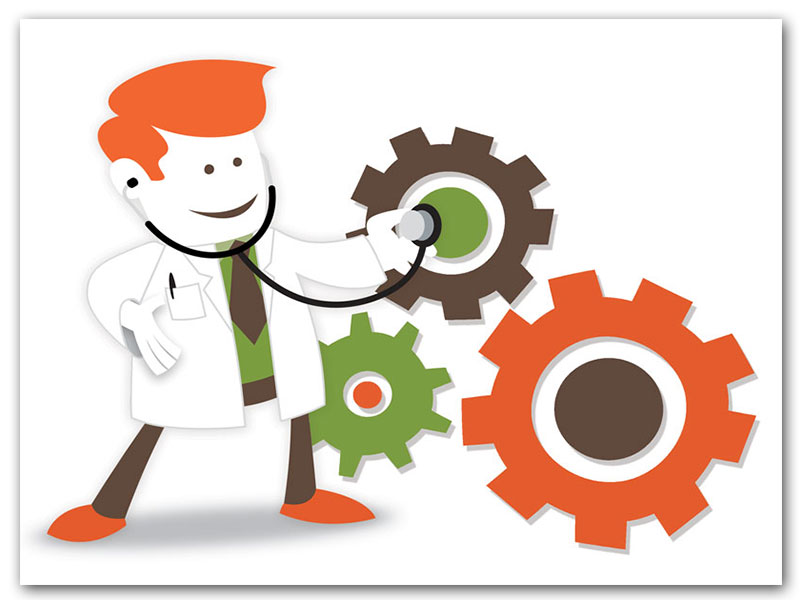
Just as the body needs to stay in regular motion to maintain healthy circulation, so does a business. You may be thinking, “My business is always in motion! I don’t have enough hours in the day to get everything done!” But the things you are thinking about doing are likely the tactical details of running your business: sales calls, product development, marketing, production, preparing for trade shows, hiring, and training. For comparison, let’s say that these tasks are similar to the person lying in bed who is also breathing, eating, talking on the phone, reading, and using the TV remote. To the body, these things are essential (well, at least some of them are), but not tactical. What is strategic to the body is movement, building muscle mass, and increasing heart and lung capacity.
What’s strategic to your business? Planning. Thinking. Forecasting. Evolving. In our modern business world of technological innovation and rapidly emerging consumer expectations, the demand to evolve is greater than ever before.
What many business owners never knew, including business owners who have been at it for decades, is that the discipline of strategic planning is intended to help a business continuously evolve. The process of stepping back, contemplating your customers and desired customers, and developing a plan to maintain and improve both competitive advantage and differentiation is what keeps a business in business. This is how GE has evolved over the past 125 years from a producer of electrical components to a global digital industrial company. They have ensured their long-term relevance by constantly looking to the future and identifying how they will be part of it.
This is not the same as stumbling onto opportunity and going with it. Nor is it the same as reacting to a customer need and benefitting from it. Both of those things can and do happen to both successful and unsuccessful businesses over time, but they are not a replacement for consciously devising how you will compete under changing conditions.
So, what do you need to be doing so your business doesn’t develop a life-threatening blood clot?
At least every two years you should do a full strategic review. This review includes analyzing your current approach to competitive advantage and differentiation, determining if it is still relevant and profitable, and questioning if it can be improved upon or replaced with something more compelling.
Every year your business plans, marketing strategies, and sales programs should be reworked according to your strategy. Any changes in your strategy must be reflected in these down-stream processes.
You see, just as the human body has specific processes that are entirely dependent on one another for health, so too does a business. Your strategic plan is the true infrastructure of your business. All other plans, from financial to marketing to operational, must flow from that strategy. This is the only way you can ensure that the things people are doing every day are relevant to and supportive of your strategy.
I was recently in a jewelry manufacturing plant that is struggling to keep its customers. They brought me in to make recommendations regarding their production processes, but it was quickly clear that their real problem was in managing customer communications. They had taken on more and more customers relative to the amount they could manufacture using new technologies, but they hadn’t upgraded their communication methods. The result? E-mail-based, slow, and inaccurate order taking, internal management, and customer feedback, resulting in unhappy customers who didn’t stick around.
Their company strategy was to produce more higher-quality products using automation. But the administrative and customer-facing departments never got the message. They were still using the tools and techniques that had worked in the past. Had they been conscious of their strategy, they would have evaluated how the changes in production would affect every other part of their business, and they would have anticipated updates they needed to make in their marketing, sales, and operations departments.
The good news is that the company had evolved. I have many more examples of companies that failed to consider the changes the internet, manufacturing automation, and communications technology would have on both how to run a business and what consumers would grow to expect from a business. Many of those companies have either been in a deep freeze for the past eight years or they are already gone.
When I talk about the importance of strategy with companies, I often hear, “I never knew that strategy applied to a small business like mine.” This year, get this skill under your belt. Go through a complete strategic review of your business, with the intention of becoming very clear on what gives you competitive advantage and differentiation. When that is done, use the results to create better sales, marketing, and operation plans. Trust me, if you do this, you can dramatically reduce the odds of rushing your business to the emergency room.